Example ELA 7th Grade Course
Course Overview
The Grade 7 Core ELA course deepens the middle school arc by shifting the lens outward from Self to Belonging. Students are asked to step beyond their own experience and witness the lives, histories, and struggles of others — building the empathy and critical awareness that sustain genuine community.
Building on the narrative and argumentative groundwork from 6th grade, students now grapple with more complex texts and harder questions: What does it mean to truly belong? Who decides the terms of inclusion? And what is the cost of exclusion?
Key Focus
The key focus of this course is perspective-taking across difference. Students read works by authors from a range of backgrounds and contexts, learning to hold complexity without flattening it. They practice recognizing whose perspective shapes a narrative and what that framing reveals or conceals.
Writing instruction in 7th grade emphasizes analytical and argumentative modes, with students building toward longer, more sustained pieces that require them to synthesize multiple sources and hold a position across the length of an essay.
Arcs of inquiry
Three arcs of inquiry structure the 7th grade year:
Arc 1: What does it mean to belong? — Students examine how belonging is defined, negotiated, and sometimes denied, drawing on both literary and informational texts.
Arc 2: What do we owe each other? — Students investigate moral responsibility and collective obligation, reading texts that place characters or historical figures at ethical crossroads.
Arc 3: What stories shape a community? — Students analyze how shared narratives — myths, histories, cultural touchstones — construct collective identity, and interrogate what happens when those narratives compete.
Unit 1: Belonging & Identity — The Final Empire
Knowledge-Building Topic
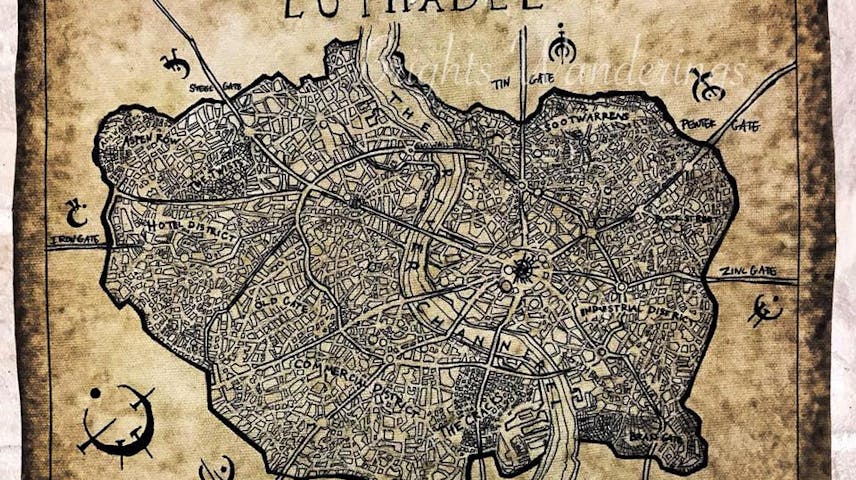
This unit explores how belonging is defined, negotiated, and sometimes denied through Sanderson's The Final Empire. Vin grows up as a street thief in Luthadel, learning to survive by never trusting anyone — because in the Lord Ruler's Final Empire, skaa who draw attention to themselves disappear. When Kelsier recruits her into his crew of Allomancers to overthrow the empire, Vin must learn not just to use her Mistborn powers, but to belong somewhere for the first time. Students examine how Sanderson uses the found family of Kelsier's crew — Breeze the Soother, Ham the Thug, Clubs the Smoker, Dockson the organizer — to explore what belonging actually requires: not similarity, but trust, accountability, and the willingness to be seen.
Essential Questions
What does Vin's transformation from street thief to Mistborn reveal about the relationship between belonging, trust, and identity?
How does the skaa versus nobility divide in the Final Empire function as a system that makes belonging impossible for certain people — and what does Kelsier's crew offer instead?
Unit 2: Witness, Testimony, and Argument — The Well of Ascension
Knowledge-Building Topic
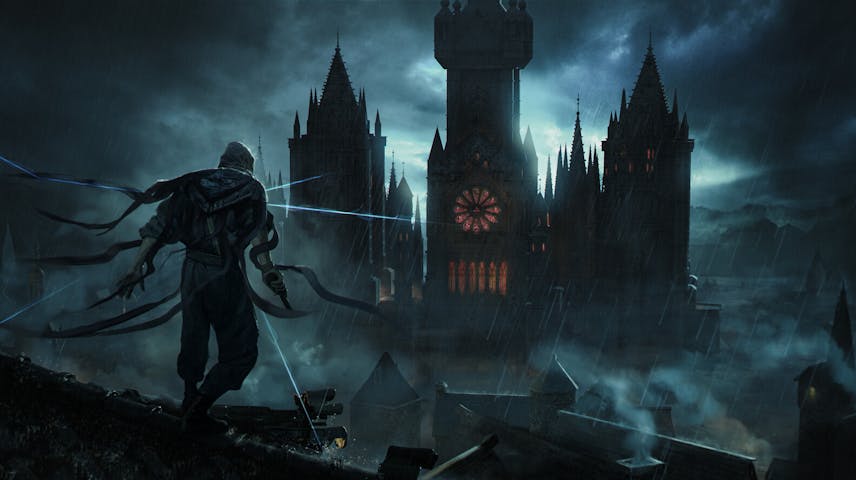
This unit examines witness, testimony, and the construction of historical argument through The Well of Ascension, the second Mistborn novel. After the fall of the Final Empire, Elend Venture governs a Luthadel under siege — three armies outside the walls, a koloss horde in the east, and a political assembly inside that cannot agree on anything. Meanwhile, Vin and the crew must evaluate increasingly suspect prophecies about the Hero of Ages, a set of ancient texts that Ruin has been subtly editing across centuries to ensure whoever claims the Well of Ascension releases rather than uses its power. Students examine how Sanderson uses the corrupted prophecies as a sustained argument about testimony: who creates it, who controls it, and what happens when the archive of the past is not what it appears to be.
Essential Questions
How do the prophecies about the Hero of Ages function as a form of testimony in The Well of Ascension — and what does it mean when testimony can be deliberately corrupted?
What does Elend's struggle to govern a besieged Luthadel reveal about the relationship between personal experience and historical argument?
Unit 3: Dreams and Opportunity — Hero of Ages
Knowledge-Building Topic
This research unit examines the nature of dreams, hope, and the will to rebuild after catastrophe through Hero of Ages, the conclusion of Sanderson's original Mistborn trilogy. Ash falls from a sky that has never been blue. The mists now kill. Koloss armies march. Vin and Elend race across a dying world trying to find the power that can stop Ruin — the Shard of entropy and destruction — before everything ends. Meanwhile, Sazed, a Terrisman Keeper who has spent his life preserving the records of dead religions, finds himself unable to believe in any of them when he needs faith most. Students investigate how Sanderson uses Sazed's journey as an argument about hope: what it is for, what it costs, and what it can build when it finally finds something worth believing.
Essential Questions
What does Sazed's crisis of faith — he has studied hundreds of religions and believes in none of them — reveal about the relationship between hope, belief, and survival?
How does Sanderson use Ruin versus Preservation as opposing Shards to argue about what it means for civilization to dream of continuity rather than entropy?
Unit 4: Connections that Shape Us — The Alloy of Law
Knowledge-Building Topic
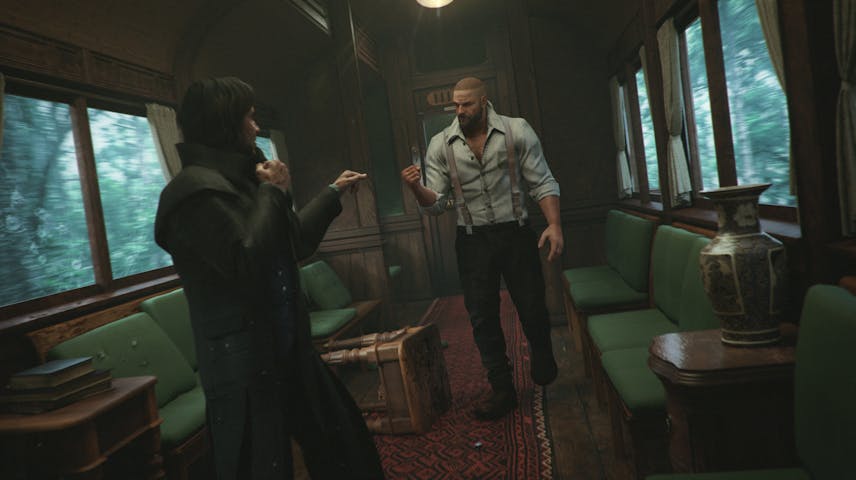
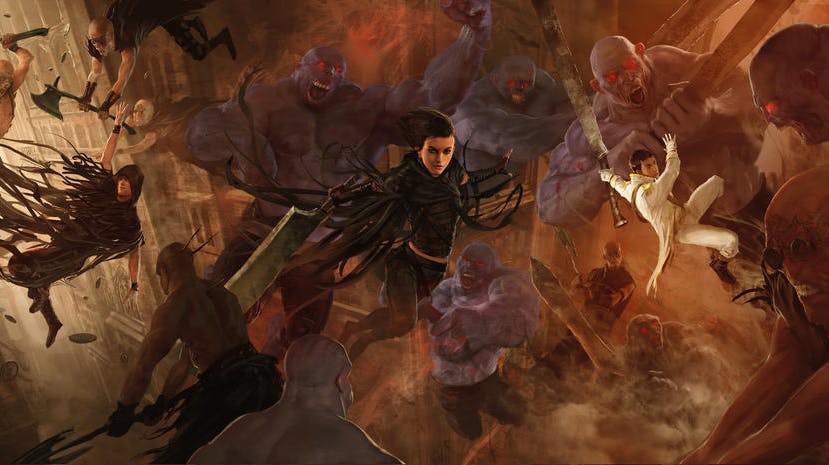
This unit explores the relationship between connection, cultural inheritance, and individual identity through The Alloy of Law, the first Mistborn Era 2 novel. Three hundred years after the Catacendre, Scadrial has industrialized — railroads, electricity, revolvers — and Wax Ladrian, a Twinborn constable-turned-reluctant-noble, must navigate between the frontier world of the Roughs that forged him and the Elendel high society he was born to. His partner Wayne (Slider and Bloodmaker Twinborn, obsessive hat collector) and his unexpected betrothed Steris (meticulous list-maker, surprisingly the most competent person in any room) complete a found-family structure that asks what connection actually requires of us.
Essential Questions
How does Waxillium Ladrian's dual identity — lawman of the Roughs, lord of House Ladrian — shape what he can see and what he cannot in the industrial Elendel Basin?
What does Wayne's loyalty to Wax — maintained across years apart, through grief and change — reveal about the nature of chosen connections versus inherited ones?