Loading course navigation
Loading lesson
50 min
Student Lesson
Lesson 2: Ancient Greece Before Percy
Content
Students will cite evidence from multiple informational texts to explain how features of ancient Greek life and belief could shape myths.
Language
Students will combine facts and predictions using because, since, and use precise domain-specific vocabulary.
Foundational Skills
Students will reread short informational excerpts aloud, pausing at punctuation to support accuracy and meaning.
Why do cultures tell stories about gods, monsters, journeys, and transformations?
How do stories from different cultures explain the natural world, and what can we learn when we compare them?
Knowledge-Building:
This lesson builds on Lesson 1’s idea that myths explain the world by showing the cultural world that produced Greek myths.
Enduring Understanding:
People create myths to explain mystery, danger, and values in the world around them.
Future Lessons:
Students will use this context to understand why Greek gods, monsters, and ideas matter in Percy’s world and how Riordan modernizes them.
Unit Performance Task:
Students will later explain how myths reflect cultural values and compare mythic ideas across texts.
| Lesson Flow | Purpose of Learning Experience |
|---|---|
Launch15 Minutes | Students will draw on what they learned in Lesson 1 and build curiosity about the kinds of mysteries ancient Greeks may have used myths to explain. |
Learning in Action30 Minutes | Students will use multiple informational texts to gather facts about ancient Greek life, beliefs, and ideas; define domain-specific vocabulary in context; and predict what this culture might explain through myth. (RI.6.1, RI.6.7, L.6.4.a) |
Look Back5 Minutes | Students will synthesize learning in a brief written response that uses evidence from at least two texts. |
Not available for this lesson
Material List
Unit 4 Lesson 2 Student Edition
Jigsaw Worksheet
Routines
Turn-and-Talk
Jigsaw Reading
Quick Write
Allow time for students to preview the informational texts for this lesson.
Say these Directions: Turn and talk with a partner to discuss your response to the questions.
Ask: What questions, dangers, or mysteries might people in ancient Greece have explained through myths?
People in ancient Greece may have created myths to explain storms, dangers at sea, or why different gods seemed to control parts of life. If they traveled by sea and believed in many gods, myths could help explain why nature felt powerful and unpredictable.
Ask: Which clue most shaped your thinking, and how did it help you form your idea?
The clue about many gods shaped my thinking the most because it suggested myths might explain which god controlled things like weather, war, or wisdom. I connected this to what we learned in Lesson 1 about myths explaining the unknown.
Say: Now we move from first predictions to text-based evidence by reading short informational excerpts about ancient Greece and testing which clues their predictions were built on.
Place students in groups of three. Assign one short excerpt from each text to an expert group first (as indicated below). Each expert group will read the assigned excerpt (not the full article) and record notes. They will share these notes with their home groups. You can choose to have the students in each expert group work together or independently. Students will then return to their home groups to share. During the sharing, students will take notes in their individual Jigsaw Worksheet documents on what their group members share.
Say these Directions: Each expert group will read one short excerpt and become the class expert on that topic. Read your excerpt aloud twice. On the second reading, pause at punctuation to support accuracy and expression.
Next, record two important facts, one domain-specific word you can define using context clues, and one myth prediction that begins with because or since and explains what the myth might show or teach. Then, teach your home group what you learned.
Use these examples:
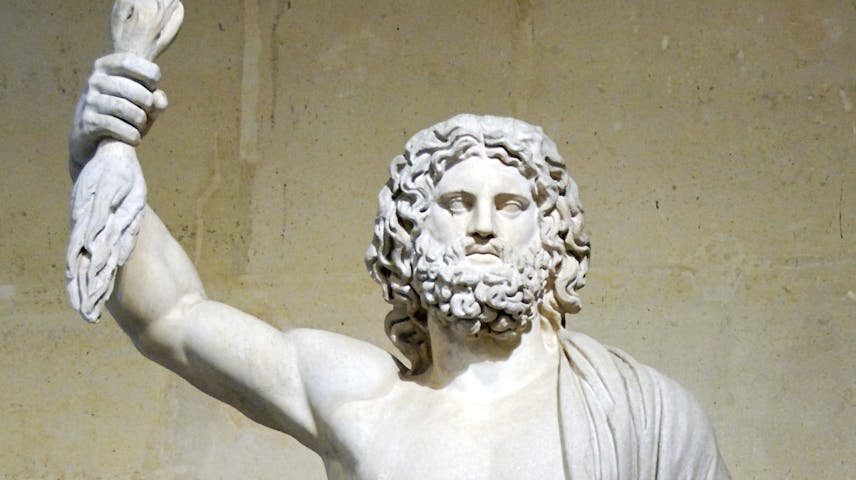
From Ancient Greeks: Gods, Goddesses, and Heroes: the section “5c. Gods, Goddesses, and Heroes,” explaining how Greek gods acted like humans and how myths explained events and taught lessons
From Ancient Greeks: the section “The First Greeks,” describing geography, city-states, and daily life
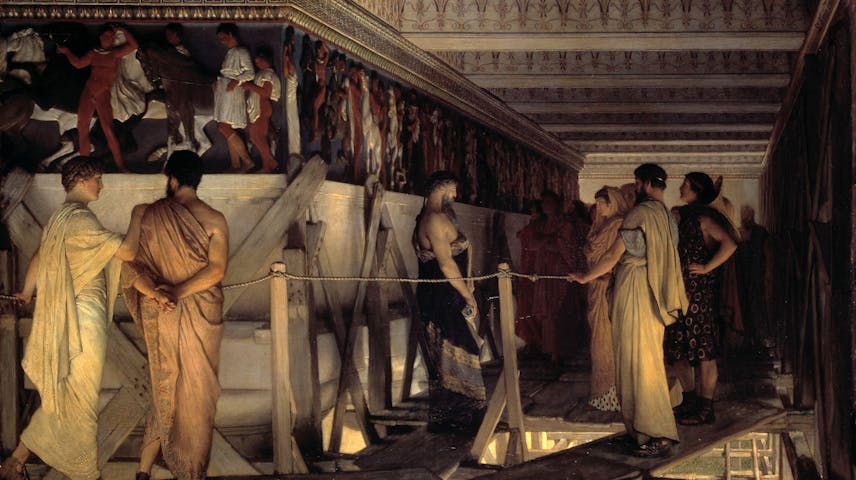
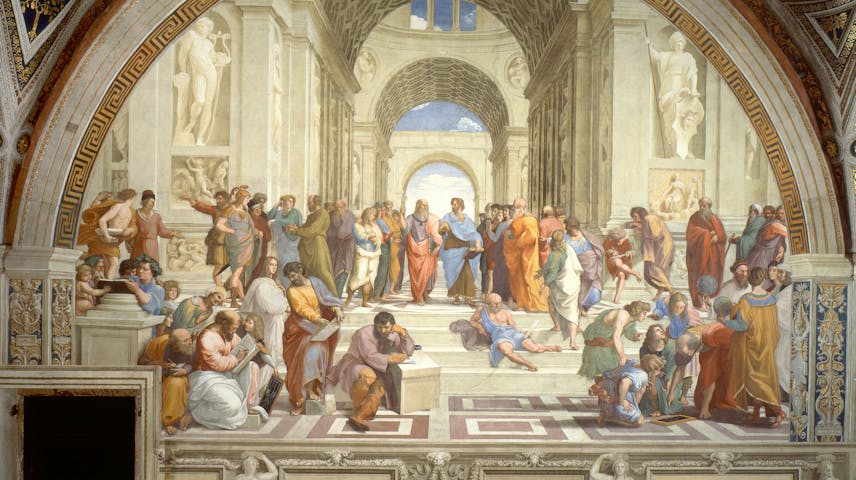
From Ancient Greeks: Truthseekers: the section “5f. Thinkers,” focusing on Socrates and how Greek thinkers used questioning and reasoning to understand the world
Say: When we read informational texts, we do more than collect facts—we ask what they reveal about what people valued, feared, questioned, or wanted to teach. Some Greek thinkers challenged traditional beliefs and searched for logical explanations, while Greek myths showed gods acting like humans and interacting with people. Precise terms such as city‑state, polytheism, and philosophy give the text a formal, informative tone. We can then turn a fact into a prediction using connectors like because or since. When I can name the fact and the prediction together, I’m already thinking about how myths grow out of a culture.
Jigsaw Notes
Text | Two Key Facts | Domain-Specific Word | Prediction |
|---|---|---|---|
Ancient Greeks: Gods, Goddesses, and Heroes (“5c. Gods, Goddesses, and Heroes” section) | Greeks believed many gods influenced the world and acted like humans; myths helped explain events and sometimes teach lessons. | polytheism: belief in many gods | Since Greeks believed gods controlled nature, myths might explain lightning, storms, or seasons and show how gods caused these events. |
Ancient Greeks (“The First Greeks” section) | Greece had mountains and islands; people lived in separate city-states. | city-state: an independent city with its own government | Because geography separated communities, myths may explain why different places honored different gods. |
Ancient Greeks: Truthseekers (“5f. Thinkers” section) | Greek thinkers asked questions about truth and sometimes challenged traditional beliefs; people searched for logical reasons behind events. | philosophy: the study of big questions and reasoning | Since people asked why the world worked the way it did, myths might explain origins, justice, or human behavior. |
Pulse Check (RI.6.7, RI.6.9) |
|---|
Which statement best combines information from more than one text to predict a likely focus of Greek myths?
|
Say these Directions: Use at least two specific details from two different texts in your response.
Ask: Which factor do you think most shaped Greek myths—polytheism, city-states and geography, or philosophy? Explain your thinking using evidence from at least two texts.
I think polytheism is the most important factor because Ancient Greeks: Gods, Goddesses, and Heroes explains that the Greeks believed many gods controlled different parts of the world and behaved like humans. In addition, Ancient Greeks (in “The First Greeks”) shows that people lived in separate city-states, so different regions may have worshipped and told stories about the gods in different ways. Together, these details suggest that Greek myths were used to explain natural events, human behavior, and to teach lessons about how people should act.