Loading course navigation
Loading lesson
50 min
Student Lesson
Lesson 4: The Lightning Thief, Chapter 1
Content
Students will analyze how Percy’s first-person narration and word choice reveal his perspective in Chapter 1.
Language
Students will explain how narration shapes tone by embedding textual evidence with noun clauses and transitions.
Foundational Skills
Students will use context clues to determine the meaning of immortal and confirm their thinking with the root mort.
Why do cultures tell stories about gods, monsters, journeys, and transformations?
Knowledge-Building:
Students build on the Three Pillars of Myth, ancient Greek context, and Riordan’s idea of adaptation from Lessons 1–3.
Enduring Understanding:
Myths help people explain the world, but modern authors can reshape mythic ideas through voice, setting, and character perspective.
Future Lessons:
Students will continue reading Chapter 1 and compare Percy’s early voice to traditional portrayals of heroes across myth and fable.
Unit Performance Task:
Students will need to identify and explain emerging themes and author choices when comparing The Lightning Thief with traditional myths.
| Lesson Flow | Purpose of Learning Experience |
|---|---|
Launch5 Minutes | Students will activate prior learning about myth and adaptation and preview how Percy’s perspective and voice modernizes the idea of a hero. |
Literacy Lab10 Minutes | Students will be explicitly taught how to embed textual evidence into analytical sentences using noun clauses and precise commentary. |
Learning in Action30 Minutes | Part A: Analyzing Percy’s Voice and Perspective (RL.6.6, L.6.4.a) Students will listen to a teacher read aloud from Chapter 1, pp. 1–8, and annotate for how Percy’s voice reveals perspective, and to identify myth clues, and examples of adaptation. Part B: Writing Through Percy’s Lens (RL.6.6) Students will explain how Percy’s voice and perspective changes a traditional hero portrayal by using embedded evidence. |
Material List
The Lightning Thief by Rick Riordan
Unit 4 Lesson 4 Student Edition
Routines
Think-Pair-Share
Language Study
Turn-and-Talk
Quick Write
Teacher Tip |
|---|
Before reading, remind students that Greek mythology began as an ancient religion and is being studied here as literature and cultural history. Students do not need to share or adopt any belief system in order to analyze the text. |
Teacher Tip |
Chapter 1, pp. 1–8, includes outdated and harmful language about disability and mental health as well as negative self-talk about being a “bad kid” or a “nobody.” Name clearly before reading that these words reflect Percy’s limited, hurt perspective and are not acceptable language for the classroom; also remind students that learning differences are real and valid, not explained by fantasy identities. |
Use this routine to connect the Spark lessons to today’s reading. Students should briefly predict what a traditional hero might sound like before they hear Percy’s very different voice and perspective.
Have students turn to a partner and keep one sentence note in the margin or notes section.
Say these Directions: Think about the myths and adaptations we have studied so far. First, decide what kind of perspective or point of view you might expect from a traditional hero in ancient myths. Then talk with your partner about how a modern hero’s perspective might be different. Partner A shares first, then Partner B.
Ask: Based on our earlier work with myths and adaptation, what kind of point of view would you expect from a traditional hero, and how might Riordan shift that perspective for Percy?
A traditional hero’s point of view might feel distant, formal, or focused on bravery and destiny. Riordan changes that by giving Percy a more personal, relatable perspective—one that shows his confusion, humor, and self‑doubt, making him feel like a real kid instead of a larger‑than‑life figure.
Say: Now we are going to listen closely to Percy’s own words and track how his perspective shapes—and sometimes changes—the kind of hero story we expect.
Today’s language move helps students avoid dropped-in quotations. The goal is to show them how to pull evidence into their own sentences so the analysis sounds smooth and connected.
Say these Directions: Effective readers pay attention to how a narrator reveals their perspective through their unique voice. Strong writers take the next step and connect that evidence smoothly to their own ideas. Today, we’re practicing a sentence move that helps us do that: embedding evidence with a noun clause.
Target Sentence Block:
“I was a really bad kid.”
“I was the only sixth grader who could’ve flunked an intro course to Greek mythology.”
Display the following Analytical Model Sentence:
The fact that Percy calls himself “a really bad kid” reveals that his point of view is defensive and self-critical.
Chunk | Meaning | Function |
|---|---|---|
The fact that Percy calls himself | This introduces Percy’s words inside my own sentence. | Embeds the evidence smoothly |
“a really bad kid” | This is the exact text detail I am using. | Provides proof from the text |
reveals that his point of view comes from a place that is defensive and self-critical | This explains what the detail shows. | Connects evidence to analysis |
Say: When I write about a narrator, I do not want my evidence sitting alone in a separate sentence. I can start with a noun clause like “The fact that . . .” or “Percy’s comment that . . .” to carry the evidence into my analysis. Then I can ask myself what that detail reveals about tone or perspective. This makes my writing sound clear and connected. It also helps the reader see exactly how the evidence supports my idea.
Ask: How does the sentence starter “The fact that . . .” help the writer explain Percy’s perspective more clearly?
It helps connect the evidence and the explanation in one sentence. Instead of just dropping in Percy’s words, the writer shows what the detail reveals about his perspective.
Say: Complete this sentence frame: “Percy’s comment that he could have flunked Greek mythology suggests that ___.”
Percy’s comment that he could have flunked Greek mythology suggests that he is making fun of himself and does not sound like a proud, traditional hero.
Connection to Today’s Learning
Say: As we listen to the chapter, you will use the same strategy to explain how Percy’s words shape your first impression of him.
Read pp. 1–8 aloud. Prompt students to listen through “Percy’s lens” and annotate for P = perspective , M = myth clue, and A = adaptation.
Say these Directions: As I read aloud, listen to how Percy talks about himself and the world around him, and think about what that reveals about his perspective. Also pay attention to any references to ancient Greek myths and notice whether the language feels adapted for a modern story or closely aligned with the original myth.
Annotate pages 1-8 using the following identifiers: P = perspective , M = myth clue, and A = adaptation. Remember, some moments in the story can connect directly to ancient myths and still be adapted for a modern audience.
(Display the 3-Column Chart graphic organizer, and have students copy down in their journals.) In your 3-Column Chart, record an example from the text of Percy’s narration. Annotate to show what the example reveals about Percy’s perspective, and whether it sounds more like a myth clue, a modern adaptation choice, or both.
Review the following:
adaptation: Adaptation means changing a story’s setting, style, or characters while keeping important themes or patterns.
perspective: the unique outlook, attitude, or "lens" through which a character or narrator views the events, characters, and world within a story
myth clue: a word or phrase in the text that connects to an ancient myth
Say: As I read, I’m listening for what Percy says and what those details reveal about his perspective—how he sees himself and his world.
When he warns the reader about being a half‑blood, his blunt, joking tone shows he doesn’t view himself like a traditional hero.
When he calls himself a “bad kid,” it tells me how he’s been labeled by others and how he might see himself, which seems very different from how an ancient Greek hero might portray himself. And when myth‑related words appear, I think about how Riordan blends everyday school life with ancient Greek ideas.
During the read-aloud, pause briefly at these moments in the text:
The opening warning to the reader about being a half-blood
The section where Percy calls himself “a really bad kid”
The section where Percy mentions being expelled
The classroom moment where Percy hears the word immortal
Ask: At the opening where Percy warns the reader away from his life, what does he reveal about his perspective, and how is that different from a traditional hero perspective?
Percy sounds blunt and sarcastic right away. Instead of sounding proud or noble like a traditional hero, he sounds like a kid who is tired of his own problems and is almost daring the reader to leave. The text states, “If you’re reading this because you think you might be one, my advice is: close this book right now.”
Ask: In the section where Percy describes himself as “a really bad kid” and mentions being expelled, what do we learn about how he sees himself?
We learn that Percy has heard negative labels so often that he repeats them. His perspective seems defensive because he explains his problems before anyone else can judge him. The text states, “Look, I didn’t want to be a half-blood.”
Ask: In the classroom section about the gods, what context clues help you infer the meaning of immortal?
The text around the word talks about gods and death, so it suggests that immortal means not dying or living forever. The root mort also connects to death, which helps confirm that meaning.
Connection to Today’s Learning
Say: Now that you have heard Percy’s voice and collected evidence, you are ready to explain how that voice changes the idea of a hero.
Pulse Check (RL.6.4, L.6.4.a) |
|---|
In the classroom section where Percy hears the word immortal, what does the word most likely mean?
|
Students now use the evidence they collected to answer the lesson TDQ. Push them to use one embedded quotation or paraphrase and one comparison to a traditional hero.
Display the following writing model if needed for support and guidance.
Say: The fact that Percy introduces himself with a warning instead of a proud hero speech changes the kind of hero we expect. Percy’s comment that he is “a really bad kid” makes him sound defensive and sarcastic, not noble or perfect. Unlike a traditional hero, who often seems confident from the start, Percy sounds like someone who has been misunderstood for a long time. This perspective makes him feel more modern and more real to the reader.
Say these Directions: Use your notes from the read-aloud to write a three- to four-sentence response to today’s question. Be sure to use one noun clause starter, such as “The fact that . . .” or “Percy’s comment that . . . ,” and at least one comparative word such as unlike, however, or instead.
Ask: How does Percy’s self-talk change the way a “hero” is traditionally portrayed?
The fact that Percy talks about himself like he is already in trouble changes the way a hero is portrayed. Percy’s comment that he is “a really bad kid” makes him sound sarcastic and defensive. Unlike a traditional hero, who might seem brave and certain right away, Percy sounds like a real kid who expects people to judge him. That makes the reader meet him as a modern hero, not a perfect one.
Connection to Today’s Learning
Students have now practiced the exact kind of evidence-based explanation they will need later when comparing Percy to myths and other traditional stories.
Display the modeling section of this chart for students as a reference.
Reflection (RL.6.6, L.6.3.a) | |
|---|---|
Reflect on your ability to explain a character’s perspective using the Reflection routine.
| |
Say these Directions: Today, we focused on how a narrator’s or character’s perspective or voice shapes our first impression of a character. Later in this unit, you will compare Percy to mythic characters and explain how Riordan transforms old story patterns for modern readers. The note-taking and sentence strategies from today will help you build those comparisons with effective evidence.
Say: Using at least two specific text details from the opening of Chapter 1, explain how Percy’s perspective changes the way a hero is traditionally portrayed.
At the very beginning, Percy warns the reader away from his life instead of introducing himself like a proud hero. Later, the fact that he calls himself “a really bad kid” and talks about being expelled shows that he expects people to see him as a problem. Unlike a traditional hero, who may sound confident or noble, Percy sounds sarcastic and defensive. This changes the hero portrayal by making him feel more modern and more human.
Teacher Tip |
|---|
Tonight’s reading, Chapter 1, pp. 9–15, includes school conflict and fantasy violence. Preview that these scenes may feel intense for some students, and remind students to stay grounded in the text by annotating Percy’s perspective rather than sharing personal experiences unless they choose to privately check in with you. |
Read and annotate The Lightning Thief, Chapter 1, pp. 9–15. Mark places where Percy’s narration shows fear, sarcasm, or confusion.
Read and annotate the excerpt from “The Hare and the Lion.” Mark how the main figure is presented as a hero or trickster so you can compare that portrayal with Percy in the next lesson.
The Lightning Thief (Percy Jackson and the Olympians, Book 1)
Rick Riordan

The Hare and the Lion
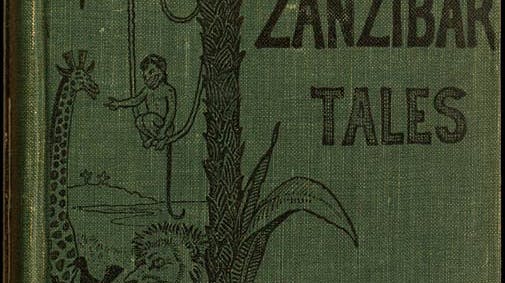
From Zanzibar Tales