Loading course navigation
Loading lesson
50 min
Student Lesson
Lesson 19: The Lightning Thief, Socratic Seminar 1
Content
Students will engage in a structured academic discussion to identify recurring patterns of cultural values across myths, informational text, and The Lightning Thief.
Language
Students will use discourse markers, abstract nouns, and evidence-based explanation frames to build on peers’ ideas during a Socratic Seminar.
Foundational Skills
Students will practice discourse markers for seminar escalation, including “Building on ___’s point . . . ,” “A recurring pattern is . . . ,” and “This reflects the cultural belief that . . .”
Why do cultures tell stories about gods, monsters, journeys, and transformations?
Knowledge-Building:
Students synthesize Investigation 1 texts and Chapters 1–12 of The Lightning Thief to identify patterns in courage, responsibility, cleverness, power, blame, and belonging.
Enduring Understanding:
People across cultures use myths to explain danger, power, and the unknown while expressing important cultural values.
Future Lessons:
Students will carry these big ideas into Lesson 20 as they analyze temptation and illusion in the Lotus Casino episode.
Unit Performance Task:
Today’s seminar prepares students to explain patterns across myths, informational text, and modern adaptations using evidence from multiple texts.
| Lesson Flow | Purpose of Learning Experience |
|---|---|
Launch5 Minutes | Students will prepare to move from individual examples to a shared Essential Question discussion. |
Literacy Lab10 Minutes | Students will be introduced to the Socratic Seminar moves they will use to build, clarify, and synthesize ideas. |
Learning in Action30 Minutes | Part A: Rehearsing a Pattern Claim (SL.6.1.c) Students will orally rehearse how to connect one text example to a broader cultural value across texts. Part B: Socratic Seminar: Myths, Power, and Cultural Values (SL.6.1.a, SL.6.1.c) Students will participate in a structured seminar that uses evidence from multiple texts and builds on peers’ responses. |
Material List
The Lightning Thief by Rick Riordan
Unit 4 Lesson 19 Student Edition
Routines
Turn and Talk
Socratic Seminar
Iterative Conversation Exchange
Quick Write
In Lesson 18, students studied how Riordan reframes Medusa so the “monster” can speak back and change the reader’s perspective on blame and power. In this lesson, students step back from one scene and look across Investigation 1 texts to ask a bigger question about what myths and myth-related texts reveal about the people who tell them. This synthesis work matters because students will need to discuss and later write about patterns across multiple texts for the unit performance task.
Say these Directions: Turn and talk with a partner to discuss your response to the question.
Ask: Which myth or scene from our reading most clearly shows a cultural value like courage, cleverness, responsibility, fairness, or belonging?
One clear example is when Percy faces the Minotaur outside Camp Half-Blood in Chapter 4 because he acts even when he is afraid. That scene suggests that courage and responsibility matter because Percy is trying to protect his mother, not just win a fight.
Say: Today, you will move from one example like this to identifying patterns across multiple texts and explaining what those patterns reveal about cultural values.
This mini-lesson prepares students to enter the seminar with clear, connected thinking.
Display the seminar question and the discussion stems that students will use. Remind students that a seminar is not a debate to “win”; it is a text-based conversation in which ideas grow through listening, building, challenging, and clarifying.
Say: A strong seminar response begins with a clear example, explains what value it shows, and connects that idea to another text or pattern. For example, Percy’s fight with the Minotaur shows courage because he acts to protect someone else. Across texts, a recurring pattern is that danger reveals what a culture values most. During the seminar, your goal is to grow your idea by connecting at least two texts and explaining what those connections mean.
Display and briefly review these Seminar Stems:
One example that shows this value is ___ because ___.
Building on ___’s point, another text that reflects this value is ___.
A recurring pattern is ___.
This reflects the cultural belief that ___.
In contrast, ___ shows ___ instead.
Review Seminar Norms:
Bring in evidence from notes or the text.
Build on or clarify a peer’s idea before shifting the topic.
Respectfully challenge ideas, not people.
Listen for patterns across texts, not just one scene.
Say these Directions: With your partner, practice one seminar response. Start with one example, then connect it to a second text, and name the pattern or value.
Ask: How can you turn one example into a pattern across texts?
Percy shows courage when he faces the Minotaur, and Soongoora shows cleverness by outsmarting stronger animals. A recurring pattern is that characters have to problem solve when their opponents are bigger and stronger than they are., Thisshows that cultures value courage and intelligence, not just strength.
Say: We are ready to rehearse longer discussion turns that connect two texts before moving into the full seminar.
Pair students. In Round 1, students name one example. In Round 2, they connect it to another text. In Round 3, they state the recurring pattern and cultural value.
Say these Directions: You are going to build your seminar comment in three rounds. Round 1: name one example. Round 2: connect it to another myth or scene. Round 3: explain the recurring pattern and what value it reflects. You will need a piece of text evidence from each text to support your responses.
Say: As your idea grows, your final statement should explain not just what happens, but what it reveals about what people believe matters. Strong responses move from examples to patterns, and then to cultural meaning.
Ask: Which two texts connect through one shared value?
The Lightning Thief and “The Hare and the Lion” connect through the value of cleverness. Percy often survives by reacting quickly, and Soongoora survives by outsmarting stronger animals. Both stories show that intelligence can matter as much as strength.
Ask: What pattern and cultural value do these examples reveal?
A recurring pattern is that characters face stronger forces and must think quickly to survive. This reflects the cultural belief that intelligence can be more powerful than strength.
By the end of this rehearsal, students should be able to connect at least two texts through a shared value and clearly name the pattern that links them. They should demonstrate the ability to move from example to interpretation using language such as “this shows” or “this reflects.” Students should also be prepared to sustain a multi-part response that includes evidence, connection, and explanation. This prepares them to participate more confidently and effectively in the full seminar.
Pulse Check (SL.6.1.c) |
|---|
Which discussion response best moves from one example to a synthesized idea?
|
Students participate in a structured seminar. Encourage the use of notes and require students to connect at least two texts in each contribution.
If possible, run the seminar in two rounds so every student has a strong chance to speak. While one half discusses, the other half tracks one strong example of building, clarifying, or challenging, and then the halves switch roles.
Teacher Tip |
|---|
This seminar revisits fantasy violence, grief, and Percy’s stereotype-based assumptions in Chapter 11, as well as violence and danger in several traditional texts. Before the discussion begins, remind students to speak about these moments as readers analyzing a text, not as facts to repeat or endorse. You may also want to remind students that some myths come from belief systems and cultural traditions that people study as literature, history, and living heritage; engaging with the stories does not require students to share those beliefs. |
Say these Directions: Stay close to the texts and to each other’s ideas. Use evidence, build on your peers' ideas, and connect your ideas across texts to explain what myths reveal about cultural values.
Ask: How do myths use gods, monsters, or challenges to show what a culture values?
In the K’iche’ Maya Popol Vuh, the Hero Twins face supernatural traps that test strategy, not just strength. This is demonstrated when they survive ordeals such as the House of Gloom and the House of Bats by relying on intelligence and assistance rather than force alone. In The Lightning Thief, Percy is also tested by monsters like the Minotaur and Medusa, and those scenes show that heroes are expected to make choices under pressure. Across these stories, danger reveals that courage and clever action matter.
Ask: What recurring pattern do you notice across The Lightning Thief and at least one traditional text we have studied?
A recurring pattern is that danger often exposes unfair power and forces a character to respond with responsibility or cleverness. For example, Soongoora survives by outsmarting stronger animals, and Percy survives in a world where gods and monsters have more power than he does. That pattern suggests many myths care about how people act when the world is unequal.
Ask: How do different cultures show the same value in different ways?
Both Percy’s story and the Popol Vuh show courage, but Percy shows it through personal choices, while the Hero Twins show it through teamwork and strategy. This shows cultures express the same value in different ways.
If needed, use one of these follow-up questions to continue the discussion:
Ask: Which text shows that myths value community or belonging, not only individual strength?
The Camp Half-Blood scenes show that myths can value community because rituals like the dinner offerings and the shared campfire foster a sense of belonging. That connects to “The Raven Myth,” where Raven’s actions shape the world for people, not just for himself. In both texts, the community matters more than one individual alone.
Ask: When does a monster seem to represent more than just a creature to fight?
Medusa seems to represent more than a monster, as her story raises questions about blame and how power operates. The Minotaur also feels symbolic because Percy’s fight marks the point where his old life is torn away, and he has to face a new identity.
During the seminar, students should demonstrate the ability to build on peers’ ideas, reference multiple texts, and explain how those texts reflect cultural values. Their contributions should move beyond summary by naming patterns such as courage, responsibility, or power and explaining how those values are revealed through events or characters. Students should also practice respectful discussion moves, including agreeing, challenging, and clarifying with evidence. By the end of the discussion, students should have contributed at least one idea that connects multiple texts to the Essential Question.
Provide students with a confidence continuum (i.e., 1–5). As needed, model how to demonstrate a level of confidence using the continuum.
Reflection |
|---|
Reflect on your academic discussion using the Reflection routine.
|
Begin by helping students consolidate the ideas generated during the seminar into a clear, text-based understanding. Remind them that the goal is not to repeat everything said, but to identify one strong pattern and explain it with evidence. Encourage students to reflect on how their ideas changed or deepened as they listened to others. Frame this writing as preparation for future analytical work, where they will need to explain patterns across multiple texts. Emphasize clarity, specificity, and connection to cultural values.
Say these Directions: In three or four sentences, explain one recurring pattern you noticed across the texts and The Lightning Thief. Use at least two examples and explain what cultural value the pattern reveals.
Across multiple texts, a recurring pattern emerges in which danger tests what a character values most. Percy’s fight with the Minotaur and the Hero Twins’ supernatural contest both show that courage is tied to quick thinking and responsibility, not just strength. Hearing classmates connect those scenes helped me notice that the pattern was bigger than one story. The discussion stem “A recurring pattern is . . .” helped me move from an example to a bigger idea.
Have students access their copies of The Lightning Thief. Instruct students to do the following:
Read the summary of Chapter 13, pp. 197–201.
Read and annotate The Lightning Thief, Chapter 13, pp. 197–211. As you annotate, mark places that seem welcoming, distracting, or suspicious, and note one question you have about how temptation might function as a mythic test.
The Lightning Thief (Percy Jackson and the Olympians, Book 1)
Rick Riordan

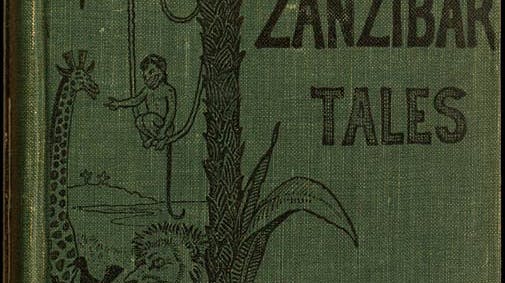
The Hare and the Lion
From Zanzibar Tales
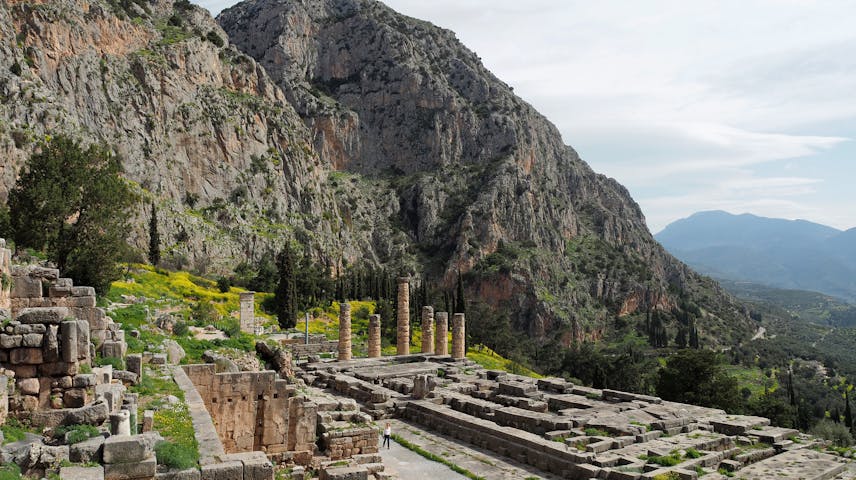
The Oracle of Delphi
Standard News Bureau
The Popol Vuh: The Mythic and Heroic Sagas of the Kʼicheʼ People of Central America
Members of the Kʼicheʼ Maya nobility, translated by Lewis Spence

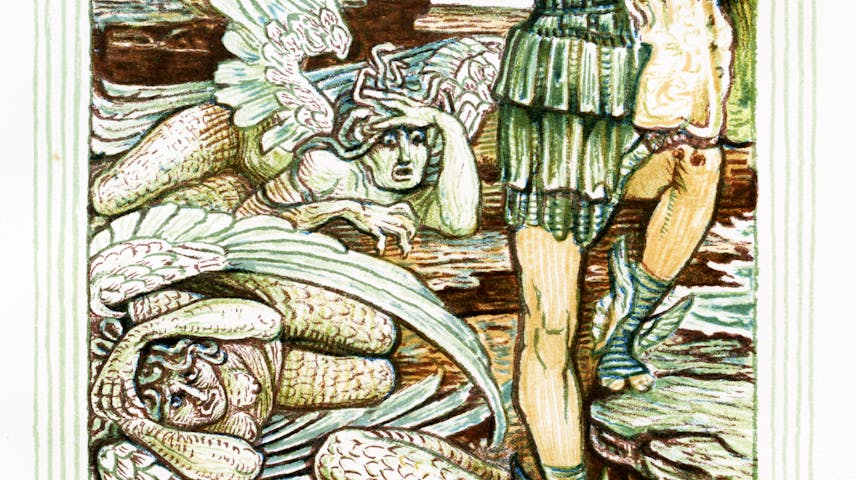
The Quest of Medusa’s Head
James Baldwin, Old Greek Stories
The Raven Myth
Collected in Myths and Legends of Alaska, by Katharine Berry Judson