Loading course navigation
Loading lesson
50 min
Student Lesson
Lesson 21: Flex Research: What Is This Image Saying About Craft?
Content
Students will analyze how images of craft processes and Korean celadon pottery communicate ideas about skill, culture, and value.
Language
Students will explain how composition, emphasis, subject positioning, and omission shape meaning in a visual source, using precise source notes.
How does art connect people to their history and community?
Knowledge-Building:
Students use visual sources connected to Goryeo celadon pottery and artisan traditions to deepen understanding of Tree-ear’s world in A Single Shard.
Enduring Understanding:
Through practice and mentorship, people turn skill into voice and work into art.
Future Lessons:
In the next lesson, students will bring forward one selected visual source and annotate it more fully, as evidence for research and explanatory writing.
Unit Performance Task:
This lesson prepares students to select and explain visual evidence for the Gallery of Learning process diagram and explanatory piece.
| Lesson Flow | Purpose of Learning Experience |
|---|---|
Launch5 Minutes | Students activate prior knowledge about apprenticeship and begin noticing that images are sources that make choices. |
Literacy Lab: Visual Rhetoric: Noticing Design Choices10 Minutes | Students learn the Grade 6 visual rhetoric routine for reading images as designed sources rather than neutral records. |
Learning in Action30 Minutes | Learning in Action A: Read Two Craft Images Closely (RI.6.7) Students integrate information from multiple sources to explain how visual media add to their understanding of skill, craft, and apprenticeship. Learning in Action B: Select a Visual Source to Carry Forward (W.6.8) Students choose one relevant image and record source notes they will use in the next lesson. |
Material List
A Single Shard by Linda Sue Park
Student notebooks or journals
Unit 2, Lesson 21 Student Edition
Media Literacy Image Analysis graphic organizer
Visual source set from Lesson 21 connected to pottery and craft traditions and/or teacher-selected images on celadon pottery and craft
Routines
Turn and Talk
Think-Pair-Share
Quick Write
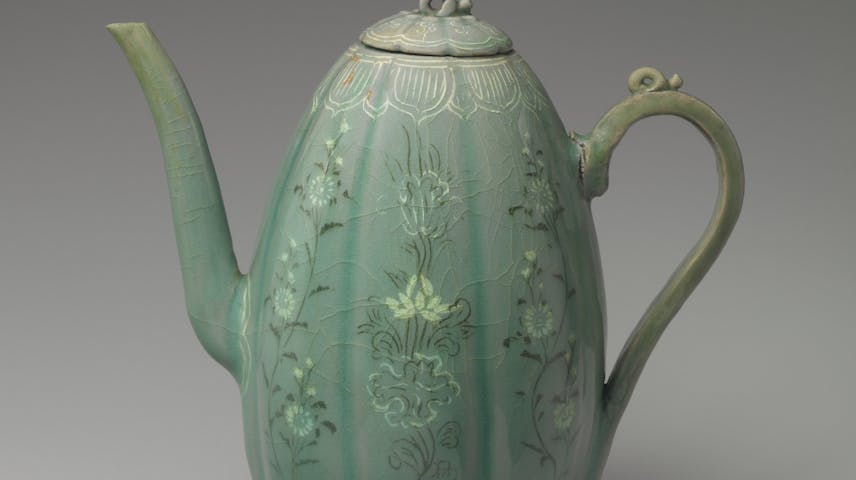
Introduce the lesson by showing students an image of Korean celadon pottery.
Use this brief routine to connect students’ recent work on Tree-ear’s observation skills to today’s research work with images.
Say: In the previous lesson, we tracked how Tree-ear learns by watching carefully before he can make anything on his own. Today, we are going to use that same habit with visual sources by asking what an image shows, what it highlights, and what it leaves out. This matters because strong readers and researchers gather evidence from more than words.
Say these Directions: Turn and talk to respond to the following question.
When you look at this image first, what do you notice right away, and what might that first detail make a viewer think about the pottery?
I notice that the vase is centered and the background is plain. That makes me focus on the smooth shape and decorations on the green glaze, so the image seems to present the pottery as valuable and important.
Teacher Tip |
|---|
Use these visuals as specific sources connected to pottery making as craft and the celadon tradition that help students understand Tree-ear’s historical world. Remind students that one image does not stand for all artisan craft or Korean culture; instead, each image is a designed representation with its own source context, purpose, and limits. |
Connection to Today's Learning
Say: We will now move from quick noticing to a clear visual rhetoric routine we can use like researchers.
The teacher-maintained model topic for this research arc is How do images communicate the value of Korean celadon craft? Use this same model topic whenever you demonstrate research and media literacy moves in this arc.
Say: Researchers do not treat images like decoration. We read them as sources by naming the choices the creator made. Today we will use four moves: composition, color and contrast, subject positioning, and absence.
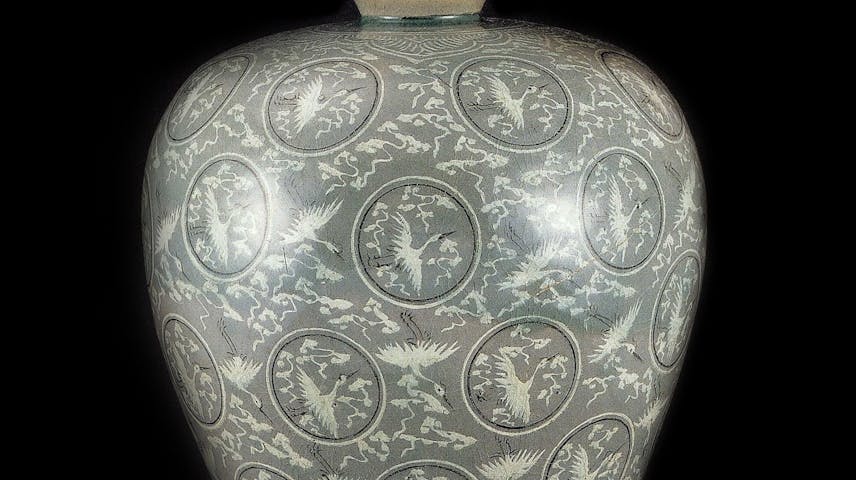
When I study this vase image, I start by naming what is literally there before I jump to meaning. I notice the vase is centered, brightly lit, and shown by itself, so the composition tells me the maker wants all my attention on the object. Then I ask what is missing, and I notice there are no people, tools, or workshop details, which means the image does not show the labor behind the piece. That helps me make a claim: this image argues that celadon pottery should be viewed as precious art.
Teacher Model: Visual Rhetoric Notes
Composition: The vase is centered and fills most of the frame.
Color and contrast: The carefully decorated green glaze stands out against a dark background.
Subject positioning: The object is treated like the main subject, not like an everyday dish.
Absence: No potter, tools, or workshop is shown.
Claim: The image presents celadon as highly valued art, but it omits the effort and apprenticeship behind it.
Ask: Which of the four visual rhetoric moves helps you go beyond saying “I see a pot,” and why?
The move about absence helps me most because it pushes me to notice what is not shown. That helps me understand that the image honors the finished object but leaves out the process and the people who made it.
Check for Understanding (RI.6.7) |
|---|
Name one visual choice in the model image, and explain what it may communicate about celadon craft. |
Connection to Today's Learning
Say: Now you are ready to apply the same four moves to additional sources and compare what images add to your understanding of craft.
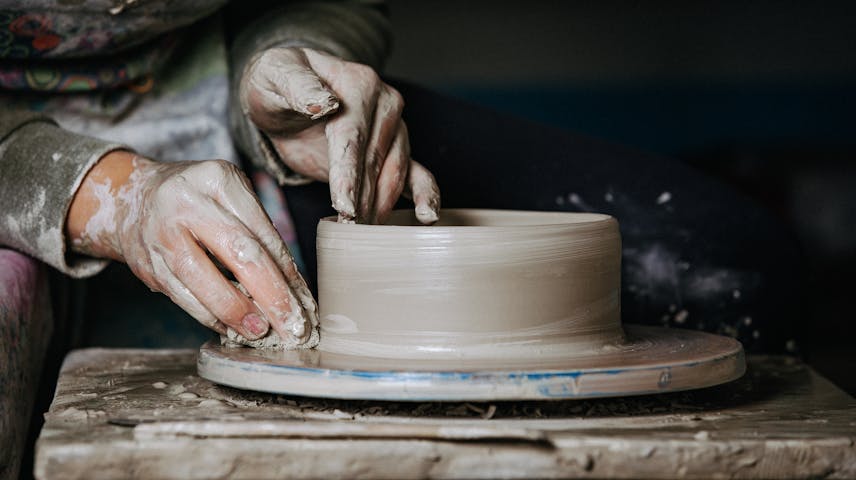
Students now practice analyzing visual rhetoric in source material. Provide them with an image or allow them to choose one visual source from the visual source set from Lesson 42, the images in “Korean Ceramics of the Goryeo Period,” and/or teacher-selected images on celadon pottery and craft.
Say these Directions: Work with your partner to analyze one of the craft images using the Media Literacy Image Analysis organizer. Record exact details from the image, and then explain what those details suggest about skill, culture, or value. Finally, add one note about how the image adds to what we have already learned from A Single Shard about observation, practice, or apprenticeship.
[UPDATED PDF LINK: https://drive.google.com/file/d/1f1Iagm46eZ769f6i6ejKX-dcsuuuQLC0/view?usp=sharing ]
Ask: Which details does the image include and emphasize? What connections can you make to what you already know about observation, practice, or apprenticeship from reading A Single Shard?
Detail from the Image | Analysis of Detail |
|---|---|
The potter’s hands are large in the frame. | The image emphasizes careful hand control. It helps me picture the physical skill behind the kind of work Tree-ear watches Min do. |
Wet clay is being shaped in motion. | Making pottery takes steady practice, not speed. It adds a process detail that words alone may not fully show. |
Tools and unfinished pieces are nearby. | Craft happens through repeated steps. It supports the idea that learning is gradual and refined over time. |
Ask: What does the image omit, and why does that omission matter?
The image omits the wider workshop and any teacher or apprentice relationship. That matters because it shows the action of making, but it does not fully show how knowledge is passed from one person to another.
Students now choose one visual source to carry into the next lesson. They should review the visual source set from Lesson 42, the images in “Korean Ceramics of the Goryeo Period,” and any teacher-selected images to make their selection.
Say these Directions: Choose one visual source connected to Korean art, pottery, or craft traditions that you want to study more closely in the next lesson. In 2–3 sentences, identify what the image includes, what it seems to emphasize or omit, and why it is a useful source for your research notes.
Ask: Which visual source did you choose, and why is it worth carrying forward into the next lesson?
I chose the image of the potter’s hands shaping clay. It is useful because it emphasizes the careful process of making, not just the finished object. I want to carry it forward because it helps show how skill is built through repeated practice, which connects to Tree-ear’s apprenticeship.
Ask: What is one note you will want to remember when you return to this image in the next lesson?
I want to remember that the close-up view makes the hands seem more important than the person’s face. That choice may be arguing that craft skill is developed through hours of practice and repeated movement.
Pulse Check (RI.6.7) |
|---|
Which response is the best example of a strong visual source analysis statement? A. This picture is pretty, so it is a good source.
B. The image has pottery in it, and pottery is important in the book.
C. The image centers the unfinished bowl and the potter’s hands, so it highlights the process of making and helps me understand the practice behind the finished art.
D. The image was taken a long time ago, so it must show exactly what Tree-ear saw.
|
Students answer both reflection prompts to generate formative data and prepare for the next research lesson.
Say these Directions: Use your notes from today to answer both reflection prompts. Be specific about one visual choice you noticed and one next step you will take as a researcher.
Ask: What new information did you learn today from a visual source that words alone did not make as clear?
I learned that a visual source can make the physical process of pottery easier to picture. The close-up of the potter’s hands and the wet clay showed how much control and repetition the work takes, which helped me understand skill-building in a more concrete way.
Ask: What is your next step for the visual source you selected to carry into the next lesson?
My next step is to return to the same image and annotate exactly what it emphasizes and omits. I also want to record the source title so I can use the image responsibly in my notes.
Review your selected visual source note from today. Be ready to return to that same source in the next lesson and add fuller annotations.