Loading course navigation
Loading lesson
50 min
Student Lesson
Lesson 40: Becoming the Apprentice, Draft a Process Document
Content
Students will draft a process document that explains the steps of learning or making a craft, including at least four sequential steps, two relevant visuals with captions, and cause–effect connectors that clarify why steps matter.
Language
Students will explain a process clearly in writing by using sequential language and cause–effect connectors and by linking visuals to text with captions and precise references.
What does it take to learn something difficult?
How does art connect people to their history and community?
Knowledge-Building:
Mentorship and practice develop skills and connect individuals to the community and heritage.
Enduring Understanding:
Through practice and mentorship, people turn skill into voice and work into art.
Future Lessons:
In Lesson 41, students revise and publish their explanatory essays and process documents. In Lesson 42, students present their work during a Gallery of Learning activity.
Unit Performance Task:
This lesson has students draft a process document that shows the steps of learning or making a craft.
| Lesson Flow | Purpose of Learning Experience |
|---|---|
Launch5 Minutes | Students will use the Think-Pair-Share routine to describe the steps of a process they know well and to identify processes they have learned about during the unit. |
Literacy Lab10 Minutes | Students will revisit how to write a process document and evaluate what makes a process document successful. |
Learning in Action30 Minutes | Learning in Action: Drafting a Process Document (W.6.4) Students will draft a process document explaining how to make or learn a craft or art form. |
Not available for this lesson
Not available for this lesson
Material List
Student copies of A Single Shard by Linda Sue Park
Unit 2 Lesson 40 Student Edition
Flowchart graphic organizer
3-column chart graphic organizer
Performance Task Handout
Teacher search: Short video about Goryeo celadon pottery
Teacher search: Short video about boot-making apprenticeships
Routines
Think-Pair-Share
3–2–1 Summary
Say these Directions: Use the Think-Pair-Share routine to discuss the following prompts.
Ask: What is a process that you know very well?
A process I know well is how to bake a cake.
Ask: What are the steps in that process?
First, preheat the oven. Second, prepare the pan. Third, gather and measure the ingredients. Fourth, mix the dry ingredients together. Fifth, mix the wet ingredients together. Sixth, gradually mix the wet ingredients into the dry ingredients. Finally, scrape the batter into the pan and put it in the oven to bake.
Ask: What are some examples of processes we have discussed or learned about during this unit?
The stages of learning, the process of making pottery.
Say: Today, you will begin working on Part 2 of the Showcase Performance Task: creating a process document that shows the steps of learning or making a craft.
Briefly review with students what they learned about process writing and process documents earlier in Unit 2.
Say: In Lesson 8, we worked collaboratively to create a simple process document, a step-by-step list of the actions needed to make something happen. In this instance, we created a process document about the steps of making pottery using information we read in A Single Shard and in the article “Cracking the Science Behind Pottery with MudFire Pottery Studio.”
Share with students the sample process document showing the process of making clay.
How to Make Pottery
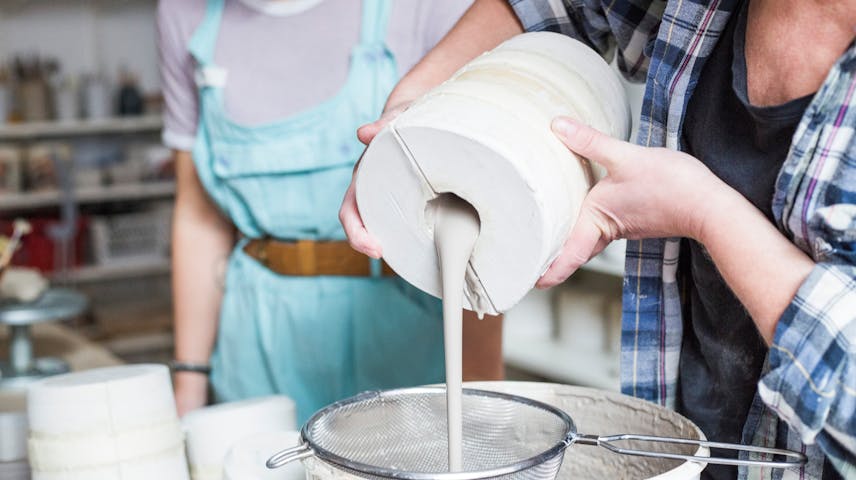
Prepare the Clay: First, the clay is gathered and purified by mixing it with water and then draining it through sieves one or more times.
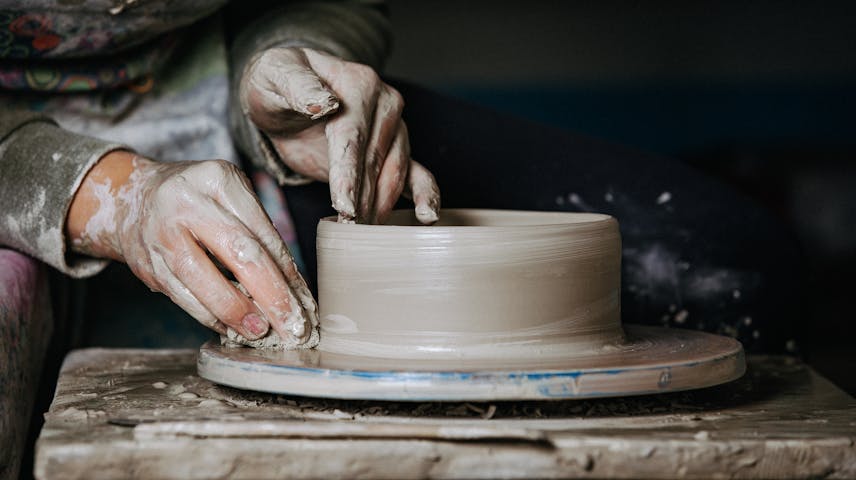
Shape the Clay: Second, the clay is sculpted using simple tools or a pottery wheel. The minerals in the clay allow it to hold its shape.
Dry and Fire the Clay: Next, the clay is left out to dry before being fired in the kiln to drive off any remaining moisture.
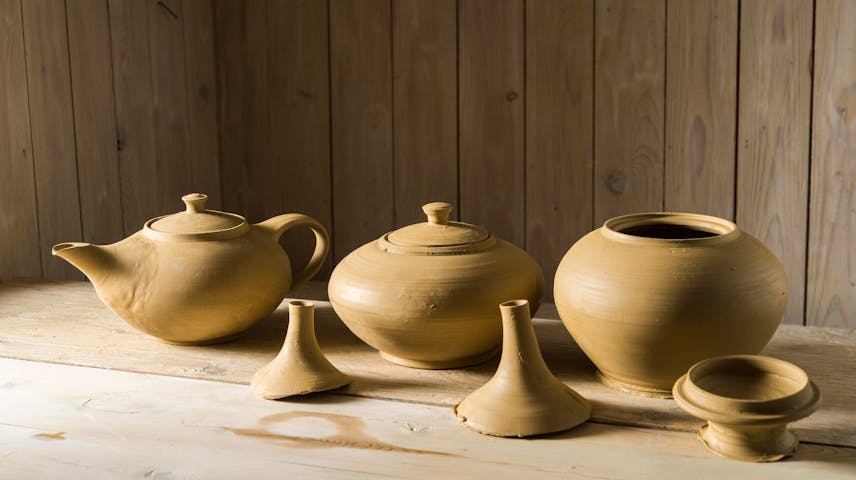
Glaze the Pottery: Lastly, the fired pottery is covered with different glazes containing metal oxides that create different colors once the pottery is fired again in an electric, soda, or raku kiln.
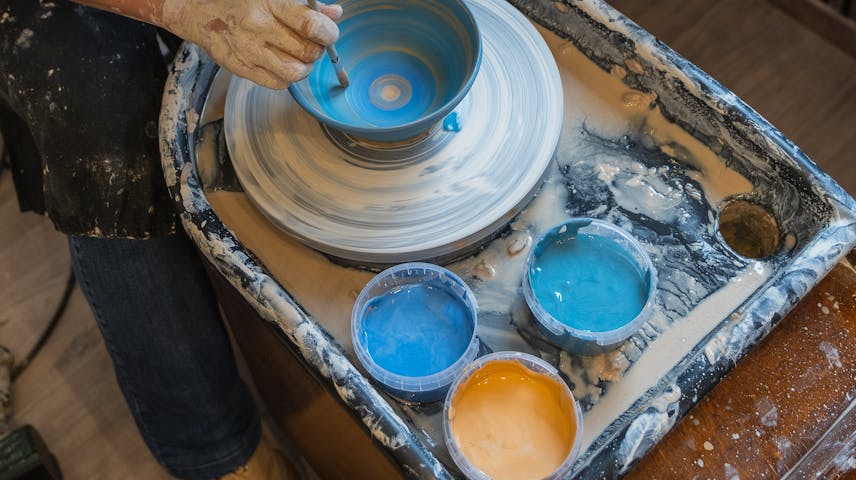
Say: This process document is based on the simple step-by-step process we co-constructed in Lesson 8.
Ask: What do you notice about this process document?
It includes a title. It uses numbers/headers to show the steps. It uses temporal connectors. It includes illustrations with captions to show each step.
Say: Successful process documents:
Are written for a specific audience;
Use clear, concise language;
Use temporal connectors to show the sequence of the steps;
Are organized in a way that is easy to follow; and
Often include images or illustrations that show each step.
Say: Use these features as a checklist as you begin drafting your own process document today.
If time permits, find other examples from the Internet of process documents to share with students. Discuss whether each process document is successful using the above criteria.
Reflection |
|---|
Reflect on your understanding of the qualities of a successful process document using the Reflection routine.
Then write a sentence explaining how you can better understand this skill. |
Connection to Today’s Learning
Say: Today, you will apply what you know about writing about processes to draft your own process document about learning or making a craft.
Display Part 2 of the Showcase Performance Task:
Say these Directions: This process document is Part 2 of your Performance Task and should clearly show either how to learn or how to make a craft. You will create a process document that shows the steps of learning or making a craft, such as pottery, weaving, or another art form.
Say: Now that you’ve drafted your explanatory essays, the next step is to create a process document. Part 2 of the Performance Task asks you to do one of two things:
Make a process document that shows the steps of learning a craft.
Make a process document that shows the steps of making a craft.
Teacher Tip |
|---|
Briefly discuss the differences between learning and making, noting how the steps to learn a craft will likely reflect the stages of learning, while the steps of making a craft will more closely reflect the process document students created as a class about the pottery process. |
As a class, generate a list of crafts and trades that students can use for their process documents.
Ask: What are some examples of crafts and trades we have learned about during the unit?
Pottery, Ndebele mural painting, kintsugi, basketry, Zuni pottery, sculpting, weaving, boot making, clog making, leatherworking, globe making
Ask: What are some other crafts and trades you are familiar with?
Weaving, knitting, beading, ironworking
Record student responses on the board. Then transition students to creating their process documents.
Say: Select a craft or trade. Then create a process document that shows the steps of learning or making that craft. Your classmates are the target audience for your process document; this means it should be written in a way that someone your age will understand. Your process document should:
Include a title
Include at least four steps
Include at least two relevant images or illustrations with captions
Have a clear organizational structure
Use clear, concise writing
Use temporal connectors
Teacher Tip |
|---|
Generating a list as a class ensures all students have viable topic options and activates shared knowledge from the unit. Distinguishing between “steps to learn a craft” and “steps to make a craft” prevents students from conflating the two structures—learning processes follow stages (observe → try → fail → refine → create), and making processes follow sequential production steps (e.g., gather → shape → fire → glaze). |
Say: You will have 30 minutes to begin drafting your process document. Focus on getting your steps written clearly in order with temporal connectors.
Say: Temporal connectors are transition words and phrases that show the order or sequence of events or steps. They tell the reader when things happen in relation to each other. Common examples include first, second, third, next, then, after, before, meanwhile, finally, subsequently, at the same time, once, later, and eventually.
Say: Use the checklist to make sure your process document meets all requirements before moving on.
Say: If you don’t finish, you’ll continue with homework and revise in Lesson 35. Quality matters more than completion today.
Say: Before you move on from each step, check for correct capitalization, punctuation, and spelling of key terms. Your captions should look as polished as the ones in our model.
Have students work independently to draft their process documents. Students may use the Flowchart graphic organizer to write down and organize their ideas.
Teacher Tip |
|---|
Students often write a bare numbered list (“Step 1: Get clay. Step 2: Shape it”) without explaining why each step matters or how it connects to the next. Circulate during drafting and prompt, “You’ve told me what to do—now tell me why this step matters or what happens if I skip it.” |
Checklist |
|---|
You will turn in your process description for feedback. A strong draft should: ☐ Select a craft or art form to describe. ☐ Identify at least four steps in a process. ☐ Use temporal connectors to describe steps in a process. ☐ Include at least two cause–effect connectors that explain why a step matters. ☐ Use clear and concise writing. ☐ Include relevant details and images with captions that reference specific steps in their process documents. |
Say these Directions: Work in small groups of three or four to co-construct a 3–2–1 Summary about process documents. Remember to include:
3 important words or phrases
2 key details or ideas
1 sentence explaining the purpose of a process document
3 Important Words or Phrases | 2 Key Ideas or Details | 1 Gist Sentence |
|---|---|---|
|
|
|
Exit Check Self-Assessment: Review your process document draft, and address the following prompts:
How many steps did you include? (Target: 4+)
Highlight or underline two temporal connectors you used.
Star one cause–effect sentence that explains why a step matters.
Do your visuals/captions connect to specific steps? (yes / not yet)
Turn in your draft with this self-assessment attached.
Instruct students to continue drafting their explanatory essays and process documents in their Journal. Students should focus on completing their process document, ensuring that it includes clear steps, relevant visuals with captions, and explanations of why each step matters.