Loading course navigation
Loading lesson
50 min
Student Lesson
Lesson 9: A Single Shard, Informational Writing, Part 1
Content
Students will write a process paragraph using the POW writing strategy to discuss the steps in a sequence using clear organization, transitions, and descriptive text.
Language
Students will write a clear procedural explanation by combining clauses to form compound and complex sentences and using sequencing transitions and purpose clauses.
What does it take to learn something difficult?
Knowledge-Building:
Students will continue to build understanding about how apprenticeship and mentorship connect individuals to community and heritage.
Enduring Understanding:
Mentorship transmits knowledge and values.
Unit Performance Task:
Students create a step-by-step process, supporting their understanding of the “stages of learning” required to develop new skills.
Future Lessons:
In Lesson 10, students continue reading and discussing Chapter 5 of A Single Shard.
| Lesson Flow | Purpose of Learning Experience |
|---|---|
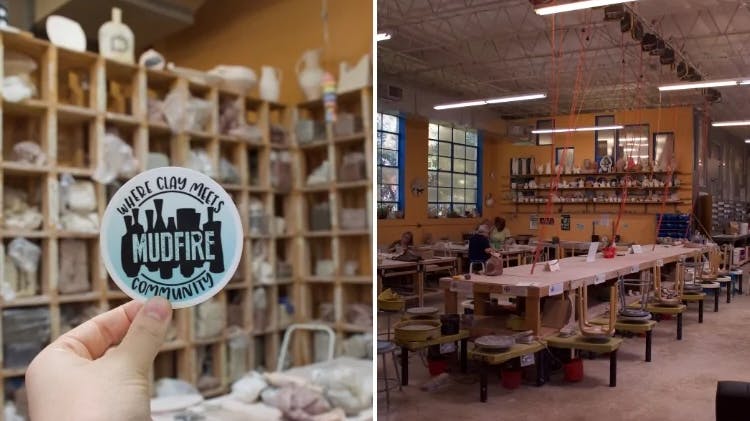
Launch5 Minutes | Students will engage in a Retell and Paraphrase Partner Check to review the article: "Cracking the Science Behind Pottery with MudFire Pottery Studio." |
Literacy Lab10 Minutes | Students will identify and use dependent and independent clauses in compound and complex sentences. |
Learning in Action30 Minutes | Part A: Model the POW Strategy (W.6.2.b, W.6.2.c, W.6.2.d) Teacher will model the POW strategy to write about a process using non-exemplar and exemplar text; students will apply the POW strategy to revise the non-exemplar text. Part B: Write about a Process (W.6.2.b, W.6.2.c, W.6.2.d) Students will work with a partner to use the POW strategy to write about a process in A Single Shard. |
Material List
Student copies of A Single Shard by Linda Sue Park
Unit 2 Lesson 9 Student Edition
Flowchart Graphic Organizer
Routines
Retell and Paraphrase Partner Check
Language Study
Quick Write
Say these Directions: Use the Retell and Paraphrase Partner Check routine to summarize the article “Cracking the Science Behind Pottery with MudFire Pottery Studio.” Include specific details from the text to maintain accuracy.
Display the article “Cracking the Science Behind Pottery with MudFire Pottery Studio” that students read in the previous lesson. Organize the class into partners. Have the first partner orally retell and paraphrase the first section of the article while the second partner checks for accuracy. Have the second partner orally retell and paraphrase the second section while the first partner checks for accuracy. Partners should alternate until the entire article has been retold and paraphrased. In the interest of time, you may choose to adapt this strategy to a whole-class activity.
After students have finished the Retell and Paraphrase Partner Check, present the process document that the class created during the previous day's lesson, but with some of the steps covered up. Ask volunteers to help you complete the list with details from the text. Ask prompting or guiding questions as needed:
Ask: What steps are missing from the process?
Ask: What does the text not tell us about the process that we still need to know?
Say: Today, we're going to write full paragraphs describing processes in A Single Shard using the POW strategy. But first, we will discuss compound and complex sentences using examples from the article we read in Lesson 8, “Cracking the Science Behind Pottery with Mudfire Pottery Studio.”
Investigating Compound/Complex Sentences
Say these Directions: We are going to be investigating compound and complex sentences. This skill will support you as you complete writing tasks in-class and also for your Performance Task.
Review the following explanations.
A clause is a group of words that includes a subject-verb pair. There are two types of clauses:
An independent clause is a complete thought that can stand on its own as a simple sentence.
A dependent clause is an incomplete thought that cannot stand on its own as a sentence.
A compound sentence is made by joining two or more independent clauses together using a coordinating conjunction (and, but, or, so, yet).
Project the following sentences from “Cracking the Science Behind Pottery with Mudfire Pottery Studio”:
“Any water trapped in the clay body will turn into steam at 100°C, and it will burst the clay piece.”
“Once a piece is molded into the desired shape, the pottery is left to dry before firing.”
Read the sentences aloud. Use the following “meaningful chunks” to lead a discussion about compound and complex sentences:
“Any water trapped in the clay body will turn into steam at 100°C . . .”
Ask: Is this clause a complete thought? Why or why not?
Concept: This is an independent clause that includes a subject (water) and a verb (trapped); it represents a complete thought.
“. . . it will burst the clay piece.”
Ask: Is this clause a complete thought? Why or why not?
Concept: This is an independent clause that includes a subject (it) and a verb (will burst); it represents a complete thought.
“Once a piece is molded into the desired shape . . .”
Ask: Is this clause a complete thought? Why or why not?
Concept: This is a dependent clause; while it has a subject and a verb, it begins with a subordinating word (once), making it an incomplete thought.
“. . . the pottery is left to dry before firing.”
Ask: Is this clause a complete thought? Why or why not?
Concept: This is an independent clause that includes a subject (pottery) and a verb (left to dry); it represents a complete thought.
Say: A complex sentence is made by joining a dependent clause and an independent clause. For example, in the second sentence:
“Once a piece is molded into the desired shape, . . .” is a dependent clause.
“the pottery is left to dry before firing” is an independent clause.
Say: Compound and complex sentences are useful when describing steps in a process and often use sequencing words. For example, the first sentence shows what will happen if a step in the pottery-making process is not followed (letting the clay dry). The second sentence shows how one step follows another: first the clay is molded, then the pottery is left to dry.
Transition:
Say: Next, you will be using the POW strategy to write about processes in A Single Shard. You can practice using compound and complex sentences in your process writing.
Say these Directions: We are going to learn about the POW strategy. This strategy can be used to help you write about steps or sequences.
Remind students of the various processes they have already encountered in their reading of A Single Shard.
Say: So far, we have read about several processes in A Single Shard, including:
Tree-ear's process for cutting, transporting, and stacking wood
Tree-ear's process for rationing lunch and dinner
The process for purifying clay
Today, you will learn a strategy that helps writers think through and explain a process clearly.
Introduce the parts of the POW strategy:
P—Pick my idea: Decide which process I will explain.
O—Organize my notes: List the steps in order.
W—Write and Say More: Draft the paragraph with details that make the steps clear and easy to follow.
Display the acronym and walk students through each part with a brief teacher-think aloud.
Say: If I were writing about Tree-ear purifying clay, first I would pick that process. Then I would organize by listing the steps I remember—mixing, stirring, sieving, settling—and I’d pay attention to the order. I’d also check the text to make sure I did not leave anything out. Finally, I would write my paragraph and say more by adding details that help the reader picture what is happening.
Model the POW strategy by comparing non-exemplar and exemplar process writing paragraphs.
Say: Follow along as I read this paragraph aloud. Display the non-exemplar paragraph for students.
To make clay, you do a lot of steps like gathering mud. Then you put water on it. Some of it will sink to the bottom, and some will stay on top. After that, take the clay part and roll it out. Keep rolling it out until it is smooth. When you’re done, you can make something with it.
Ask: What are your thoughts about this paragraph?
As I read the paragraph, I noticed that I couldn't quite tell what the first step in the process is. I also don't know what the writer is trying to make in the end. This tells me the writer probably didn't organize their steps before writing.
Connect this paragraph explicitly to the POW strategy:
P—Pick my idea: Did the writer clearly identify the process? (Not really; they didn't clearly name the task or final outcome.)
O—Organize my notes: Did the steps follow a clear sequence? (No; the order is confusing.)
W—Write and say more: Is there enough detail? (No; there's no description of how the clay is mixed, strained, or prepared.)
Invite a volunteer to read aloud the passage from Chapter 4 of A Single Shard beginning “Tree-ear was learning a new skill now” and ending with “the better to feel it, Tree-ear supposed.”
Prompt students to compare the first non-exemplar paragraph about making clay with the excerpt from the novel.
Ask: What are some reasons why the process in the novel is much easier to follow than the process in the non-exemplar paragraph?
The novel excerpt focuses on one idea that is organized step-by-step, unlike the non-exemplar paragraph. The novel also includes details about what Tree-ear is doing and why, which the paragraph does not have.
As a class, revise the non-exemplar paragraph to improve the process writing. Display or post a list of temporal connectors (e.g., before, after, then, next) that students can use to clarify transitions between sentences and steps. Refer to the POW strategy to assist students in:
Clarifying the first step of the process
Describing the materials used
Explaining what happens to the clay after it’s mixed
Identifying the outcome more clearly
Using technical vocabulary appropriately
After the clay is gathered, the next step is to mix the clay with water to form a thick mud. Next, this mixture is poured through a sieve. Smaller pieces of the mixture fall through the sieve, while larger bits like pebbles stay on top. After this step, the clay is left to rest for a few days so the water can separate out and be drained away. Then, the clay is tested by rolling it between your fingers to see if it is smooth enough. Finally, if the clay is ready, you can make something with it.
Reflection |
|---|
Reflection: How confident are you in your ability to use the POW strategy when writing about a process? Choose a number between 1 and 5, with 1 being the least confident and 5 being the most confident, to rate your confidence level. Then write a sentence or two describing the POW writing strategy. Modeling:
|
Have students work in pairs to identify and discuss another process of their choosing described in A Single Shard (such as Tree-ear’s process for cutting and transporting wood or Tree-ear’s process for rationing lunch and dinner) or “Cracking the Science Behind Pottery with MudFire Pottery Studio.” Students should use the POW steps as they work. Give students the option to use a piece of paper or the Flowchart graphic organizer to help them organize their thoughts before writing.
Teacher Tip |
|---|
Remind students that they may need to add extra arrows and boxes to their flowcharts, depending on how many steps their chosen process includes. |
Provide sentence starters that integrate POW thinking:
P: “We picked the process of ___ because . . .”
O: “The first step seems to be ___ because the text says . . .”
O: “Next, Tree-ear ___. We know this from the temporal word(s) ___.”
W: “A detail we might add to help the reader understand is . . .”
W: “We could say more by describing how Tree-ear felt/thought as he completed this step.”
Circulate and observe as partners discuss and plan their process writing steps. Then, prompt students to write a short paragraph using the POW strategy. Encourage students to include domain specific vocabulary, descriptive details and temporal connectors to show a clear relationship between the steps in the process.
Say: Use the ideas and plans from your discussion to write a short paragraph describing a process found in A Single Shard. Include domain specific vocabulary, descriptive details and temporal connectors to transition from one step to the next.
Lesson 9 Writing Rubric: Process Paragraph — POW Strategy
Writing prompt: Write a process paragraph using the POW strategy to explain the steps in a sequence from A Single Shard. Use clear organization, transitions, and descriptive text to make the process easy to follow.
Criteria | 1 — Beginning | 2 — Developing | 3 — Proficient |
|---|---|---|---|
Evidence & Development (W.6.2.b) Steps with Specific Detail | The paragraph describes few or no steps, or the steps are vague and not connected to A Single Shard. Evidence from the text is absent. | The paragraph describes some steps from the text, but the evidence is general or only loosely connected to the process being explained. At least one step is specific. | The paragraph accurately describes the steps of the process using specific evidence from A Single Shard. Each step is developed with detail that makes the process clear and easy to follow. |
Organization & Transitions (W.6.2.c) Temporal Sequence Transitions | The steps are presented without a clear sequence. Transitions are absent or do not show order (first, next, then, finally). | The paragraph uses some sequence transitions, but they are limited to one or two connectors and do not consistently signal the order of steps. | The paragraph uses varied temporal transitions (first, next, then, after that, finally) to sequence the steps clearly and guide the reader through the process from beginning to end. |
Precise Language (W.6.2.d) Descriptive & Precise Word Choice | Language is vague or informal. Steps are described in general terms without precise vocabulary connected to pottery, craftsmanship, or the text. | Some precise language is used, but word choice is inconsistent. Some steps use specific craft vocabulary while others remain vague. | The paragraph uses precise, descriptive language throughout — including specific vocabulary related to pottery or craftsmanship from A Single Shard — that makes each step concrete and specific. |
Teacher Tip |
|---|
If students are having trouble identifying the steps of the process, direct them back to the text and ask them to underline or highlight every verb or action Tree-ear takes. This helps them see the process as a chain of actions and gives them a concrete list of steps to organize. |
Checklist |
|---|
Check that you are doing the following in each step of the POW strategy:
|
Say these Directions: Reflect on the POW strategy you used during today's lesson. Then, complete a Quick Write in response to the following prompt:
How does using the POW strategy help improve your process writing?
Next, we will continue our exploration of A Single Shard. To prepare:
Finish reading Chapter 5. As you read, think about the stage of learning that occurs in this chapter.
A Single Shard
Linda Sue Park
Cracking the Science Behind Pottery with Mudfire Pottery Studio
Science ATL (Engineers of Atlanta Science Festival)