Loading course navigation
Loading lesson
50 min
Student Lesson
Lesson 26: A Single Shard, Chapter 10
Content
Students will discuss the role of setting in shaping the historical perspective of A Single Shard.
Language
Students will explain how setting influences meaning in A Single Shard by using cause–effect language and conditional structures (if . . . , then . . .) to express inferences about Tree-ear’s journey, supporting their explanations with academic language tied to historical context.
Language
Writing Students will compare and contrast historical novels to other forms of writing in terms of their approaches to similar themes and topics.
Foundational Skills
Students will use the Word Matrix routine to identify morphological patterns and make sense of unfamiliar words.
How does art connect people to their history and community?
Knowledge-Building:
Mentorship and practice develop skill and connect individuals to their community and heritage.
Enduring Understanding:
Through practice and mentorship, people turn skill into public voice and work into art.
Future Lessons:
Students examine how the influences of mentorship, creativity, and courage affect Tree-ear’s actions in Chapter 11 of A Single Shard.
Unit Performance Task:
This lesson asks students to identify text evidence from the anchor text and supplemental informational texts in order to build topical and historical background knowledge.
| Lesson Flow | Purpose of Learning Experience |
|---|---|
Launch5 Minutes | Students will use the Turn and Talk routine to discuss their Homework Journal responses and to make a prediction about events in A Single Shard. |
Literacy Lab10 Minutes | Students will use the Word Matrix routine to determine the meaning of hospitality and related words. |
Learning in Action30 Minutes | Part A: Historical Perspective in A Single Shard (RL.6.1, RL.6.9) Students will be provided direct instruction about historical perspective, including an explanation of how past events appear in the context of their own times. Students will compare how the texts convey historical perspective to support readers’ understanding of Tree-ear’s journey in Chapter 10. Part B: Connecting Setting and Historical Perspective (RL.6.1, RL.6.9) Students will engage in small-group discussions to determine how changing the setting of A Single Shard would affect historical perspective and the novel’s plot. |
Material List
A Single Shard by Linda Sue Park
Unit 2 Lesson 26 Student Edition
Unit Vocabulary graphic organizer
Jigsaw Worksheet graphic organizer
Reflect and Respond graphic organizer
Stages of Learning graphic organizer
Routines
Turn and Talk
Word Matrix
Quick Write
Have students take out their Journal responses.
For homework, students were asked to read Chapter 10 and respond to the following prompt about the “Rock of the Falling Flowers” story (pp. 115–117): What is the significance of this story? Does it represent Tree-ear’s journey? Why or why not?
Say these Directions: Discuss your Journal responses using the Turn and Talk routine.
This story is significant because it shows the importance of personal courage in the face of danger or difficult circumstances. It represents Tree-ear’s journey in the sense that he was inspired by Crane-man’s story to move past the fox and continue his journey to Puyo, then Songdo.
Say these Directions: Respond to the following prompt with your partner:
Ask: Make a prediction about Tree-ear’s decision to visit the Rock of the Falling Flowers in Puyo. What do you think will happen when he gets there? Use details from the text to support your response.
I think Tree-ear will have to demonstrate some act of courage at the top of the rock.
Say: The story of the Rock of the Falling Flowers tells readers a little bit about the influence of Korea’s geography on events in the novel. We will explore this connection through class and small-group discussions.
Read aloud the following passage from Chapter 10 of A Single Shard:
Say: Follow along as I read the passage, and consider the meaning of the word hospitality within this section of the text.
“The countryside custom of hospitality to travelers was a great comfort
to him. He walked the main street of the village until someone usually a
child inquired about his health and his journey. Tree-ear would accompany
the child home, where the woman of the house always consented to let him
sleep under the eaves. Most evenings a meal was provided as well;
otherwise, Min had given Tree-ear a string of coins to buy food as needed.
He kept them in his waist pouch along with his two flint stones and a ball of
clay.”
Say: Readers use context clues as well as word parts to determine the meaning of new or unfamiliar words, such as hospitality. Today, we will practice analyzing word parts to help us figure out word meanings.
Introduce the Activity: Engage students in an exploration to build word families by adding prefixes and suffixes to roots. Display the matrix below, or create it on the board as a class.
Build Words from the Matrix: Explain that the left column contains a prefix, the middle column contains the Latin root word hospit (meaning “guest” or “host”), and the right column contains suffixes.
Say these Directions: Select word parts from the columns to create new words and determine the meanings by combining prefixes and/or suffixes with the root.
hospitality (root: hospit = guest/host):
Prefix | Root | Suffix |
|---|---|---|
in | hospit | al |
ality | ||
able | ||
ize |
Prefix | Root | Suffix | New Word | Meaning |
|---|---|---|---|---|
hospit | ality | hospitality | friendly, welcoming, or generous treatment of guests or strangers | |
hospit | able | hospitable | welcoming of guests | |
in | hospit | able | inhospitable | unwelcoming of guests |
hospit | al | hospital | a place where sick or injured people go for care | |
hospit | al + ize | hospitalize | to put in a hospital for care |
Share Words: Prompt students to share some of the words they created and what they think they mean.
Discuss:
Say: After deconstructing parts of the word hospitality, what can you determine about the meaning of the word as it appears in the passage above?
After learning the meaning of “hospit” and thinking about other words with this root, I understand that “hospitality” is the act of welcoming and taking care of visitors. Tree-ear was treated with hospitality as he was traveling in the countryside.
Say these Directions: Discuss patterns in words and explain their meanings by answering these questions.
Ask: What does the suffix -ality mean? How does it change the meaning of the root hospit?
The suffix -ality means “state, condition, or quality.” The root hospit means “guest” or “host.” Adding the suffix -ality changes the meaning of the root by making it “the quality of a host welcoming guests.”
Ask: How do the prefix in- and the suffix -able change the meaning of the root hospit?
The prefix in- means “opposite” or “without,” and the suffix -able means “having the ability to.” Together, they change the meaning of hospit to be “unwelcoming of guests.”
After students complete the Word Matrix routine, prompt them to take out their Unit Vocabulary graphic organizers and record new vocabulary.
Check for Understanding |
|---|
List the word hospitality in your Personal Dictionary. Underline the root word and circle the suffix, and then write the definition of the word. |
Connection to Today’s Learning
Say: Understanding words such as hospitality helps us more clearly picture what is happening in the text. The concept of hospitality is an important part of the plot in Chapter 10 that reflects the novel’s historical perspective, a concept you will learn about today.
Explain the concept of historical perspective to students, and connect it to A Single Shard.
Say: A Single Shard is a historical fiction novel. Recall from the beginning of the unit that historical fiction is a genre that blends fictional characters and plots with historic places, events, and occasionally people. When authors write historical fiction, they take into consideration historical perspective, or the ways that people in the past viewed and understood the world around them.
Ask: Why do you think it’s important for historical fiction writers to consider historical perspective in their writing?
The way we view things in the present can be very different from the ways people viewed things in the past. Using historical perspective can make historical fiction novels more accurate or true to how people thought, behaved, and acted in the past.
Say: Historical perspective is shaped by time, place, and physical geography. For example, the perspective of a person living in twelfth-century Korea (like Tree-ear) would be very different from that of a person living during the same time period in the steppes of Central Asia, the Sahara in Africa, or the jungles of the Yucatan Peninsula in Central America.
As a class, revisit the articles from Spark Lesson 1: If available, have students refer to the Jigsaw Worksheet graphic organizers they completed during this lesson.
Ask: What do these articles say about the geography of Korea?
“How Geography Shaped Korea: Land of Mountains, Rivers, and Big Neighbors” explains that the Korean peninsula has long coastlines. About 70 percent of the country is mountainous with heavily forested areas. Korea’s geography made it difficult to travel across it in the past.
Ask: What other details in the articles help you understand the historical perspective of Tree-ear’s time?
“From Ancient Beginnings to the Kingdom of Goryeo: An Early History of Korea” ” explains the importance of trade and the arts during the Goryeo dynasty, especially the production of celadon pottery.
Ask: How would you compare these articles in terms of how well they provide context for the story?
I think that both articles provide important context for the story A Single Shard. “How Geography Shaped Korea: Land of Mountains, Rivers, and Big Neighbors” really helped me to visualize the geography of Korea. It helped me to understand how difficult and dangerous Tree-ear’s journey must have been. From the article “From Ancient Beginnings to the Kingdom of Goryeo: An Early History of Korea” I learned about the tradition of celadon pottery-making and how valued it is in Korean culture. The articles have different topics, but both gave me important background knowledge that helped me understand the story.
Ask: Based on these articles and what you have read in A Single Shard, how does having historical perspective influence how a reader understands Tree-ear’s journey?
Historical perspective influences how a reader understands Tree-ear’s journey by explaining why traveling to Songdo was such a big undertaking. Both the novel and the articles show how Korea’s challenging geography affects Tree-ear as he walks from Ch’ulp’o to Songdo. The texts also help readers understand how Tree-ear’s culture viewed and valued the beautiful celadon pottery made by Min and other artists.
Teacher Tip |
|---|
Explain that historical perspective takes into account the specific beliefs of a culture in a given time and place. One example of this in A Single Shard is the cultural symbolism and significance of the fox to twelfth-century Koreans. As time allows, guide students in a brief discussion of what the fox represents to Tree-ear in Chapter 10 (pp. 113–115) and how the perspective about this animal might be different in a different culture, time, and place. |
Pulse Check |
|---|
Which story element most influences the historical perspective of A Single Shard?
|
Organize the class into small groups of three or four students. Share with students the following prompt:
Say: Choose another setting for A Single Shard. This could be a different time and/or place. Discuss how characters and plot events might change in the new setting. Based on your discussions, why do you think the author of A Single Shard chose twelfth-century Korea as the setting?
We chose to keep the setting of Korea but put it in the twenty-first century. In this time, Tree-ear is less likely to live under a bridge and would probably be in school instead of an apprenticeship. He wouldn’t have to carry the celadon pottery on foot; he could take a bus, car, train, or airplane from Ch’ulp’o to Songdo. While people still value celadon pottery today, this art form was distinct to the Goryeo period. Artisans today are less likely to receive a royal commission. I think the author of A Single Shard chose twelfth-century Korea as the setting because the events of the story, as well as the cultural traditions and values, are unique to this time and place.
Say: Compare how the informational texts describe Korea. Discuss how the information in each article is similar and different as well as any other observations you make while comparing the two texts.
Say: Record your discussions using the Reflect and Respond graphic organizer.
Invite two or three groups to share their conclusions with the class.
Teacher Tip |
|---|
As a class, generate examples of alternative settings for A Single Shard. Remind students that this could be a different time, a different place, or both. Have some additional settings in mind to supplement student suggestions. Display the list so students can refer to it during their small-group discussions. |
Reflection |
|---|
Reflection: Reflect on your understanding of how setting (time, place, physical geography) shapes the historical perspective in A Single Shard. Choose a number between 1 and 5, with 1 being the least confident and 5 being the most confident, to rate your confidence level. Then write a few sentences that show well you understand how setting shapes historical perspective. |
Say these Directions: Write three to five sentences in response to the following Quick Write prompt.
Ask: How does understanding Korea’s geography and history help you see why Tree-ear’s journey and Min’s pottery carry cultural meaning? What does this suggest about how art preserves heritage? Use details from the text to support your response.
Have students read Chapter 11 of A Single Shard. Instruct students to respond to the following prompt in their Journal:
As you read Chapter 11, focus on the “failures” that Tree-ear experiences. Consider the following question:
How does Tree-ear handle these failures?
Fill in the Stages of Learning graphic organizer with your findings.
A Single Shard
Linda Sue Park

From Ancient Beginnings to the Kingdom of Goryeo: An Early History of Korea
Standard News Bureau
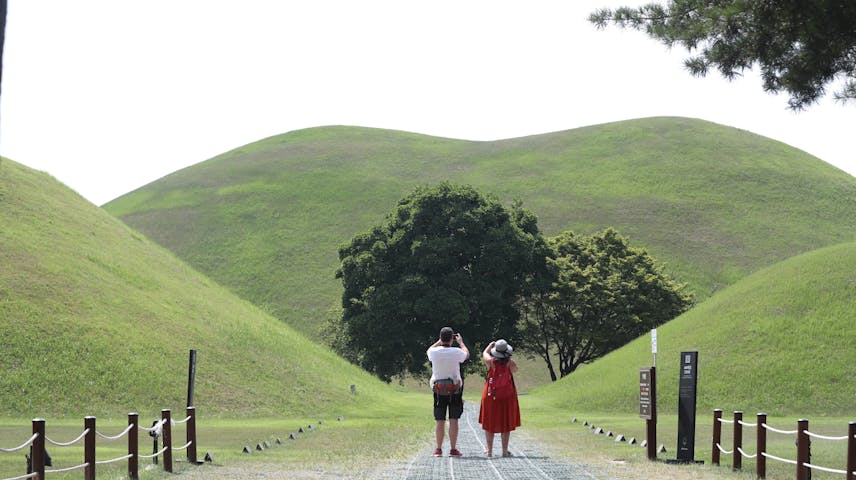
How Geography Shaped Korea: Land of Mountains, Rivers and Big Neighbors
Standard News Bureau

South Korea: A Land of Mountains, History and Culture
Standard News Bureau