Loading course navigation
Loading lesson
50 min
Student Lesson
Lesson 1: Building Background Knowledge: Korea
Content
Students will preview the anchor text, A Single Shard, and engage in Jigsaw Reading to explore Korean history, culture, and geography as well as contextualize the setting of the novel.
Language
Students will summarize and explain Korea’s historical context by using general academic nouns (such as tradition, community, and identity), incorporating connecting and transitional language (e.g., because, for example, as a result), and applying time and place prepositional phrases (such as “in Korea,” “during the Goryeo period,” and “on the Korean peninsula”) while sharing their jigsaw learning.
What does it take to learn something difficult?
How does art connect people to their history and community?
Knowledge-Building:
Art expresses cultural identity.
Enduring Understanding:
Through practice and mentorship, people turn skill into voice and work into art.
Future Lessons:
In Lesson 2, students will analyze a photo gallery and video on Goryeo celadon pottery. In Lesson 3, they will be introduced to the Essential Questions and engage with an article and video focused on mentorship and apprenticeship.
Unit Performance Task:
This lesson introduces the historical and cultural context of the anchor text’s setting.
| Lesson Flow | Purpose of Learning Experience |
|---|---|
Launch15 Minutes | Students engage in a turn and talk discussion to preview A Single Shard. and anticipate reading using the I See, I Think, I Wonder graphic organizer. |
Learning in Action30 Minutes | Part A: Jigsaw Resources (RI.6.2, RI.6.3) Students engage in a Jigsaw Reading of three informational articles about Korean history, culture, and geography. Part B: Jigsaw Deep Dive (RI.6.2, RI.6.3, RI.6.9) Students complete their Jigsaw Worksheet graphic organizer by sharing their learning and actively listening to their peers’ insights. They also engage in group discussions about the articles. |
Look Back5 Minutes | Students engage in a Think-Pair-Share to reflect on their prior knowledge of Korea and incorporate new understandings gained from reading informational texts. |
Not available for this lesson
Not available for this lesson
Material List
Student copies of A Single Shard by Linda Sue Park
Unit 2 Lesson 1 Student Edition
I See, I Think, I Wonder graphic organizer
Jigsaw Worksheet graphic organizer
Routines
Turn and Talk
Jigsaw Reading
Think-Pair-Share
Have students take out their copies of the anchor text, A Single Shard by Linda Sue Park, and provide a brief introduction and overview.
Say: The anchor text for this unit is A Single Shard. This novel tells the story of Tree-ear, a young orphan living in twelfth-century Korea who embarks on a journey to learn the craft of pottery. It is a work of historical fiction, a genre that blends fictional characters and plotlines with real historical settings, events, and, at times, people.
To build on students’ understanding of the genre, introduce the concept of third-person limited point of view.
Say: Stories written in third-person limited point of view are told by a narrator who is not a character in the story. The narrator uses words like he, she, and they to describe what is happening. Most of the time, the narrator shares the thoughts and feelings of only one character, but sometimes they may include more than one. In A Single Shard, the narrator shares the thoughts and feelings of the main character, Tree-ear. This helps readers feel closer to him and better understand what is happening in the story.
Teacher Tip |
|---|
A Single Shard features two unhoused characters, Tree-Ear and Crane-man—a phenomenon that was very unusual for this period in Korean history due to the religious and cultural views of the time. Prior to starting the novel, establish ground rules for respectful and empathetic dialogue when discussing the challenges that Tree-ear and Crane-man experience. |
Allow students the opportunity to observe the cover and flip through the pages of A Single Shard. Prompt them to record their thinking in the I See, I Think, I Wonder graphic organizer. Then have them discuss their ideas with a partner.
Say these Directions: Turn and talk with a partner about the following question to prepare for today’s lesson.
Ask: What do you see, think and wonder as you review the cover and flip through the pages of A Single Shard?
Say: Record your observations and questions in the I See, I Think, I Wonder graphic organizer. Then, turn and talk to discuss your thoughts and ideas with a partner.
I See . . . | I Think . . . | I Wonder . . . |
|---|---|---|
On the cover, I see a large green vase. There are images of water, rocky mountains, and trees. | I think the cover shows part of the setting where the characters live in Korea. | I wonder why this book is titled A Single Shard. What is a shard? I also wonder why there is a vase on the cover. |
Bring the class back together and invite volunteers to share their ideas.
Say: A Single Shard takes place in Korea during the twelfth century (1100s CE), which is about 800 years before now. In this lesson you'll build geographic and cultural understanding to better visualize and imagine this time period and its long and highly valued artistic tradition.
Review the Jigsaw Reading protocol if needed and the Jigsaw Reading worksheet graphic organizer. Transition students into groups of three. Have students assign one of the following articles to each person in the group.
Say: Assign one article to each person in your group.
Student 1: “From Ancient Beginnings to the Kingdom of Goryeo: An Early History of Korea”
Student 2: “South Korea: A Land of Mountains, History and Culture”
Student 3: “How Geography Shaped Korea: Land of Mountains, Rivers, and Big Neighbors”
Direct students to join the expert group that read the same text.
Use the following prompts to guide expert groups as they read and discuss their article.
Say these Directions: As you read, think about what the article says about Korean history, culture, and geography. Identify the central idea and list three key details the author uses to support this idea. Consider how these details are introduced, illustrated, or elaborated in the text. In your expert groups, collaborate through discussion and ask your peers questions to deepen your understanding of the text.
Encourage students to highlight details shared by their peers, acknowledge the information, and then justify their conclusions. Have students record their responses and ideas so they can refer to them while completing the Jigsaw graphic organizer.
Instruct students in expert groups to record their responses to the following questions on the Jigsaw Worksheet graphic organizer.
Ask: What is the central idea of the article you read? Which textual details about Korean history, culture, or geography help to convey the central idea?
Say: Record your key takeaways in your group’s box on the Jigsaw worksheet graphic organizer.
“From Ancient Beginnings to the Kingdom of Goryeo: An Early History of Korea” | “South Korea: A Land of Mountains, History and Culture” | “How Geography Shaped Korea: Land of Mountains, Rivers, and Big Neighbors” |
|---|---|---|
South Korea is an ancient land where different kingdoms eventually came together to form one strong country. For thousands of years, people there built massive stone monuments called dolmens and created beautiful art like green celadon pottery. They were also very smart inventors who created a metal printing press long before many other places in the world. Today, Korea's long history of working hard and being creative has helped it become a modern and successful nation. | South Korea is a crowded country on a peninsula covered with mountains. It has a long history and preserves its traditions, like respecting elders and making kimchi, even as it has become a global leader in modern technology. The country is also famous for the "Korean Wave," which has made its music, movies, and food popular all over the world. | South Korea is a land of rugged mountains and flowing rivers that have shaped its long history. Because the steep mountains made travel hard, people used the rivers like highways to move goods and build important cities. While Korea shared ideas with its neighbors, it also created its own amazing inventions, like a metal printing press and beautiful green pottery. Today, these geographic features and creative traditions remain a proud part of South Korea's identity. |
Reflection |
|---|
Reflection: How confident do you feel in identifying the central idea and key details in an informational text? Choose a number between 1 and 5, with 1 being the least confident and 5 being the most confident, to rate your confidence level. Then write a few sentences that show how you go about identifying main ideas and key details of an informational text. Modeling:
|
Say these Directions: Return to your home group to share what you learned with your expert group. Work together with your home group to complete the remaining sections of the Jigsaw Worksheet graphic organizer.
Say: The goal for your home group is to collectively identify important historical, cultural, and geographic information about Korea from all the articles. Each expert will share what they recorded in the organizer, and all group members will add notes on what their peers recorded for the other texts. Be sure to include at least one specific detail from each text that describes historical, cultural, or geographic information about Korea. Then discuss how each detail connects to a central idea in the article.
As students discuss, circulate and look for evidence that they are comprehending the central ideas in each source. Notice the following: Did students cite at least one key detail from their article that describes historical, cultural, or geographic information about Korea? Do students understand how the key detail connects to a central idea in the text?
Deep Dive Discussion
Once students have completed each part of the Jigsaw worksheet graphic organizer, pose the following questions and discuss responses with the whole class.
Ask: Based on the texts you read, how do Korea’s geography, history, and community life help explain the connection between pottery and identity during the Goryeo period?
During the Goryeo period, Korea’s geography and history helped make pottery a special part of who they were. Since Korea has many rivers, it was easy for people to move the heavy clay and wood needed to build big pottery ovens. The mountains also helped different groups of people focus on their own special ways of making art. Korean people were very proud of being inventors. Instead of just copying other countries, they created a unique green pottery called celadon that was famous all over the world. Working together in their communities to make these beautiful objects helped Koreans feel united and proud of their own creative skills.
Ask: Based on your reading, what kind of community do you imagine Tree-ear might live in?
Tree-ear may live in a small, close-knit coastal village that values skilled crafts like pottery. The texts suggest that Korea’s long coastlines and difficult mountain terrain could lead communities to be somewhat isolated but still connected to trade by sea. Because the Goryeo dynasty was known for its beautiful celadon pottery and trade with other countries, Tree-ear’s community might be a center for artists and shared traditions that would be important to the village’s identity.
Pulse Check |
|---|
What do the central ideas and key details from the articles suggest about the story’s setting?
Correct. The articles’ central ideas highlight Korea’s geography, the Goryeo dynasty’s celadon pottery, and trade connections, suggesting that the story is set in a traditional village that values craftsmanship and community.
Incorrect. The articles focus on historical Korea and traditional arts that have been practiced in villages and tight-knit communities for hundreds of years.
Incorrect. While one article mentions climate and wildlife, the main ideas emphasize human history, geography, and cultural achievements like pottery, not survival in the wild.
Incorrect. The articles explain that although geography created some isolation, Korea still had trade and strong cultural traditions, so the setting would not be disconnected from history or community life. |
Say these Directions: Use the Think-Pair-Share routine to discuss the following reflection questions:
Ask: What did you learn about Korea today that was especially interesting to you? How might this new learning connect to the novel, A Single Shard?
Instruct students to respond in their Reflection Journal to the following prompt:
Prepare a definition of curiosity, using your own words. Identify two examples that show the meaning of the word curiosity.
A Single Shard
Linda Sue Park

From Ancient Beginnings to the Kingdom of Goryeo: An Early History of Korea
Standard News Bureau
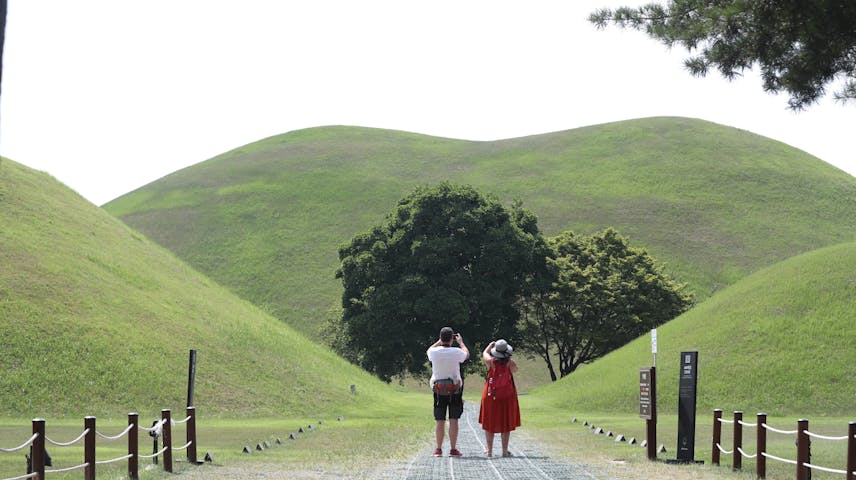
How Geography Shaped Korea: Land of Mountains, Rivers and Big Neighbors
Standard News Bureau
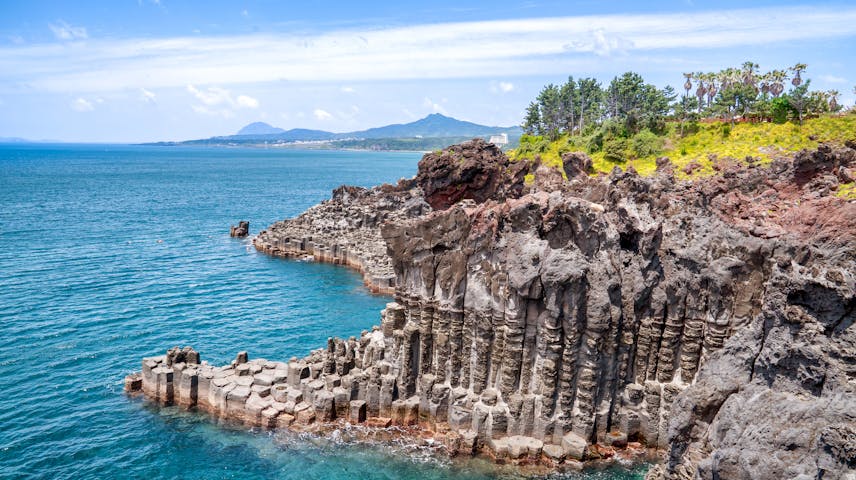
South Korea: A Land of Mountains, History and Culture
Standard News Bureau