Loading course navigation
Loading lesson
50 min
Student Lesson
Lesson 2: Building Background Knowledge: When Dreams Wait
Content
Students will analyze how word choice, punctuation, line breaks, and format shape meaning in the poem “Harlem.”
Language
Students will explain how a dream may be deferred by using evidence from a photograph and a poem, including precise words such as deferred, punctuation, line break, and tone.
Foundational Skills
Students will read a poem aloud with attention to punctuation, pauses, and phrasing.
How do our dreams shape who we are, and how do historical circumstances shape what becomes possible?
How can understanding the experiences of others help us think critically about fairness and opportunity?
Knowledge-Building:
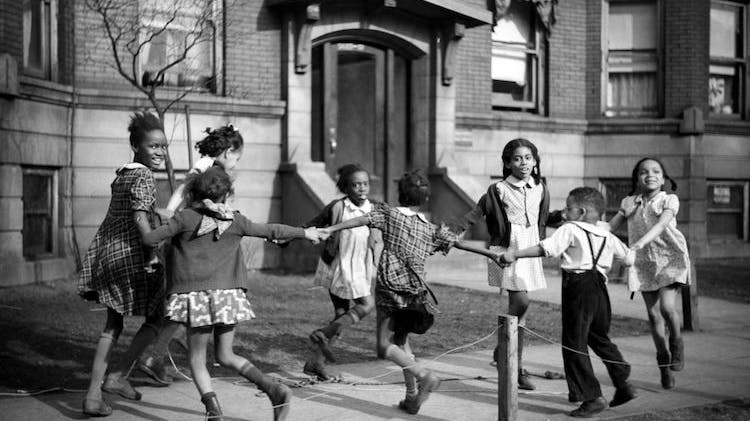
Students connect the previous lesson’s Rosskam photographs of the South Side of Chicago to Langston Hughes’s idea of a deferred dream.
Enduring Understanding:
Studying dreams and the systems that shape them helps students understand both hope and barriers.
Future Lessons:
In the next lesson, students will move from artistic representations of deferred dreams to the historical system of redlining.
Unit Performance Task:
This lesson builds the language and thinking students will later use to argue how systems and barriers shape opportunity.
| Lesson Flow | Purpose of Learning Experience |
|---|---|
Launch15 Minutes | Students reconnect to Lesson 1 by selecting a Rosskam image that suggests dreaming and learning the meaning of deferred in the opening line of Hughes’s poem. |
Learning in Action30 Minutes | Students read, hear, and perform “Harlem” to analyze how word choice, punctuation, line breaks, and medium shape meaning. (RL.7.4, RL.7.5, RL.7.7) |
Look Back5 Minutes | Students synthesize the image and poem in a brief evidence-based reflection about what dream a person in the photograph might have and how it might be deferred. |
Material List
Unit 3 Lesson 2 Student Edition
Audio recording of “Harlem”
Routines
Turn-and-Talk
Quick Write
Choral Reading
In Lesson 1, students used close observation to study Rosskam’s photographs without rushing to unsupported guesses. Today, they build on that same habit of evidence-based thinking by connecting one image to the idea of dreaming. This matters because the unit asks students to notice not only what people hope for, but also what can delay or block those hopes.
Display the class-selected photographs from Lesson 1. Give students one minute to silently think about the Rosskam images from Lesson 1. Then invite them to choose the image that most clearly suggests a dream or hope.
Say these Directions: Think back to the photographs we studied in Lesson 1. Choose one image that you think best responds to the prompt below and be ready to share your ideas. Partner A, share your image choice and one detail from the photo. Partner B, listen for the details and then share your own.
Ask: Which image best shows dreaming, and what details lead you to that inference?
I chose the image of the people dressed carefully and standing together because they look focused and purposeful. Their posture and clothing suggest they are headed toward something important, so the image makes me think about hope for a better future.
Teacher Tip |
|---|
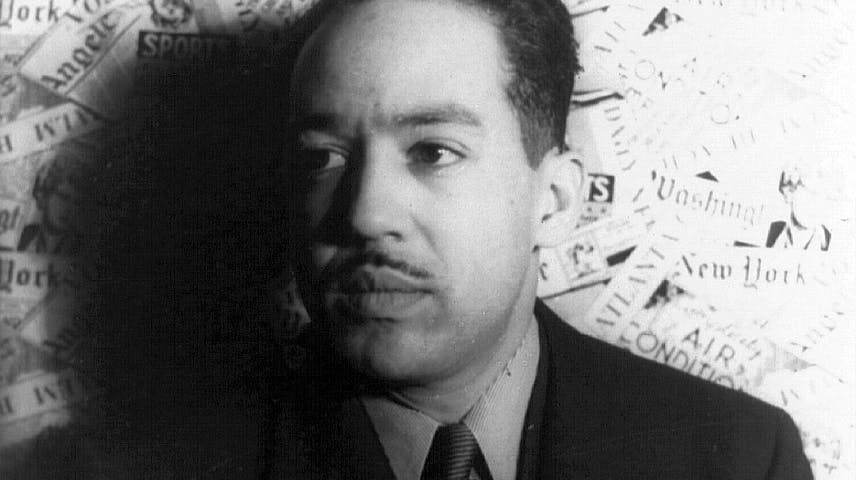
Before reading, briefly situate Langston Hughes as a well-known Black poet whose work often explored Black life, creativity, dignity, and frustration in the United States. Keep discussion grounded in the poem and the image first. Invite personal connections only as optional, not required, so all students can participate meaningfully. |
Display and read aloud the opening line from “Harlem”: "What happens to a dream deferred?"
Say: When I read the word deferred, I use the whole question to help me understand its meaning. The poem is asking what happens when a dream does not happen when someone wants it to happen. The examples are of things that have sat for too long or been neglected. So deferred means “delayed” or “pushed off to a later time,” not erased. In this unit, that word matters because dreams can be deferred by barriers that people encounter.
Ask: Based on the opening line of “Harlem,” what do you predict this poem will explore?
I predict the poem will explore what it feels like when a person has a dream but has to wait for it to come true because something is in the way. The word deferred makes me think the poem will be about delay, pressure, and frustration.
Say: You will now test that prediction by reading, hearing, and performing the poem to see how Hughes builds meaning through both language and structure.
Students will move through three reads of the poem. Keep each response brief so the focus stays on how understanding deepens with each medium and rereading.
Teacher Tip |
|---|
As students discuss deferred dreams, keep the conversation from becoming only about suffering. Invite them to notice how the poem itself is an act of voice and artistic power: Hughes turns frustration into a well-crafted series of questions that pushes readers to think about fairness and consequences. |
Say these Directions: You are going to experience this poem three ways: silently on the page, through audio, and through our own voices. Each time, notice something new about how Hughes shapes the idea of a deferred dream.
Say: A first read helps us get the basic idea, but a poem often reveals more when we return to it. Good readers do not stop at “It is about dreams.” They ask how the poet’s specific words and choices build that meaning. Today, we are paying attention to both what the poem says and how it says it.
Ask: Read the poem silently once. Then write 2–3 sentences answering the question: What is this poem about?
This poem is about what can happen when a person's dream gets delayed. The speaker does not give one answer. Instead, he shows several possible effects, like drying up, rotting, or exploding, which makes the delay feel serious and dangerous.
Say these Directions: Now listen to the audio recording. Pay attention to the reader’s pauses, emphasis, and tone.
Ask: What did you notice in the audio version that you did not notice on the page?
In the audio version, I noticed the pauses more strongly after each question. The reader let each question hang in the air, which made the poem feel more tense and uncertain. The reader also changes emphasis on the final line.
Ask: What did the reader's voice do that the punctuation or line breaks could not do by themselves?
The reader’s voice added tone. For example, the final question sounded sharper and more urgent, and that emotional pressure is harder to hear just by looking at the page.
Say: You will now look closely at the printed poem itself to see what the page shows that the audio cannot fully capture.
Have students circle punctuation marks first and then stand and listen as you read the poem aloud, pausing at punctuation marks and with inflection. Then the students will read the poem aloud together. The repeated reading should help them hear how the questions build pressure.
Say these Directions: Circle every punctuation mark you see in the poem. Then we will stand and read the poem aloud sentence by sentence, paying attention to how the punctuation changes our reading pace.
Ask: What pattern do you notice in the punctuation?
I notice that the poem is built mostly from questions. The repeated question marks make the poem feel unsettled, like the speaker is searching and warning at the same time.
Ask: Why might Hughes end with the shortest question, "Or does it explode?"
Hughes may isolate that line to make it hit harder. Because it stands alone after white space, the last question feels sudden and powerful, almost like the pressure from the earlier lines has been building toward it.
Say: When we compare a poem on the page to a poem read aloud, we are noticing different tools. On the page, Hughes controls white space, line breaks, and how a line stands alone. In audio, the reader controls pace, pauses, and tone. Strong readers ask what each medium adds instead of deciding one version is simply “better.”
Ask: What does the page show you that the audio cannot?
The page shows the white space and the way the final line sits by itself. It also lets me see the question marks stacked through the poem, which makes the questions feel visually repeated and pressing.
Ask: How does seeing those choices on the page affect your experience of the poem?
Seeing the poem on the page slows me down because the white space makes each question feel separate. The isolated final line makes the ending feel more shocking, so the poem builds tension visually as well as through sound.
Ask: Why do you think Hughes asks a series of questions instead of giving one final answer?
I think Hughes uses questions because he wants readers to think about many possible effects of delaying a dream. The unanswered questions also suggest that deferred dreams can affect people in different ways depending on the pressure around them.
Pulse Check (RL.7.5, RL.7.7) |
|---|
Which feature of the printed poem most strongly builds tension in a way the audio alone cannot fully show?
|
Say these Directions: Look back at the class-selected photograph and at the poem “Harlem.” Write a short response that answers both parts of this question:
Ask: “What dream might this person have? How might it be deferred?” Use at least one specific visual detail from the photograph and one specific detail from the poem to support your opinion.
The person in the photograph might dream of owning a safe home or getting a better job. I think that because the image shows people who look serious and purposeful, like they are working toward something important. In “Harlem,” Hughes asks what happens to a dream when it is deferred and ends with "Or does it explode?" That makes me think this dream could be delayed by unfair barriers, and the delay could build frustration over time.
In the next lesson, students will move from studying poetry and photographs to a historical system, redlining,to explore how individuals’ dreams can be affected by policies and power.
Instruct students to read up to the heading “Beneath the Santa Monica Freeway, lies the erasure of Sugar Hill” in the NPR article excerpt, “Black Americans and the Racist Architecture of Homeownership.”
Ask students to take notes in their Journal on the following:
Important ideas from the article
What is redlining? Where did it happen? Does it still exist?
“Harlem”
Langston Hughes
Black Americans and the Racist Architecture Of Homeownership
Ailsa Chang, Christopher Intagliata, Jonaki Mehta, NPR
Striking Black and White Photos Capture the Black Experience in 1940s South Side Chicago
Edwin Rosskam, Library of Congress