Loading course navigation
Loading lesson
50 min
Student Lesson
Lesson 9: Comparative Writing, A Raisin in the Sun and “Black Americans and the Racist Architecture of Homeownership”
Content
Students will draw evidence from literary and informational texts to support analysis of what the two texts together reveal about homeownership and opportunity.
Language
Students will use cross-text transitional phrases and evidence-linking language to connect quotations from two texts in one analytical paragraph.
How do our dreams shape who we are, and how do historical circumstances shape what becomes possible?
Knowledge-Building:
Students continue connecting the Younger family’s dream of homeownership to historical and contemporary systems and barriers that shape access to housing and wealth.
Enduring Understanding:
Students deepen the idea that dreams are shaped by systems and barriers, not just individual effort.
Future Lessons:
Students will build from one cross-text paragraph to larger research-based arguments.
Unit Performance Task:
Students practice a must-have skill for the final research argument by combining textual evidence from multiple sources in one coherent paragraph.
| Lesson Flow | Purpose of Learning Experience |
|---|---|
Launch5 Minutes | Students will activate prior knowledge by comparing Mama’s words in the play with a contemporary informational text about homeownership and wealth. |
Literacy Lab10 Minutes | Students will learn how to build a cross-text connection with a transition and explanation that links evidence from two sources. |
Learning in Action30 Minutes | Part A: Drafting One Cross-Text Paragraph (W.7.9.a, W.7.9.b) Students will draft one analytical paragraph using one piece of evidence from the play and one piece of evidence from the NPR article. Part B: Peer Feedback for Evidence and Clarity (SL.7.1c) Students will share paragraphs in pairs and give feedback about evidence use and the clarity of the connection between texts. |
Not available for this lesson
Not available for this lesson
Material List
Student copies of A Raisin in the Sun by Lorraine Hansberry
Unit 3 Lesson 9 Student Edition
RACE Writing Strategy graphic organizer
Routines
Turn and Talk
Language Study
Quick Write
Think-Pair-Share
Use this quick comparison to activate prior learning with the NPR reading from the previous lesson and bridge students into today's writing task. Have students sit with a nearby partner and look at the displayed quotations.
Say these Directions: In a previous lesson, we gathered details from the NPR article about how homeownership is still complicated in terms of equity. Today, we are putting that contemporary text beside Mama's words in A Raisin in the Sun and writing one paragraph that uses both texts together.
Display p. 45 of A Raisin in the Sun, and direct students to read the passage beginning with “you should know all the dreams I had . . .” and ending with “. . . make them dreams seem worth while.”
Say: Here are two quotes, the first from A Raisin in the Sun and the second from the article “Black Americans and the Racist Architecture of Homeownership.”
"MAMA: . . . you should know all the dreams I had ’bout buying that house and fixing it up and making me a little garden in the back. . . . Big Walter used to say, . . . ‘Seem like God didn’t see fit to give the black man nothing but dreams—but He did give us children to make them dreams seem worth while.’” (pp. 45–46)
“Owning a home is an undeniable part of the American dream—and of American citizenship. It is also the key to building intergenerational wealth.”
Ask: What do these two excerpts have in common?
Both excerpts connect homeownership to something more than just having a place to live. When Mama remembers Big Walter, the dream is about what parents want for their children. In the NPR article, homeownership is also tied to citizenship and intergenerational wealth, so both texts show that not being able to buy a home can affect a family's future.
Say: Partner A, share first for 30 seconds. Then switch to Partner B..
Students have named the shared idea; next, they will learn how writers can articulate that connection in one analytical paragraph.
Teacher Tip |
|---|
Mama's line can sound only inspirational if it is discussed without context. Keep students grounded in the historical reality that the Younger family’s dream is shaped by racist housing barriers, and help students see that the NPR article adds a contemporary explanation of how access to homeownership affects a family’s security over time. Remind students of what comes right after Mama quotes Big Walter: “(She waits and stops smiling) And didn’t none of it happen. (Dropping her hands in a futile gesture).” |
Use this mini-lesson to teach cohesion across sources. Students need to see that strong analysis does not simply place two quotations side by side; it explains the relationship between them. Have students look at the displayed model sentence and the two source excerpts.
Say these Directions: We can use evidence from two different texts in one paragraph and make the relationship between them clear. To demonstrate a cross-textual connection, we start with a big idea or theme, use evidence from both sources and a clear transition or “bridge,” and conclude with an explanation of what the two texts reveal together.
Model the writing process, displaying and reading aloud one sentence at a time. Start with a description of Mama’s speech on p. 45 as the leading idea.
Say: Take a look at how we can create a thematic bridge between the two sources:
Mama remembers how she dreamed of living in a house, and she remembers Big Walter saying that it seemed as if God had given Black Americans “nothing but dreams” but that their dreams were worthwhile because of their children (pp. 45–46).
Continue with a sentence about the NPR article:
Similarly, the NPR article says that homeownership is “the key to building intergenerational wealth.”
Ask: Why is the phrasing “Similarly, the NPR article says . . .” important?
It tells the reader right away that the article is connected to the play instead of starting a brand-new topic. It also shows that the writer is connecting and comparing ideas across texts, not just listing two pieces of information.
Finish with a statement that directly connects the two sources:
Say: This echoes Mama’s feeling that dreams matter because parents want a better future for their children.
Guide students to chunk the ideas. Provide each chunk, and ask students to volunteer the meaning and function of each chunk. Display the first example, and have students fill out the rest.
Chunk | Meaning | Function |
|---|---|---|
Similarly, the NPR article says that | Another text is about to be connected to the first one. | signals a cross-text transition |
homeownership is "the key to building intergenerational wealth.” | Owning a home can help a family build wealth over time. | adds evidence from the informational source |
This echoes Mama's feeling that | This idea matches something in the play. | links the second text back to the first |
dreams matter because parents want a better future for their children. | Both texts are really about family future and opportunity. | explains the shared idea |
Teach: Building a Cross-Text Connection
Say: When I write using two text sources, I do not want my paragraph to sound like two separate mini-paragraphs pushed together.
First, I decide on the one big idea that both texts share. Here, the idea is that homeownership is tied to a family’s future.
Next, I bring in evidence from one text and explain it in my own words.
Then I use a bridge phrase like “Similarly, the NPR article . . .” or “This idea is echoed in . . .” so my reader hears the connection as I move to the second source.
After the second piece of evidence, I add one more sentence that explains what the two texts together reveal.
Say: That last sentence captures the real analysis because it shows why the pair of details matters.
Check for Understanding (W.7.9.a, W.7.9.b) | |
|---|---|
Write one sentence that begins with “Similarly . . .” or “This idea is echoed in . . .” and connects the play to the NPR article. | |
Connection to Today’s Learning
Students have practiced the bridge sentence; next, they will use that move inside a full analytical paragraph.
Students will consult with partners and then write a first draft of a cross-textual analytical paragraph.
Say these Directions: With your partner, use the RACE Writing Strategy graphic organizer to plan one paragraph that answers the question below. Include one piece of evidence from each source.
Ask: What do A Raisin in the Sun and the NPR article together reveal about what happens when the dream of homeownership is out of reach?
Display the RACE Writing Strategy graphic organizer:
RACE = Restate + Answer + Cite + Explain
R – Restate the question
Restates the question as a declarative sentence
Establishes the main topic of the paragraph
A – Answer the question
Provides an answer to the question
Tells the reader what to expect in the paragraph
C – Cite evidence from the texts
Specific quote or paraphrase from the texts
Must be introduced smoothly (not just dropped in)
E – Explain your answer
Tells what the evidence shows
Points to specific words/phrases
Makes the connection explicit for the reader
Say: Use the RACE graphic organizer to take notes that align with the RACE strategy in order to respond to the question.
Restate | Both A Raisin in the Sun and “Black Americans and the Racist Architecture of Homeownership” reveal that when the dream of homeownership is out of reach for Black Americans, it causes deep personal pain and is passed down across generations. |
|---|---|
Answer | Both texts show that homeownership is not just about having a place to live; it represents dignity, stability, and the ability to leave something behind for your children. When that dream is blocked, the loss doesn’t just hurt one person. It echoes through families for decades. |
Cite Evidence | In A Raisin in the Sun, Mama remembers how she and Big Walter dreamed of owning a home but never could, saying, “[Y]ou should know all the dreams I had ’bout buying that house and fixing it up and making me a little garden in the back— . . . And didn't none of it happen” (Act 1, Scene 1). She also recalls that Big Walter used to say, “Seem like God didn’t see fit to give the black man nothing but dreams—but He did give us children to make them dreams seem worth while” (Act 1, Scene 1). Similarly, the NPR article explains that homeownership “is the key to building intergenerational wealth” but that over the past 15 years, “Black homeownership has declined more dramatically than for any other racial or ethnic group in the United States.” |
Explain | This evidence shows that when the dream of homeownership is denied, the cost goes beyond money. Mama's words “And didn't none of it happen” capture a lifetime of deferred hope, not just for herself, but for the family she and Big Walter were trying to build something for. Big Walter’s belief that children make dreams “worth while” shows that homeownership was never just about a house—it was about having something to pass on to the next generation. The NPR article connects this personal grief to a nationwide pattern, revealing that the forces keeping Black families from owning homes (redlining, discriminatory lending, and higher costs) have been stealing that same dream from generation after generation. Together, the two texts show that being locked out of homeownership doesn’t just limit wealth; it limits hope itself. |
Explain to students that they are going to use the notes from their completed RACE graphic organizer to create a model paragraph.
Say: Now that you have completed the RACE graphic organizer, develop your paragraph around one clear point.
Model how to plan a paragraph using a teacher think-aloud.
Say: My topic sentence will name the shared idea first: Homeownership is tied to a family’s future. Then I will use the moment when Mama remembers Big Walter because it shows how dreams are connected to children and the next generation. After I explain that evidence, I will move to the NPR article with a transition so my reader can follow my thinking. I will choose the article detailing intergenerational wealth because it directly connects to what families can pass on. Finally, I will end by telling what the two texts together reveal, which is stronger than just summarizing each one alone.
After partners have worked on their RACE planning, have them share briefly with the class before writing.
Ask: What shared idea will hold your paragraph together?
My paragraph will focus on the idea that homeownership affects what families can give their children. The play shows this through Mama’s memory of Big Walter’s dreams, and the article explains it through intergenerational wealth.
Checklist |
|---|
Activity: Cross-Text Paragraph Drafting Instruction: Circulate and provide real-time feedback on student journals and Student Editions based on the following observable language behaviors: You will turn in your paragraph draft. After you have finished your draft, check that you:
|
Scoring Rubric
Criterion | 1 — Developing | 2 — Approaching | 3 — Meets |
|---|---|---|---|
RL.7.1 — Cite textual evidence to reflect on writing choices | Names a strength or revision in general terms and includes fewer than two specific details | Includes two details, but the connection to the reflection is uneven or partly explained | Cites at least two specific details from the play, article, or paragraph and clearly uses them to explain a strength and a revision need |
W.7.9.a, W.7.9.b — Draw evidence from texts to support analysis across sources | Refers to the texts separately or vaguely without showing what they reveal together | Uses evidence from both texts but only partially explains the relationship between them | Uses evidence from both texts and explains what the details together reveal about the idea of homeownership and opportunity |
Students will read their drafts aloud to a partner and listen for two specific features: evidence from both texts and a clear cross-text connection.
Say these Directions: Read your paragraph aloud to your partner. As you listen, look for where your partner cites evidence from the play, where they cite evidence from the NPR article, and whether the connection between the two texts is made explicit. After both partners read, take turns suggesting one strength and one revision for each other’s paragraphs, and jot one glow and one grow in your notes section. Partner A reads first while Partner B listens and takes notes. Then switch.
Ask: What is one specific note you can give your partner about evidence or a connection?
I can say, “I noticed your evidence from the play in the line about Big Walter’s dreams. Add a sentence after the NPR quote that explains how both details connect to children and the future so the connection is clearer.”
Ask: Which part of your partner’s paragraph made the cross-textual link clearest?
The clearest part was the last sentence because it said what the two texts together reveal. That sentence helped me see that the paragraph was not just listing evidence.
Pulse Check (W.7.9.a, W.7.9.b) |
|---|
Which sentence best connects the play and the NPR article? A. Mama talks about dreams. The NPR article talks about money.
B. The play was written long ago, and the NPR article is contemporary.
C. Mama’s dream for her children is echoed in the article’s claim about homeownership.
D. Both texts mention owning homes, so they are basically about the same thing.
|
Students have drafted and received feedback on one paragraph; next, they will reflect on which writing move they used well and which one they still need to revise.
Keep this reflection short and specific so students leave with a clear revision target for homework.
Say these Directions: Reread your paragraph and your partner’s notes. Then answer these questions about your draft. If you’d like, use the optional sentence starter. :
Optional Sentence Starter:
One strength in my paragraph is ___, and one revision I still need to make is ___.
Ask: What is one strength in your draft, and what is one revision you still need to make? Cite at least two specific details.
One strength in my paragraph is that I used Mama’s memory of Big Walter’s dream for his children and the article’s point about intergenerational wealth to stay focused on one shared idea. My transition “Similarly, the NPR article . . .” helped the paragraph sound connected. One revision I still need to make is adding a clearer final sentence that explains how being shut out of homeownership blocks both hope and wealth building. Ask: Which phrase or tool helped you connect the two texts most clearly today?
The phrase "This idea is echoed in . . .” helped me most because it forced me to explain the relationship between the play and the article instead of just dropping in another quote.
Instruct students to revise their paragraphs according to peer editing advice and to complete the following tasks in their Journal:
Underline the sentence where you make the connection between the two texts most explicit.
Revise at least one sentence for clarity.
A Raisin in the Sun
Lorraine Hansberry
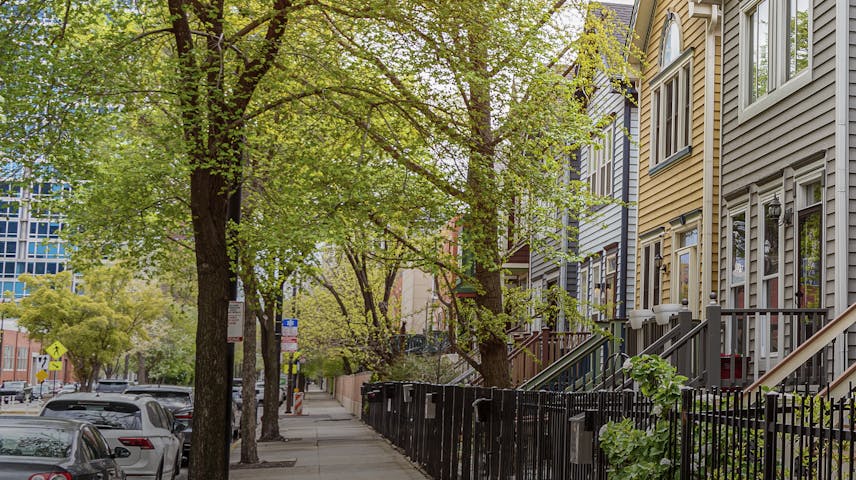
Black Americans and the Racist Architecture Of Homeownership
Ailsa Chang, Christopher Intagliata, Jonaki Mehta, NPR