Loading course navigation
Loading lesson
50 min
Student Lesson
Lesson 1: Building Background Knowledge: Looking Closely at the South Side of Chicago
Content
Students will analyze historical photographs to describe what is happening, support ideas with visual evidence, and learn about daily life in the South Side of Chicago in the 1940s.
Language
Students will use precise observation language and cause-thinking words such as because, so, and this suggests to explain how visual details support their ideas.
How do our dreams shape who we are, and how do historical circumstances shape what becomes possible?
How can understanding the experiences of others help us think critically about fairness and opportunity?
Knowledge-Building:
Students begin building background knowledge about Black American life in South Side Chicago during the Great Migration through Edwin Rosskam’s photographs.
Enduring Understanding:
Looking closely at everyday life helps students see how hopes, routines, and opportunities are shaped by larger barriers.
Future Lessons:
Students will build an understanding from visual evidence, maps, historical context, and later, A Raisin in the Sun.
Unit Performance Task:
Students begin practicing precise description, evidence use, and inquiry that will support later research and argument writing.
| Lesson Flow | Purpose of Learning Experience |
|---|---|
Launch15 Minutes | Students will build curiosity and model how to study a historical photograph by distinguishing between observation from inference and grounding every claim in visible evidence. |
Learning in Action30 Minutes | Students will independently study a Rosskam photograph, discuss it with peers who examined the same image, and present evidence-based observations and questions to the class. (SL.7.2) |
Look Back5 Minutes | Students will write a brief evidence-based response naming the image that interests them most, explaining why, and posing a genuine question. |
Not available for this lesson
Not available for this lesson
Material List
Unit 3 Lesson 1 Student Edition
Notice, Wonder, Connect graphic organizer
Routines
Think-Pair-Share
Group Accountability Share
Quick Write
Place students in pairs. Let them think silently for a few seconds before turning to a partner.
Say: In this unit, we are going to study dreams, opportunity, and the barriers that shape people’s lives. Today we are starting with photographs from Chicago’s South Side in 1941, so we can practice a habit we will use all unit long: close observation and supporting our ideas with evidence. This will help us later when we relate history to A Raisin in the Sun and to our own research.
Say these Directions: First, take a moment to think quietly about the following prompt and to write down some initial ideas. Then turn to your partner and share one observation each. Make sure your idea is based on what a photograph can actually show (an observation), not just on a guess (an inference). Once Partner A has shared their observation, Partner B will share.
Ask: What can a photograph teach us about a community that a list of facts might miss?
A photograph can show details about daily life, such as clothing, buildings, body language, or how people use a space. A fact list might tell me where people lived, but a photo can help me notice details and more easily imagine what life felt like in that place.
Teacher Tip |
|---|
These photographs are an entry point into Black American life on the South Side of Chicago in the 1940s, not a complete story. Encourage students to stay grounded in what is visible before making assumptions, and invite them to notice routine, care, work, style, humor, and community alongside any signs of hardship. Remind students that photographs are framed by a photographer’s choices, so photos show one perspective, not the whole truth. As you think through what this image shows with your students, model how to record responses in a Notice, Wonder, Connect chart. |
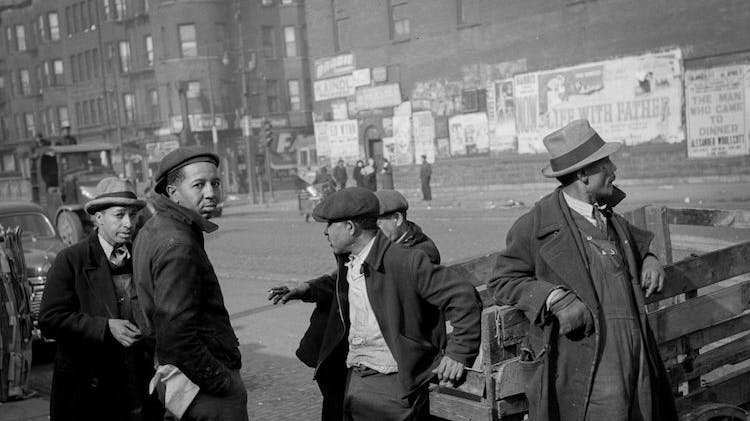
Display one Rosskam photograph from the set for shared practice.
Say these Directions: Edwin Rosskam spent three weeks in 1941 documenting daily life on the South Side of Chicago during the Great Migration. Let’s look at this image together, and practice distinguishing between what we can see and what we think it might mean.
Say: When I study a photograph, I start with what is visible before I jump to a conclusion. “I notice where people are standing, what they are wearing, or what objects are in the frame.” Then I can add an idea using because: “I think this is a public space because I can point to features that make it look shared or open.” If I cannot point to a detail, then I should turn my idea into a question instead of stating it like a fact.
Ask: What is one thing you notice first in this image?
One of the first things I notice is how the people and the setting are arranged in the frame. It seems that the men likely know one another because a few of them appear to be talking to each other. Because they are in the foreground of the picture, the photographer wants us to focus on them instead of what’s happening on the street behind them. Those details stand out because they help me focus on what kind of moment Rosskam wanted viewers to see.
Ask: What makes you say that?
I say that because I can point to visible details in the image, such as where the people are placed, what they seem to be doing, and what parts of the street Rosskam included.
Ask: What questions does this image raise for you?
I wonder what happened right before this moment was photographed. The image captures only one second, so I want to know what the people were doing before and what happened next. I also wonder if those people know one another. What’s in the cart some of them are leaning on? Is it connected to the men in any way?
Ask: What can this photograph show us, and what can it not tell us?
The photograph can show us physical details such as people, objects, and place, but it cannot tell us exactly what the people are thinking or the full story behind the moment unless we learn more from other sources. The picture is taken during the day, so I’d want to know if the men are working and what kind of work they might be doing. What are they talking about? What is the man on the right looking at?
Say: Now you will use this same process with your own assigned Rosskam photograph: first, you will observe independently, and then you will compare observations with classmates who studied the same image. Finally, you will share your evidence-based thinking with the class.
Say these Directions: Each of you will receive one photograph from Rosskam’s South Side Chicago collection. First, look at your photograph silently and use your Notice, Wonder, Connect organizer as you study it. In the Notice section, describe only what you can point to (observations). In the Wonder section, write questions the image raises. In the Connect section, note one idea about daily life, community, or opportunity that this image might help us explore. Then, meet with classmates who studied the same image to build a stronger group explanation using evidence from the photograph. Choose one speaker to present for your group, but everyone should be ready to elaborate if needed.
Ask: What is one specific detail in your photograph that you can point to exactly?
One specific detail I can point to is how the people, objects, or buildings are placed in the scene. That helps me stay precise instead of making a broad guess.
Ask: What might that detail suggest about the moment in the photograph?
That detail might suggest something about what kind of place this is or what the people are doing, because small visual clues can help me make a careful inference.
Say these Directions: Now meet with classmates who studied the same image. As a group, decide on one strong claim about what is happening, two details that support that claim, and one question the image raises.
Ask: What’s going on in this picture?
I think this picture captures an everyday moment in the neighborhood because the people and setting seem part of a regular routine, not a posed event.
I think this image shows people gathered in a shared space because several visible details suggest that the moment is public and connected to community life.
Ask: What makes you say that?
I said that because I can point to details in the image, such as where people are placed, what they seem to be doing, and what the setting looks like.
My group’s idea is based on evidence from the photograph, not just a guess, because we can identify specific parts of the scene that support it.
Ask: What else do you see?
I also notice background details that change how I understand the image, such as objects, buildings, or other people who are not at the center.
I see clues about daily life, such as the way people use the space or interact with one another, and that helps the image feel more complete.
Ask: What details in this image show routine, care, work, style, or community?
The image can show community through the way people share space, pay attention to one another, or move through a familiar place. Even small details, such as posture, clothing, or how close people stand, can suggest connection.
Ask: What in the image makes you think something may have happened right before or right after this moment?
The photograph freezes one second, so details such as people facing a certain direction, looking toward something, or seeming in motion can make me think there is a larger story before and after the shutter clicked.
When students are finished studying their assigned photograph, reconvene the class in preparation for presentations and whole-group discussion.
Say these Directions: As each group presents, listen for one new detail or one new question that helps you understand the image more clearly.
Display each photograph as the group presents.
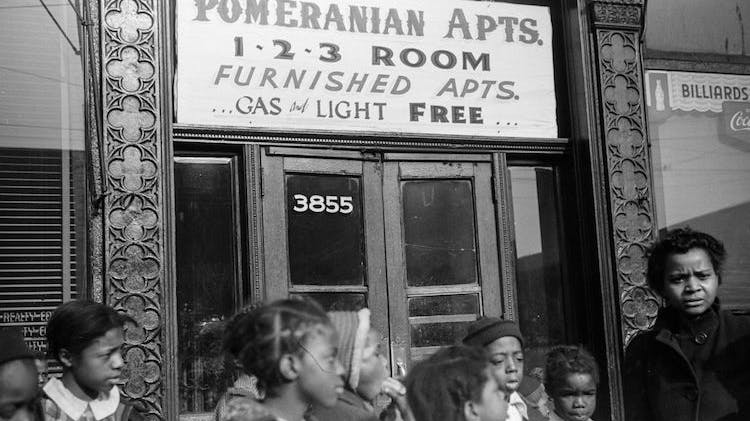
https://drive.google.com/file/d/17Q8nQ1q1fLfeSL1IHFvw7c08tj4kTNgA/view?usp=sharing
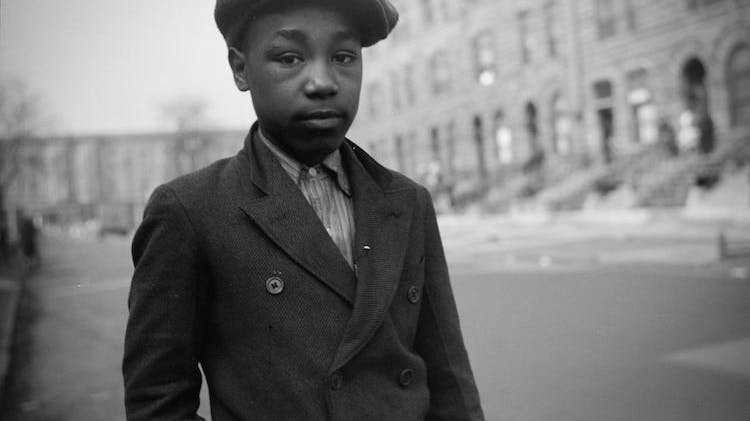
[Image URL= [IMAGE URL — https://drive.google.com/file/d/1NXSFco4OvNGzqcAamjUBdTrNKH9XBIZN/view?usp=sharing]
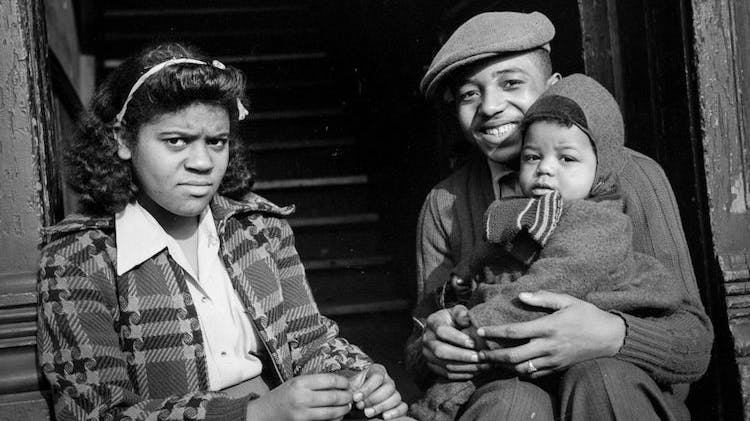
[Image URL= [https://drive.google.com/file/d/1-umvZCz82Cf9G_cbstLghXUb2N8SqJgs/view?usp=sharing]
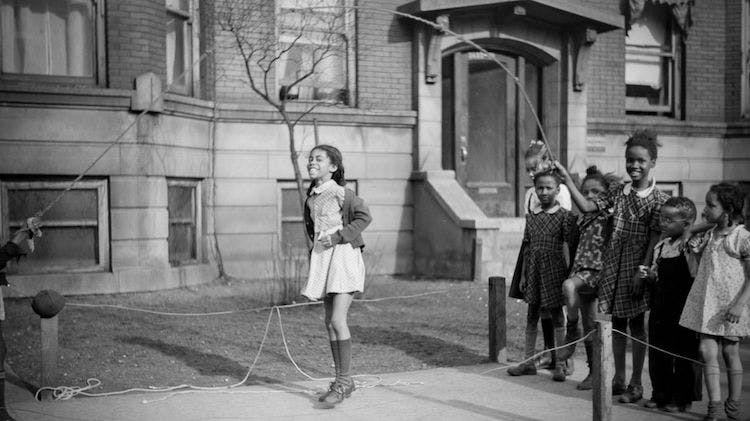
[Image URL= [IMAGE URL — https://drive.google.com/file/d/1dL2n3fBbjgfABgKizqKY0aSivMMplE1w/view?usp=sharing]
Ask: Which group helped you see its photograph more clearly, and what detail made their explanation stronger?
The strongest explanation named a very specific detail from the image and then explained why that detail mattered. That made the group’s idea feel grounded instead of vague.
Ask: After hearing several groups, what patterns do you notice across the full set of images?
Across the set, I notice that these photographs seem interested in everyday life, shared spaces, and the people who make a neighborhood feel active. The images raise questions not just about one person, but about a whole community.
Provide students with a confidence continuum (i.e., 1–5). As needed, model how to demonstrate a level of confidence using the continuum.
Reflection |
|---|
Reflect on your ability to analyze images and develop evidence-based claims using the Reflection routine. How confident are you in your ability to analyze images and develop evidence-based claims? |
Say these Directions: Choose the image that interests you most. It can be your own image or another group presented. Write a 4-6 sentence response that clearly describes the image and answers the following prompt:
Ask: Which image interests you the most, and why? Explain what draws you to the image using at least two specific visual details, and end with one genuine question about the people, place, or moment. Then add one final sentence explaining what helped you move from inference to observation today.
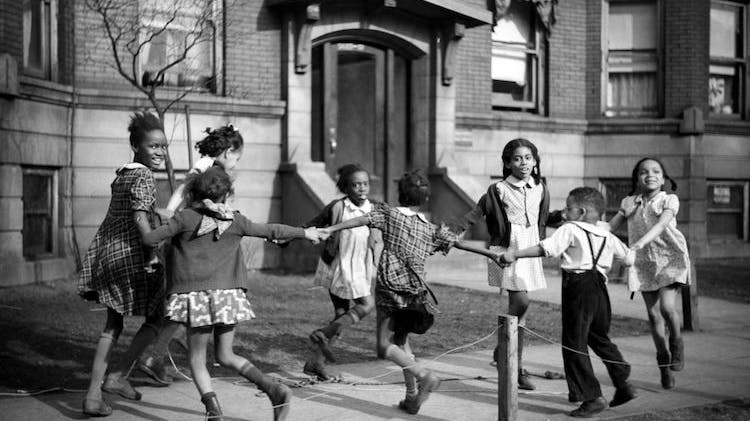
The image that interests me most is the one with lots of people gathered in one outdoor space. I could identify it from the set because it feels more crowded and active than some of the other photographs. What draws me to it is the way the people and the setting seem connected by the way they are dressed in such fancy clothes and are in front of a big building that might be a church. These details make the moment feel like part of everyday neighborhood life. I also notice the way the people are moving, like some are coming and some are going, and that makes me think the photographer captured a moment that was already unfolding before he arrived. My question is: What were the people doing right before this photograph was taken, and what happened next? The strategy that helped me most was separating what I could actually see from what I was only wondering about.
In the next lesson, students will move from visual evidence to historical explanation by studying how maps and policies shaped neighborhoods in Chicago. Today’s careful noticing will help them recognize that places are shaped not only by people’s choices, but also by larger barriers.
Students read their independent reading book for 20 minutes and complete a reading log entry.
Say these Directions: Read your independent reading book for 20 minutes. In your reading log, record the date and pages you read, write 1–2 sentences about what happened or what you learned, and respond to this week’s prompt using evidence from the text.
Striking Black and White Photos Capture the Black Experience in 1940s South Side Chicago
Edwin Rosskam, Library of Congress