Loading course navigation
Loading lesson
50 min
Student Lesson
Lesson 12: Comparing Red, White, and Whole and “Savitri: A Princess Who Would Not Give Up”
Content
Students will analyze how details in poems and story retellings interact to show when and why Reha shifts from receiving stories to making meaning through them.
Language
Students will explain word meaning (including cultural terms such as dharma) and compare how two versions of a story contribute different kinds of meaning using context-clue language, contrastive phrases, and evidence-based explanation.
Foundational Skills
Students will use context clues and syllable chunking to pronounce and determine the meaning of unfamiliar cultural and academic words.
What is blood, and how does it work as a symbol of both family ties and our shared humanity?
Knowledge-Building:
Students extend Investigation 2 by studying stories as cultural inheritance and as tools people use to make sense of pain, duty, and belonging.
Enduring Understanding:
Identity is shaped by biological, cultural, and emotional connections, and literature helps reveal how these layers come together to form a whole person.
Future Lessons:
Students will next trace how other people see Reha and what they miss, building toward deeper analysis of perspective, symbolism, and belonging.
Unit Performance Task:
Students practice comparing how different texts (poems and informational texts) use structure, word choice, and perspective to reveal an important connection, which prepares them to write their literary analysis and original poem.
| Lesson Flow | Purpose of Learning Experience |
|---|---|
Launch5 Minutes | Students will activate prior learning from Lesson 11 and homework. Students will frame stories as a cultural and emotional coping tool. |
Literacy Lab10 Minutes | Students will use context clues (appositive/restatement clues) to determine the meanings of key cultural terms that unlock today’s reading. |
Learning in Action30 Minutes | Part A: What Kind of Hero Is Savitri? (RI.7.4) Students will read the article and explain how word choice (such as duty and loyalty) shapes Savitri’s heroism. Part B: When Reha Starts Making Stories (RL.7.3, RL.7.9) Students will compare how the poems and the article give different kinds of meaning (emotional perspective vs. background information) and explain why Reha needs this story now. |
Material List
Unit 4 Lesson 12 Student Edition
Red, White, and Whole by Rajani LaRocca, “Amar Chitra Kathas”–“Savitri, Part 2” (pp. 73–83)
Journals
Routines
Think-Pair-Share
Context Clues in Action
Group Accountability Share
Quick Write
Instruct students to take out their Journals and sit with an elbow partner. Students review their homework using a Think-Pair-Share routine, before sharing ideas in a whole-group discussion.
Say these Directions: In the previous lesson, we tracked how Reha lives in the in-between and what it costs her to move between worlds. Today, we will look at what happens when stories become one of the tools Reha uses to survive that in-between space. Share one example from your homework that shows Reha starting to make her own story. In 1–2 sentences, explain why it matters.
After pairs share, invite 2–3 students to report out. Shape the discussion to show how stories can give people a way to cope, rehearse, or say what real life does not make easy to say.
Ask: What examples did you choose that show a moment where Reha makes her own story? What does that moment show what stories allow Reha to do?
I chose the moment in “MTV” (58–59) when Reha is watching music videos with her friend and notes that their parents still watch grainy black-and-white films. She says, “It feels like we’ve already entered the future, while they only live in the past,” which shows that Reha is making decisions for herself about what she enjoys and what she connects with.
Connection to Today's Learning:
Say: Strong literary analysis explains not only what happens in a poem, but why that moment matters. That is a skill you will need for this unit’s Performance Task. Now that we see how stories help Reha cope and make meaning, we are ready to study the key words that unlock the Savitri story she turns to.
Students use context clues and character descriptions to determine the meaning of virtue.
Say these Directions: Today, one word helps us understand why Yama responds to Savitri the way he does: virtue. We are going to use the lines around that word to figure out what it means, and then we will verify our thinking. Work with your partner to underline details that show what Savitri says and how Yama describes her. Then write a definition of virtue and one context clue from the poem that helped you infer meaning in your Personal Dictionary.
Display page 83 and direct students to read the lines beginning with “Please, Lord...” and ending with “it shall be yours.”
Target Line Block from “Savitri, Part 2” on page 83:
“Please, Lord, said Savitri, do not take my husband away.
Lord Yama, recognizing her virtue, took pity on her.
O remarkable and faithful wife, he said, ask for anything but the life of your husband and it shall be yours.”
Say: When I come to the word virtue, I look closely at what happens around the word before looking for a dictionary definition. Right before it, Savitri speaks respectfully and bravely to Yama instead of giving up. Right after it, Yama calls her “remarkable and faithful,” so those words act like clues that describe the kind of quality he sees in her. That helps me make a smart guess that virtue means a strong moral quality a person shows through actions, like faithfulness, goodness, or courage. I can confirm that because Savitri has stayed with Satyavan, spoken with self-control, and acted out of love and duty. So when I write my definition, I should not just say “nice”; I should write that virtue means honorable character shown by what a person does.
Ask: Which words or details around virtue helped you infer its meaning most clearly?
The clue “remarkable and faithful wife” helped me most because it shows Yama sees a good quality in Savitri’s character. Her respectful plea also helps me infer that virtue means moral goodness shown through actions.
Stop displaying the word for a moment.
Say these Directions: Write the word virtue from memory in your Personal Dictionary.
Display the word again.
Say these Directions: Check your spelling and correct it if needed.
Say these Directions: Underline the whole base word virtue. This word does not have a prefix or suffix in this form, so we are focusing on the whole word as the meaning unit.
Ask: Which part of the poem helped you remember both the spelling and the meaning of virtue?
The words “remarkable and faithful” helped me remember the meaning, and writing the whole word as one unit helped me remember the spelling.
Say these Directions: Check your definition using a dictionary, glossary, or article support tools. Does the definition match what you inferred? Revise your definition if needed.
Ask: After you verified the word, how would you define virtue in this poem?
In this poem, virtue means a strong moral quality, especially faithfulness and goodness, that Savitri shows through her actions.
Check for Understanding (L.7.4.a, RL.7.4) |
|---|
Write virtue in your Personal Dictionary. Then write a one-sentence definition and copy one clue phrase from the poem that helped you infer the meaning. |
Teacher Tip |
|---|
If students need support, point students to the clue phrase “remarkable and faithful wife.” Explain that this description helps readers infer the meaning of virtue by showing the moral qualities Yama recognizes in Savitri. |
Teacher Tip |
|---|
Some students may know different versions of the Savitri story or may pronounce names differently. Treat those differences respectfully as evidence that stories live across time and communities. Avoid framing one version as the only “correct” one. |
Connection to Today's Learning:
Say: Now that you have defined virtue, keep noticing how the article and the poem show Savitri’s goodness, duty, and persistence. That will help you explain what kind of hero she is and why this story matters to Reha.
Partners do a close read of the Newsela article and prepare a response to share with the class using the Think-Pair-Share routine. In the next segment, students use their understanding of “Savitri, Part 2” to draw comparisons with Reha’s experiences.
Guide students in analyzing Savitri as a nontraditional hero by focusing on word choice and key moments in the text.
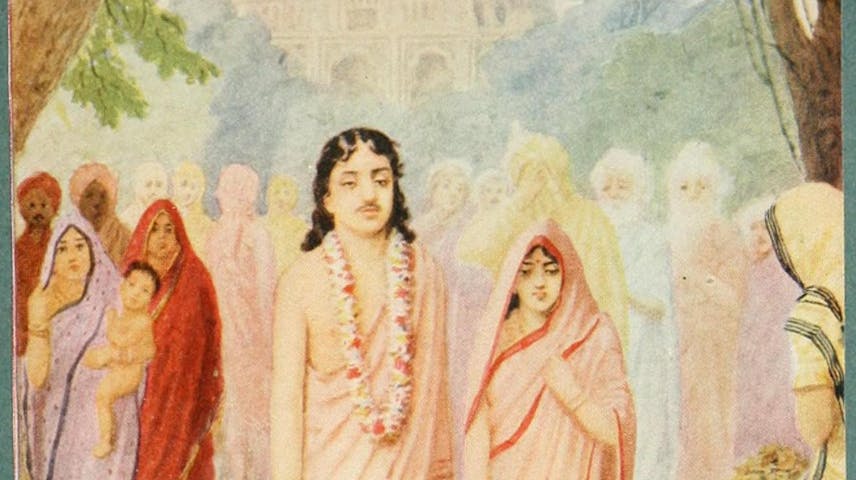
Say: Today, we will compare a traditional story with a contemporary retelling connected to Reha’s experience in Red, White, and Whole. The Savitri myth has been passed down through generations and helps preserve cultural ideas about duty, love, and moral responsibility. Rajani LaRocca’s use of Savitri builds on that traditional story, but also reshapes it to connect to Reha’s contemporary experience. As readers, we will think about what the newer version preserves, emphasizes, or changes and why those choices matter.
Say these Directions: Read the article with your partner, alternating paragraphs. Stop at moments where Savitri makes an important choice, such as when Savitri chooses Satyavan and follows Yama. Take a moment to answer: What kind of hero is Savitri? As you read, notice which parts of Savitri’s story reflect traditional ideas about duty and loyalty and which parts feel especially meaningful for a modern character like Reha.
When you have finished reading, write a three-to-four sentence response that includes at least one specific detail from the story. Be ready to share your ideas with the class.
Say: Sometimes readers picture a hero as someone who wins through force or battle. But in this article, the author highlights Savitri’s duty, wisdom, and persistence. This shows that her strength is not mainly physical—it is moral and verbal. The author’s word choice helps us see Savitri as steady, strategic, and deeply committed. That is why understanding dharma matters here.
Ask: Based on the article, what kind of hero is Savitri, and how does the author’s word choice help show that?
The article presents Savitri as a hero of duty and persistence. The author uses words like devotion and shows how she keeps speaking to Yama, which shows her strength comes from commitment and self-control. This connects to dharma because she follows her moral responsibility instead of giving up.
Ask: Why does the article keep returning to ideas like duty, loyalty, and persistence instead of battles or action scenes?
The author wants readers to see that Savitri’s bravery is in how she stays loyal and keeps going even when death itself appears. Those words shape the story so her heroism feels thoughtful and moral, not flashy.
Ask: Which parts of Savitri’s story seem preserved from the traditional version, and which ideas are emphasized to help contemporary readers connect to Reha’s experience?
The retelling preserves Savitri’s loyalty, persistence, and moral responsibility because those traits remain central to the traditional story. However, the lesson especially emphasizes how stories help people cope, heal, and make meaning, which connects more directly to Reha’s emotional experience in the modern narrative.
Ask: The article says the Savitri story has been retold in films, operas, and poems. What does that repetition suggest stories can do that real life cannot?
The repetition suggests stories help people return to hard problems again and again in new forms. Real life does not always give closure or second chances, but stories let people imagine endurance, justice, and hope. Retelling also keeps a cultural connection alive across time.
Pulse Check (RI.7.4, RL.7.9) |
|---|
Which explanation best shows how the word dharma shapes Savitri’s heroism in the article?
|
Connection to Today's Learning:
Say: Next, we will explore why this story matters to Reha specifically, and what changes when she starts making stories for herself.
Place students in groups of 3 to 4. Each group should agree on one shared explanation to report to the class.
Say these Directions: In your group, reread “Cells”(p. 74) and “My Aerogramme” (pp. 77–78). Work with your group to answer the questions about the poems and the Savitri story. Then reread the part of “Savitri, Part 2” (p. 83) where Yama is named “Dharmaraja, the King of Duty.” Explain why that detail matters. Use the word dharma, duty, or moral responsibility in your explanation. Use at least one detail from the poems and one detail from the article in your explanation. Work together to agree on one clear response to share with the class in 3–4 sentences.
As you prepare your response, use this comparison checklist:
I identified at least 1 element the retelling preserves from the traditional Savitri story.
I identified at least 1 element the modern version emphasizes or reshapes for Reha’s experience.
I explained why those changes matter for contemporary readers and for understanding Reha’s experience.
Say: When I compare the poems with the article, I ask: what does each text let me see that the other one cannot? The article gives me background. It explains the story clearly and helps me understand words, roles, and the larger tradition. The poems give me Reha’s timing, emotion, and need. When LaRocca places the line about words hurting and healing right before Reha writes, the poem helps me understand why writing matters at that exact moment. So, comparison is not just about differences, it also helps explain how each version gives us a different way to understand the story.
Say: When authors retell traditional stories, they often preserve important cultural ideas while also emphasizing details that connect to a new audience or situation. In Red, White, and Whole, LaRocca keeps Savitri’s connection to duty and persistence, but she also uses the story to help readers understand Reha’s emotional struggle, identity, and need to make meaning for herself.
Ask: In “Cells,” how does Reha’s conversation with Amma about blood help her begin to make meaning for herself? In “My Aerogramme,” where do you see her take this a step further?
In “Cells,” Reha begins to make meaning with Amma through their shared talk about blood science, so knowledge becomes personal and intimate. In “My Aerogramme,” she takes a bigger step because she writes her own letter, which means she is no longer just hearing stories or facts from someone else. She is trying to shape her own words.
Ask: Why does LaRocca place the line “words can hurt, and words can heal” in “Cells” right before Reha picks up her pen in the next poem? How does this explain her choice to write?
LaRocca places that line there to show why writing matters in that moment. Reha has already felt how words can wound, so the poem sets up writing as a possible way to repair, release, or answer that pain. The placement makes the pen feel like a choice about healing, not just a random action.
Ask: In “Savitri, Part 2,” why does it matter that Yama is named “Dharmaraja, the King of Duty”? What does this show about what Savitri is really challenging?
This matters because Savitri is not arguing with a villain — she is arguing with duty itself. This connects to dharma, or moral responsibility, and shows her bravery more clearly.
Ask: What parts of the traditional Savitri story does LaRocca preserve, and what parts does she emphasize differently to help readers understand Reha’s experience?
LaRocca preserves Savitri’s persistence, moral responsibility, and devotion, which remain central to the traditional story. However, she emphasizes how stories can help people process identity, pain, and belonging so readers better understand why Reha turns to Savitri’s story during a difficult moment in her life.
Provide students with a confidence continuum (i.e., 1–5). As needed, model how to demonstrate a level of confidence using the continuum.
Reflection (RL.7.3, RL.7.9) | |
|---|---|
Use the Reflection routine to reflect on your ability to compare texts and explain what each contributes. Complete the sentence stem in your notes: The poem gives ______, while the article gives ______, which helps readers understand ______. Complete this sentence stem: The modern retelling preserves ______ from the traditional Savitri story, but it emphasizes ______ to help readers better understand Reha’s experience. |
Students write a short paragraph comparing how a poem and an informational text shape the same story in different ways, using examples from this lesson.
Say these Directions: You have practiced comparing a poem with an informational text, which will make later reading and writing easier because it helps you explain how texts build meaning. For this Quick Write, write a 3–4 sentence response. Use at least one specific detail from the article and one from the poem.
Ask: How do the poem and the informational text tell the same story in different ways, and what does each text help the reader understand?
The article gives readers the background of the Savitri story, including what dharma means and why Yama matters, so I understand the story’s larger ideas. The poem gives readers Reha’s emotional timing, especially when she hears that words can hurt and heal and then reaches for her pen. The article informs me, but the poem shows why this story matters to Reha’s life right now. She needs a story about someone who does not give up because she is trying to find courage and language for her own pain.
If you’d like, use the optional Sentence Starter:
The article gives ______, while the poem gives ______, which helps readers understand ______. Reha needs this story right now because ______.
Instruct students to read the poem set that includes “What Rachel Thinks,” “Deepavali,” “Always Something There to Remind Me,” “The Dress,” “At the Mall,” and “Down the Stairs” and answer the following prompt in their Journal:
In this poem set, several different people look at Reha: Rachel, her community at Deepavali, a stranger at the mall, Amma on the stairs, etc. Pick one of these moments and explain:
What does each person actually see when they look at her?
What do they miss?
Red, White, and Whole
Rajani LaRocca

Savitri: A Princess Who Would Not Give Up
Standard News Bureau