Loading course navigation
Loading lesson
50 min
Student Lesson
Lesson 2: Building Background Knowledge: Understanding Bicultural Identities and Experiences, Part 1
Content
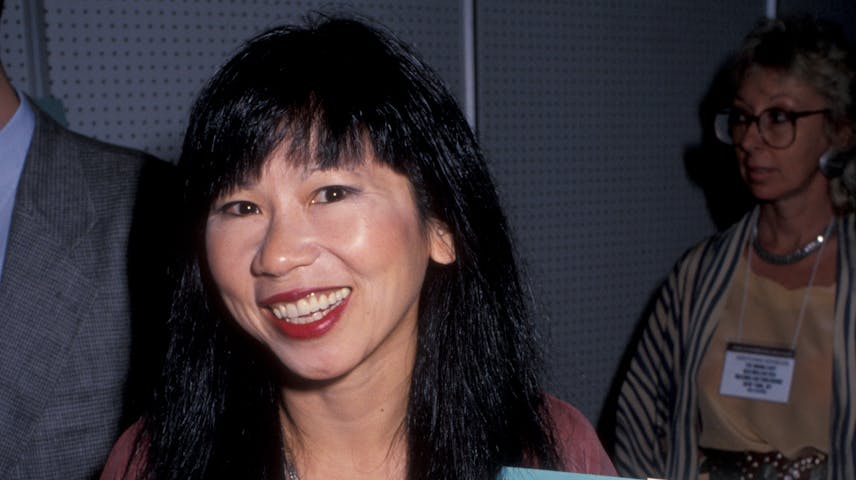
Students will determine a central idea and analyze how Amy Tan develops it through details and shifts in perspective in “Fish Cheeks.”
Language
Students will explain how words connected to identity and emotion shape meaning using evidence-based discussion and writing frames.
Foundational Skills
Students will use context and word parts to determine and spell key words from the text.
What is blood, and how does it work as a symbol of both family ties and our shared humanity?
What is culture, and how does it shape our identity and sense of belonging especially when we move between more than one world?
Knowledge-Building:
Students continue building understanding of bicultural identity by examining how one family scene reveals tension between belonging and home.
Enduring Understanding:
Identity is shaped by many kinds of connections, including cultural and emotional ones, and literature helps us see how these layers come together.
Future Lessons:
Students will carry this idea into Red, White, and Whole as they analyze how Reha is pulled between two selves in the poem “Two.”
Unit Performance Task:
Today’s work prepares students to write a literary analysis explaining how details in a text reveal an important connection.
| Lesson Flow | Purpose of Learning Experience |
|---|---|
Launch5 Minutes | Students will think about duality and connect homework reading to the unit question. |
Literacy Lab10 Minutes | Students will learn how key words in the ending of “Fish Cheeks” shape tone and central idea. |
Learning in Action30 Minutes | Part A: Tracking the Two Selves (RI.7.3) Students will use a literary analysis organizer to connect details from the dinner scene to Amy’s divided identity. Part B: From Shame to Pride (RI.7.2) Students will discuss how the final lines reframe the dinner scene and deepen the text’s central idea. |
Material List
Unit 4 Lesson 2 Student Edition
3-Column Chart Graphic Organizer
Red, White, and Whole, by Rajani LaRocca
Routines
Think-Pair-Share
Morphology & Vocabulary
Graphic Organizer Deep Dive
Quick Write
Have students take out their Journals and “Fish Cheeks.” Partners should sit side by side so that both students can refer to their notes and the text.
Say these Directions: In Lesson 1, we compared poetry and prose and started talking about the idea of duality: feeling as if you have “two selves.” Today, we are looking more closely at how Amy Tan illustrates duality in “Fish Cheeks.” This will help us get ready to explain how a writer uses details to reveal identity in our final literary analysis. Use the Think-Pair-Share routine to discuss your Journal entries; share one detail that shows the narrator wants to belong and one detail that shows she is connected to home. Then talk about why both details matter.
Reconvene the class when students have completed their Think-Pair-Share routine, and ask a few students to share as time permits.
Ask: What detail did you find in “Fish Cheeks” that shows the narrator wanting to belong, and what detail did you find that shows the narrator’s home self?
A detail that shows Amy wanting to belong is the beginning, when she becomes focused on Robert and worries about what he will think of her family. A detail that shows her home self is the Christmas Eve dinner with her relatives, food, and family customs. Together, those details show that she is pulled between wanting acceptance and being shaped by her own culture.
Connection to Today’s Learning:
Say: Now that you have identified the two sides of Amy’s identity, let’s study how the ending gives those details a deeper meaning.
Students study the words different and shame, found at the ending of “Fish Checks,” and additional related words, to help determine the text’s theme.
Say these Directions: The final paragraphs of “Fish Cheeks” are key to understanding the essay. We are going to slow down and study the last sentence of the story to help us understand the meaning of the dinner scene. Write down the words, different and shame in your personal dictionaries. Look up each word in a dictionary and write a definition in your own words.
Display the target sentence from the text “Fish Cheeks.”
Target Sentence Block:
“You must be proud you are different. Your only shame is to have shame.”
Say: Use these related words to help you talk about being different or feeling shame. As we review them, pay attention to what each word means.
different
differ (to be different)
difference (a quality that is different)
shame
shameful (bringing shame)
ashamed (feeling shame)
Ask: What does it mean to be different? Is it a good thing, a bad thing, or neither?
Being different means not being exactly the same as someone else. It isn’t a good thing or a bad thing to differ from another person or group. It can make you feel proud, or it can make you feel left out.
Ask: What does it mean to have shame? Is it a good feeling, a bad feeling, or neither?
Shame is a bad feeling, like being embarrassed. It is feeling ashamed, as if you have done something wrong, or that something is wrong with you.
Ask: What does it mean when Amy’s mother says that her only shame would be to feel shame? What did Amy seem to feel shame about?
She wants Amy to feel good about her identity. Amy was embarrassed by the Chinese food and customs in front of the non-Chinese guests. Her mother thinks that it would be shameful for Amy to feel shame about who she is or the differences between her and her non-Chinese friends.
Say: Look back at your definitions of different and shame. Decide if you want to revise or add anything based on our discussion, then share your thinking and make any changes.
Ask: How do the words different and shame work together to help you understand the meaning or a theme of the essay?
Amy’s mother says that being different is not the problem. Instead, the problem is feeling shame about that difference. That makes the essay a lesson about pride and identity, not an embarrassing memory. The true meaning, or theme, is that Amy should be proud of her identity. Duality, having two cultural identities, should be celebrated.
Check for Understanding (RI.7.4, L.7.4a) | |
|---|---|
In your Personal Dictionary, write different and shame, mark the word parts in different, and add one sentence explaining how one of the words helps you understand the ending of the essay. | |
Check for Understanding Teacher Tip: If students only write a dictionary definition, prompt them to add: This word matters because it shows __________ about Amy’s identity. |
Connection to Today’s Learning:
Say: We have unpacked the language of the ending. Let’s track how details across the essay build the message that differences are something to be proud of.
Students examine “Fish Cheeks” together in pairs. This section moves from one modeled row to collaborative completion of the chart.
Guide students in using the 3-column organizer to analyze how a single scene reveals character duality. Support students in selecting precise evidence and explaining what it shows about Amy.
Say these Directions: Use your 3-Column Graphic Organizer to record evidence that answers the following prompt:
Ask: How does one dinner scene reveal so much about Amy’s duality?
One dinner scene reveals Amy’s duality by showing how she behaves differently at home than she does in public. At the dinner table, Amy follows her family’s expectations and respects traditions, but she also reacts in ways that show discomfort or distance from those expectations. This contrast shows that Amy is balancing two identities at once; one shaped by her family’s culture and one shaped by her own personal experiences.
Guide students to write these headings: “Text detail,” “What it reveals about Amy,” and “How it builds the central idea.”
Say these Directions: In Column 1, record a specific text detail. In Column 2, explain what that detail reveals about Amy. In Column 3, explain how that detail builds the central idea about identity and belonging.
Complete the first row of the chart while explaining each note. Guide students to copy your notes to the first row of their own charts.
Say: Literary analysis is not about looking at a detail by itself. It is about noticing a pattern and then explaining what that pattern reveals. Let’s start with the part near the beginning when Amy sees Robert and immediately begins worrying about how her family will be perceived.
Say: In Column 1, we can record that detail. In Column 2, we can explain that it reveals Amy’s self that wants approval from Robert’s world. In Column 3, we can connect it to a central idea: if people try too hard to belong, they may start to feel divided from other parts of themselves, such as their own cultures or family traditions.
Say: When we add more details from the dinner scene, we will show that this tension keeps building.
Say these Directions: Work with your partner and add at least two more details from different parts of the essay. Use at least one of today’s words, different or shame, in your analysis.
Ask: Which details from different parts of the essay reveal Amy’s two selves, and how do those details build the central idea?
Text detail | What it reveals about Amy | How it builds the central idea |
|---|---|---|
At the beginning, Amy sees Robert with his family and starts worrying about the Christmas Eve dinner. | She wants approval from Robert’s world and is afraid of being judged. | This begins the idea that wanting to belong can make someone feel split between two identities. |
During the dinner, her relatives eat in familiar ways and serve foods that matter to the family. | Her home life is real, strong, and deeply connected to culture, even while she feels embarrassed. | This shows that Amy is not choosing between fake and real worlds; she is living in both at once. |
In the closing advice from her mother, Amy is told to be proud of being different. | She is pushed to see her identity as something valuable instead of shameful. | This develops the central idea that difference can become a source of pride when people learn to value where they come from. |
Pulse Check (RI.7.3) |
|---|
Which statement best explains how Tan develops the central idea that identity can feel divided when someone is trying to belong?
|
Place students with a partner and guide students in discussing how the ending reframes Amy’s understanding of the dinner and her identity.
Say these Directions: We have discussed how the final paragraphs reframe the dinner scene. You have recorded details from the essay and made notes explaining what they reveal and how they connect to the central idea or theme. Now, work with your partner to discuss the prompt and draft a short response to the following question.
Ask: What does the mother’s final advice make Amy understand about the dinner and about herself?
The mother’s final advice makes Amy understand that the dinner was not something she should have been ashamed of. Earlier, Amy was worried about how Robert would see her family, but the ending shows that her culture is the part of herself she should be proud of. That develops the central idea that belonging should not require hiding part of who you are, including where you come from.
If needed, model how to connect details.
Say: “When I get to the ending, I stop and ask, What is different now from the beginning? At first, Amy sees the dinner as proof that she does not fit into Robert’s world. But her mother’s advice changes the lens. The ending does not erase Amy’s embarrassment; it teaches her to reinterpret it. The same foods, family habits, and traditions that made Amy want to hide are now presented as part of what she should value. That is why the ending feels powerful: it turns the dinner from a scene of shame into a lesson about pride, belonging, and identity. When I explain the central idea, I need to show that shift clearly.”
Teacher Tip |
|---|
This discussion asks students to talk about embarrassment connected to differences in culture or family, and about wanting a sense of belonging. Remind students that the goal is to analyze the narrator’s experience, not to judge any culture or family practices. |
Provide students with a confidence continuum (i.e., 1–5). As needed, model how to demonstrate a level of confidence using the continuum.
Reflection (RI.7.2) | |
|---|---|
Use the Reflection routine to reflect on your ability to explain how the ending of “Fish Cheeks” changes the meaning of the dinner scene with two details from the text | |
Students complete the lesson by writing a short response based on their analysis of “Fish Cheeks.”
Say: Today, you moved from spotting two sides of identity to explaining how a writer develops that idea through a pattern of details. That is exactly the kind of thinking you will need when you analyze a poem from Red, White, and Whole. The clearer you are about how details build meaning, the stronger your Performance Task writing will be.
Say these Directions: When you can trace details across a text and explain what they mean, future reading and writing get easier because you are doing more than finding evidence, you are building an interpretation. Write 2–4 sentences in response to the prompt, using at least two specific details from different parts of the essay to support your thinking.
Ask: What central idea about identity or belonging does Tan develop, and how do at least two details build that idea?
Amy Tan develops the central idea that a person can feel divided when they want to belong, but that difference can become a source of pride. At the beginning, Amy worries about how Robert will see her family, which shows that she wants acceptance from another world. During the dinner, her family’s traditions make her feel embarrassed, but then her mother teaches her that these differences are valuable. Together, those details show that Amy’s identity is shaped by culture, even when she struggles to accept it.
Instruct students to read the opening poem “Two” in Red, White, and Whole and respond to the following questions in their Journal:
What are the two selves the narrator is caught between? How do you know?
.
Red, White, and Whole
Rajani LaRocca
Fish Cheeks
Amy Tan