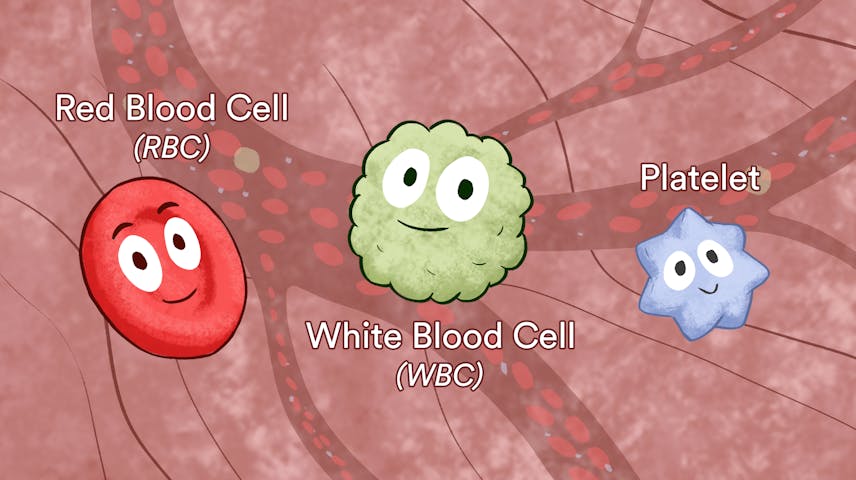
Your blood is made up of liquid and solids. The liquid part, called plasma, is made of water, salts and protein. Over half of your blood is plasma. The solid part of your blood contains red blood cells, white blood cells, and platelets.
Red blood cells (RBC) deliver oxygen from your lungs to your tissues and organs. White blood cells (WBC) fight infection and are part of your immune system. Platelets help blood to clot when you have a cut or wound.
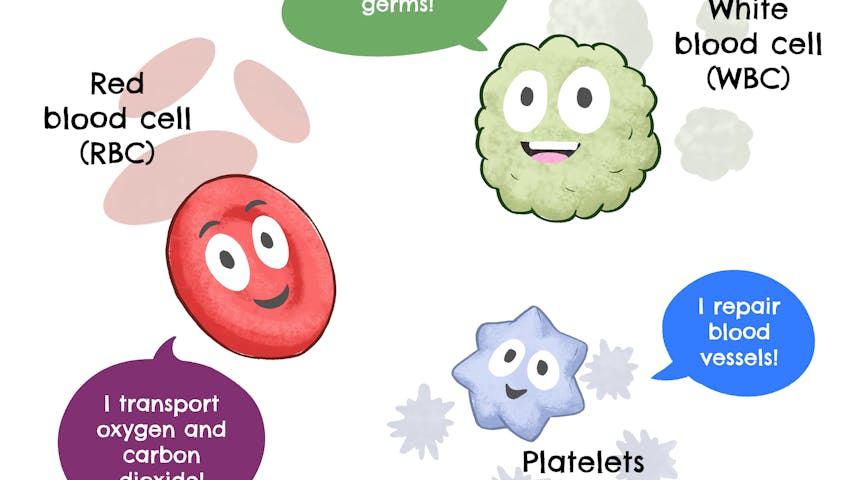
Bone marrow, the spongy material inside your bones, makes new blood cells. Blood cells constantly die and your body makes new ones. Red blood cells live about 120 days, and platelets live about six days. Some white blood cells live less than a day, but others live much longer.
How Does Blood Travel in the Body?
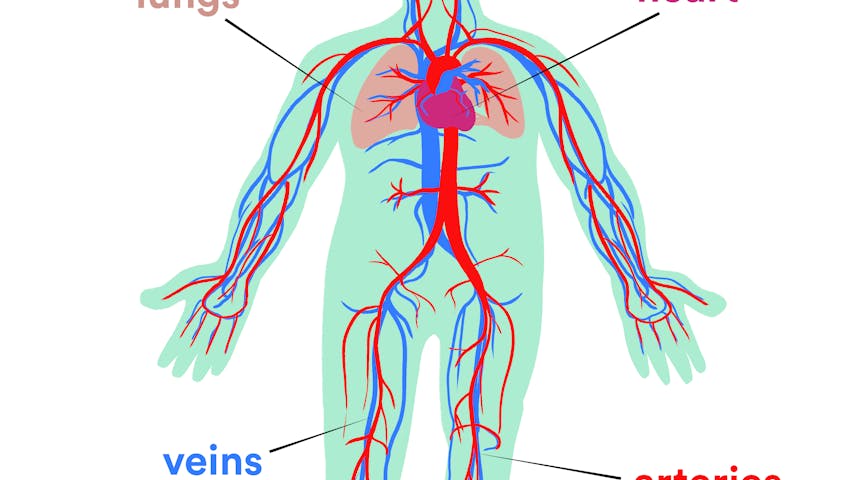
The heart is a large muscular organ which constantly pumps blood to all parts of the body. Arteries and veins go into and out of the heart. Arteries carry blood away from the heart and veins carry blood to the heart. The flow of blood through the vessels and chambers of the heart is controlled by valves.
Blood provides oxygen and nutrients to the body and removes carbon dioxide and waste. As blood travels through the body, the oxygen is used up. When the blood becomes oxygen-poor, it travels back to the heart and lungs to gain oxygen. So, basically, oxygen-rich blood enters the heart from the lungs and goes out to the body. Oxygen-poor blood enters the heart from the body and goes out to the lungs.
How Does Blood Travel in the Heart?
Blood comes into the right atrium from the body, moves into the right ventricle and is pushed into the pulmonary arteries in the lungs. After picking up oxygen, the blood travels back to the heart through the pulmonary veins into the left atrium, to the left ventricle and out to the body’s tissues through the aorta.
What Are Blood Types?
Blood is often grouped according to the ABO blood typing system. The four major blood types are:
A
B
AB
O
In addition, your blood is also either Rh-positive or Rh-negative. So, for example, if you have type A blood, it’s either A positive or A negative. Which type you are is important if you need a blood transfusion.
Therefore, because there are four main types and each one can be positive or negative, there are eight blood types in total:
A negative
A positive
B negative
B positive
O negative
O positive
AB negative
AB positive
Your blood type is based on whether or not certain proteins are on your red blood cells. These proteins are called antigens. Your blood type (or blood group) depends on what types of blood your parents passed down to you.
Blood typing is a way to tell what type of blood you have. Blood typing is done so you can safely donate your blood or receive a blood transfusion. It is also done to see if you have a substance called Rh factor on the surface of your red blood cells.
Blood tests such as blood count tests help doctors check for certain diseases and conditions. They also help check the function of your organs and show how well treatments are working. Problems with your blood may include bleeding disorders, excessive clotting (clotting helps your body control bleeding) and platelet disorders. If you lose too much blood, you may need a transfusion.
What Is the Importance of Blood?
Blood acts as the body’s main transportation system, keeping us alive by delivering essential oxygen and nutrients to every cell while carrying away waste products to be removed. It works around the clock to protect us by using white blood cells to fight infections and platelets to seal up cuts and wounds. Additionally, blood helps regulate our body temperature, ensuring we stay warm or cool off as needed. Without blood constantly circulating, our organs could not function, and we could not fight off sickness, making it absolutely crucial for maintaining a healthy, working body.
Works Cited
“Congential Heart Defects (CHD): How the Heart Works.” Centers for Disease Control, 14 Dec. 2025, https://www.cdc.gov/heart-defects/how-the-heart-works/index.html
MedlinePlus. “Blood.” National Library of Medicine, accessed 31 Mar. 2026, https://medlineplus.gov/blood.html#cat_51.
MedlinePlus. “Blood Transfusion and Donation.” National Library of Medicine, accessed 31 Mar. 2026, https://medlineplus.gov/bloodtransfusionanddonation.html.
MedlinePlus. “Circulation of Blood Through the Heart.” National Library of Medicine, accessed 31 Mar. 2026, https://medlineplus.gov/ency/imagepages/19387.htm.