Loading course navigation
Loading lesson
50 min
Student Lesson
Lesson 7: Red, White, and Whole and “What Is Blood?”, Part 2
Content
Students will write an analytical paragraph explaining how LaRocca uses blood as both a literal and a symbolic force in Red, White, and Whole.
Language
Students will use at least one complex sentence (although, because, while) and at least one analytical verb (symbolizes, reveals, suggests) to show relationships among claim, evidence, and explanation.
What is blood, and how does it work as a symbol of both family ties and our shared humanity?
Knowledge-Building:
Students connect facts from the informational article “What Is Blood?” to the symbolic meaning of blood in LaRocca’s poems.
Enduring Understanding:
Identity is shaped by biological, cultural, and emotional connections, and literature helps us see how those layers work together.
Future Lessons:
Students will move from blood as a biological and symbolic connection into poems about cultural difference and belonging; this lesson supports SRSD Stage 3 and Stage 5 by modeling the process and then guiding supported drafting.
Unit Performance Task:
Students practice the same type of analytical writing they will need for their lengthier literary analysis writing task about symbolism or imagery in the culminating project.
| Lesson Flow | Purpose of Learning Experience |
|---|---|
Launch5 Minutes | Students will activate prior learning from Lesson 6 and identify strong evidence they can use in today’s analytical writing. |
Literacy Lab10 Minutes | Students will learn how sentence structure can help them move writing from summary to analysis. |
Learning in Action30 Minutes | Part A: Plan with Your Best Evidence (W.7.2.b, W.7.4) Students will select evidence, study a writing model, and plan a paragraph that explains both literal and symbolic meanings of blood. Part B: Draft, Share, Strengthen (W.7.2.d, W.7.4, L.7.1b) Students will draft a paragraph, use sentence variety to connect ideas, and give partner feedback that pushes analysis deeper. |
Not available for this lesson
Not available for this lesson
Material List
Red, White, and Whole by Rajani LaRocca
Unit 4 Lesson 7 Student Edition
RACE Writing Strategy graphic organizer
Routines
Think-Pair-Share
Language Study
Modeled Writing
Turn-and-Talk
Quick Write
Have students take out their Homework Journals, class notes, and any annotations from Lesson 6. Remind them that in the previous lesson, they compared the science of blood with LaRocca’s poetry. Today, they will use those ideas in their analytical writing.
Say these Directions: Yesterday, we studied how blood has both a biological role and a deeper symbolic meaning. Today, you will organize your notes and ideas and compose an analytical paragraph. Strong literary analysis explains symbolic significance, not just what the text says on a literal level.
Ask: Which detail best shows the literal function of blood, and which detail best shows its symbolic meaning? Explain your choices using because to show why each detail is important.
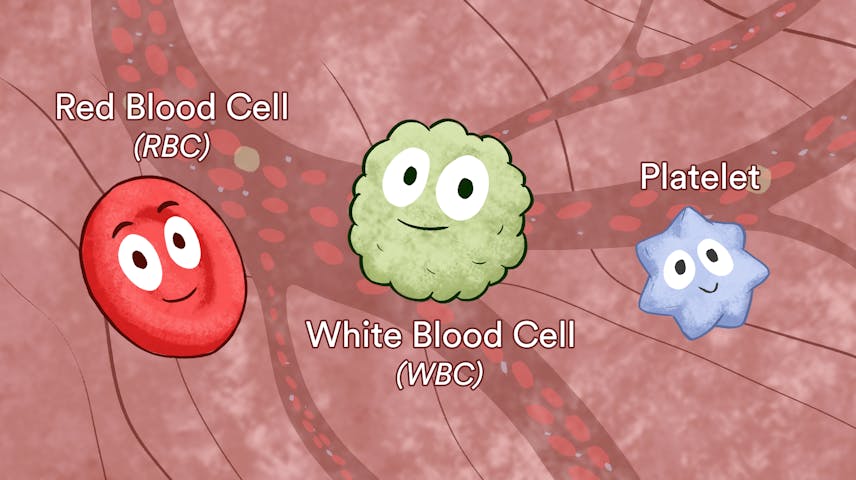
In the section of the article explaining red blood cells, the detail that blood carries oxygen shows its literal significance because it explains what blood does in the body. In the poem “Red, White, and Whole,” LaRocca calls blood a “precious river” (p. 27). The symbolic meaning stands out because that image makes blood feel valuable and connected to care and life.
Say: Turn to your partner. Partner A, share your two details and why you chose them. Then switch.
Connection to Today’s Learning:
Say: Now that you have surfaced valuable evidence, you are ready to learn how sentence choices can help you bridge evidence and analysis.
Students examine how complex sentences connect literal and symbolic meaning.
Say these Directions: Today, we are going to study how writers turn two separate ideas into one clear analytical sentence. A summary tells what the text says, but analysis shows the relationship between ideas and explains why the evidence matters. The way we build each sentence helps the reader follow our thinking.
Display page 27 and direct students to read the lines beginning with “Red, white, and whole,” and ending with “…our hearts.”
Target Lines:
Red, white, and whole,
the precious river in our arteries, our veins,
our hearts.
Display the following comparison sentence for analysis:
Analytical Sentence:
The article says blood carries oxygen, and the poem says blood is a “precious river” (p. 27).
Say: I have two facts, but I have not shown how they connect. So I ask myself: What relationship do I want the reader to see here?
Ask: How could this sentence be improved to show the relationship between these two ideas?
Although blood carries oxygen through the body, LaRocca calls it a “precious river” (p. 27) in the poem “Red, White, and Whole” to show that blood also symbolizes life and family connection.
Say: When I write literary analysis, I do not want to sound like I am just listing my notes. Now the sentence is doing more than retelling; it is interpreting why blood matters in the novel.
Say: I want the reader to see a contrast between blood’s scientific job and its emotional meaning. I choose a complex sentence that starts with although:
Although blood carries oxygen through the body, LaRocca calls it a “precious river” (p. 27) in the poem “Red, White, and Whole” to show that blood also symbolizes life and family connection.
Say: That opening clause beginning with although helps me place the literal meaning first, and then the main clause lets me explain LaRocca’s symbolic move.
Chunk | Meaning | Function |
|---|---|---|
Although blood carries oxygen through the body, | Blood has a real biological job. | Dependent clause that sets up the literal meaning |
LaRocca calls it a “precious river” (p. 27) in the poem “Red, White, and Whole” | The poet uses imagery to describe blood. | Independent clause that introduces the symbolic meaning |
to show that blood also symbolizes life and family connection. | The writer explains significance. | Phrase that pushes the sentence beyond summary |
Check for Understanding (L.7.1.b, W.7.2.b) | |
|---|---|
Combine these ideas into one sentence that shows a clear relationship: White blood cells help fight infection. La Rocca calls white blood cells “warriors” in the poem “Red, White, and Whole.” | |
Modeling:If needed, prompt students to begin with although, because, or while and end the sentence with an explanation of what that relationship reveals. |
Connection to Today’s Learning:
Say: You will now use this same sentence work to plan and draft a paragraph that explains blood’s literal and symbolic significance.
Since your students will be familiar with the RACE strategy from previous units, model the most complex step of the analysis: explaining the significance of evidence using effective verbs (such as symbolizes, reveals, or suggests) and subordinating conjunctions, which are used to join a dependent clause (an incomplete thought) to an independent clause (a complete thought) to show the relationship between ideas.
Say: Your writing must have a topic sentence or thesis. When you restate the prompt in the R step of RACE, you are writing a thesis — not just repeating the question. A strong thesis previews the relationship you will explain: what LaRocca does with blood AND where that becomes most visible.
Say: Additionally, When we move from a literary text to an informational one our writing needs transitions that signal that move. A connector makes the relationship clear: it tells the reader whether you are contrasting, adding, or showing that the two sources speak to the same idea.
Say: Analytical writing about literature and information requires formal style: no contractions, no I think, no slang. Use claim language: LaRocca reveals, the evidence demonstrates, this suggests.
Say: Your final 1–2 sentences are your conclusion. A strong concluding statement must (1) follow from your analysis — no new claims about blood-as-symbol — and (2) support the analysis by naming why this literal-symbolic reading matters for understanding the novel.
Say these Directions: Use the RACE Writing Strategy graphic organizer to plan your response to the following question:
Ask: How has LaRocca used blood as both a literal and a symbolic force in Red, White, and Whole so far?
Say: First, choose two or three strong pieces of evidence: one from “What Is Blood?,” one from the poem “Red, White, and Whole,” and at least one more from another poem we have read so far in this book.
Say: Remember that RACE stands for “Restate the question” + “Answer the question” + “Cite evidence” + “Explain your answer.” In the Explain box, use an analytical verb such as symbolizes, reveals, or suggests to show why your evidence matters. Circle the connector (although, because, while) you will use in your analysis.
Say: Before I draft, I want to make sure each piece of evidence has a job. My claim needs to answer the whole prompt, so I cannot choose only science facts or only poetic images.
First, I start by selecting one article detail that explains what blood literally does, because that gives my paragraph a solid factual base.
Then I choose the “precious river” (p. 27) image from the title poem, “Red, White, and Whole,” because it clearly turns blood into a symbol.
I add one more poem detail from “Give and Take” because it introduces sacrifice, which makes my analysis deeper.
Say: Now my evidence is not random; it is organized to show that LaRocca builds blood into a force of life.
Restate | LaRocca uses blood as both a literal and a symbolic force in Red, White, and Whole. |
|---|---|
Answer | LaRocca uses blood as both a real force that keeps people alive and a symbol of love, sacrifice, and connection. |
Cite | In the article explaining red blood cells, readers learn that blood carries oxygen through the body. In the poem “Red, White, and Whole,” blood is described as a “precious river” (p. 27). In the poem “Give and Take,” the speaker connects blood to what a mother gives during birth (p. 2). |
Explain | According to the article “What Is Blood?,” red blood cells deliver oxygen all through the body. Although blood does this important biological job, author LaRocca shows it can mean something much more symbolic. In the poem “Red, White, and Whole,” she calls blood a “precious river” (p. 27), and in “Give and Take,” she connects it to what a mother might sacrifice during birth (p. 2). Together, these texts suggest that blood is more than just a biological element; it is also a symbol of life and the love between a parent and child. |
Say: Now it’s your turn to use the RACE strategy to help you analyze how LaRocca uses blood as both a literal and a symbolic force in Red, White, and Whole.
Ask: Which evidence pair from your notes will help you answer both sides of the prompt most clearly?
I will use the article detail about blood carrying oxygen and the image of blood as a “precious river” (p. 27) from “Red, White, and Whole.” That pair works well because one shows the literal function, and the other shows the symbolic meaning. Then I could add “Give and Take” to explain sacrifice.
Pulse Check (W.7.2.b) |
|---|
Which sentence best explains the significance of blood instead of only summarizing details?
|
Guide students in drafting an evidence-based analytical paragraph that connects the article and poems through partner discussion.
Say these Directions: Draft one well-developed paragraph (6-8 sentences) in your journal using your plan. As you write, make sure your paragraph includes a clear claim, evidence from the article and the poems, and at least one compound or complex sentence that helps show the relationship between literal and symbolic meaning.
Say: Your paragraph must include:
1 complex sentence (using although, because, or while)
1 analytical verb (symbolizes, reveals, or suggests)
Evidence from both the article and the poem
Name the source using text landmarks such as “In the article . . .” or “In the poem . . .”
Explanation of the significance of the evidence, not just summary
Say: Before you draft, underline the precise words you must use to explain blood as both literal and symbolic. These words do that work: symbolism, literal, figurative, biological, ancestry, kinship, donor, marrow. Choose at least 3 to use intentionally — in sentences where the word carries the explanation.
Example swaps: family → kinship; what blood does → its biological function.
Say: When you and your partner have drafted your paragraphs, read them aloud to each other. Then tell your partner:
One sentence that goes beyond summary and why
One place where they can push analysis using an analytical verb (symbolizes, reveals, suggests)
Ask: What is one place in your partner’s paragraph where the writing goes beyond summary?
Your sentence about the “precious river” goes beyond summary because you explain that the image makes blood feel valuable and connected to family care, not just what blood is.
Ask: Where could your partner push the analysis further?
You could push your thinking further after the detail from “Give and Take” by explaining how sacrifice affects Reha, rather than just saying the mother gave blood during birth.
Lesson 7 Writing Rubric: Analytical Paragraph — Blood as Literal and Symbolic Force
Writing prompt: Write an analytical paragraph responding to the prompt: How has LaRocca used blood as both a literal and a symbolic force in Red, White & Whole so far? Explain what blood does in the poem — not just what it is.
Criteria | 1 — Beginning | 2 — Developing | 3 — Proficient |
|---|---|---|---|
Thesis & Topic Sentence (W.7.2.a) Argue, Don't Just Identify | The topic sentence identifies an image or symbol but does not argue what it reveals. The paragraph describes rather than analyzes. | The topic sentence names the image or symbol and hints at what it reveals, but the claim is vague or incomplete — it doesn't fully explain what the image or symbol does in the poem. | The topic sentence argues how a specific image or symbol reveals something meaningful in the poem — not just what it is, but what it does and what it means. |
Evidence & Analysis (W.7.2.b) Commentary, Not Paraphrase | Evidence from the poem is absent or the paragraph simply retells or paraphrases lines without explaining what the image or symbol reveals. | Evidence from the poem is present, but commentary mostly paraphrases rather than analyzing what the imagery or symbolism reveals. | Evidence from the poem is accurately cited and paired with commentary that explains what the image or symbol reveals — what it makes the reader see, feel, or understand about Reha's experience. |
Precise Language & Style (W.7.2.d) Precise Analytical Language | Language is vague or informal. No precise vocabulary related to imagery, symbolism, or literary analysis is used. | Some analytical language is present (image, symbol, reveals, suggests), but word choices are inconsistent or not always accurate. | Precise analytical vocabulary — imagery, symbolism, connotation, reveals, conveys, represents, suggests — is used accurately throughout to explain how the image or symbol works in the poem. |
Elaboration (W.7.2.e) Explain the Deeper Meaning | The paragraph does not elaborate on the deeper meaning of the image or symbol. Evidence is cited without explanation. | The paragraph attempts elaboration, but the explanation of what the image or symbol reveals is incomplete or stays at the surface. | The paragraph elaborates by explaining not just what the image or symbol is, but what it reveals about Reha's inner experience, cultural identity, or emotional state. The analysis goes beyond observation to interpretation. |
Conclusion (W.7.2.f) Close with Insight | The paragraph does not include a concluding sentence or simply restates the topic sentence. | The conclusion restates the topic sentence but does not add an insight about what the image or symbol ultimately reveals about the poem's meaning. | The paragraph ends with a concluding sentence that reflects on what the image or symbol ultimately reveals — about Reha's experience, LaRocca's craft choices, or the poem's central meaning. |
Checklist (W.7.2.a-f, W.7.4, L.7.1b) |
|---|
As you draft and give partner feedback, make sure you have:
|
Provide students with a confidence continuum (i.e., 1–5). As needed, model how to demonstrate a level of confidence using the continuum.
Reflection (L.7.1.b) |
|---|
Use the Reflection routine to reflect on your ability to combine sentences to show relationships between ideas. |
Have students reflect on a writing tool or phrase that supported their thinking.
Say these Directions: Write a 1–2 sentence response.
Ask: Which phrase or tool helped you most today as a writer?
The phrase “to show that” helped me most because it reminded me to explain the meaning of the detail instead of stopping after the quote.
Instruct students to read the poems “Courtly Love,” “Do You Speak Indian?,” “When You Are Different,” “Sisters,” “Brothers,” “Only,” “Birthday Parties,” “Embarrassing Things,” “Rules,” and “Mustard Seeds” from Red, White, and Whole (pp. 28–45) and respond to the following prompt in their Journal:
When does being different feel especially hard for Reha? Find a moment from your reading that shows Reha feeling this way, and explain what makes it so hard.
Red, White, and Whole
Rajani LaRocca

What Is Blood?
National Institutes of Health (NIH) and Centers for Disease Control (CDC), adapted by Newsela