Loading course navigation
Loading lesson
50 min
Student Lesson
Lesson 33: Comparing Experiences in Red, White, and Whole and “Bicultural Identity: Then & Now”, Part 1
Content
Students will analyze how LaRocca’s “Author’s Note” and Kunnath’s article present bicultural identity through different evidence and perspectives.
Language
Students will compare and qualify ideas using contrast language and evidence-based frames in discussion and writing.
Foundational Skills
Students will read short nonfiction passages fluently, using phrasing and punctuation to support meaning.
What is culture, and how does it shape our identity and sense of belonging especially when we move between more than one world?
Knowledge-Building:
Students extend the unit’s study of bicultural identity by comparing a personal author reflection with an informational article about Indian American experiences across generations.
Enduring Understanding:
Identity is shaped by biological, cultural, and emotional connections, and texts help us see how those layers interact across time and perspective.
Future Lessons:
Students will carry this comparison work into final analysis by using context and author choices to strengthen claims about symbolism, imagery, and identity in the novel.
Unit Performance Task:
Today’s work strengthens students’ ability to build a claim, select evidence, and explain how a text reveals connection and belonging.
| Lesson Flow | Purpose of Learning Experience |
|---|---|
Launch5 Minutes | Students will activate prior learning from the ending poems and set up the question of how an author’s real-life perspective changes readers’ understanding of the novel. |
Literacy Lab10 Minutes | Students will learn academic vocabulary for comparing texts and analyzing whether one text complements or complicates another. |
Learning in Action30 Minutes | Part A: Tracking the “Then” Generation (RI.7.1,RI.7.9) Students will gather and organize evidence from Kunnath’s article and LaRocca’s “Author’s Note” to compare generational experiences of bicultural identity. Part B: Does LaRocca Match or Complicate the Pattern? (RI.7.1, RI.7.9) Students will write a short, evidence-based response comparing how the two texts present Indian American identity across time. |
Material List
Red, White, and Whole by Rajani LaRocca, Author’s Note (pp. 211–213)
Unit 4 Lesson 33 Student Edition
3-Column Chart graphic organizer
Routines
Think-Pair-Share
Morphology & Vocabulary
Graphic Organizer Deep Dive
Source-to-Claim Quick Write
Check for Understanding
Have students pair up. Invite them to take out their homework responses about the difference between an author’s voice and a narrator’s voice.
Say these Directions: In the previous lesson, we studied how Amma’s letter changes the ending of the novel and helps us think about words as a lasting connection. Today, we are stepping outside Reha’s voice for a moment and hearing directly from the author, Rajani LaRocca, and then comparing her reflection with an article about bicultural identity across generations.
This matters for our final literary analysis because strong readers do more than quote a text; they understand how perspective and context deepen meaning.
Discuss the following question with a partner:
Prompt students to discuss the question with a partner:
Ask: How is the voice of the author different from the voice of her narrator?
The narrator speaks from inside Reha’s story and feelings, but the author speaks directly to the reader about why she wrote the book and what parts connect to her own life. She states, “...much of this novel is based on my own experiences.” Reha’s voice is part of the novel, while LaRocca’s voice in the “Author’s Note” is more reflective and direct.
Say: Turn to your partner. Partner A, share your thinking first in about 30 seconds. Partner B, listen for one idea you can build on. Then switch.
Say: After your discussion respond in writing to the question:
Ask: Now that we know some of Reha’s story connects to LaRocca’s real life, does that change how you interpret the character of Reha?
Yes, it changes my reading because Reha’s struggles with belonging and family feel even more personal. I still know Reha is a fictional character, but the “Author’s Note” makes me see that LaRocca is writing from real emotions and experiences, not inventing everything from scratch.
Connection to Today's Learning:
Say: You will now build the key vocabulary needed to compare how two texts present bicultural identity across time.
Guide students in building comparison vocabulary (conform, complicate) through morphology and text connections.
Target words: conform, complicate
Say these Directions: Today we need two strong comparison words because our job is not just to say whether the texts are similar or different. We also need language for when one text fits a pattern (conform) and when one text adds a more layered picture (complicate). These words will help unlock our comparison in Learning in Action.
Display page 211 from Red, White and Whole and direct students to read the sentence beginning with “The truth is…” and ending with “…split in two.” Then display the quote from “Bicultural Identity: Then & Now” by Bhavana Kunnath
Target Sentence:
“The truth is, I’ve always felt split in two.” (LaRocca)
“...so many Indian American teens still feel the pressure to conform.” (Kunnath)
Say: When I read LaRocca’s line, “The truth is, I’ve always felt split in two,” (p. 211) I notice that she is describing what bicultural identity can feel like from the inside.
Say: She does not use the word conform there, but that line helps me understand the emotional pressure behind trying to belong in more than one world.
Say: Then I move to Kunnath’s article, where she writes that “...so many Indian American teens still feel the pressure to conform.” Here, the word conform appears directly, and the context helps me define it as changing yourself to fit what others expect.
Say: I can also hear form inside conform, which reminds me of shape, so the word suggests shaping yourself to match outside expectations.
Say: Now I can compare the two texts more precisely: Kunnath names the social pressure, while LaRocca shows what that pressure can feel like personally. That is where complicate becomes useful, because LaRocca’s reflection does not just repeat Kunnath’s point; it adds another layer to it.
Say these Directions: Add conform and complicate to your Personal Dictionary. Next to each word, write a short meaning in your own words and one clue from today’s texts that helped you figure it out.
Verify Meaning: Prompt students to use a dictionary, glossary, or other reference material to confirm the meaning of the word they have constructed or inferred.
Say: Check your definition using a dictionary or other reference material. Does the definition match what we inferred? Revise as needed.
Say: Now we are going to encode one word so it sticks in your memory.
Erase/Hide: Stop displaying the word conform.
Retrieve: Write the word conform from memory in your Personal Dictionary.
Check: Display the word and check your spelling. Fix it if needed.
Re-Label: Circle con- and underline form.
Metacognitive Prompt: Prompt students to respond in writing to the question:
Ask: Which part of the word helped you remember how to spell it?
The part form helped me because I remembered the word has to do with shaping yourself to fit what others expect.
Check for Understanding (L.7.6) |
|---|
Use your Personal Dictionary to write one sentence that uses both conform and complicate to summarize today’s comparison. |
Teacher Tip: If needed, guide students to start with Kunnath’s idea first and then add LaRocca’s text with but or however. |
Connection to Today's Learning:
Say: You are now ready to gather evidence and decide where LaRocca’s personal story complements Kunnath’s generational framework and where it makes that framework more complex.
Keep students in pairs. Students should have both texts in front of them.
Say: Today we will analyze how two authors writing about the same topic—bicultural identity—shape their presentations differently. As we compare the texts, we will look at both the evidence each author chooses to emphasize and the way each author interprets bicultural identity across generations.
Say: Kunnath presents a broader informational perspective about patterns across generations, while LaRocca presents a personal reflection shaped by her own experiences. Reading both texts together helps us notice how authors can shape the same topic in different ways.
Say these Directions: Revisit Kunnath’s article and mark every detail that describes the then generation. Look especially for details about pressure to conform, lack of community, and the cost of being visibly different. Then use the 3-column chart to compare those ideas with details from LaRocca’s “Author’s Note.”
Say: First, I go to the part of Kunnath’s article that explains what life was like for earlier Indian American generations. I am not highlighting whole paragraphs; I am choosing exact details that show the pressure or challenge clearly.
Next, I move to the “Author’s Note” and look for places where LaRocca describes her own life, family, or reasons for writing the book.
Then I ask a comparison question: Does this detail support Kunnath’s interpretation of bicultural identity, or does it complicate that interpretation by adding something unexpected?
If I only write “same” or “different,” my thinking stays shallow. When I name the relationship more precisely, I am doing real cross-text analysis.
Say: In your pair, complete at least two rows of the chart. In the first column, record a piece of evidence Kunnath emphasizes about bicultural identity and the then generation. In the second column, record a detail from the “Author’s Note.” In the third column, explain how the two authors shape the topic similarly or differently through their evidence and interpretations, using one of these labels: complements, partly complements, or complicates.
Kunnath’s “then” detail | LaRocca’s “Author’s Note” detail | Relationship |
|---|---|---|
In the part of the article describing Indian American kids in earlier decades, Kunnath explains that many felt pressure to fit in to American culture and hide differences because they felt “the pressures of this cultural disconnect…” | In the “Author’s Note,” LaRocca explains that “much of this novel is based on my own experiences—the sense of living in two worlds…the weekday American or the weekend Indian.” | complements because both texts show the pressure of feeling different |
In the section where Kunnath argues the experience has changed over time, she suggests later generations may have more community and visibility. She states that the “ability to turn biculturality into a source of strength and motivation is the thread that connects the Indian American youth of then and now.” | In the “Author’s Note,” LaRocca explains that she still felt the need to tell this story years later and honor experiences that were painful and lasting. She hopes that her book “...helps you understand that even when you feel torn apart, you can still be a whole person.” | complicates because change has happened, but earlier experiences still matter deeply |
Prompt students to respond in writing to the questions:
Ask: Which detail from Kunnath’s article, “Bicultural Identity: THEN & NOW” best captures the pressure on the “then” generation, and why?
A strong detail is the part where Kunnath explains that many kids felt pressure to fit in and not stand out. She quotes one person who said, “I tried hard to be an American … nothing about me would give away the Indian influence.” That detail captures the “then” generation because it shows how belonging could depend on hiding visible differences.
Ask: Where in LaRocca’s “Author’s Note” do you see a detail that complements or complicates Kunnath’s idea?
In the part of the “Author’s Note” where LaRocca explains that parts of Reha’s story came from her own life, and her “wanting to be like everyone else,” I see a detail that complements Kunnath’s idea about feeling different. At the same time, it complicates the article because LaRocca’s reflection shows that those experiences stayed important long after childhood because as an adult she says, “As I’ve gotten older, I’ve felt even more contradictions.”
Pulse Check (RI.7.9) |
|---|
Which statement best explains the relationship between Kunnath’s article and LaRocca’s “Author’s Note”? A. Both texts tell exactly the same story about bicultural identity from the same point of view.
B. Kunnath argues that bicultural identity only mattered in the past, while LaRocca argues it only matters in the present.
C. Kunnath presents a broad generational pattern, while LaRocca provides a personal perspective that both supports and complicates that pattern.
D. LaRocca’s “Author’s Note” is more credible than Kunnath’s argument because a professional author’s story is more credible than a student’s.
|
Students will use their 3-column chart and both texts to write a focused, evidence-based response.
Say: Strong cross-text analysis explains not only what happened in each text, but also how each author shapes the reader’s understanding through different evidence and perspectives.
Say these Directions: Write a short analytical response to the following writing prompt in your journal. Make a clear claim about whether LaRocca agrees with Kunnath, partly agrees, or complicates the argument. Use at least one specific detail from Kunnath’s article and one specific detail from LaRocca’s “Author’s Note.” In your response, use at least one of today’s vocabulary words: conform, complicate, or generation.
Ask: Kunnath argues that the Indian American experience has changed significantly since the 1980s. Based on the “Author’s Note,” does LaRocca agree—or does her own story complicate that argument?
LaRocca partly agrees with Kunnath, but her story also complicates the argument. In the part of Kunnath’s article about the earlier generation, she explains that many Indian American kids felt pressure to conform and had less community. In LaRocca’s “Author’s Note,” she explains that parts of Reha’s story came from her own life, which shows that this pressure was real for her too. However, the note also complicates Kunnath’s argument because LaRocca’s experience does not feel finished or simple. She wrote the novel later to honor those feelings and her family history, so the past still shapes identity in the present.
Say: When writers move from notes to writing, they need a claim that explains the relationship between the texts. If I say both texts talk about bicultural identity that is true but too general.
Say: A stronger claim explains how the texts relate. For example, Kunnath explains that earlier Indian American generations often struggled to fit in, while LaRocca’s author’s note shows how that experience shaped her own life.
Say: To support that claim, I select evidence from each text. Kunnath describes the pressure to conform and quotes someone who said they “tried hard to be an American.”
Say: In the author's notes, Larocca reflects on her childhood and explains that she “felt split in two” (p. 211).
Say: Then I explain what reading both texts together reveals about identity and belonging.
Source to Claim Checklist (RI.7.9) |
|---|
Use the following checklist to help you move your comparison notes into a cross-text claim:
|
Display the following writing model if needed for support and guidance:
Kunnath argues that the Indian American experience has changed across generations, especially from the 1980s to now. LaRocca’s “Author’s Note” partly agrees with that idea because her reflection shows that feeling different and trying to belong were real parts of her own life. In the part of Kunnath’s article about the “then” generation, she explains that many young people felt pressure to fit in and stand out less. In LaRocca’s “Author’s Note,” she explains that parts of Reha’s story came from her own experience, which supports the article’s description of that pressure. However, LaRocca also complicates Kunnath’s argument because her note shows that those earlier experiences do not stay in the past; they continue shaping identity, memory, and the stories people choose to tell. Reading both texts together gives a fuller picture of bicultural identity because one text gives the pattern and the other gives the personal cost.
Provide students with a confidence continuum (i.e., 1–5). As needed, model how to demonstrate a level of confidence using the continuum.
Reflection (RI.7.9) |
|---|
Reflect on your ability to compare texts and analyze how they present ideas using the Reflection routine.
|
Modeling:I would rate myself a 4 if I had two good pieces of evidence but my explanation still felt general. My next step would be to add one sentence that tells exactly how the second text changes the first. That is how I move from summary to analysis. |
Have students write a brief response using evidence from both texts to analyze culture, identity, and belonging.
Say these Directions: Before we close, take one minute to look back at the comparison work you did today. Then answer the Check for Understanding question using one detail from the “Author’s Note” and one detail from Kunnath’s article.
Ask: How does reading the “Author’s Note” alongside Kunnath’s article deepen your understanding of culture, identity, and belonging in Red, White, and Whole? Cite two specific text details, one from each text.
Reading the two texts together deepens my understanding because the article explains the broader experience of bicultural identity while the author's note shows how that experience affected the author personally. In Kunnath’s article, the writer explains that many young people balance two cultures and says it was “easier to process my bicultural life by neatly dividing it into two worlds.” In the author's note, LaRocca reflects on her own childhood and writes that she spent time “wondering which one was the ‘real’ me: the weekday American or the weekend Indian” (p. 211). These details show that questions about identity and belonging in the novel connect to real experiences of growing up between cultures.
Students read their independent reading book for 20 minutes and complete a reading log entry.
Read your independent reading book for 20 minutes. In your reading log, record the date and pages you read, write 1–2 sentences about what happened or what you learned, and respond to this week’s prompt using evidence from the text.
Red, White, and Whole
Rajani LaRocca
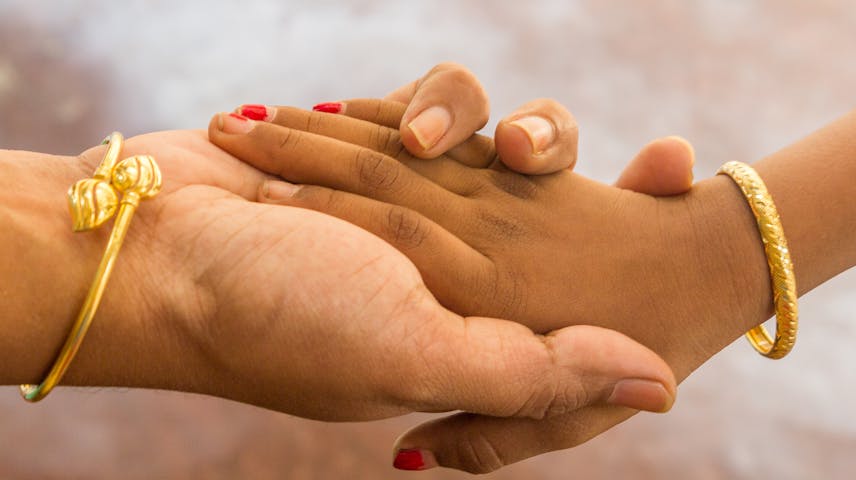
Youth: Bicultural Identity, Then and Now
Bhavana Kunnath, Khabar, an Indian American magazine