Loading course navigation
Loading lesson
50 min
Student Lesson
Lesson 25: Animal Farm and Historical Revolutions, Collaborative Discussion
Content
Students will participate in structured academic discussions in pairs and small groups about how revolutions protect or betray their ideals, citing evidence from Animal Farm and informational texts.
Language
Students will sustain a collaborative, text-based discussion that synthesizes evidence from three to four sources and uses transitions to build comparisons and counterclaims about how revolutions protect or betray their ideals.
Why do revolutions rise, and why do some end up betraying their own ideals?
Knowledge-Building:
Students continue to build their knowledge of the American and Russian Revolutions through comparisons to Animal Farm’s revolutionary ideals.
Enduring Understanding:
Students explore how revolutions begin with ideals—but don’t always stay true to them—through the lens of historical and fictional revolutions.
Future Lessons:
In Lesson 26, students will review how to create a strong claim in their writing. In Lesson 27, students will read and analyze Chapter IX of Animal Farm.
Unit Performance Task:
Today’s discussion helps students practice making claims, using evidence from multiple texts, and expressing and responding to counterclaims as they prepare to write an evidence-based argument in Animal Farm.
| Lesson Flow | Purpose of Learning Experience |
|---|---|
Launch5 Minutes | Students will compare the Russian and American Revolutions to analyze how revolutionary ideals are protected or lost. |
Literacy Lab10 Minutes | Students will explore how to create a counterclaim and how to respond to a counterclaim by finding relevant and specific evidence. |
Learning in Action30 Minutes | Discussing Revolutionary Ideals (RL.8.1, RI.8.1, SL.8.1.a, SL.8.1.b, SL.8.1.d, SL.8.3, SL.8.6) Students will conduct pair, group, and class-wide discussions about how revolutionary ideals are protected or betrayed by citing evidence from fictional and informational texts. |
Not available for this lesson
Not available for this lesson
Material List
Animal Farm by George Orwell
Unit 2 Lesson 25 Student Edition
Routines
Turn and Talk
Quick Write
Have students take out their homework from the previous lesson: Have students review their Comparing Revolutions Chart from today. Instruct students to write in their Journal on the following prompt:
As you review your chart, find one quote from each source that will support your responses to the following questions:
Based on all the texts, what is the strongest reason why some revolutions uphold or betray their original ideals?
Which revolution does Animal Farm resemble more closely, and why?
Why might Orwell have created his animal satire about revolutions? What messages or ideas did Orwell want to communicate to readers?
Instruct students to take out their Comparing Revolutions Chart from Lesson 24. They will use it during this lesson’s academic discussion. Have students complete a turn-and-talk routine to discuss revolutionary ideals.
Say these Directions: Turn to a partner and discuss the prompt:
Which revolution—Russian, American, or Animal Farm—best shows how ideals can be lost or protected? Use one piece of evidence from your organizer.
Animal Farm most clearly shows how ideals can be lost. At first, the animals promise equality to each other with the Seven Commandments, but by Chapter VIII, the pigs have changed the rules and live like humans, demonstrating inequality among the animals.
Ask for two to three volunteers to share with the class.
Connection to Today’s Learning
Say: You’ve gathered evidence about multiple revolutions by analyzing several texts. Today, we’ll use that evidence to analyze why some political revolutions can protect their original ideals and why others betray them.
Guide students through the process of providing evidence to support an argument.
Say: In the next part of the lesson, we will engage in an academic discussion about the information in the texts that you have read. First, you will work with a partner to discuss the reasons why revolutions protect or betray their ideals. Together, you will come up with evidence to support your opinions. Then, you will join another pair and discuss historical connections and why Orwell might have made these connections. Lastly, groups will debate each other to practice how to respond to counterclaims.
Remind students that they have been writing claims in previous lessons. And, during this lesson, they will think about and share counterclaims. Show students how to think about a counterclaim by modeling a response that qualifies a claim. Display the following counterclaim definition and example:
Counterclaim: an opposing claim
Example of a counterclaim: “I see your point about equality, but the executions show violence became normalized, which suggests another ideal was also betrayed.”
Say: As you engage in discussion today, you might be presented with an argument that conflicts with your own. In this case, you will have to refer to additional specific evidence that you think is stronger or concede the point if you have been convinced.
Model how to make an argument when presented with a counterclaim:
Say: For example, if my claim is that the ideal that was most betrayed was the promise of no violence, I might give the evidence that the pigs originally came up with the commandment “No animal shall kill any other animal.” If someone counters my claim and says they think that the ideal that was most betrayed was the promise of equality and gives the evidence of the pigs living in the farmhouse after they all agreed no one should live there, then I would need to find more evidence to support my claim.
Ask: What other evidence can we think of that supports the claim that the ideal most betrayed by the pigs was the promise of no violence? Support your answer with reasoning.
The executions of animals who confessed to crimes show that violence became normal on the farm. This betrays the commandment that no animal should kill another animal. It also shows how Napoleon used fear to control others, similar to how political purges happened after the Russian Revolution.
Encourage students to use the vocabulary words from Lesson 24, subjugation and liberties, during the academic discussion. Allow one to two students to share their thoughts.
Connection to Today’s Learning
Say: At the end of the unit, you will be asked to write an argument essay. Practicing arguments out loud today will make the essay easier to write.
Students will now engage in an academic discussion about revolutionary ideals based on the historical and fictional revolutions they have studied.
Teach: Evaluating a Speaker’s Argument
Say: When we listen to a speaker in a discussion, we do more than decide whether we agree. First, we name the speaker’s claim, or main point. Next, we ask whether the reasons actually connect to that claim and whether the evidence comes from the text instead of from a general opinion. Then, we decide whether the speaker has given enough evidence or whether the argument still needs another strong detail. Finally, we notice if the speaker adds a detail that may be true but does not actually support the claim, because that is irrelevant evidence. For example, if a speaker says Animal Farm shows revolutions fail because the animals work hard, I would ask whether that detail directly proves the claim, or whether stronger evidence would be Napoleon’s propaganda, violence, and rule changes.
Say these Directions: As you listen in each round, jot quick notes about your peers’ claims, their evidence, and whether their reasoning is sound or needs more support.
Round 1: Claim & Evidence
Have students work in pairs during this first round of discussion.
Say these Directions: Turn to your partner and discuss the following prompt. Make sure you use evidence from your Comparing Revolutions chart and text annotations.
Question 1: Based on all the texts, what is the strongest reason why some revolutions uphold or betray their original ideals?
One major reason revolutions betray their ideals is that power becomes concentrated in a small group without accountability. In Animal Farm, Napoleon controls information through Squealer and eliminates rivals like Snowball. In the Russian Revolution, Stalin centralized power and limited political opposition. In contrast, the American Revolution created institutions like elected legislatures that helped preserve some ideals, even though many groups were still excluded.
Have peers ask probing questions:
Which ideal is being protected or betrayed?
The ideal of equality is betrayed in Animal Farm because the pigs give themselves special privileges, like living in the farmhouse and trading with humans. For example, the pigs take to sleeping “in the beds” of the former human owners, even though that is not supposed to be allowed according to the original commandments (p. 66).
How is it being protected or betrayed?
The ideal of equality is betrayed through propaganda and rule changes. Squealer convinces the animals that the pigs need more food and comfort to lead effectively, which allows inequality to grow. He repeatedly tells the animals that the pigs have so much “brainwork we have to do” and they should not be robbed of their “repose” (p. 67).
How do you know your evidence is relevant to the claim?
My evidence is relevant because it directly shows the pigs breaking the promise of equality. If my claim is that equality is betrayed, then details about special privileges and changed rules support that claim better than a general detail about life on the farm.
Round 2: Cross-Text Comparison
Instruct student pairs to join another set of student pairs, creating a small group of four students.
Say these Directions: Discuss with your group the following prompts. Use evidence from any chapter of Animal Farm, your notes on the Russian Revolution, and your notes on the American Revolution.
Question 2: Which revolution does Animal Farm resemble more closely, and why?
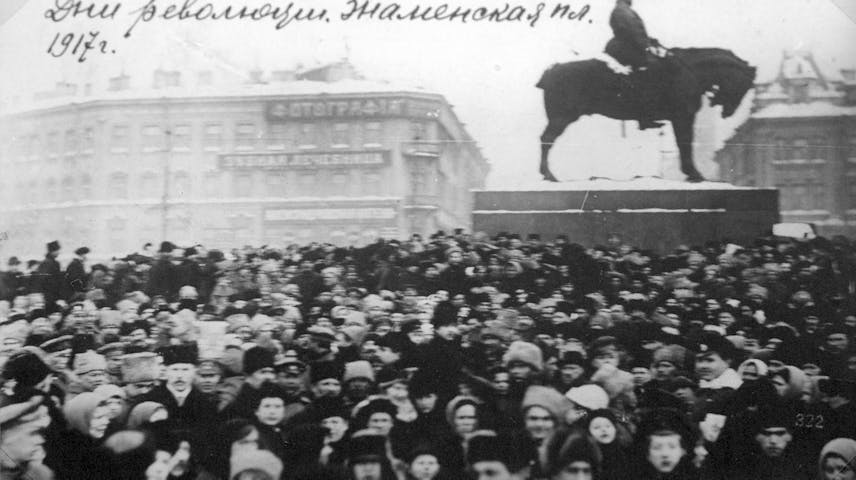
Animal Farm resembles the Russian Revolution more closely because both begin with promises of equality for all but end with a dictatorship. Napoleon represents Stalin, and the pigs become a ruling class just like Communist Party leaders. For example, Stalin removes Trotsky from power and establishes an “oppressive” dictatorship. Even Lenin allowed some “economic freedoms” but not total equality as he had originally promised.
Question 3: Why might Orwell have created his animal satire about revolutions? What messages or ideas did Orwell want to communicate to readers?
Orwell used satire to show how propaganda and fear can corrupt a revolution’s ideals. He wanted readers to understand that citizens must question authority and protect truth, or leaders can manipulate information and gain total control.
Round 3: Counterclaim Challenge
Instruct students to now challenge another small group of peers by sharing claims made and providing relevant evidence and logical reasoning.
Say these Directions: With your group, you will now challenge an opinion from another group using text evidence and logical reasoning. Before you respond, restate the other group’s claim in your own words. Then decide whether their reasoning is sound, whether their evidence is relevant and sufficient, and whether any detail they used is irrelevant.
What is the other group’s main claim, and what evidence are they using to support it?
The other group’s main claim is that revolutions fail when leaders concentrate power. Their evidence is that Napoleon drives out Snowball and that Stalin limited opposition after the Russian Revolution. Those examples are relevant because both show power moving into one leader’s hands.
Is there another explanation for why revolutions fail to uphold their original ideals?
Another explanation is economic hardship. In Russia, war and food shortages created chaos that made authoritarian control easier. For example, Lenin originally said that he wanted “land for the peasants,” but he still limited political “opposition” and only allowed “some small economic freedoms.” In Animal Farm, the animals were overworked and underfed, which made them more willing to accept Napoleon’s authority.
Is your evidence strong enough, or is there a better example? Is any evidence irrelevant?
A stronger example might be the moment when the pigs begin trading with humans, even though they said they would not. This clearly shows how they abandoned their original ideals.
Is the reasoning sound? Why or why not?
The reasoning is sound because the speaker shows a clear cause-and-effect link between concentrated power and betrayed ideals. The argument explains not just what happened, but how those actions led to lost liberties and less equality. If the speaker only said Napoleon was unfair without explaining how that connects to the revolution’s ideals, the reasoning would be weaker.
Circulate to monitor the group's discussion skills, paying close attention to the use of claims, evidence, and reasoning.
Whole-Class Synthesis
Have the whole class come together and reflect on their evolving discussions.
Ask: What patterns help explain why some revolutions maintain their ideals and others betray them?
Revolutions are more likely to keep their ideals when power is shared and leaders are held accountable. They are more likely to betray ideals when leaders consolidate power by controlling information and using fear to manipulate the citizens.
Teacher Tip |
|---|
Some students may find it easier than others to communicate their opinions. Challenge those students by assigning them an opposite stance to debate. Support those struggling by giving them some guiding questions or sentence starters. |
Provide students with a confidence continuum (i.e., 1–5). As needed, model how to demonstrate a level of confidence using the continuum
Reflection |
|---|
Reflect on your ability to debate the ideals of historical and fictional revolutions using the Reflection routine.
|
Have students quickly reflect and synthesize their learning in a quick write.
Say these Directions: Write one to two sentences in response to the prompt:
Choose one difference in rhetoric between the American and Russian Revolutions. Explain how that difference helps explain how each revolution protected or failed to protect its stated ideals.
The American Revolution rhetoric often focused on representation and natural rights, which helped create systems like constitutions and elections. Russian Revolution rhetoric promised equality but used fear and propaganda to silence opposition, which led to authoritarian rule.
Students read their independent reading book for 20 minutes and complete a reading log entry.
Read your independent reading book for 20 minutes. In your reading log, record the date and pages you read, write 1–2 sentences about what happened or what you learned, and respond to this week’s prompt using evidence from the text.
Animal Farm
George Orwell
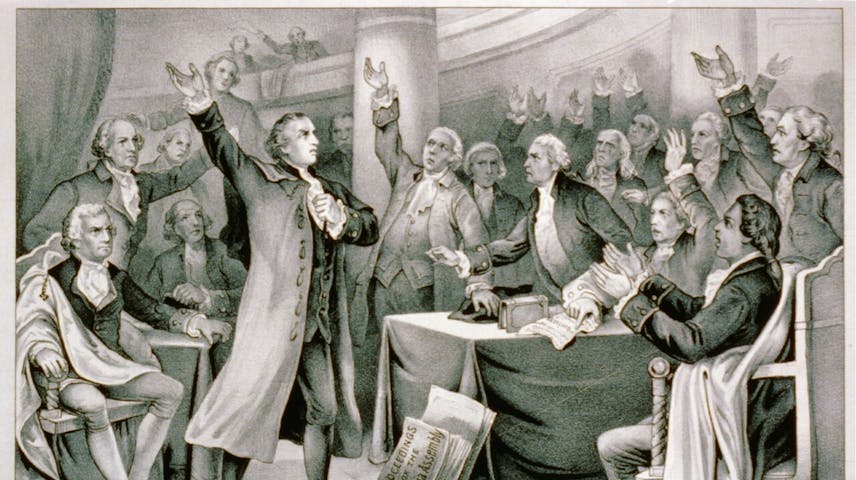
Famous Speeches: Patrick Henry's "Give Me Liberty Or Give Me Death"
Original speech from the public domain
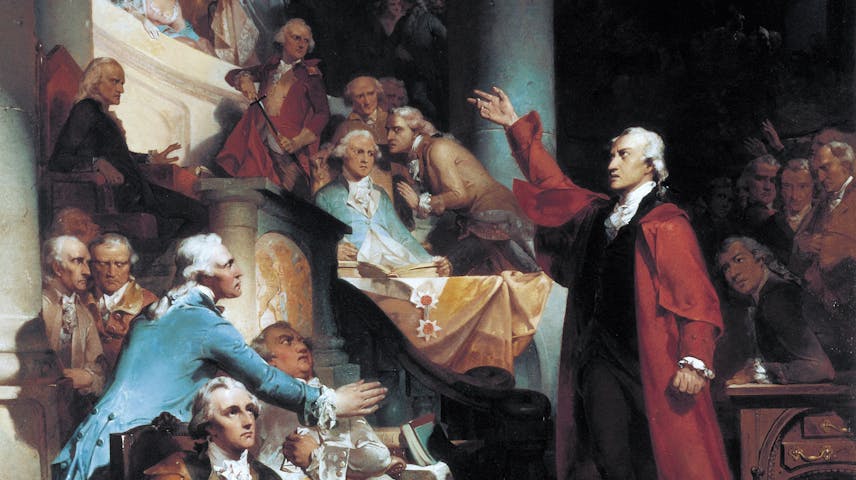
Independence and the Articles of Confederation
USHistory.org
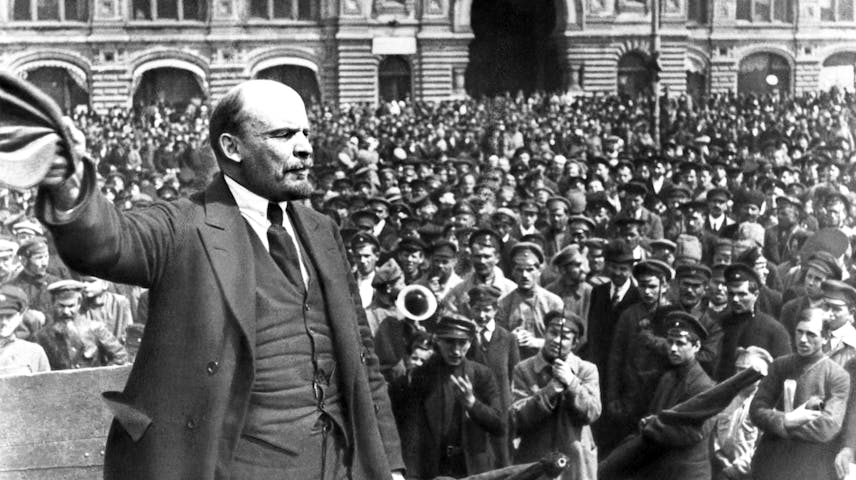
Revolution, Civil War and Terror: The Birth of the Soviet Union
Standard News Bureau
The Russian Revolution: A New Kind of Power
Standard News Bureau