Loading course navigation
Loading lesson
50 min
Student Lesson
Lesson 23: Animal Farm, Chapter VIII
Content
Students will read and analyze key excerpts of Chapter VIII of Animal Farm to consider how Napoleon’s leadership is changing through a peer discussion and a gallery walk.
Language
Students will explain how praise imagery and rewritten “laws” shape perception in Chapter VIII by using expanded noun groups and cause/effect connectors to cite evidence.
Foundational Skills
Students will explore the vocabulary word censured through contextual discussion and application.
Why do revolutions rise, and why do some end up betraying their own ideals?
Knowledge-Building:
Students will continue to build knowledge of how a leader can consolidate power to create an authoritarian government.
Enduring Understanding:
Revolutions can drift from their original ideals as leaders consolidate power and use manipulation to maintain control.
Future Lessons:
In Lesson 24, students will compare and contrast the American and Russian Revolutions, focusing on their goals, outcomes, and use of persuasive language.
Future Lessons:
In Lesson 25, students will compare the rhetorical strategies used in the American and Russian Revolutions and discuss how those strategies shaped whether revolutionary ideals were preserved or betrayed.
Unit Performance Task:
In this lesson, students analyze the ways in which Orwell uses propaganda, symbolic language, and the rewriting of laws to demonstrate the betrayal of revolutionary ideals. This examination prepares students to write an argument explaining how revolutions protect or betray their founding principles, using textual evidence and rhetorical analysis.
| Lesson Flow | Purpose of Learning Experience |
|---|---|
Launch5 Minutes | Students will reflect on Napoleon’s leadership and how it has changed. |
Literacy Lab10 Minutes | Students will examine a new vocabulary word and expand their knowledge based on situations and examples. |
Learning in Action30 Minutes | Part A: Close Reading and Discussion of Chapter VIII (RL.8.3) Students will reread key excerpts of Chapter VIII of Animal Farm and answer text-dependent questions with partners. Part B: Determining Central Ideas Gallery Walk (RL.8.2) Students will engage in a gallery walk in which they determine one central idea from Chapter VIII. |
Material List
Animal Farm by George Orwell
Unit 2 Lesson 23 Student Edition
Routines
Think-Pair-Share
Generating Situations, Context, and Examples
Gallery Walk
Quick Write
Remind students that in Lessons 19–21, they analyzed fear, propaganda, and rewritten truth in Chapters VI–VII. Tell students that today they will examine how those tactics intensify in Chapter VIII and consider what these developments suggest about the direction of the revolution.
Instruct students to take out their homework from the previous lesson: As you read Chapter VIII of Animal Farm, annotate the text for the following: In what ways has Napoleon's leadership changed from Chapter V to now?
Transition students into partners and have them engage in a Think-Pair-Share on the following prompt. Display the following prompt:
In what ways has Napoleon's leadership changed from Chapter V to now?
Say these Directions: Think about what you noticed in your homework reading. How is Napoleon treated differently in Chapter VIII than he was earlier in the story? Turn to a partner for a Think-Pair-Share and give one example from the text.
In Chapter VIII, Napoleon is treated more like a powerful ruler than an equal animal. For example, he is guarded by fierce dogs and is praised in the poem “Comrade Napoleon,” which describes him as a heroic and wise leader (p. 94). These details show that he is being elevated above the other animals in a way that did not happen earlier in the story.
Teacher Tip |
|---|
Chapter VIII shows the rebellion entering a new stage as a dictatorship emerges more clearly. The focus of this lesson is to analyze how Napoleon uses propaganda, control, and symbolic power to deepen the betrayal of the revolution’s original ideals. |
Connection to Today’s Learning
Say: In Chapter VIII, we will analyze how language, propaganda, and rewritten laws help consolidate Napoleon’s power and reveal how the revolution is drifting from its founding principles.
Present a prompt orally and/or display it. Students can respond with a partner, in writing, or in a whole-group discussion. Encourage multiple responses to show the range of context where the target word, censured, can apply.
Introduce Activity:
Censured
Discussion: Ask students to discuss with a partner or respond in writing. Then discuss responses in a whole-group discussion. Encourage multiple responses to show the range of contexts where the vocabulary words can apply.
Prompt Student Thinking:
Target word: censured
Ask: How might being censured change the way a person is treated by their coworkers or peers in the future?
They might not be as respected or trusted by others, or they might not get as many opportunities.
Ask: Why would a group choose to censure someone publicly rather than just punishing them in private?
They might want to make an example of them or make a statement about what they think is acceptable.
Ask: What is the difference between a person being censured by a government and a person being disapproved of by society?
One is official and the other is unofficial.
Ask: What are some specific behaviors that would cause a professional organization (like a group of doctors or an athletic league) to censure one of its members?
dishonesty, fraud, theft, or unethical behavior
Check for Understanding |
|---|
List the word censured in your Personal Dictionary. |
Ask: Explain to a partner how discussing the word in context helped you to further understand the word.
Tell students that this vocabulary word will be further analyzed in this lesson's text analysis work. Allow students to share their work.
Connection to Today’s Learning
Say: Today, we will examine how Snowball is increasingly censured and used as a scapegoat by Napoleon.
Explain that students will reread key passages from the first half of Chapter VIII to analyze how praise of Napoleon and changes to the commandments show a shift toward total or authoritarian control.
Say these Directions: Today, we will reread key excerpts from Chapter VIII. With a partner, reread each excerpt carefully and consider what the text is revealing about how Napoleon’s leadership has evolved in this chapter. Be ready to explain your ideas using evidence from the text.
Instruct students to read the following excerpts closely with a partner. Have students annotate as they read: How is Napoleon’s leadership evolving in this chapter?
Use three key passages from the first half of Chapter VIII:
Excerpt A: The new poem “Comrade Napoleon” (pp. 94–95).
Excerpt B: Begins with the sentence “A few days later, when the terror caused by the executions had died down, some of the animals remembered—or thought they remembered—that the Sixth Commandment decreed ‘No animal shall kill any other animal,’” and ends with the sentence “But they saw now that the Commandment had not been violated; for clearly there was good reason for killing the traitors who had leagued themselves with Snowball” (pp. 91–92).
Excerpt C: Begins with the sentence “Nevertheless, feeling against Frederick continued to run high” and ends with the sentence “Once again some of the animals heard this with a certain bewilderment, but Squealer was soon able to convince them that their memories had been at fault” (pp. 97–98).
Transition the students from close reading into discussing the following text-dependent questions with their partner:
How does the poem “Comrade Napoleon” impact Napoleon’s power?
The poem praises Napoleon with phrases such as “fountain of happiness,” “thou watchest over all,” and “yet his first squeak should be ‘Comrade Napoleon!’” This extreme praise makes him seem heroic and almost worshipped, which strengthens his power by encouraging the animals to admire him instead of questioning his leadership (pp. 94–95).
How does the wording of the Sixth Commandment help justify the executions?
The animals remember the commandment as “No animal shall kill any other animal,” but when Muriel reads it, it now says “without cause” (p. 91). This added phrase makes the animals believe the executions were justified, even though it changes the original rule.
How does Squealer manipulate the animals’ memories in this passage?
Squealer tells the animals that Snowball was never a hero, as he never “received the order of 'Animal Hero, First Class”’ (p. 97) and had actually been “censured” for cowardice. When some animals feel confused, Squealer convinces them that their memories are wrong, or “at fault,” which helps the pigs control the animals’ understanding of the past (p. 98).
Based on these excerpts, how is the farm environment changing for the animals? How has power shifted from the beginning of the revolution to now?
The farm is becoming more controlled by the pigs, especially Napoleon. The animals are encouraged to praise him in the poem “Comrade Napoleon,” the Sixth Commandment is interpreted to justify the executions, and Squealer convinces the animals that their memories are wrong. These changes show that power has completely shifted away from the animals and toward Napoleon and the pigs.
Have students discuss in pairs, and then invite students to share with the class for discussion.
Pulse Check (RL.8.3) |
|---|
In the first half of Chapter VIII, how do the pigs further distance Napoleon from the rest of the animals and solidify his role as a supreme leader?
|
Students continue analyzing Chapter VIII by identifying central ideas that develop as Napoleon consolidates power. Through a Gallery Walk, students gather evidence from the text and explain how key events reveal shifts in power, truth, and revolutionary ideals.
Transition students into small groups. Prepare them for the Gallery Walk activity.
Say these Directions: In this activity, you will work with classmates to determine central ideas that are developing in Chapter VIII. Around the room are several posters at different stations. Your group will be assigned a poster, and together you will write one central idea that is developing in Chapter VIII, and you will find evidence that helps explain how that idea is developing. Record your group’s evidence and a brief explanation on each poster.
Transition student groups into creating their poster for the Gallery Walk. Provide the following prompt to support their work:
How does Chapter VIII further develop a central idea in the novel?
The animals begin praising Napoleon instead of working together as equals, which shows the revolution’s promise of equality is fading.
The rewriting of the commandments shows that the pigs have taken total control over the animals and are creating an unjust society.
Squealer’s use of propaganda to justify all the commandments Napoleon is breaking demonstrates a betrayal of the revolution’s foundation of Animalism.
Remind students to make connections between how each text example develops the central idea in the chapter, not just what happens in the scene.
After student groups have created their central idea posters, engage the students in a gallery walk in which they can visit each other’s posters and provide feedback.
After the gallery walk, lead a whole-class discussion using the following question:
Ask: How does Chapter VIII show the revolution reaching a point where ideals are nearly gone?
In Chapter VIII, the animals begin praising Napoleon instead of working together as equals, which shows that the revolution’s promise of equality is fading. The commandment about killing is also changed to include the words “without cause,” allowing the pigs to justify the executions. These examples show how the original ideals of the revolution are being replaced by control and obedience.
Reflection |
|---|
Reflect on your understanding of the ways the pigs are manipulating the animals using the Reflection routine
|
Tell students that the Quick Write will help them summarize what they learned today and prepare for comparing different revolutions in the next several lessons.
Say these Directions: In three to four sentences, respond to the prompt below. Use at least two details from this lesson’s reading and discussion.
Choose one moment from the first half of Chapter VIII that shows Napoleon gaining more control. In two or three sentences, explain how this moment shows the revolution moving further away from its original ideals.
A moment that shows Napoleon gaining more control is all the extreme praise he receives from his fellow pigs. For example, Squealer “would talk with tears rolling down his cheeks of Napoleon’s wisdom, the goodness of his heart, and the deep love he bore to all animals everywhere . . .” (p. 93). This evidence shows the revolution moving more toward Napoleon having total control, and equality being completely eradicated.
Assign each student one of the four articles so that the class is split into four equal groups. Try to keep the numbers as even as possible. Students should read only their assigned article.
Explain to students that in Lesson 24, they will work in small groups in which each group will include at least one student for each article, so everyone must be ready to explain their assigned article to others.
Provide students with a copy of their assigned article.
Russian Revolution:
"Russian Revolution: A New Kind of Power”
“Revolution, Civil War and Terror: The Birth of the Soviet Union”
American Revolution:
“Independence and the Articles of Confederation”
“Patrick Henry’s ‘Give Me Liberty or Give Me Death’”
Instruct students to read their article and annotate as they read for the following ideas:
What the revolution was fighting for (its main ideals or goals)
What the revolution achieved or failed to achieve (outcome)
Animal Farm
George Orwell
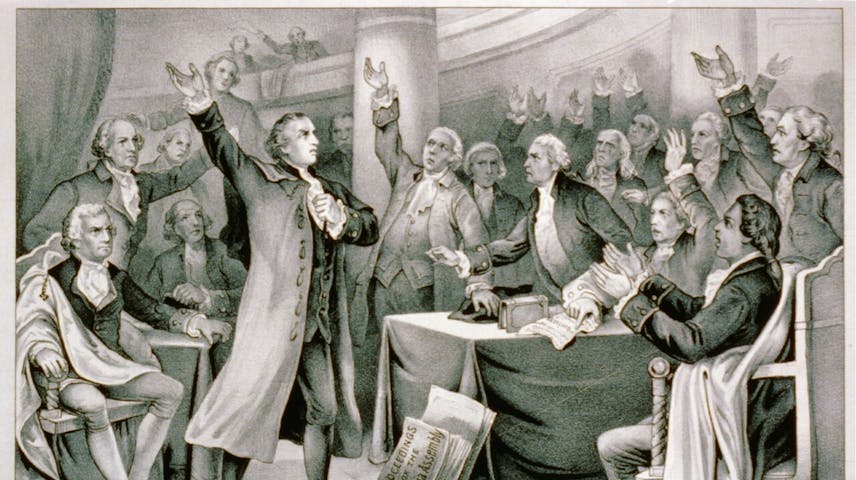
Famous Speeches: Patrick Henry's "Give Me Liberty Or Give Me Death"
Original speech from the public domain
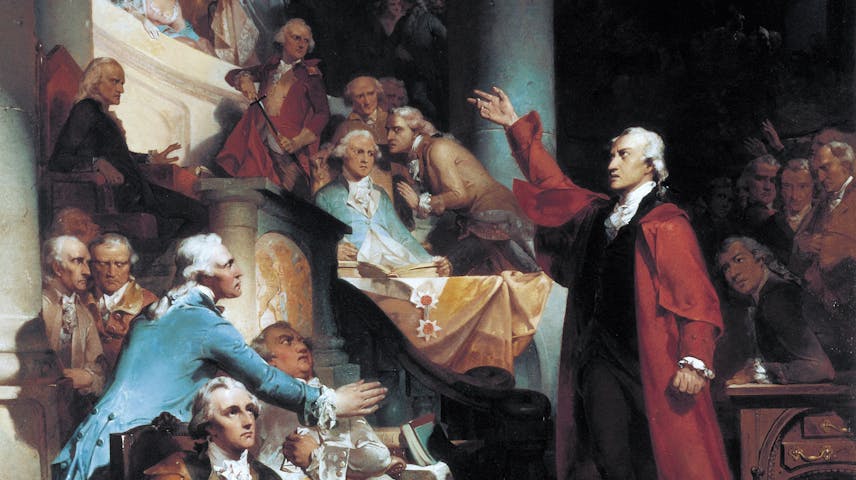
Independence and the Articles of Confederation
USHistory.org
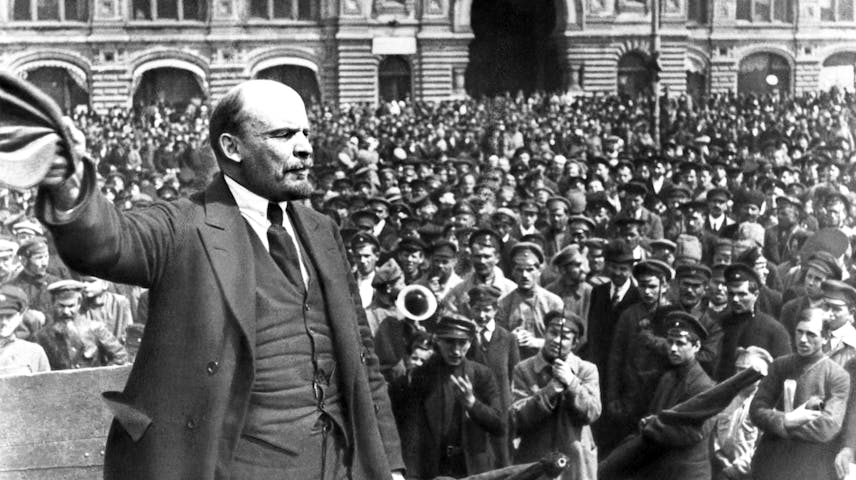
Revolution, Civil War and Terror: The Birth of the Soviet Union
Standard News Bureau
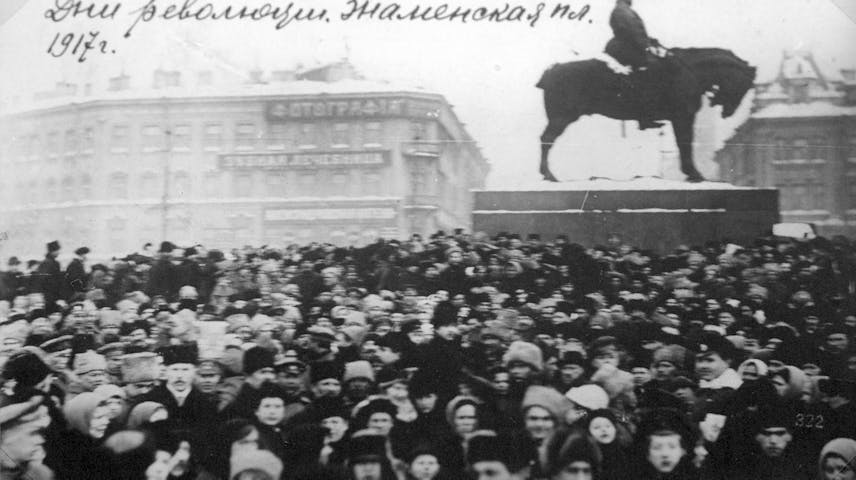
The Russian Revolution: A New Kind of Power
Standard News Bureau