Loading course navigation
Loading lesson
50 min
Student Lesson
Lesson 11: Animal Farm, Chapters I–V Debate
Content
Students will engage in a debate protocol about which force—ideals, propaganda, or fear—has the strongest impact on the animals’ beliefs and actions in Chapters I–V.
Language
Students will argue how ideals, propaganda, or fear influence belief and action in Animal Farm (Chapters I–V) by making an evidence-based claim, using academic discussion frames and comparative transitions, and responding to peers with rebuttal language grounded in cited textual evidence.
How do propaganda and rhetorical techniques influence what people believe and how they act?
Knowledge-Building:
Students will continue to build knowledge about revolutions and revolutionary leaders who might use fear, propaganda, or ideals to influence beliefs and actions.
Enduring Understanding:
Students will form opinions on effective propaganda techniques and make arguments supporting their claims.
Future Lessons:
In Lesson 12, students will be introduced to the Russian Revolution as the event that inspired the story of Animal Farm. In Lesson 13, students will learn about how certain historical figures from the Russian Revolution influenced Animal Farm and the allegorical connections that Orwell made between real people and fictional characters.
Unit Performance Task:
This discussion will help students learn how to form a clear and arguable claim about the revolution in Animal Farm in relation to propaganda, ideals, and fear, which will help students determine if the revolution either protects or corrupts ideas, or both, which will help them write their final argument essay.
| Lesson Flow | Purpose of Learning Experience |
|---|---|
Launch5 Minutes | Students will present the text evidence they collected for homework from Lesson 10 and receive teacher feedback. |
Literacy Lab10 Minutes | Students will learn how to structure their argument for the debate using claims, relevant evidence, and logical reasoning. |
Learning in Action30 Minutes | Part A: Preparing for the Debate (SL.8.1.a, SL.8.4) Students will prepare for the debate by reviewing their notes and annotations. Part B: Debating Ideals, Propaganda, and Fear (SL.8.1.a-d, SL.8.4) Students will engage in a debate protocol to discuss how either ideals, propaganda, or fear most influence the animals’ beliefs and actions in Chapters I–V. |
Not available for this lesson
Not available for this lesson
Material List
Animal Farm by George Orwell
Unit 2 Lesson 11 Student Edition
Routines
Evidence Sticky-Note Check
Debate Protocol
Quick Write
Students share the evidence they gathered for homework.
Have students take out their copies of Animal Farm and their homework from the previous lesson.
Lesson 10 Homework: Students located evidence to support the following discussion prompt:
By the end of Chapter V, which force has the strongest influence on the animals: ideals, propaganda, or fear? Use text evidence to support your thinking.
Provide students with at least two sticky notes and instruct them to write one quote or textual detail and a one-sentence explanation of how that quote or detail supports their response to the question on each sticky note.
Say these Directions: Use your two sticky notes to write one quote or detail from the text, plus a one-sentence explanation of that quote or detail, that supports your response to the debate question. Be sure to complete two sticky notes, each with one quote/detail and your one-sentence explanation.
Circulate and review students’ sticky notes to provide in-the-moment feedback. Have several students volunteer to share their quotes/details and one-sentence explanations.
Connection to Today’s Learning
Say: Today, you will participate in an academic debate about influencing the animals by the end of Chapter V. You’ve seen ideals, propaganda, and fear working in different ways to impact the animals’ beliefs and actions. Your task is to use evidence to argue which one is the most powerful and what that reveals about the revolution’s progress.
Teacher Tip |
|---|
For this debate, we are distinguishing ideals, propaganda, and fear. Before this lesson, we had discussed fear appeal and idealism as rhetorical techniques of propaganda. However, during this debate, we will isolate revolutionary ideals (e.g., the utopian idea of Animal Farm as a space run by the animals, for the animals) and fear (e.g., the actual fear that Napoleon has inspired in the animals) as entities in and of themselves, separate from propaganda. |
Students will make a claim about the forces influencing the animals, support it with evidence from the text, and explain how the evidence impacts the animals’ beliefs and actions.
Say: During the debate, you will follow a debate protocol in which you share your argument and specific claims, supported by text evidence. Review the debate protocol steps:
Argument: Response to the debate question in which you take a position
Claim: First reason that supports your position
Relevant Evidence: Evidence from the text that supports your claim
Valid Reasoning: Explanation of how your evidence supports your claim
Closing: A final explanation of why your argument is justified
Explain to the students that they will take turns in small groups presenting their arguments, claims, relevant evidence, reasoning, and closing statements, and will then have time to debate each other’s ideas.
Say these Directions: Turn and talk to discuss the following questions:
How do you know if your evidence is relevant to your claim?
Evidence that is relevant to my claim is directly related to it, and it makes sense. For example, if I am making a claim that Napoleon uses fear to control the animals, then I should have text evidence that demonstrates Napoleon saying something or doing something to elicit fear in the other animals.
How do you know if your reasoning is valid?
If I can explain how my evidence directly supports my claim, then my reasoning is reasonable or logical. If I cannot explain how my evidence supports my claim, then either my evidence is not relevant, or I am not clearly explaining my reasoning.
Present the following model argument. Model a think-aloud by reading through the following argument and then explaining how the argument is constructed:
Say: The force that has the strongest influence on the animals is their ideals. The animals revolt against the humans because they believe in their freedom. Boxer commits wholeheartedly to these ideals throughout the first half of the novel. The text says that “His answer to every problem, every setback, was ‘I will work harder!’— which he had adopted as his personal motto.” Boxer keeps this motto, but Napoleon’s influence is added when his second motto becomes “Napoleon is always right.” This evidence shows that even though fear and propaganda can easily influence people, their ideals are the strongest influence in a revolution.
Next, think aloud by explaining the argument, claim, text evidence, reasoning, and closing from the model argument.
Say: My argument is that ideals are the strongest influence on the animals. And the first claim I make is that the animals initially revolt because of their ideals and their desire to have freedom and independence from humankind. The text evidence I provide is about Boxer and his commitment to the revolution through his mottos. The reasoning I use is that Boxer continues to keep his mottos throughout the text, even as the revolution changes and Napoleon takes over. I include a closing sentence at the end stating that even though fear and propaganda can seep in, the revolution’s ideals are still the strongest influence for the animals.
Offer students a few minutes to ask questions if needed.
Teacher Tip |
|---|
This lesson focuses on a scaffolded debate approach in which students learn how to present claims, evidence, and reasoning. Later in the unit, students will engage in more comprehensive debates in which they present counterclaims and rebuttals as part of the debate protocol. |
Give students 10 minutes to review their notes and annotations from Chapters I–V and prepare for the debate. Provide the following outline of the debate protocol to help students organize their ideas using their notes and annotations.
Say these Directions: Review your notes and annotations to prepare for the debate. Make sure you have evidence to support your thinking in response to the debate prompt:
By the end of Chapter V, which force has the strongest influence on the animals: ideals, propaganda, or fear?
Make an argument by answering the question and taking a position.
Make a claim that supports your position.
Choose a text quote that supports your claim.
Explain how the quote supports your claim.
Create a conclusion that reaffirms why your argument is justified.
Teacher Tip |
|---|
Students may need guidance to settle on their initial claim. If so, have students review their annotations and notes and ask themselves which influence on the animals they have the most evidence for. Ask them which influence they think has the clearest evidence. If needed, allow students to conduct a quick brainstorming conversation with a partner. |
Provide students with a confidence continuum (i.e., 1–5). As needed, model how to demonstrate a level of confidence using the continuum.
Reflection (SL.8.1.a) |
|---|
Reflect on your ability to prepare for a debate using the Reflection routine.
|
Divide students into small groups of 3–4, and have them use the debate protocol to share their arguments within their groups. Once each student has presented their debate, encourage the students to question and debate each other’s ideas.
Say these Directions: With your group, take turns presenting your argument using the debate protocol. After a group member presents, ask a follow-up question about what they said. Follow-up questions you might ask could include:
Why do you think that force had more influence than ___?
What evidence contradicts that idea?
Why did you choose this quote instead of a different one?
Which word or phrase in that quote makes your argument strongest?
(Student responses will vary.) The force that has the strongest influence on the animals is Squealer’s use of propaganda because he routinely convinces the animals that the pigs need to break the rules because they are the most intelligent animals on the farm. For example, at the end of Chapter III, Squealer persuades the animals that the pigs need the milk and apples for their health. He says, “We pigs are brainworkers. The whole management and organisation of this farm depend on us. . . . It is for your sake that we drink that milk and eat those apples” (p. 36). This quote demonstrates Squealer’s ability to use propaganda to convince the animals that the pigs should receive special food and treatment because running the farm rests on the pigs’ shoulders. Throughout Chapters I–V, Squealer’s propaganda has been the most influential in keeping the animals satisfied with the pigs’ behavior.
Say: When everyone in the group has had a chance to present their debate, discuss the following prompt with your group:
What does your argument show about how revolutionary leaders might shape belief and actions?
Revolutionary leaders might use the same approach as Squealer to shape others’ beliefs and actions. In the novel, Squealer shows how easy it is to manipulate or deceive the animals because of their unwavering belief in the pigs’ intelligence. The animals easily accept “that the pigs, who were manifestly cleverer than the other animals, should decide all questions of farm policy” (p. 47). This evidence shows that revolutionary leaders can use propaganda, such as superior intelligence, to shape others’ beliefs and actions.
Have students discuss their ideas in small groups, and then lead a whole-class discussion.
Say: In your final performance task, one part of the argument you will write will include an explanation of how language and messaging shape the beliefs and actions of the revolution. Today’s discussion helps you start developing those ideas for your final writing piece
Teacher Tip |
|---|
Consider providing students with additional discussion stems to support their debates:
|
Make a 3-column chart with the headings Ideals, Propaganda, and Fear.
Ask: Which force did you conclude is the most influential? Why? Which quotes were especially convincing to support this claim?
Add to the chart as a class. Write the observations based on the evidence and arguments that came up during the students’ debates.
Check for Understanding (RL.8.3, SL.8.1.a-d, SL.8.4) |
|---|
Think about your performance in the debate. Did you do each of the following?
|
Transition students into reflecting on their learning from the lesson by completing a Quick Write response.
Say these Directions: Reflect on the debate by writing two to three sentences in response to the prompt. Use a quote from the text to support your thinking.:
Which force (ideals, propaganda, or fear) most strongly influenced the animals by the end of Chapter V, and why is that important for understanding how leaders can influence belief?
(Student responses may vary.) By the end of Chapter V in Animal Farm, the force that most strongly influenced the animals is fear. One quote that shows this is: “They dashed straight for Snowball, who only sprang from his place just in time to escape their snapping jaws” (p. 53). After Napoleon uses the dogs to chase Snowball away, the animals realize that opposing him is dangerous. This moment shows that some leaders can influence belief through intimidation. This is important because it shows leaders can control belief by using fear to silence disagreement. Once people are afraid, they are less likely to question decisions or speak out. Even if they disagree, fear keeps them in line, allowing leaders to maintain power and influence what others believe.
Provide students with a copy of the article “Russian Revolution: A New Kind of Power.” Instruct students to read the article and take notes in their Journal on the following prompt:
As you read, annotate the text and write 1–2 responses for each of the following prompts:
What events led to the creation of the Union of Soviet Socialist Republics (USSR)?
Identify one event in the Russian Revolution article that is similar to an event in Animal Farm.
Animal Farm
George Orwell
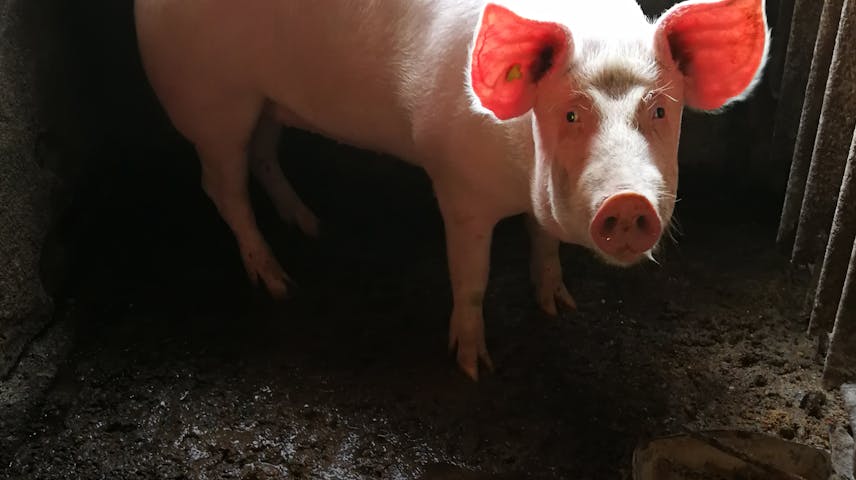
The Russian Revolution: A New Kind of Power
Standard News Bureau