Loading course navigation
Loading lesson
50 min
Student Lesson
Lesson 24: Animal Farm, Comparing Historical Revolutions to Animal Farm
Content
Students will compare informational texts about the American and Russian Revolutions and connect their ideas to events in Animal Farm.
Language
Students will compare how informational texts frame the American and Russian Revolutions by comparing ideas, using cohesive devices, and using accurate paraphrasing to connect those ideas to Orwell’s allegory in Animal Farm.
Foundational Skills
Students will explore vocabulary words by discussing their context.
Why do revolutions rise, and why do some end up betraying their own ideals?
Knowledge-Building:
Students will build knowledge about the goals, key leaders, and outcomes of the American and Russian Revolutions and compare the different ways each revolution used rhetoric and persuasive messaging to gain support.
Enduring Understanding:
Students will learn about historical revolutions to prepare them for making connections to Animal Farm.
Future Lessons:
In Lesson 25, students will conduct an academic discussion about revolutionary ideals. In Lesson 26, students will work on developing an initial claim for their performance task.
Unit Performance Task:
In this lesson, students prepare for the unit performance task by comparing the ways the American and Russian Revolutions used rhetoric and persuasive messaging to influence public support. By analyzing the goals, outcomes, and messaging of each revolution, students begin to evaluate how revolutionary ideals can be protected or betrayed.
| Lesson Flow | Purpose of Learning Experience |
|---|---|
Launch5 Minutes | Students will reflect on the goals of the American and Russian Revolutions. |
Literacy Lab10 Minutes | Students will analyze how key vocabulary in the informational texts shapes meaning and tone. |
Learning in Action30 Minutes | Part A: Comparing Revolutions (RI.8.3, SL.8.1.a) Students will reflect on the comparisons between the American and Russian Revolutions in a Jigsaw Reading and discussion. Part B: Drawing Connections to Animal Farm (RL.8.3, RI.8.3) Students will analyze how each revolution is connected to Orwell’s allegory in Animal Farm. |
Material List
Animal Farm by George Orwell
Unit 2 Lesson 24 Student Edition
Routines
Think-Pair-Share
Generating Situations, Context, and Examples
Jigsaw Reading
Quick Write
Instruct students to take out their homework from the previous lesson. Assign students so that each group includes one student for each of the four articles, ensuring balanced representation of the articles before this lesson officially begins.
Say these Directions: For homework, each of you read one of four texts. Two of these resources focused on the Russian Revolution, and two focused on the American Revolution. As you read, you identified the goals of the revolution you studied and what it ultimately achieved or failed to achieve.
Think about what you read and prepare a response explaining the goals of the revolution in your article and what it ultimately achieved.
Display the following questions:
What were the goals of the Russian Revolution?
Russian Revolution goals included ending the rule of the tsar, withdrawing from World War I, and creating a government that promised equality for all citizens, including workers and peasants.
What were the goals of the American Revolution?
American Revolution goals included independence from Britain, representation in government, and protection of rights such as liberty and self-government.
Have students share their responses with their small group. Then bring the class together for a brief discussion.
Connection to Today’s Learning
Say: Yesterday, we analyzed how Napoleon’s dictatorship deepened in Chapter VIII. Today, we will step back from Animal Farm to compare two historical revolutions to the one Orwell satirizes. Understanding why revolutions rise—and why they succeed or fail—will help us better understand Orwell’s themes and overall message in Animal Farm.
Say these Directions: We will look more closely at two words from the texts you read to help us better understand them.
Target words: subjugation, liberties
Introduce Activity 1: Present a prompt orally and/or project on a board. Students can respond with a partner, in writing, or in a whole-group discussion. Encourage multiple responses to show the range of context where the target word can apply.
Subjugation
Discussion: Have students share their ideas with a partner or respond in writing. Then bring the class together for a whole-group discussion. Encourage multiple responses to show the range of contexts where the vocabulary word can apply.
Prompt Student Thinking:
Target word: subjugation:
Patrick Henry uses the word subjugation to reference the actions of the British military against the colonies. What feelings does this mean the colonists feel about the British military’s actions?
They feel oppressed and over-controlled.
What other ways might someone be subjugated?
Not having any rights, not getting fair justice
Which characters from Animal Farm feel subjugated?
At the beginning of Animal Farm, the animals feel subjugated by the humans who control the farm. By the end, most animals feel subjugated again—this time by the pigs, who now hold power.
Introduce Activity 2: Present a prompt orally and/or display it on a board. Students can respond with a partner, in writing, or in a whole-group discussion. Encourage multiple responses to show the range of context where the target word can apply.
Liberties
Discussion: Ask students to share their ideas with a partner or respond in writing. Then bring the class together for a whole-group discussion. Encourage multiple responses to show the range of context where the vocabulary word can apply.
Prompt Student Thinking:
Target word: liberties
The American colonists wanted to preserve their liberties. What kind of liberties would you think are most important to preserve?
freedom to make your own decisions, freedom to live safely in your home, freedom to speak your ideas without punishment
What kinds of governments tend to suppress the people’s liberties?
dictatorships, totalitarian governments, autocracies
What are some liberties that the animals fought for at the beginning of the story?
equality among the animals, the freedom to control their own work and food, freedom from unfair punishment by humans
Tell students that this vocabulary will be further analyzed in this lesson's text analysis work. Allow students to share their work.
Ask: Explain to a partner how using these words in context helped you to understand them.
Check for Understanding |
|---|
List the words subjugation and liberties in your Personal Dictionary. After each word, write (1) the definition of the word and (2) a sentence using the word. |
Connection to Today’s Learning
Say: Today, we will learn more about the American and Russian Revolutions, when people fought for liberties and freedom from subjugation.
Have students form groups of four. Within each group, one of the students will be assigned the article they read for homework. The student will be responsible for becoming the “expert” on their assigned article within the group.
Say these Directions:
Step 1: Reread your article and prepare to give a one-minute summary of it.
Step 2: Present a one-minute summary of your article to your group, responding to the following questions:
What goal(s) did this revolution want to achieve?
What was the outcome of the revolution? Were the goals of the revolution achieved? Why or why not?
After each student in the group shares their summary, provide all students with an outline of the following Comparing Revolutions Chart. Display the chart and have students draft the chart in their journals.
Comparing Revolutions Chart
Revolution | American Revolution | Russian Revolution |
|---|---|---|
Goals | ||
Key Leaders | ||
Outcomes | ||
Propaganda/Rhetorical Techniques Used |
Model for students how to complete the organizer by completing the goals section for each revolution based on what the students just discussed in their small groups. Then, transition students back into working independently within their jigsaw group.
Revolution | American Revolution | Russian Revolution |
|---|---|---|
Goals | To secure the rights of life, liberty, and the pursuit of happiness | To overthrow an ineffective leader and to withdraw from World War I |
Key Leaders | Jefferson, Henry, Adams | Lenin, Trotsky, Stalin |
Outcomes | It led to the creation of the Articles of Confederation and then later the Constitution of the United States. | It led to the formation of the authoritarian USSR under Stalin. |
Propaganda/Rhetorical Techniques Used | Patrick Henry’s speech = appeal to emotion | Stalin used to promote his leadership. |
Say these Directions:
Step 3: Now, deepen your expertise with your article by using the following text-dependent questions to take notes on the graphic organizer. Remember, you are preparing to share your expertise with your group.
Provide students with the following text-dependent questions.
Text-Dependent Questions:
How did the revolutionary leaders persuade people to support the cause?
(Student responses may vary depending on the article they read and analyzed.) Leaders persuaded people through speeches, newspapers, and promises of land, peace, or representation. For example, Patrick Henry used emotional appeals about liberty, while the Bolsheviks promised land to the peasants and a “classless society.”
What rhetorical techniques or propaganda were used as part of the revolution?
Propaganda encouraged people to support the cause or fear the enemy. For example, in the Russian Revolution, the Bolsheviks spread their message among “soldiers and factory workers” by promising ideals like “immediate peace” and the elimination of private property. The American Revolution also spread ideals like “No taxation without representation” to encourage people to join the revolution.
What were the outcomes of each revolution? How did the revolution either protect or betray its original ideals?
Outcomes differed for each revolution. The American Revolution created a republic with a constitution, though many groups were excluded from the rights outlined in that constitution. The Russian Revolution created a communist state that later became authoritarian under Stalin.
Teacher Tip |
|---|
Consider writing sentence stems on the board to guide students’ discussion and written responses. Examples may include:
|
Say these Directions:
Step 4: Now, share about your article and the information you synthesized on the graphic organizer.
Step 5: After each student shares, as a group, write one sentence explaining one similarity and one difference between the two revolutions. Share with the class.
Groups should now work together to fill in the organizer by comparing both revolutions.
Teacher Tip |
|---|
As students share their findings, circulate and listen for accurate comparisons between the revolutions. Students should recognize that the Russian Revolution grew out of inequality, food shortages, and dissatisfaction with Tsarist rule and that its ideals were later betrayed as power became concentrated under authoritarian leadership. They should also note that the American Revolution emphasized liberty and representation for many colonists, though rights were still denied to enslaved people, women, and Indigenous peoples. Encourage students to notice how rhetorical strategies differed, such as hopeful language about liberty versus messaging that relied on fear or manipulation. |
Pulse Check (RI.8.2) |
|---|
In Animal Farm, the single phrase “All animals are equal” illustrates a fundamental difference between the outcomes of the Russian and American Revolutions. Which statement best explains this difference?
|
Transition students into a whole-class discussion. They will return to Animal Farm and draw connections to the texts they just reviewed.
Say these Directions: Let’s compare the historical revolutions you’ve read about with the revolution in Animal Farm. What similarities and differences do you notice in the goals of the revolutions, the rhetoric leaders used to persuade people, and the outcomes that followed?
Ask: Which revolution does Animal Farm resemble more closely, and why?
Animal Farm more closely resembles the Russian Revolution because a small group promises equality but creates a dictatorship. Power becomes concentrated, and propaganda is used to silence opposition.
Ask: How do propaganda and rhetoric differ between the American Revolution and Animal Farm's revolution?
American Revolution rhetoric often focused on shared ideals like liberty and representation. In Animal Farm, the rhetoric begins with shared ideals of equality and justice, but then becomes full of fear, false accusations, and rewriting history to control people.
Ask: Why might Orwell have created his animal satire about revolutions? What messages or ideas did Orwell want to communicate to readers?
Orwell used satire to show how revolutions can be corrupted when leaders seek power instead of equality. The Bolsheviks, who led the Russian Revolution, promised a government that would represent workers, but the new state became a dictatorship that used violence and repression to maintain control. The American Revolution used powerful rhetoric about liberty and representation, such as Patrick Henry’s call for freedom in his “Give Me Liberty or Give Me Death” speech. These examples help show how revolutionary ideals can be powerful but also vulnerable to manipulation, which is the warning Orwell explores in Animal Farm.
Provide students with a confidence continuum (i.e., 1–5). As needed, model how to demonstrate a level of confidence using the continuum.
Reflection |
|---|
Reflect on your understanding of the American and Russian Revolutions, and how they connect to Animal Farm, using the Reflection routine.
|
Have students summarize and reflect on their learning today by drafting a Quick Write response.
Say these Directions: Write a Quick Write response to the following prompt in 2-3 sentences.
Based on today’s analysis, why do some revolutions protect their ideals while others betray them?
Some revolutions betray their ideals when leaders gain too much power and are no longer held accountable. In the Russian Revolution reading, the Bolsheviks promised change for workers, but later Stalin used violence and repression to maintain control, limiting people’s rights and access to the truth. In Animal Farm, the pigs use propaganda and fear to silence criticism and rewrite the original promises of the rebellion. Revolutions are more likely to protect their ideals when leaders remain accountable, citizens can question authority, and the original ideals of equality and fairness continue to guide the government.
Have students review their Comparing Revolutions Chart from today. Instruct students to write in their Journal on the following prompt:
As you review your chart, find one quote from each source that will support your responses to the following questions:
Based on all the texts, what is the strongest reason why some revolutions uphold or betray their original ideals?
Which revolution does Animal Farm resemble more closely, and why?
Why might Orwell have created his animal satire about revolutions? What messages or ideas did Orwell want to communicate to readers?
Animal Farm
George Orwell
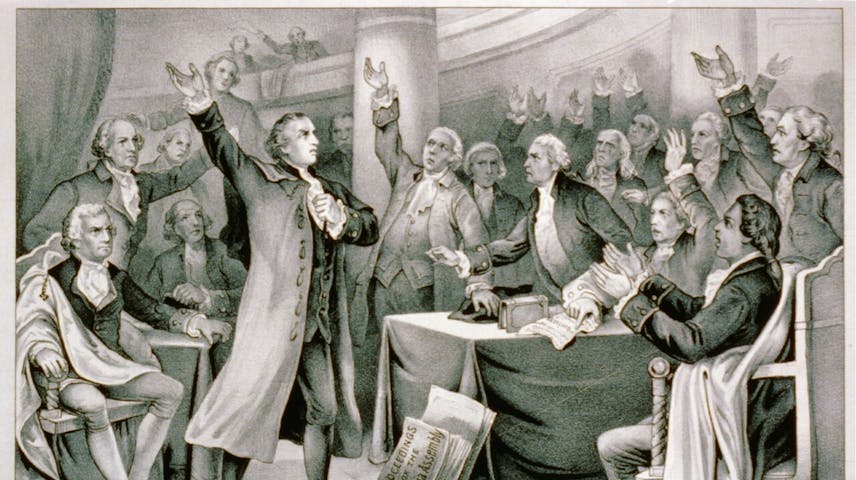
Famous Speeches: Patrick Henry's "Give Me Liberty Or Give Me Death"
Original speech from the public domain
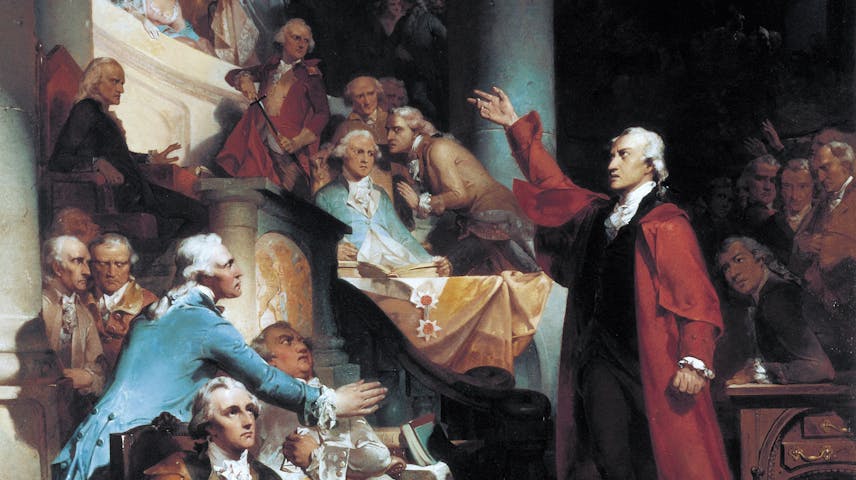
Independence and the Articles of Confederation
USHistory.org
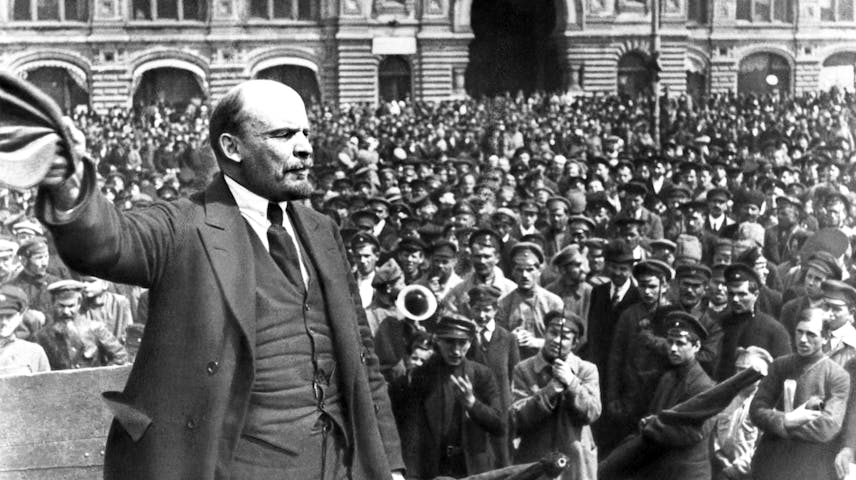
Revolution, Civil War and Terror: The Birth of the Soviet Union
Standard News Bureau
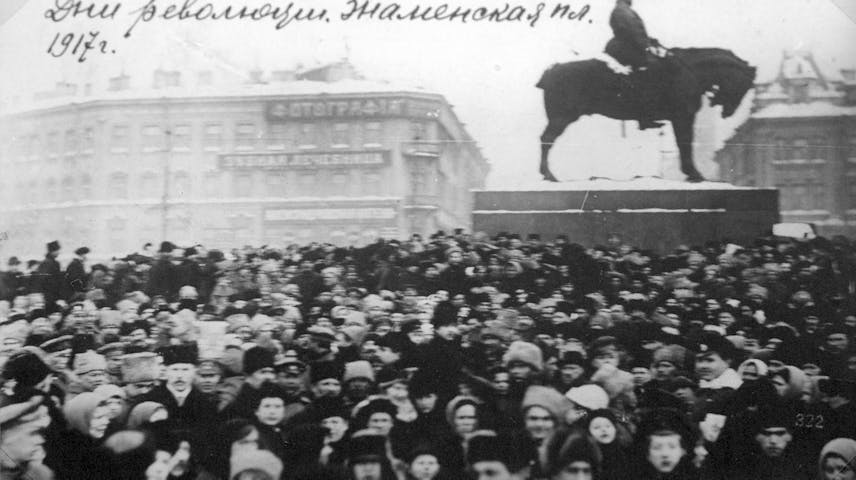
The Russian Revolution: A New Kind of Power
Standard News Bureau