Loading course navigation
Loading lesson
50 min
Student Lesson
Lesson 39: Flex Day: Skill-Based Huddles
Content
Students will spend time in responsive flex day huddles to improve their understanding of point of view and purpose, analysis of conflicting information across texts, and use of punctuation to indicate pauses and breaks, or will engage in independent extension work.
Language
Students will engage in collaborative academic discourse within differentiated huddles to clarify point of view and purpose, analyze conflicting ideas across texts, and use punctuation to indicate pauses and breaks, or will extend their mastery of these skills with knowledge-building and independent reading connected to the Civil Rights Movement and Civic Memory.
How does storytelling become a tool for civic change?
What is civic memory, and how does testimony help us remember and learn?
Knowledge-Building:
Deepening understanding of the Civil Rights Movement and Civic Memory.
Enduring Understanding:
People shape civic memory through storytelling.
Future Lessons:
Students will apply stronger craft choices and literary understanding as they prepare for the Civic Memory Brief.
Unit Performance Task:
Today’s huddles strengthen the reading and language skills students can transfer into narrative drafting, revision, and reflective commentary.
| Lesson Flow | Purpose of Learning Experience |
|---|---|
Launch5 Minutes | Students self-assess confidence with determining point of view, contrasting information in texts, and using punctuation so the teacher can form responsive huddles based on both student reflection and recent assessment evidence. |
Learning in Action40 Minutes | Teacher uses flexible grouping to provide targeted 10-15-minute huddles anchored in a text excerpt of the teacher’s choice; other students engage in independent reading or knowledge-building tasks. |
Look Back5 Minutes | Students reflect on growth in confidence or new learning from independent work. |
Material List
Student copies of at least two teacher-selected short informational passages on the same topic
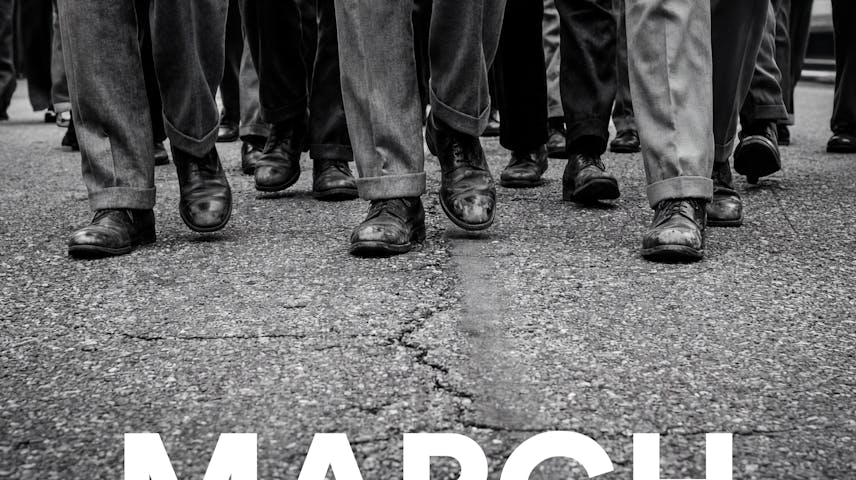
Student copies of March: Book One
Student copies of writing from Lesson 38 or teacher notes from recent formative work
Student independent reading texts
Unit 8 Lesson 39 Student Edition
Routines
Reflection
Quick Write
Say: Today is a Flex Day. Based on your self-assessment and your recent work, I'll be meeting with small groups for a quick skill session while others work independently. Let's start by rating your confidence.
Instruct students to reflect on their ability to do each of the following using the Reflection routine.
Reflection |
|---|
|
Say: Using your confidence ratings in addition to how you’ve demonstrated your understanding in recent work, you’ll get individualized learning sessions so you get what you need today.
Collect a quick visual of ratings (students can hold up fingers or submit on paper). Explain the plan:
Three 10-15 minute teacher huddles:
Huddle 1: RI.8.6 (Determining Point of View and Purpose)
Huddle 2: RI.8.9 (Analyzing Conflicting Information Across Texts)
Huddle 3: L.8.2.a (Using Punctuation to Indicate Pauses or Breaks)
Students not in a huddle work independently (choice: independent reading or knowledge-building on the unit topic).
Then sort students using:
their Reflection responses and
your data from recent formative assessments (exit tickets, annotations, short responses).
Teacher Tip |
|---|
|
Explain that you are first going to pull students for additional work on RI.8.6 (Determining Point of View and Purpose). Pull students who rated 1–3 on RI.8.6 and/or have shown difficulty with identifying an author’s point of view or purpose (based on recent work). All other students begin independent work (see “Independent Choice Work” below).
Pull this group when students can identify what a text is about but cannot articulate what the author thinks or why the author wrote it. In written responses, look for students who describe the topic or retell content from your selected text without naming the author’s specific stance or reasoning.
Students not in responsive huddles choose one task and write a brief response.
Option 1: Independent Reading
How does determining an author’s point of view or purpose connect to your independent reading today? Cite one example.
I noticed that the author's purpose is to show readers what it was really like to fight for civil rights from someone who actually lived it. When Lewis describes the sit-ins at the lunch counter and staying nonviolent, you can tell he wants us to understand that change took real courage and sacrifice. His point of view as a participant makes the history feel personal instead of just like facts in a textbook.
Option 2: Knowledge-Building
How does the author’s point of view or purpose in your reading today demonstrate how storytelling and testimony help us remember and learn? Cite one example.
It shows how testimony helps us remember the Civil Rights Movement in a way that statistics never could. For example, when Lewis describes the sound of the troopers' boots on Bloody Sunday and how scared but determined he felt, his firsthand storytelling makes readers picture what happened. Without people sharing their stories, important lessons about standing up for justice could get lost or forgotten.
Use any teacher-selected short informational passage for this huddle. Students should have the text in front of them.
Point of View: what an author thinks or believes about a topic
Purpose: the reason the author is writing (i.e.: to inform, to entertain, to persuade, to critique, or to challenge or respond to a commonly held idea)
Say: As we look at the text together, you’re going to look for the specific clues that reveal what the author thinks and why they wrote this piece.
Reread a short section of the selected text and identify the topic, then point out words, phrases, or details that convey strong emotions, ideas or connotations, or that seem intended to make the reader feel a certain way about the topic.
Ask: What is the author’s point of view? What words, phrases, or details tell you what the author wants readers to think about this topic?
The author’s point of view is that [author’s perspective]. By choosing to use these specific words and details, the author is signaling that they believe [conclusion/judgment about the topic].
Direct students to skim the text for any places where the author addresses or acknowledges a point of view that is different from their own.
Ask: Are there any pieces of evidence or perspectives that conflict with the author’s point of view? How do you know, and how does the author respond to them?
The author addresses a contradictory point of view. I know this because the author notes the point of view, then includes evidence that opposes it, and then reiterates their own perspective on the topic.
Direct students to think about the passage as a whole and why the author chose to include the language, details and perspectives they did. Prompt them to consider what the author was trying to accomplish with the reader.
Ask: Why do you think the author chose to include these phrases, examples and ideas? What was the author trying to do — what is their purpose in writing this passage?
I think the author’s purpose is to persuade readers to take action. By using specific words and details, they’re trying to make readers feel the same way they do. By presenting examples and evidence, the author strongly contradicts the opposing argument. The purpose is to convince readers to agree that [author’s main point].
Ask: Which additional phrases and details help show the author’s point of view and purpose? How?
The [phrase or example] and [phrase or example] help reveal the author’s point of view by [emotion/connection/idea they emphasize]. These details develop the author’s purpose by [function in the text]. This helps me understand that the author wants to [how the author wants readers to feel about the topic].
Check for Understanding |
|---|
Circulate and spot-check, or listen for students to demonstrate the following:
|
Explain that you are now going to pull students for additional work on RI.8.9 (Analyzing Conflicting Information Across Texts). Pull students who rated 1–3 on RI.8.9 and/or have shown difficulty with analyzing cases in which two or more texts provide conflicting information on the same topic (based on recent work). All other students continue independent work.
Pull this small group when students can locate and summarize what each text says about a topic but fail to identify where the texts directly respond to or contradict each other. Students may also treat every difference between the texts as a factual error, not yet distinguishing between a disagreement about what is true and a disagreement about what the evidence means.
Students not in responsive huddles choose one task and write a brief response.
Option 1: Independent Reading
How does analyzing multiple texts that provide conflicting information on the same topic connect to your independent reading today? Cite one example.
I noticed that different sources told the story of the Freedom Rides in different ways. One text described the Freedom Riders as heroes peacefully challenging unjust laws, while a speech from a segregationist politician at the time framed them as outsiders who were breaking the law. Comparing the two helped me see that you need more than one source, because the author's point of view changes how the same event gets told.
Option 2: Knowledge-Building
Why might it be important to read and analyze multiple texts when studying how people shape civic memory through storytelling? Cite one example.
It's important to read multiple texts when studying civic memory because one person's story only shows part of what really happened, and other voices can fill in the gaps or even challenge what we thought we knew. For example, John Lewis's account of the march in Selma focuses on the courage of the protesters, but reading a different text from a journalist or another marcher might highlight details Lewis didn't mention, like what other organizers were planning behind the scenes.
Use any two teacher-selected short informational passages on the same topic for this huddle. Students should have the texts in front of them.
Say: When two texts cover the same topic, they don’t always tell the same story. Skilled readers look for exactly where the texts pull apart and then ask: Are the authors disagreeing about what happened, or about what it means? This is a difference between evidence and interpretation, or facts and opinions. Your job today is to find the specific moment of conflict and name what kind of disagreement it is.
Provide these examples to clarify:
A Disagreement over Evidence/Facts: Text A says 500 people were affected; Text B says 200.
A Disagreement of Interpretation/Opinion: Both texts cite the same event, but one author calls it a turning point while the other calls it a minor setback.
Have students review the two selected texts and identify one specific piece of information — a number, event, or claim — that both texts reference.
Ask: Looking at [Text A], what is one specific piece of information or claim that [Text B] also addresses? Point to where you see it in each text.
Both texts talk about a major civil rights protest from the 1960s. Text A mentions the number of people who participated and the response from authorities, and Text B also describes that same protest and what happened that day. I can point to the paragraph in each text where that information comes up.
Have students compare what each text says about that same piece of information and describe how the two texts present it differently.
Ask: How do the two texts present that information differently? Is the disagreement about what the facts are, or about what those facts mean?
Both texts describe the same event and basically agree on what happened. But Text A presents it as a turning point that led to lasting change, while Text B focuses on how the event is remembered today and argues that some important details get left out of the common story. So they don't really disagree about the facts, they disagree about what the event means and how it should be remembered.
Have students consider why an author’s perspective or purpose might lead to an interpretive disagreement in the two texts.
Ask: Why do you think these two authors arrive at different interpretations of the same information? What does that tell you about how each author is using the evidence?
I think the authors arrive at different interpretations because they have different purposes. Text A is telling the story to honor the people who took part and show how their actions changed history, so the author frames the event as a clear victory. Text B is more focused on civic memory and how stories about civil rights get simplified over time, so the author points out what the common version leaves out. Their interpretations show how the same event can be told in different ways depending on what the author wants the reader to remember.
Ask: How is the disagreement between the two texts connected to each author's point of view or purpose? How do the evidence they include and the conclusions they draw from it affect the audience?
The disagreement between the two texts is connected to each author's point of view and purpose. Text A's purpose is to celebrate the people who took part in the civil rights protest and show how their actions led to real change, so the author includes evidence like the size of the crowd, quotes from leaders, and the laws that were passed afterward. This makes the audience feel inspired and proud of what was accomplished. Text B's purpose is to look at how this event is remembered today and point out what gets left out of the common story, so the author includes evidence like lesser-known participants, details that don't usually make it into textbooks, and quotes from historians. This makes the audience think more carefully about whose voices are remembered and whose are forgotten.
Check for Understanding |
|---|
Circulate and spot-check, or listen for students to demonstrate the following:
|
Explain that you are now going to pull students for additional work on L.8.2.a: (Using Punctuation to Indicate Pauses or Breaks). Pull students who rated 1–3 on L.8.2.a: and/or have shown difficulty with using punctuation to indicate pauses or breaks when writing (based on recent work). All other students continue independent work.
Pull this small group when students are reading sentences aloud without pausing at internal punctuation marks — they move through commas, dashes, and ellipses at the same pace as surrounding text, or they cannot identify these marks when asked to find examples. In written work, students may omit internal punctuation entirely, use commas and periods interchangeably, or insert punctuation randomly rather than to signal a deliberate pause or break to the reader.
Students not in responsive huddles choose one task and write a brief response.
Option 1: Independent Reading
How does being able to identify and use punctuation like commas, ellipses or dashes connect to your independent reading today? Cite one example.
I noticed that the author used dashes and ellipses to slow down important moments and make them feel more powerful. For example, the dashes in one sentence made me actually pause and picture the scene instead of just rushing through it. Knowing how this punctuation works helped me understand that writers use it on purpose to control how readers feel.
Option 2: Knowledge-Building
Why might it be valuable to know how to indicate pauses or breaks when writing about civic memory, testimony, and storytelling? Cite one example.
When writing about civic memory and testimony, knowing how to show pauses or breaks is valuable because real people don't tell their stories in perfect, flowing sentences, especially when the memories are painful or emotional. For example, if someone is describing the moments before a protest, an ellipsis can let the reader feel the nervousness and hesitation instead of just reading words on a page. Punctuation like commas, dashes, and ellipses helps storytellers honor the weight of what actually happened.
Use any short teacher-selected passage for this huddle. Students should have the text in front of them.
Provide students with these punctuation quick explanations
Comma (,): creates a brief, gentle pause inside a sentence: ‘She hesitated, then kept walking.’
Dash (—): signals a sharper, more dramatic interruption — like a thought being cut off — or adds sudden emphasis.
Ellipsis (...): shows when a writer or speaker trails off to suggest something is unfinished or to build suspense…
Have students scan your selected text and locate at least one sentence that contains a comma, dash, or ellipsis used inside the sentence and not just at the end of it.
Say: Find one sentence in the text that has a comma, dash, or ellipsis inside it. Point to it and read it aloud.
I found this sentence: ‘The marchers stood quietly — some carrying signs, others holding hands — as the crowd gathered around them.’ It has dashes inside the sentence, not at the end.
Have students look at the punctuation mark they found in your selected text and explain what kind of pause or break it creates in that specific sentence.
Ask: What kind of pause or break does that mark create? Is it a small pause, a sharp stop, or something trailing off? What’s the difference between that mark and a period?
The dashes create a sharp interruption. They draw attention to what is in the middle of them. If the author had used commas, the part about the signs and holding hands would feel like a quick side note, but the dashes make those details stand out more.
Have students consider why the author of your selected text chose that particular punctuation mark rather than substituting a different one.
Ask: Why do you think the author used that specific punctuation mark instead of a different one? What effect does it have on the meaning of the sentence, on the mood, or for the reader?
The author chose the dashes to make the reader pause longer and really notice the details in the middle. This affects the mood by making the moment feel serious and powerful, like the reader is standing there watching it happen. It also helps show how peaceful and united the marchers were, which adds meaning to the sentence and makes the moment of civic change feel more important.
Say: Write three original sentences. One should use a comma, one should use a dash, and one should use ellipses.
The room was silent, except for the ticking of the clock. He reached for the phone — then stopped himself — and set it back down. Maybe she already knew… maybe she had always known.
Check for Understanding |
|---|
Circulate and spot-check, or listen for students to demonstrate the following:
|
Students complete a brief reflection based on what they did today. Invite 2–3 students to share.
Option A (students who attended one or more huddles):
Re-rate your confidence for RI.8.6, RI.8.9, L.8.2.a. What specifically improved?
Before, I was a 2 on RI.8.6, but now I’m a 3 because I can identify an author’s point of view and explain how it is connected to their purpose.
Option B (students who did independent reading/knowledge-building):
What are you learning about on the unit topic from today’s reading/work? Cite one detail.
I’m learning that activists used nonviolent protest, visuals and narratives; in the excerpt, the details Lewis includes help show his point of view about civil rights.
Scoring Rubric (Quick Write Reflection)
Score | Criteria |
|---|---|
3 | Clearly states growth or learning, names the specific skill or idea, and includes text-based evidence or a concrete example from today’s work. |
2 | States growth or learning and names a skill or idea, but evidence or explanation is limited. |
1 | Gives a general statement with minimal connection to today’s skill, text, or learning. |
Students read their independent reading book for 20 minutes and complete a reading log entry.
March: Book One
John Lewis, Andrew Aydin, Nate Powell