Loading course navigation
Loading lesson
50 min
Student Lesson
Lesson 19: The Last Cuentista and “El Conejo en la Luna: The Rabbit in the Moon”
Content
Students will analyze how Higuera reimagines a traditional legend to develop a theme in The Last Cuentista.
Language
Students will explain comparisons and symbolic meaning using compare-contrast language and evidence connectors in discussion and writing.
Foundational Skills
Students will use context clues to determine the meaning of an unfamiliar word in context.
How does memory help us understand who we are, and what is lost when memory disappears?
Knowledge-Building:
Students continue connecting storytelling to memory, identity, and survival by examining how a traditional legend is reimagined in a modern novel.
Enduring Understanding:
Stories shape how humans remember the past and imagine the future.
Future Lessons:
In Lesson 20, students practice using transition words, phrases, and clauses in their narrative writing. In Lesson 25, students continue to read and analyze The Last Cuentista.
Unit Performance Task:
Students study how Higuera reshapes a legend, a narrative technique that students can apply in their own writing for the performance task.
| Lesson Flow | Purpose of Learning Experience |
|---|---|
Launch5 Minutes | Students recall and summarize the traditional legend, “El Conejo en la Luna,” with a partner. |
Literacy Lab10 Minutes | Students use context clues to determine the meaning of sustenance. |
Learning in Action30 Minutes | Part A: Analyzing Traditional Stories Within Modern Fiction (RL.8.9) Students compare the traditional legend of “El Conejo en la Luna” with Petra’s dream sequence in Chapter 19 to identify the impact of the similarities and differences. Part B: Determining Theme (RL.8.2, RL.8.9) Students explain how Higuera’s reimagining of the traditional legend develops a theme in the novel. |
Material List
The Last Cuentista by Donna Barba Higuera
Unit 4 Lesson 19 Student Edition
Routines
Turn and Talk
Using Context Clues
Graffiti/Table Talk
Quick Write
Have students take out their copy of the story “El Conejo en la Luna: The Rabbit in the Moon” and their homework annotations. Pair students with a nearby partner to summarize the legend.
Say these Directions: Summarize the legend of “El Conejo en la Luna” with your partner. What happens, and what lesson does the legend communicate?
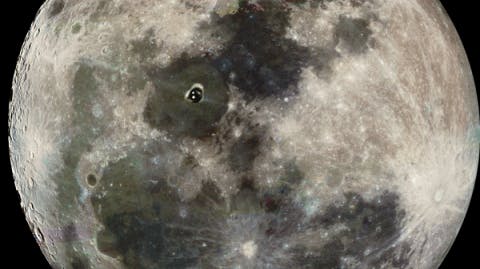
In the legend, the traveler is weak and hungry, and the rabbit offers itself as food to help him survive. The traveler is really a god, and he rewards the rabbit’s kindness by imprinting his profile on the moon. The story communicates the idea that sacrifice and generosity can have their own rewards.
Connection to Today's Learning
Say: Now that you have the original legend, you are ready to analyze Higuera’s use of this same legend in The Last Cuentista.
Say: We’re learning about the word sustenance today. This word shows up in Higuera’s adaptation of “El Conejo en la Luna.” Let’s explore this word and the clues to its meaning.
Display the Target Sentence: Display and read aloud the passage from the text with the target word sustenance.
"The rabbit hops up to him and paws at his feathers and touches his pink nose to Quetzalcoatl's face. 'You need sustenance,' el Conejo says to him." (p. 160)
Read the Surrounding Sentences
Display or reread the paragraph that contains the sentence through the first paragraph on p. 161.
Say: Turn to p. 160 of The Last Cuentista. As we reread, listen for words or ideas that help you understand the word sustenance.
Read the passage on p. 160, starting with “Quetzalcoatl staggers across the desert . . .” and ending with the paragraph “Lita nods.”
Identify Context Clues
Have students work with a partner to answer the following questions:
Say these Directions: Turn and talk with a partner about the following questions.
What is happening in this part of the text?
Quetzalcoatl is dying of thirst and hunger when el Conejo approaches. He “offers up himself for food.” (p. 160)
Which words or phrases help explain the target word sustenance?
food, eat
Call on students to name the exact words they used as context clues. Annotate or underline those clues on the displayed text.
Infer a Meaning
Ask: Based on the context, what does sustenance most likely mean?
food, water, something that feeds a person
Verify Meaning
Have students test the meaning in context by replacing sustenance in the sentence with their suggested meaning. Reread the sentence again.
Prompt students to use a dictionary, thesaurus, or other reference material to confirm the meaning.
Say: Check your definition using a dictionary or other reference material. Does the definition match what we figured out? Revise as needed.
Quick Application
Have students work with a partner to create a new sentence that fits the meaning of the word sustenance.
Say: Work with your partner to create a new sentence that fits the meaning of the word sustenance.
Check for Understanding (L.8.4.a) | |
|---|---|
In your Personal Dictionary, write sustenance and write a definition that fits the meaning. |
Connection to Today's Learning
Say: You will now think about the word sustenance and the kind of help the rabbit represents in both the legend and Petra’s dream.
Transition students into pairs. Provide partners with chart paper or access to a digital board. Direct them to review the dream sequence in The Last Cuentista beginning on p. 160 with “In the distance, a man with a rainbow headdress of feathers. . .” and concluding at the end of the chapter.
Say these Directions: With your partner, reread the dream sequence that features the story of el Conejo. Then independently record two similarities and two differences between the traditional story and Higuera’s rendition of it. After you have recorded your individual thinking, discuss the similarities and differences you noted with your partner.
Teacher Tip |
|---|
Students have now analyzed how Higuera weaves traditional stories into her novel in Lessons 11 and 14. If students need support in this task, provide further instruction on how to complete it meaningfully.
|
Allow students several minutes to complete the task independently. When students finish writing, pairs should discuss the similarities and differences they recorded. Encourage them to consider why Higuera changes the story as she does in her novel.
Answer the following questions as a class:
Ask: How is Petra’s dream different from the traditional legend?
Petra’s dream changes the role of the rabbit from a symbol of sacrifice to one of guidance. In the traditional legend, the rabbit responds to Quetzalcoatl's need for sustenance by offering itself as food, showing self-sacrifice. The rabbit in the dream, however, does not offer to help Quetzalcoatl. “Instead of following the story, the rabbit turns toward us. ‘You should follow me,’ he says. But he is not looking at Quetzalcoatl or Lita. He is looking at me” (p. 161).
Ask: What does the rabbit symbolize in the original legend and Higuera’s retelling?
In both versions, the rabbit offers support in a moment of need, but in different ways. In the original legend, the rabbit literally offers itself as food, telling an exhausted and hungry Quetzalcoatl, “If you are truly starving, you may eat me.” The rabbit symbolizes sacrifice and generosity. But in Petra’s dream, the rabbit offers a different kind of support by inviting her to act with courage: “‘Come,’ he calls back, motioning for me to follow” (p. 161). Instead of providing food, the rabbit offers Petra a chance to escape, but only if she accepts his invitation and takes a risk.
Ask: What is the impact of Higuera altering the legend in Petra’s dream?
Higuera uses a story from Petra’s past in order to propel Petra forward, encouraging her to make a decision to escape the Collective. Because Lita was the source of the story, Petra is more apt to pay attention to its message. As the story changes, Lita encourages Petra to trust el Conejo. “You should see where he leads” (p. 161), Lita says. Petra replies that the rabbit’s not heading to the ocean but to a desert instead. Lita adds, “If you take the risk and trust where the story is leading you, you might find the ocean you must cross” (p. 162), which is a reference to Blancaflor crossing the ocean to rescue her prince. By retelling the story this way, Higuera gives Petra motivation to follow the rabbit, or in other words, to take a risk to escape the Collective.
Teacher Tip |
|---|
Consider explaining to students that the story of Blancaflor is also integrated into Petra’s dream of “El Conejo en La Luna.” Lita repeats the same line that she makes about Blancaflor from Chapter 18, p. 151, when she says, “If you don’t take a risk, you cannot cross the ocean.” Lita is repeating herself to push Petra forward to follow el Conejo. |
Provide students with a confidence continuum (i.e., 1–5). As needed, model how to demonstrate a level of confidence using the continuum.
Reflection |
|---|
Reflect on your ability to analyze how Higuera adapts a traditional legend to develop Petra’s experiences and character in Chapter 19 using the Reflection routine.
|
Transition students into small groups of four by combining partnerships from the previous activity. Students will use their notes from the previous activity and consider how Higuera introduces differences between the traditional legend and the retelling in the novel to develop themes in the novel.
Say: A theme is developed across a text, not in a single scene. However, one scene can further develop the theme and convey a clear message. Higuera calls upon and changes the legend of el Conejo for specific reasons. Consider the content and how Higuera changes it to determine her intended message or theme.
Say these Directions: Use the similarities and differences you noted from the previous activity to explain how Higuera reimagines the legend to develop a theme in The Last Cuentista. Discuss the following questions with your small group.
Display the following questions.
How do the traditional legend and Petra’s dream work together to convey a theme or message?
The original legend shows the rabbit as a symbol of sacrifice and “kindness.” Petra’s dream builds on that idea but changes the scene. This time, el Conejo offers support in guiding Petra to escape the Collective. He says, “You should follow me . . . I will save you” (p. 161). In her dream, Petra is the one who must sacrifice and approach her own dangerous situation bravely. Together, the two versions show that sacrifice and bravery can be difficult and life-altering, but can yield reward.
How does this adaptation relate to the novel’s exploration of memory and culture?
This scene connects to the novel’s exploration of memory and culture by having Petra access the real story as told by Lita with a combination of Spanish and English. She calls upon her memory of the story to point out the contrast of the dream version. When the rabbit says, “Your sacrifice and risk shall be rewarded,” readers understand that Petra will become a present-day el Conejo if she is able to lead the others out of the Collective.
How does Higuera’s use of the traditional legend and its adaptation develop a theme in the novel?
With the old and new versions, Higuera develops the theme of the necessity and rewards of sacrifice and risk. El Conejo is rewarded in the traditional tale, and in its adaptation, he promises that if Petra follows, “I will save you” (p. 166). The necessity of the risk is reiterated as Lita says, “The one who does not take the risk” (p. 161) in connection to Petra following the rabbit.
Pulse Check (RL.8.2) |
|---|
Which statement best explains how Higuera’s reimagining of “El Conejo en la Luna” develops a theme in The Last Cuentista?
|
Instruct students to complete the following Quick Write response.
Say these Directions: Respond to the prompt in three to four sentences. Use at least two specific details in your answer: one from the traditional legend and one from Petra’s dream in the novel.
How does Higuera use the traditional story of El Conejo to further develop a theme in the text?
Higuera uses “El Conejo en la Luna” to develop the theme that sacrifice and bravery can be challenging but also rewarding. In the original legend, the rabbit offers himself as “sustenance” to help the weakened traveler, showing sacrifice. In Petra’s dream, the rabbit instead tells her to follow and promises that her “risk shall be rewarded” (p. 161), shifting the rabbit’s offer from sacrifice to guidance as Petra assumes the role of el Conejo, becoming the one who must sacrifice her own safety to escape the Collective.
Students read their independent reading book for 20 minutes and complete a reading log entry.
Read your independent reading book for 20 minutes. In your reading log, record the date and pages you read, write 1–2 sentences about what happened or what you learned, and respond to this week’s prompt using evidence from the text.
The Last Cuentista
Donna Barba Higuera

El Conejo en la Luna: The Rabbit in the Moon
Standard News Bureau