Loading course navigation
Loading lesson
50 min
Student Lesson
Lesson 30: The Last Cuentista, Chapter 30
Content
Students will analyze Chapter 30 and the structural choices Higuera makes to begin and conclude The Last Cuentista.
Language
Students will speak and write complex sentences using descriptive noun phrases and adverbial phrases to synthesize Petra’s character development across the novel.
Foundational Skills
Students will practice reading an excerpt from The Last Cuentista with expression and fluency.
How do stories help communities survive change and imagine a future worth building?
Knowledge-Building:
Students analyze how Higuera uses structural choices like circular structure to begin and end her novel.
Enduring Understanding:
When memory is threatened, storytelling preserves identity and helps rebuild community.
Future Lessons:
In Lessons 31 and 32, students will read and analyze “The Comet” to compare another speculative future shaped by catastrophe, survival, and human connection to The Last Cuentista.
Unit Performance Task:
Students study how Higuera begins and ends her novel intentionally to bring Petra’s development as a storyteller full circle so they can emulate similar narrative craft in their own writing.
| Lesson Flow | Purpose of Learning Experience |
|---|---|
Launch5 Minutes | Students will retell key events from the homework reading, paraphrase partners’ retellings, and answer a question about the novel’s conclusion. |
Literacy Lab10 Minutes | Students will build fluency and practice intentional emphasis and pacing to convey meaning and mood when reading narrative. |
Learning in Action30 Minutes | Part A: Analyzing the Conclusion of The Last Cuentista (RL.8.3, RL.8.6, L.8.5.a) Students will analyze the ending of the novel and share ideas about Petra’s feelings and motivations, the impact of dramatic irony, and the effect of events on the characters. Part B: Analyzing the Final Cuento (RL.8.3, RL.8.5) Students will synthesize how the ending reshapes the novel’s beginning and what Petra’s role reveals about stories and community. |
Not available for this lesson
Material List
The Last Cuentista by Donna Barba Higuera
Unit 4 Lesson 30 Student Edition
Structure and Purpose graphic organizer
Routines
Retell & Paraphrase Partner Check
Fluency Practice
Think-Pair-Share
Quick Write
Transition students into pairs. Explain that they will take turns retelling the key events from the previous lesson’s homework reading. Then they will paraphrase their partner’s ideas to check that they understand.
Say these Directions: You read Chapter 30 for homework and annotated the text in response to this question: How does the role of storytelling change over the course of the text, from helping characters survive to helping them build a community? Take turns retelling the main events that occur in Chapter 30. Then share your answer to the question.
Explain that after the first student shares an answer, the second will paraphrase the first’s response to check for understanding.
Say: Use the following sentence starter to begin your paraphrase:
So you’re saying that ___.
If time allows, have students share responses and paraphrases for the following question.
Ask: What does the community do by the end of Chapter 30, and what happens to Petra’s role and the stories she has carried?
By the end of Chapter 30, the community works together to survive and protect one another. For example, when they cross the river, Petra is hurt and stuck on a boulder. The others help save her from the river (p. 300). Petra is still the leader, but her role changes from being the only one who knows what is really happening. Now that the others watch the ship disappear, they know that they are together in the adventure. Not only does Petra keep the stories and pass them on, but she also makes the stories her own, like telling her own version of the fire snake story.
Say: Now that students have identified the key moments and considered the changes that have taken place, they can move into analyzing how Higuera concludes her novel.
Process: Display the following excerpt from The Last Cuentista.
The distinct whir of a drone vibrates the air.
Suma’s mouth drops open, and we lock eyes.
It’s approaching fast. And it’s loud. Far too loud.
Voxy clings to my arm. We stare off to a dark pinpoint in the distance, high above the lake from the direction we came. As it moves closer, I see it is not a single drone.
Like a plague of locusts, a swarm of drones is flying toward us.
But these are not harmless collection drones, or rescue ones in search of a missing child. Attached at the base of each one is an aerosol dispenser used for terra-forming. And what makes my heart stop are the auxiliary tanks behind them. They’re filled with bright green liquid.
—The Last Cuentista, p. 296
Model reading the passage fluently with appropriate pacing and expression.
Ask: What happens in this passage? How does the description make you feel?
Petra and the others see the oncoming drones. Both Suma and Petra recognize the threat, and Voxy fears they have come for him. Only Petra knows the magnitude of the threat because she knows of the toxin. The description makes me feel afraid for them.
Say: Let’s read this passage again, using our voices to convey the fear and worry that Petra feels. We’ll read the short sentences at a faster pace to show the urgency of the events. We’ll slow down the pace in the last paragraph to explore the feeling of “what makes my heart stop.”
Reread the paragraph to demonstrate how the short sentences and phrases create a sense of urgency in the text.
Next, have the class echo-read the passage.
Say these Directions: Let’s read the passage one more time with a partner to practice the tone of urgency and anxiety that is created through the description and use of short sentences and phrases. One of you will read, and the other will provide feedback. Then you will switch.
When you pair students, create thoughtful partnerships that foster growth and ease nervousness. Striving students will need partners who are patient and supportive when reading aloud.
Say: When you provide feedback, be sure to start with a positive observation about what your partner did well. Then provide a suggestion for improvement. You can use these sentence starters to present feedback:
You read the part ___ at a perfect pace.
The smoothest part was ___.
When you read ___, you used expression to show ___.
You could slow down/speed up when you read ___ because ___.
When you read ___, you might change your expression to show ___.
Say: Now that you have practiced reading part of Chapter 30 fluently, you are ready to analyze the novel’s structure and discuss what the conclusion reveals about Petra, the other characters, and the importance of stories.
Instruct students to form small groups to analyze the conclusion of the novel. Tell them that they will share and discuss their ideas with their small groups before sharing ideas with the larger class.
Say these Directions: With your small group, reread the following excerpts from Chapter 30, and discuss the following questions.
Excerpt #1: Start on p. 293 at the beginning of the chapter, and continue through the paragraph ending “. . . to save us, then I will take the risk trying” on p. 294.
In the opening of Chapter 30, how does Petra feel, and what keeps her moving forward?
In the opening of Chapter 30, Petra feels despondent at the loss of her brother. She knows “[h]e is gone” and contemplates giving up her quest and huddling “into a ball” (p. 293). Then the fear and uncertainty set in: “It’s so far. . . . We may not even make it” (p. 294). Petra doesn’t give up, though. She finds motivation in her memory of Javier and her ability to be a storyteller, to “tell the story someday of an old man’s bravery to save us” (p. 293).
Excerpt #2: Start on p. 296 with the paragraph starting “The distant whir of a drone vibrates the air,” and continue through the paragraph ending “I’m glad Suma’s on my side” on p. 297.
What do Petra, Suma, and Voxy know that Feathers and Rubio do not? What effect does this difference in perspective on the oncoming drones create?
Petra, Suma, and Voxy know that the Collective is working against them. When they spy the drones, “Suma’s mouth drops open” and “Voxy clings to my arm” (p. 296). In contrast, Rubio calls the drones “impressive,” and Feathers waves her arms and states, “Why would we panic? . . . It is just the Collective” (p. 297). This puts pressure on Petra and Suma because they are aware of the danger and need to keep maintaining the lie to make sure Feathers and Rubio follow along. This difference in perspective creates tension or anxiety because Petra, Suma, and Voxy know the Collective is out for them, and they need to get Feathers and Rubio to safety.
What does the simile “like a plague of locusts” suggest about the Collective’s actions?
The simile describes the drones as a swarm or a big group of insects coming toward Petra and the others. By using this simile, the author is comparing the Collective’s pursuit of Petra and the others to a biblical plague, which shows how terrifying and scary the Collective’s actions are.
Teacher Tip |
|---|
Students may not be familiar with the reference Higuera is making in the text by describing the drones as a “plague of locusts”. She is alluding to a biblical reference about total devastation or destruction by plagues visited upon Egypt in the Book of Exodus. |
Excerpt #3: Start on p. 305 with the paragraph starting “The boosters kick in and the ship catapults into hyperspace,” and continue through the paragraph ending “Her name is Petra” on p. 307.
How does watching the Collective’s ship leave them behind affect each of the characters? How does Petra call upon memory and story to help her friends?
Voxy seems like he will be fine. He says, “I know,” when Petra reassures him (p. 305). He has made a choice and is okay with the outcome. Suma cries as she watches it leave, likely mourning the loss of her mother and her childhood. She reaches out for Voxy and Feathers and leads them to shelter. Petra contemplates the ending of Javier’s story: ”he knows [she] loved him. . . . His story will end as Javier—not as part of the Collective” (p. 305). She also attempts to contact Lita in an effort to find guidance and support in helping the others cope by grabbing her “pendant” (p. 306).
After small groups discuss, invite volunteers to share key ideas from the discussions with the whole class.
Pulse Check (L.8.5.a) |
|---|
Why does Petra compare the drones to a plague of locusts?
|
Students will revisit the first version of the fire snake tale, in Chapter 1, and Petra’s version that concludes the novel. They will note similarities and differences between the structures of each. Then they will consider how Higuera uses these two versions of the same cuento to create a circular structure in her text and the effects of this choice. Provide a copy of the Structure and Purpose graphic organizer to each student.
Say: Let’s revisit the first telling of the fire snake story, in Chapter 1, pp. 3–4.
Read the excerpt aloud, or allow students a couple of minutes to reread Lita’s version of the fire snake cuento. Then ask the following questions.
Ask: Who tells the story? How are the events in the story organized?
Lita tells the story to Petra. The events within the story are organized in chronological order, but Lita’s telling of the story is interrupted by Petra’s questions and observations.
Model how to complete the Structure and Purpose graphic organizer by recording a brief note in the first row.
Ask: How does the author’s structure of Lita’s cuento in Chapter 1 shape its meaning within this part of the novel?
She organized the presentation of the story this way to show the deep connection that Petra and Lita have as grandmother and granddaughter. She also shows how much Petra engages with her grandmother’s storytelling, and the story itself also provides context about the impending comet and destruction of Earth and that Petra and Lita will be separated.
Say: Follow along as I model how to complete the first row of the graphic organizer.
Record the notes in the Purpose column. Draw students’ attention to the reason Lita tells the story and what the story explains. They will use this information to compare this version with the retelling of the cuento in Chapter 30.
Transition students into pairs.
Say these Directions: Let’s revisit Petra’s version of the fire snake story, in Chapter 30, pp. 309–312. First, reread Petra’s retelling of the cuento. Then turn and talk with a partner about the following questions, and complete the second row of your Structure and Paragraph graphic organizer by focusing on Petra’s version of Lita’s tale in Chapter 30.
Who tells the story? How are the events in the story organized?
Again, the story is told in chronological order with interruptions, including the questions and comments from Rubio and Feathers and Petra’s own thoughts and memories. This time, Petra tells the story and makes it her own by adding details and using the story to explain what happened to Earth.
How is the content both the same and different between Lita’s version of the story in Chapter 1 and Petra’s version in Chapter 30? Use specific examples to explain.
In Chapter 1, Lita responds to Petra’s question with “Ssssh, this is my cuento.” In Chapter 30, Petra repeats those exact words, and she also uses some of the same turns of phrase as her grandmother, such as “Pobrecito. Without his eyes . . .” Petra includes descriptions of Earth’s sun, saying it is “much larger and more powerful” than Sagan’s sun (p. 309). In Lita’s story, the nagual snake is on its way home to its mother, Earth. In Petra’s story, the nagual snake has already reunited with Earth. Petra creates a new ending that tells what happens after the comet’s collision with Earth. She also adds that the fire snake is there to “protect” them and keep them “warm,” as fellow children of “his mother, Earth” (p. 312).
How does the structure of Petra’s cuento in Chapter 30 shape its meaning in this part of the novel?
It shows the development of Petra’s storytelling and that she is not afraid to “share the stories [she] know[s] from Lita’s mother and her mother’s mother” (p. 312). Petra’s storytelling also demonstrates that she is willing to “say out loud the parts that hurt” in order to “do better” (p. 311). Her retelling of this cuento shows she has come into her own as a storyteller and can help the others remember.
Structure | Purpose |
|---|---|
Chapter 1: Lita tells the fire snake cuento in chronological order and addresses Petra’s observations and questions as she tells the story. | shows the strength of Petra and Lita’s deep familial relationship; demonstrates Petra’s interest in stories and storytelling; explains the impending comet |
Chapter 30: Petra tells the cuento in chronological order but adds additional details and uses the story to explain the destruction of Earth. | shows Petra’s development in her own storytelling role; shows the similarities and differences between Petra and Lita and how Petra can build on “the folklore of [her] ancestors” in this “new world” (p. 312) |
The Last Cuentista circular structure | shows how stories, memory, and history prevail and yet are transformed to make something new |
After partners have discussed, transition students into a whole-class discussion.
Say these Directions: Now, let’s think about the novel as a whole and analyze the structural choice that Higuera makes to begin and end the novel with the same cuento.
Ask: Why might Higuera have chosen to begin and end her novel with the same cuento? What does this structural choice suggest about the novel’s overall meaning?
Beginning and ending with the same story creates a circular structure within the novel. Higuera begins her novel with Lita telling a cuento to show the importance of storytelling in Lita and Petra’s relationship as well as in their culture. By ending the novel with the same cuento, Higuera is highlighting how important it is that “story” moves through generations and continues to be an important part of cultural memory. By transitioning from Lita as the storyteller to Petra as the storyteller, Higuera ultimately shows how cultural memory, knowledge, and identity are passed down through storytelling and story.
Ask: How has Petra’s character developed and changed from the beginning to the end of the novel? How does the retelling in Chapter 30 demonstrate her development?
Higuera uses the retelling to set up a clear example of Petra’s growth and her coming into her role as the cuentista, or storyteller. At the beginning of the story, Petra doubts herself and her ability to be a storyteller. By the end, not only does Petra embrace her role, but Suma declares her belief in Petra’s gift. Suma says, “Petra is a Storyteller” (p. 308). By having Petra say some of Lita’s words explicitly and refer to her memory of the first telling (“I stall like Lita used to . . .”), Higuera shows readers how Petra has grown into her role as storyteller. Lita first told Petra this cuento when Petra was scared about having to leave Earth as Halley’s Comet approached; Petra is now telling the other Zetas as they feel fear about being on the new planet, Sagan, and the approaching windstorm. Petra has evolved from the one receiving comfort and reassurance from a cuento to the one providing that comfort and reassurance. In this way, Petra has fully come into this ancestral gift she inherited from Lita. At the end, she thinks, “I will make sure the folklore of my ancestors soak into Sagan’s soil” (p. 312).
Provide students with a Reflection (i.e., 1–5). As needed, model how to demonstrate a level of confidence using the continuum.
Reflection |
|---|
Reflect on your understanding of the text structure of the cuentos using the Reflection routine.
|
Instruct students to respond to the following prompt in a Quick Write response.
Say these Directions: Write two to three sentences in response to the prompt. Use the sentence starter to begin your writing.
In Chapter 30, stories shape the community’s future by ___.
In Chapter 30, stories shape the community’s future by creating a hopeful world. In the beginning, the story of the fire snake warned of imminent destruction. Petra has remade the story to be her own, creating a tale that provides solace and hope at a critical point in the group’s journey.
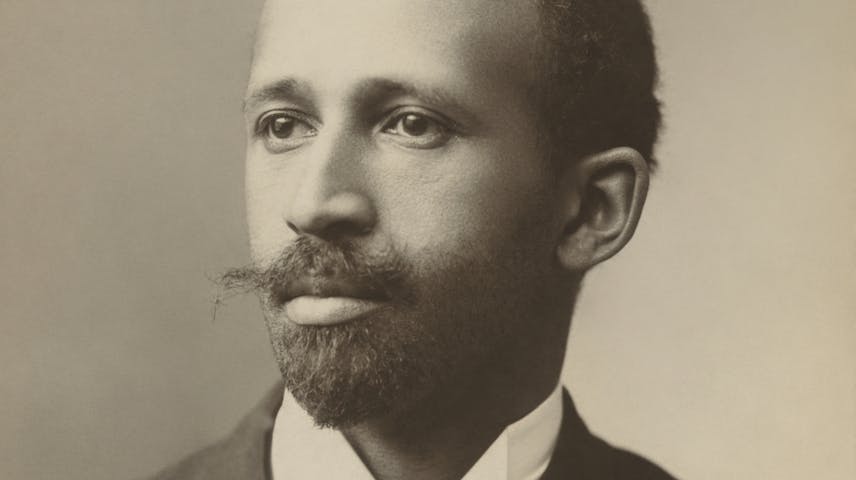
Provide students with a copy of “The Comet” by W. E. B Du Bois. Share with students the following background information about the context of this short story:
The story takes place in the 1920s in New York City.
During this period of time, racial segregation and discrimination were the norm, similar to the experiences John Lewis describes in March, the text students studied in Unit 1.
Have students read the first half of the short story “The Comet,” by W. E. B. Du Bois, ending with the dialogue line “The long distance telephone—the telegraph and the cable—night rockets and then—flight!” Instruct students to take notes in their Journal on the following prompt:
As you read, annotate the text for the following:
What events happen in the first half of this short story, and how do you know that is what is happening?
Teacher Tip |
|---|
Address with students the use of racial slurs in the upcoming short story, and establish ground rules for respectful dialogue. Explain to students that the words Negro and colored are being used by characters in the story to describe Jim. Ensure that students understand that the slurs used should not be read aloud and are not allowed to be used at any time, in or out of class. Explain that the historical context of these slurs relates to bigotry and that they are not synonyms for Black people. The ending of the short story includes the n-word racial slur. Before students engage with this section of the short story, ensure that you have taken steps to support a safe learning environment for all students. Depending on your context, this may mean creating norms about engaging with texts that have slurs or derogatory language (e.g., “We do not speak this word aloud in this class”); making space for students’ processing time before, during, or after engaging with this content; and helping students understand why Du Bois may have included this word in his short story, despite its harmful history and impact. Similar to The Last Cuentista, DuBois’s short story includes catastrophic events that lead to mass human casualties. Students who have experienced the death of close loved ones might be affected by this short story. Please be sensitive to your students and provide opportunities for them to take breaks as needed. |
The Last Cuentista
Donna Barba Higuera

The Comet
W.E.B. Du Bois