Loading course navigation
Loading lesson
50 min
Student Lesson
Lesson 42: Flex Day: Skill-Based Huddles
Content
Students will strengthen narrative writing by engaging and orienting the reader, developing conflict with narrative techniques, and using transitions to clarify relationships among events.
Language
Students will explain revision choices using sequence language, craft verbs, and cause/effect phrasing during huddles and reflection.
How does memory help us understand who we are, and what is lost when memory disappears?
How do stories help communities survive change and imagine a future worth building?
Knowledge-Building:
Students apply what they learned from The Last Cuentista and The Comet about survival, memory, and ethical choices to their own narrative drafts.
Enduring Understanding:
Stories preserve identity and guide communities forward, so clear scene writing helps readers understand what should survive.
Future Lessons:
Students will carry stronger openings, conflict scenes, and transitions into final revision, polishing, and publication work.
Unit Performance Task:
Today’s huddles strengthen key parts of the Stories for the Future narrative by helping students clarify orientation, deepen conflict, and connect events clearly.
| Lesson Flow | Purpose of Learning Experience |
|---|---|
Launch5 Minutes | Students self-assess confidence on W.8.3.a, W.8.3.b, and W.8.3.c to help the teacher form huddles. |
Learning in Action40 Minutes | Teacher uses flexible grouping to provide targeted 10–15-minute huddles on engaging and orienting the reader, developing conflict with narrative techniques, and using transitions to clarify relationships among events; other students engage in independent reading or knowledge-building tasks. |
Look Back5 Minutes | Students reflect on growth in confidence or new learning from independent work. |
Material List
Unit 4 Lesson 42 Student Edition
Student narrative drafts (from Lessons 39–41)
Story Arc Planner (from Lesson 38)
Teacher-selected short passage from a current unit mentor text, student model, or student draft for each huddle
Independent reading text
Routines
Reflection
Quick Write
Whole-Class Discussion
Say: Today is a Flex Day. Based on your self-assessment and your recent work, I'll be meeting with small groups for a quick skill session while others work independently. Let's start by rating your confidence.
Instruct students to reflect on their ability to do each of the following using the Reflection routine.
Reflection |
|---|
|
Say: Using your confidence ratings in addition to how you've demonstrated your understanding in recent work, you'll get individualized learning sessions so you get what you need today.
Collect a quick visual of ratings.
Explain the plan:
Three 10–15-minute teacher huddles:
Huddle 1: W.8.3.a (Engaging and Orienting Readers)
Huddle 2: W.8.3.b (Using Narrative Technique)
Huddle 3: W.8.3.c (Conveying Events Clearly)
Students not in a huddle work independently using one of the choice tasks.
Then sort students using:
1. their Reflection responses, and
2. your data from recent drafts, conferences, peer feedback, and exit tickets from Lessons 39–41.
Teacher Tip |
|---|
|
Explain that you are first going to pull students for additional work on W.8.3.a (Engaging and Orienting Readers). Pull students who rated 1–3 on W.8.3.a and/or have shown difficulty with opening scenes by beginning with vague action, unclear speakers, or missing setting details based on recent work. All other students begin independent work (see "Independent Choice Work" below).
Pull this group when students open with lines like "It happened fast" or "I ran" and the reader cannot yet tell who is in the scene, where the scene is happening, or why the moment matters.
Students not in responsive huddles choose one task and write a brief response.
Option 1: Independent Reading and Writing
How does the author of your independent reading text orient you at the start of a chapter or scene? How do you do this in your own narrative? Cite one example.
The author orients me by quickly showing where the character is and what is wrong. In the opening of my own narrative, the character is standing outside a damaged shelter and already worrying about the missing supplies.
Option 2: Knowledge-Building
How does a clear opening help a reader understand what a community is trying to protect in a story about memory, culture, or survival? Cite one example from your reading or your draft.
A clear opening matters because it tells the reader what is at stake right away. In my draft, starting in the memory vault helps show that the characters are trying to protect stories before they are erased.
Use any short passage from a current unit mentor text or sample draft for this huddle. Students should have the text in front of them.
An opening engages and orients the reader when it quickly shows who is present, where the scene is happening, and what situation is beginning.
A strong opening does not tell the whole backstory first; it gives just enough context so the reader can enter the moment.
Readers get lost when a draft uses vague pronouns, floating dialogue, or action without place or purpose.
Say: We are going to study how an opening helps a reader enter a scene fast. As we look at the text, we will notice what details help us know who, where, and what is happening.
Have students read the opening lines of the text and underline details that introduce the character and setting.
Ask: What detail helps you enter the scene right away?
The strongest detail is the one that tells who is in the scene and where it is happening right away because that lets me picture the moment instead of guessing.
Have students look again and decide which part of the opening is most clear and which part still feels incomplete.
Ask: What part of the orientation is strongest, and what part still needs to be clearer?
The character and place are clear, but the problem still needs to be clearer. The writer should hint at what the character wants, fears, or is trying to protect.
Have students draft one added or revised sentence that would help a reader understand the opening faster.
Ask: What sentence might you add or revise so the reader understands the scene more quickly?
I would add a sentence that names the setting and the immediate problem, like “The archive door was sealing shut, and my brother was still inside.”
Say: Now you will try this skill on your own. Your sentence should help a reader enter the scene right away by naming who is there, where the action is happening, and what problem is beginning.
Have students revise the opening sentence of their own drafts, or provide this sample starter: I ran.
Ask: Revise the opening sentence so it engages and orients the reader. Include who is acting, where the scene is happening, and a hint of the problem.
I ran through the dim archive tunnel, clutching my grandmother's story chip before the patrol drones could spot me.
Check for Understanding |
|---|
Circulate and spot-check:
|
Explain that you are next going to pull students for additional work on W.8.3.b (Using Narrative Technique). Pull students who rated 1–3 on W.8.3.b and/or have shown difficulty by writing conflict as a summary instead of a developed scene based on recent work. All other students begin independent work (see "Independent Choice Work" below).
Pull this group when students rush through important moments, tell the reader that a conflict happened without showing it, or leave out dialogue, pacing, description, and reflection that would make the tension feel real.
Students not in responsive huddles choose one task and write a brief response.
Option 1: Independent Reading and Writing
How does the author in your independent reading build tension in one scene? How can you use this technique in your own narrative? Cite one example of dialogue, pacing, description, or reflection.
The author builds tension by slowing down the moment and describing what the character notices. In my narrative, I can describe the silence in the hallway before anyone opens the door, which makes the scene feel more tense.
Option 2: Knowledge-Building
In stories about memory, culture, or survival, why does conflict need to feel immediate instead of summarized? Cite one example from your reading or your draft.
Conflict needs to feel immediate so the reader understands the risk and the choice. In my draft, showing the character hiding a story seed during the inspection is stronger than just saying the government was dangerous.
Use any short passage from a current unit mentor text or sample draft for this huddle. Students should have the text in front of them.
Conflict becomes vivid when a character wants something and something blocks that goal.
Writers build tension through dialogue, pacing, description, and reflection, not just by stating that a problem exists.
Scene writing feels stronger when the reader can hear, see, or sense the pressure of the moment.
Say: We are going to look at how an author makes a hard moment feel alive instead of summarized. As we read, notice which craft move makes the conflict feel strongest.
Have students reread a tense moment in the text and mark the line where the problem becomes clear.
Ask: What tells you this is a conflict moment?
This is a conflict moment because the character wants something, but an obstacle or other person blocks it. The language also shows urgency or fear.
Have students identify which narrative technique is doing the most work in that moment.
Ask: Which technique develops the conflict most strongly here: dialogue, pacing, description, or reflection?
Description does the most work because the writer slows down the moment and helps the reader notice the danger through what the character sees and feels.
Have students choose one plain sentence from the passage and revise it to make the conflict more vivid.
Ask: How could you revise one sentence so the tension feels stronger?
I would revise the sentence by adding a reaction and a sound, like “My hands shook against the locked panel while footsteps clicked closer behind me.”
Say: Now you will revise a simple sentence into a scene moment. Use at least one narrative technique so the reader feels the tension instead of just hearing that there was a problem.
Have students revise a conflict in their own drafts, or provide this sample starter: The door was closed.
Ask: Revise to show conflict more effectively. Add one narrative technique such as dialogue, pacing, description, or reflection.
The door slammed shut just as I reached it, and from the other side my mother whispered, “Don't let them hear you.”
Check for Understanding |
|---|
Circulate and spot-check:
|
Explain that you are next going to pull students for additional work on W.8.3.c (Conveying Events Clearly). Pull students who rated 1–3 on W.8.3.c and/or have shown difficulty in writing without jumps in time, place, or cause that confuse readers based on recent work. All other students begin independent work (see "Independent Choice Work" below).
Pull this group when students move from one event to another with no transition, use repetitive transition words like then for every sentence, or leave readers unsure whether events are happening before, after, or because of each other.
Students not in responsive huddles choose one task and write a brief response.
Option 1: Independent Reading or Writing
Find one transition in your independent reading or your own draft that signals sequence, time shift, or cause. Explain what kind of connection it shows.
The phrase “Hours later” signals a time shift because it moves the reader forward without listing every small event in between.
Option 2: Knowledge-Building
Why do transitions matter in a story about memory, survival, or rebuilding the future? Cite one example from your reading or your draft.
Transitions matter because they help the reader follow how one choice leads to another. In my draft, the phrase “After the archive burned” helps show why the characters have to rebuild their memory system.
Use any short passage from a current unit mentor text or sample draft for this huddle. Students should have the text in front of them.
Transitions show sequence, shift, or relationship between events.
Phrases and clauses can show time, place, and cause, not just one-word transitions.
Clear links and transitions between events help the reader follow how a story moves and why one moment leads to the next.
Say: We are going to study how a text helps the reader move from one event to the next. As we read, we will notice what words or phrases show time, change, or cause.
Have students reread two connected lines or sentences in the text and underline the transition or phrase that links them.
Ask: What word or phrase helps you follow the movement from one event to the next?
The transition helps me follow the movement because it shows whether the next event happens after, during, or because of the first one.
Have students decide what kind of connection the transition shows.
Ask: Is this transition showing a sequence, shift, or relationship? How do you know?
This transition shows a relationship because it explains why the next action happens, not just when it happens.
Have students rewrite one part of the passage with a stronger phrase or clause that makes the connection clearer.
Ask: How could you revise this part so the connection between events is easier to follow?
I would add a clearer phrase like “When the signal failed” or “By morning” so the reader knows whether the story is showing cause or time.
Say: Now you will connect two events in one sentence. Choose a transition, phrase, or clause that clearly shows time or cause so the relationship between the events makes sense.
Have students revise to clearly link two events in their own drafts, or provide this sample starter: The power failed. We lit the memory candles.
Ask: Combine the two events by using a transition, phrase, or clause that clearly shows the relationship between them.
When the power failed, we lit the memory candles.
Check for Understanding |
|---|
Circulate and spot-check:
|
Students complete a brief reflection based on what they did today. Invite two or three students to share.
Option A (students who attended one or more huddles):
Re-rate your confidence for W.8.3.a, W.8.3.b, and W.8.3.c. What specifically improved?
Before, I was a 2 on W.8.3.b, but now I am a 4 because I know I should not just say the conflict happened. I can add dialogue or description to make the reader feel the pressure in the scene.
Option B (students who did independent reading or knowledge-building):
What are you learning about on the unit topic from today's reading or work? Cite one detail.
I am learning that stories about survival need clear stakes from the beginning. In my independent reading, the first page showed a family hiding seeds after a flood, and that detail made it clear what they were trying to protect.
Scoring Rubric (Quick Write Reflection)
Score | Criteria |
|---|---|
3 | Clearly states growth or learning, names the specific skill or idea, and includes a concrete example from a huddle task, draft, or reading. |
2 | States growth or learning and names a skill or idea, but the example is general or only partly developed. |
1 | Gives a vague statement with little connection to today's huddle work, independent reading, or unit topic. |
Students read their independent reading book for 20 minutes and complete a reading log entry.
The Comet
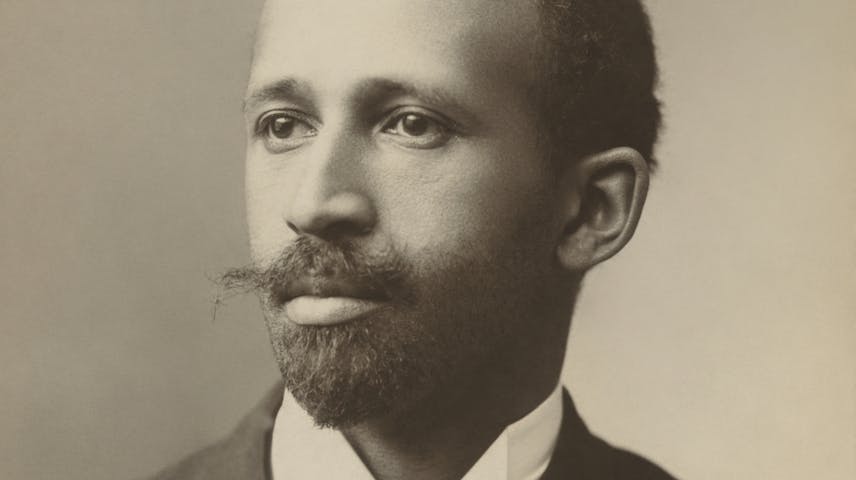
W.E.B. Du Bois