Loading course navigation
Loading lesson
50 min
Student Lesson
Lesson 11: The Last Cuentista and “The Fox and the Crow”
Content
Students will analyze how The Last Cuentista draws on the fable “The Fox and the Crow” by adapting its themes and character types, and compare the structure of both texts to explain how these differences shape meaning and style.
Language
Students will analyze how an author uses a fable in the novel using text-to-text connection language and evidence connectors.
Foundational Skills
Students will draw connections between word relationships and distinguish among connotations of words with similar denotations.
How does memory help us understand who we are, and what is lost when memory disappears?
Knowledge-Building:
Students build knowledge of how fictional writers can use traditional stories to frame and understand contemporary situations within works of modern fiction.
Enduring Understanding:
Stories shape how humans remember the past and how they understand their present.
Future Lessons:
In Lesson 12, students will analyze how the Collective creates conditions that threaten memory in Chapters 14–15 of The Last Cuentista. In Lesson 13, students continue to read Chapter 16 of The Last Cuentista.
Unit Performance Task:
Students study how a traditional fable can be reshaped inside a new context, a move they may use in their own narrative writing.
| Lesson Flow | Purpose of Learning Experience |
|---|---|
Launch5 Minutes | Students activate prior learning from Chapter 13 by discussing how Petra recalls and uses a fable Lita told her to understand her current situation. |
Literacy Lab10 Minutes | Students analyze word relationships and distinguish connotations among words with similar denotations by analyzing the Collective’s use of the words harmony and unanimity. |
Learning in Action30 Minutes | Part A: Analyzing Traditional Stories in Modern Texts (RL.8.9) Students will analyze how the author integrates “The Fox and the Crow” into her contemporary story to show how Petra understands her current situation. Part B: Comparing Text Structures (RL.8.5) Students will analyze how the author’s choice to embed a traditional fable in her novel contributes to meaning and style. |
Not available for this lesson
Material List
The Last Cuentista by Donna Barba Higuera
Unit 4 Lesson 11 Student Edition
Routines
Turn and Talk
Word Relationship
Think-Pair-Share
Have students take out their annotations from Chapter 13 and open to pp. 98–103 in The Last Cuentista. Instruct students to transition into pairs for a turn and talk discussion.
Say these Directions: In the last lesson, we analyzed how the Collective’s dogma and their forced compliance make individuality feel dangerous on the ship. Today, we will analyze how Petra uses an old fable to make sense of that danger. Turn and talk with a partner about the following question.
Display the following question.
What makes Petra recall the Fox and Crow story? How does she use the story to understand the situation on the ship?
Petra recalls the fable in the context of the warning Lita presented: “You must be able to sense those who have selfish intentions.” (p. 98) The Chancellor’s grin reminds Petra of the fox—a “trickster” who does not have her “best interest at heart” (p. 98). She uses the story to figure out who is a trickster and who is being tricked.
Say: Today, you will analyze how Higuera uses a traditional story in her futuristic narrative to help Petra make sense of the people around her and the unfamiliar world she finds herself in.
Say: Words have both denotations, which are dictionary definitions, and connotations, which are feelings or ideas associated with the words.
Say: We will study two words with similar denotations, or definitions. The Collective uses the words harmony and unanimity as part of the displays on the ship’s ceilings. These words have similar definitions, but they may have different connotations based on how they are used in a text like The Last Cuentista.
Provide students with the denotations of the words harmony and unanimity.
harmony: agreement, accord, different parts working well together
unanimity: being of one mind, everyone agreeing
Ask: How are the words harmony and unanimity related to each other?
Both words mean agreement and being in unity with each other.
Display the following target sentence.
Target Sentence: “The word Harmony in bright green starts to flash across the otherwise blank ceiling. I’m sure I’m imagining it, but then Unanimity replaces it in purple.” (p. 95 )
Ask: Can you have harmony without unanimity? Why or why not?
Harmony means everyone is in agreement. I think you can have people who agree on something without thinking the exact same thing.
Say: Both words mean agreement, but harmony can mean that you have different individuals who work well together. Harmony can also mean voices or instruments making different notes that blend together musically. Unanimity means everyone fully agrees. When all voices are singing the exact same note, that’s called singing in unison. Unison and unanimity both share the Latin root word ‘unus’ meaning ‘one’.
Distinguishing Connotation and Denotation
Ask: What feeling do you associate with the word harmony? Is it a positive or negative association? Why would the Collective project the word on the ceiling?
The word harmony has a positive association. The Collective is using the denotation and the connotation to remind the ship’s inhabitants of the dogma, or ideals everyone follows.
Ask: What feeling do you associate with the word unanimity? Is it a positive or negative association? Why would the Collective project the word on the ceiling?
The word unanimity could have a positive or negative connotation based on how it is being used. The Collective wants the ship’s inhabitants to remember that there must always be total agreement or consensus.
Ask: What kind of connotation do the words harmony and unanimity evoke when used by the Collective?
The words harmony and unanimity have a negative feeling or connotation when used by the Collective. They are used as a form of propaganda to keep the ship’s inhabitants under control and okay with absolute conformity and consensus. Even though in other contexts harmony and unanimity might be positive, in this context, when the Collective uses these words, they are using them to maintain control.
Check for Understanding (L.8.5.c) | |
|---|---|
In your Personal Dictionary, write one sentence that explains the connotation of unanimity and harmony in this part of the novel. |
Say: Now that you have studied how the Collective’s language sounds inviting but hides control, you are ready to compare that manipulation to the fable.
Remind students that they first encountered “The Fox and the Crow” in Unit 2, Lesson 3, as a traditional story that teaches a lesson through allegory.
Say: When I encounter a traditional story within a modern text, I look for more than surface details. I think about the author’s purpose for including the traditional story in the text. First, I familiarize myself with the characters and message in the traditional story. Then, I think about those elements the author hopes to draw upon to deepen the message of their modern story, using the themes and ideas in the traditional story.
Provide students with a copy of the fable “The Fox and the Crow” and place students in pairs.
Teacher Tip |
|---|
Consider reminding students of the definition of a fable if necessary. A fable is a very short story that teaches a lesson, often through animal characters |
Say these Directions: With your partner, reread the fable “The Fox and the Crow.” Then, reread pp. 98–103 of The Last Cuentista that includes Petra’s recollection of her grandmother telling her the story. Answer the following questions to analyze how the author uses the themes and character types from “The Fox and the Crow” to further her own plot and develop events and characters.
What are the main character types in “The Fox and the Crow”? What message does the fable convey?
The main character types are the trickster, who is the Fox, and the vain or gullible character, the Crow. The fable conveys the message that the Fox cannot be trusted and that the Crow is partially to blame because she let her vanity overcome her good sense.
How does Lita present the moral of the story to Petra? How does that compare to the moral in the fable you read?
Lita presents the moral of the story as a warning. She warns Petra to be on the lookout for the “fox” and not fall for anyone’s flattery. Lita says, “You must be able to sense those who have selfish intentions” (p. 98).
How does Higuera integrate the fable into her story? Why do you think she makes those choices to integrate it in the way that she does?
Higuera integrates the fable into her narrative by having Petra recall it as a memory of her grandmother’s storytelling. She uses the trickster Fox to reflect the type of character the Chancellor is and to warn Petra that “the crow did not see the fox’s sneer, but only heard his deceptive words.” (p. 99). She also puts events from the main story right next to events from the fable to demonstrate the connection to readers. For example, “Crow considered Fox’s words. Of course, Crow was tired.” comes right after the Chancellor announces “The bio-drones have confirmed the atmosphere has sufficient oxygen” and Crick expresses his relief at the announcement by saying “This is it . . .” (p. 99). This shows that Crick and the other members of the Collective are willing to believe the Chancellor’s words at face value rather than question or interrogate them.
How does Petra use the traditional story to make sense of her current situation?
Petra aligns the members of the Collective to the character types in the story. The Chancellor “turns with a grin on her face just like a fox” (p. 98). After witnessing Len talk to Crick and chug the liquid, Petra thinks, “I think I’ve found the Crow” (p. 100). This shows that Petra has identified Len as the crow, the person who is being used by the Collective to “accompany the Zetas,” even though it could hurt him (p. 100). She applies the learning from the story to help her identify danger and dishonesty among the Chancellor and Crick, as well as understand why the Collective is behaving as it does.
After students have had time to discuss in pairs, have a few volunteers share out about the questions.
Teacher Tip |
|---|
If necessary, translate the Spanish that Petra remembers Lita speaking about the Fox and the Crow story.
|
Pulse Check (RL.8.9) |
|---|
Which statement best explains how The Last Cuentista draws on the fable “The Fox and the Crow”?
Incorrect: A student might choose this if they overgeneralize the lesson of the fable instead of identifying the trickster–target relationship Petra notices between the Chancellor and Len. |
Students will analyze the text structure used in “The Fox and the Crow” and compare how it is used within the structure of Higuera’s narrative.
Ask: What text structure organizes events in “The Fox and the Crow”?
The fable uses a sequential structure or plot events relayed in consecutive order.
Say these Directions: Review pp. 98–103 in Chapter 13 of The Last Cuentista. Pay attention to the way that Higuera incorporates the fable into her narrative. Then read the following questions and think about your responses. Take brief notes if needed. When you are done writing, turn and talk to your partner about the questions.
How is the telling of the fable organized within this section of the novel? What is happening in the present moment? What is memory?
The organization of the fable in this part of the story is not told in a sequential order like the original fable. Instead, Higuera moves from the present moments that Petra is experiencing back to the retelling of the fable. In the present, Petra stands before the Collective and listens to the Chancellor and learns that the “Zeta unit” and Len will be exploring the new planet, Sagan (pp. 99–100). As Petra listens to the Chancellor, Petra is constantly flashing back to the past, remembering a conversation with her grandmother, including Lita’s warnings about the fox. Within Lita’s dialogue in the flashback, the fable comes to life.
How does the layering of present-day events, memory of her grandmother, and the Fox and Crow fable add to the meaning of Higuera’s narrative?
The layering of the events, memory, and story conveys a perspective of the Chancellor and the Collective that comes from the traditional knowledge shared in the fable. Framing the Chancellor as the “fox” is important because it shows that she and her presentation of the goals of the Collective cannot be trusted (p. 98).
Why does Higuera use a traditional story in this part of the text? How does its use support a developing central idea of the novel?
Higuera uses a traditional fable to develop the central idea of the importance of storytelling. The use of the fable here underscores the fact that people can use stories to help them better understand and respond to people and situations. For example, through the fable, Petra is able to understand the Chancellor as the “fox,” or the person who has “selfish intentions,” while also understanding that people like Len are the “crow” and will be “sacrifice[d]” (pp. 98–102).
If time allows, invite a volunteer or two to share key understandings gained from the discussion.
Provide students with a confidence continuum (i.e., 1–5). As needed, model how to demonstrate a level of confidence using the continuum.
Reflection |
|---|
Reflect on your understanding of how Higuera structures her story to incorporate the traditional fable of the “Fox and the Crow” using the Reflection routine.
|
Instruct students to discuss the following question with a partner.
Say these Directions: Turn to your partner and share your ideas in response to the question. Support your ideas with evidence from the text.
What does Higuera achieve by using a traditional story in this part of the novel? Why do you think she chose to weave the story into her novel?
Higuera’s choice to use a traditional story allows her to build layers of meaning and develop central ideas while moving the action forward. Petra’s comparison of the characters in “The Fox and the Crow” to the Chancellor and Len shows that old stories carry survival knowledge and apply to contemporary life. The way Higuera weaves in the traditional tale as Petra remembers Lita telling it reinforces the idea that memory and storytelling are essential to identity and understanding one’s circumstances.
Instruct students to read Chapters 14-15 of The Last Cuentista and take notes in their Journal on the following prompt.
As you read, annotate the text for the following:
How does the Collective create conditions that threaten memory?
Teacher Tip |
|---|
In Chapter 15, Petra watches a reenactment of Earth's destruction. Some students may have experienced displacement due to natural disaster, conflict, or immigration, and may be particularly sensitive to this depiction. Ensure that the topic of the loss of a homeland is handled with empathy and sensitivity. In Chapter 15, Petra finds that her parents have been “purged” from the ship. Students who have experienced the death of a family member, family separation, or displacement may be affected by this part of the novel. Please be sensitive to your students and provide opportunities for them to take breaks as needed. |
The Last Cuentista
Donna Barba Higuera

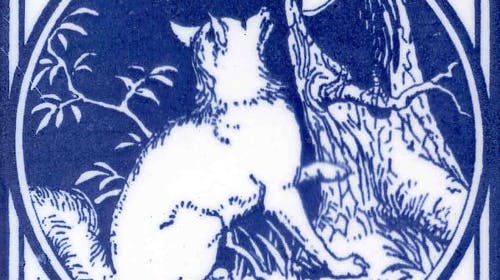
The Fox & the Crow
The Æsop for Children