Example ELA 6th Grade Course
Course Overview
The Grade 6 Core ELA course opens the middle school journey by anchoring students in the study of Self — how individuals understand their own identity through the stories they carry. Students examine how narrative craft connects readers to lived experience, how mentorship shapes who we become, and how elevating overlooked voices can reframe what we think we know.
This course sets the foundation for the three-year thematic arc: Self → Belonging → Systems. Students build close-reading skills, learn to write with intentionality, and practice the habits of thought that will carry them through 7th and 8th grade.
Key Focus
The key focus of this course is story as a tool for self-understanding. Students read across genres — memoir, fiction, and informational text — to examine how authors construct identity and why those choices matter.
Writing instruction centers on narrative and argument, with an emphasis on voice, evidence, and revision as a thinking practice rather than just a polish step.
Arcs of inquiry
Students move through three arcs of inquiry over the course of the year:
Arc 1: Who am I? — Students explore the stories that define individual identity and examine how authors use narrative craft to make private experience legible to a wider audience.
Arc 2: Who taught me? — Students investigate how mentorship, heritage, and community shape who we become, reading texts that trace the transmission of knowledge across generations.
Arc 3: Who gets remembered? — Students research figures whose contributions have been minimized or overlooked, building arguments for why those contributions matter and writing to make them visible.
Unit 1: Voice, Self, & Agency — Warbreaker
Knowledge-Building Topic
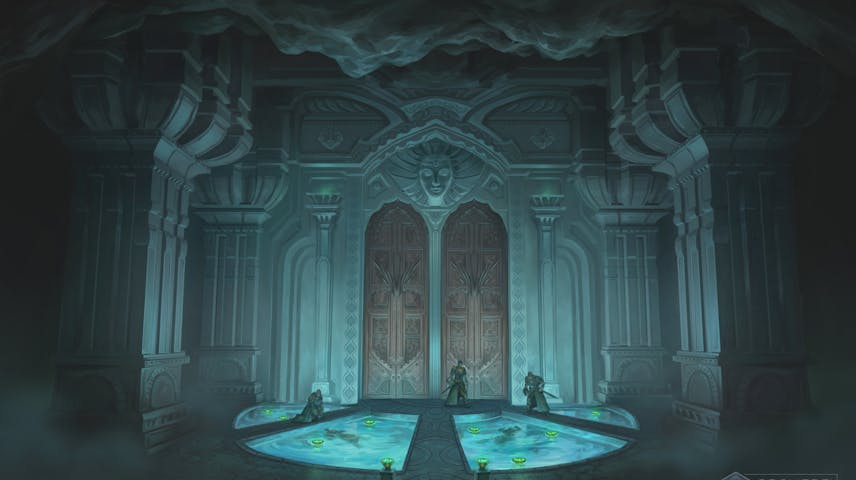
This unit explores how individuals develop a sense of self and learn to claim agency in circumstances not of their choosing. Warbreaker follows two Idrian princesses — Vivenna, who spent her life preparing to be sent to Hallandren, and Siri, who is sent instead — as they navigate a foreign culture, a political marriage, and a world where BioChromatic Breath functions as currency, power, and metaphor for the voice within us. Students examine how Sanderson uses these parallel journeys to ask what it means to find yourself when everything you assumed about yourself turns out to be wrong.
Essential Questions
What does Vivenna's journey from rigid Idrian princess to adaptable survivor reveal about how identity forms under pressure?
How does Siri find agency in Hallandren's Court of Gods despite having no power of her own, and what does that reveal about the nature of voice?
Unit 2: Curiosity & Discovery — Isles of the Emberdark
Knowledge-Building Topic
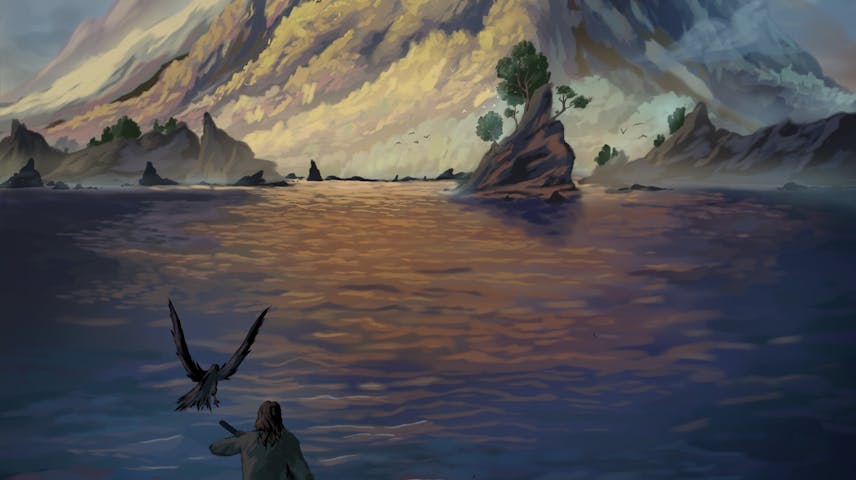
Students explore how Sixth uses direct observation and ecological knowledge to survive on the deadly islands of the Drominad system, and what happens when outside forces claim to bring "progress" to a world they don't understand. Sixth is a trapper who hunts on the deadly island of Patji — an island where every organism is a threat and survival depends entirely on accumulated, firsthand knowledge of how the ecosystem works. When the Ones Above, spacefaring visitors with advanced technology, arrive and begin studying the islands, Sixth must decide whether their curiosity is benign or exploitative. Students examine how Sanderson uses this conflict to argue that genuine discovery requires humility, patience, and respect for what already exists.
Essential Questions
What can Sixth's methods of observing Patji's ecosystem teach us about how careful attention to evidence leads to discovery?
When outsiders claim to "discover" knowledge that indigenous people already hold, whose discovery is it?
Unit 3: Hidden Worlds & Unlikely Partners — Yumi and the Nightmare Painter
Knowledge-Building Topic
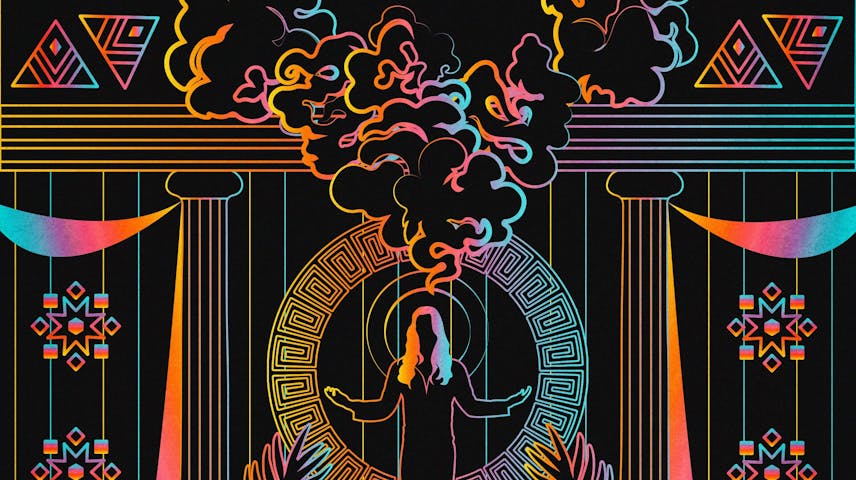
This research unit focuses on curiosity, evidence, and discovery through Sanderson's novella Yumi and the Nightmare Painter. On the planet Komashi — where the Shard Virtuosity Splintered herself — two protagonists live in radically different worlds that are secretly connected. Yumi is a yoki-hijo: a spirit summoner who stacks rocks in precise patterns to call spirits into her bright, tradition-bound world. Nikaro (called Painter) contains nightmares with specialized paint in the dark, modern city of Kilahito. When they inexplicably swap bodies, each is forced to inhabit the other's life — and through that forced collaboration, they begin to piece together evidence that Yumi's entire reality is a fabrication maintained by a machine that has enslaved the very spirits she summons. Students examine how Sanderson structures this dual investigation and what it reveals about how curiosity requires seeing beyond the assumptions baked into our own world.
Essential Questions
What does Yumi and Painter's body-swap reveal about how stepping into someone else's world changes what we're able to discover?
How does Sanderson use the nightmares of Kilahito as a metaphor for truths hidden in plain sight — and what does it take to see through a fabricated reality?
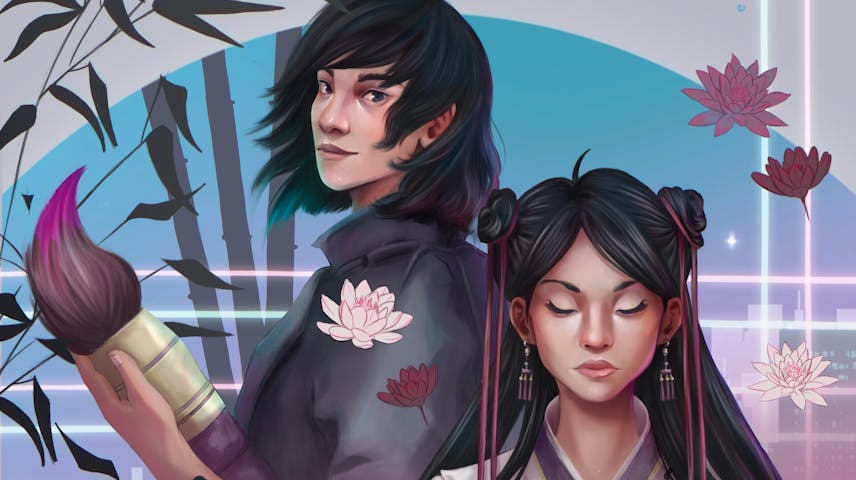
Unit 4: Myths, Monsters, and Modern Stories — Tress of the Emerald Sea
Knowledge-Building Topic
This unit examines the relationship between myth, fairy tale structure, and contemporary storytelling through Sanderson's Tress of the Emerald Sea — a Secret Project novella narrated by Hoid, the Cosmere's ancient worldhopping storyteller. Tress is a cup-washer on a small island who crosses the deadly spore seas of Lumar to rescue Charlie, the duke's son she loves, from the Sorceress who has cursed him. The novel is explicitly structured as a fairy tale and equally explicitly deconstructs every assumption of that structure: the monster has a backstory, the hero is terrified, and the narrator is a chaos agent with his own agenda. Students examine how Sanderson uses and subverts archetypal structures to make claims about the stories we tell and why we tell them.
Essential Questions
Why does Hoid choose to tell Tress's story as a fairy tale — and what does that framing reveal about what fairy tales are actually for?
How does Tress of the Emerald Sea transform the monster of the fairy tale (the Sorceress, the spore seas) into something more complicated than evil?