Loading course navigation
Loading lesson
50 min
Student Lesson
Lesson 24: Comparing A Raisin in the Sun and “Redlining: How Housing Discrimination Shaped American Neighborhoods”
Content
Students will compare and contrast a fictional portrayal of housing exclusion with a historical account of redlining and neighborhood segregation.
Language
Students will explain how vague and coded word choice shapes meaning using comparison language and evidence-based reasoning.
Foundational Skills
Students will use the Latin root unus to determine the meaning of unique and related words.
How can understanding the experiences of others help us think critically about fairness and opportunity?
Knowledge-Building:
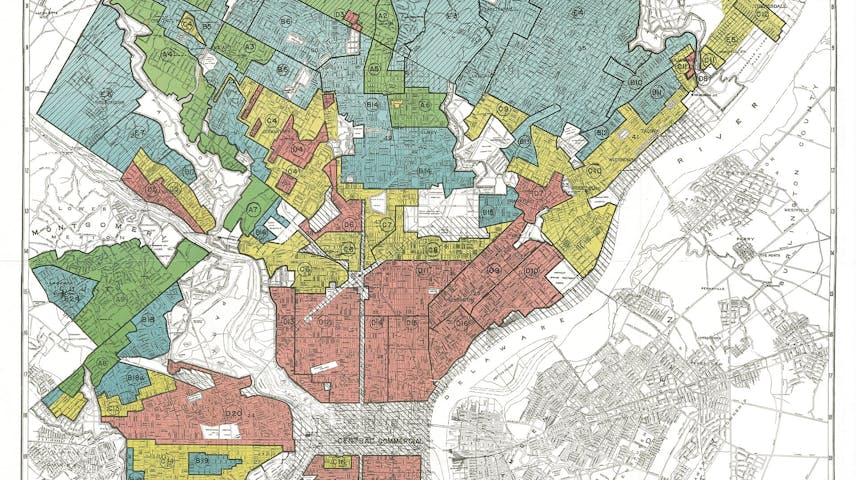
Students build on the homework article about redlining and neighborhood exclusion tactics. Enduring Understanding: Students examine how systems can sound reasonable while still blocking opportunity. Future Lessons: Students prepare to analyze how different characters respond to lost opportunity and deferred dreams in the final pages of the play. Unit Performance Task: Students practice comparing literary and informational evidence, a skill they will need in their research argument about modern systems of opportunity.
| Lesson Flow | Purpose of Learning Experience |
|---|---|
Launch5 Minutes | Activate prior knowledge from the homework article and connect historical exclusion tactics to today’s analysis of Mr. Lindner’s language. |
Literacy Lab10 Minutes | Explicitly teach how the root unus helps students unpack the word unique and analyze why Lindner’s word choice is vague and strategic. |
Learning in Action30 Minutes | Part A: Comparing Coded and Historical Language (RL.7.9) Students use a T-chart to compare Lindner’s “reasonable” language with the historical tactics described in the Newsela article. Part B: Explaining What the Language Hides (RL.7.9) Students write an evidence-based explanation of why one of Lindner’s phrases is misleading when viewed alongside the historical account. |
Material List
Student copies of A Raisin in the Sun by Lorraine Hansberry
Unit 3 Lesson 24 Student Edition
T-Chart graphic organizer
Routines
Think-Pair-Share
Introduce New Words Using Morphology
Group Accountability Share
Quick Write
Students should have their annotated homework article out. Keep this opening brisk so students carry article details into the comparison work.
Setup: Students turn to a nearby partner and place their homework article between them.
Say: In the previous lesson, we traced the emotional damage caused by the lost insurance money and connected that loss to barriers like housing discrimination. Today, we are stepping back to examine how those barriers can be hidden behind calm, polite language, especially in Mr. Lindner’s visit to the Youngers. This matters because your final performance task asks you to explain how systems shape people’s opportunities using evidence from both literature and research.
Say these Directions: Take out your annotations on the Newsela article from homework. With your partner, share one strategy you underlined that was used to keep Black families out of certain neighborhoods, and be ready to explain why it mattered.
Ask: What strategies did you underline in the article that were used to keep Black families out of certain neighborhoods? Share one detail with your partner.
I underlined the part where banks labeled Black neighborhoods as risky and refused home loans there. I also noticed that some white neighborhoods used rules and pressure tactics to keep Black families from moving in. These strategies mattered because they limited where families could live even when they were trying to build a better future.
Invite two or three students to share briefly with the class.
Connection to Today's Learning:
Say: Now that students have those real historical tactics fresh in mind, they are ready to test whether Lindner’s polite language actually matches what history shows.
Use this routine to help students see that one carefully chosen word can shape how an argument sounds. The goal is not just to define unique, but to analyze why Lindner chooses that word in this moment.
Setup: Students keep the play open to the scene with Mr. Lindner and open their Personal Dictionaries.
Say these Directions: When a character uses a word that sounds smooth or harmless, we can slow down and study the word itself. Today we are going to unpack the word unique to understand both what it literally means and how Lindner is trying to present his organization.
Read this line from page 116.
Target Sentence Block:
“…we have what I think is going to be a unique type of organization in American community life…”
Say: People often use the word unique to mean “special” or “unusual.” What does it really mean? How is Lindner using it? Let’s start by identifying the word’s literal meaning, which is based on the Latin word unus, which means “one.”
Write “unus: one” on the board. Guide students to come up with words with the root un- that they think are related to unus. Elicit or provide definitions as words are added to the list.
Ask: What other English words might be related to the Latin word unus?
unit: one part
unite: join into one
uniform: having one form or the same appearance
universe: one whole world or system
Ask: What do you think is the literal meaning of unique? How do you know?
It has to do with “one,” and I think it means “the only one” or “one of a kind.”’
Ask students to identify what unique has in common with the related words, in both spelling and meaning. Guide them to recognize that all the words begin with the root uni- and all have to do with “one.” Have students practice spelling unique by adding -que after uni-.
Ask: Based on your reading, was Lindner’s organization literally unique?
No, our reading has shown that there were a lot of neighborhood organizations like his, working to maintain racial segregation.
Ask: Why would Lindner use the word, if it wasn’t literally true? What does it imply about the message he was trying to give?
He was trying to make his organization sound special and as if it came from the specific, or unique, group of people in that neighborhood. Instead, it was part of a larger system. He wanted to give a positive-sounding message instead of giving details about what the group’s mission actually was.
Ask: Were Lindner’s word choices and overall tone honest or misleading?
Almost everything Lindner said was misleading, including his polite tone and his choice of words such as unique. Not until the end did he make his meaning clear.
Say: Check your smart guess using a dictionary or other reference material. Revise your definition in your Personal Dictionary if needed.
Now write the word unique from memory in your Personal Dictionary.
Check your spelling against the displayed word and correct it if needed.
Circle the root-connected meaning one and add at least two related words that helped you remember the definition.
Ask: Which part of the word study helped you remember how to spell and define unique?
The idea of one helped me most, because it reminded me that unique means one of a kind. Thinking about words like unit and unite helped me connect the meaning and remember the spelling.
Check for Understanding (L.7.4.b) |
|---|
List the word unique in your Personal Dictionary along with its definition. Add one sentence explaining why Lindner’s use of the word is vague or misleading. |
Teacher Tip: |
If needed, remind students to begin with the literal meaning first: “Unique means one of a kind.” Then prompt them to add the effect: “He uses it to make the organization sound special instead of discriminatory.” |
Connection to Today's Learning:
Say: Students have now unpacked one key word. Next, they will compare Lindner’s smooth language with the harsher historical reality described in the redlining article.
Check for Understanding (L.7.4.b) | |
|---|---|
List the word unique in your Personal Dictionary along with its definition. Add one sentence explaining why Lindner’s use of the word is vague or misleading. | |
Teacher Tip: If needed, remind students to begin with the literal meaning first: “Unique means one of a kind.” Then prompt them to add the effect: “He uses it to make the organization sound special instead of discriminatory.” |
Teacher Tip |
|---|
Mr. Lindner’s speech is a useful example of racially coded language. His tone is calm and “neighborly,” but students should be guided to analyze how words such as community, people, and unique mask racist exclusion rather than treat his speech as neutral or polite. Keep discussion grounded in the text and in the historical account students read for homework. |
Setup: Students move into small groups with the play and the Newsela article in front of them.
Say: Today we will compare a fictional portrayal of housing exclusion in A Raisin in the Sun with a historical account of redlining and segregation. As we read across both texts, our job is to notice how Hansberry uses fiction to show the emotional and personal effects of discrimination, while the article explains the larger historical systems behind those experiences.
Fiction and historical accounts often reveal different kinds of truth. A historical article can explain policies, systems, and patterns directly, while fiction can help readers experience how those systems affect people emotionally, socially, and personally.
As you work, think about this question: What does the play reveal about housing discrimination that the historical article cannot show in the same way? What does the article explain more directly than the play?
Say these Directions: In your group, use a T-chart to compare how Hansberry portrays housing discrimination through Lindner’s dialogue with how the redlining article explains the historical reality of segregation and exclusion. On the left side, record words and phrases Lindner uses to make his argument sound reasonable and neighborly. On the right side, record details from the article that reveal the real tactics used to keep Black families out of certain neighborhoods. Try to make at least three clear connections.
Say: After you have worked on your charts, share your ideas with the class. As you listen to other groups, add to or revise your chart based on new ideas you hear.
Completed Sample T-Chart
Lindner’s reasonable-sounding language | Historical reality from the Newsela article |
|---|---|
“unique type of organization” | neighborhood groups often worked to preserve segregation and keep Black families out |
“our community life” | white communities used covenants, intimidation, and pressure to stop integration |
“people get along better” | segregation was maintained through unequal access to loans, housing, and neighborhood choice |
Say: Notice that the play does not list statistics or explain policies the way the article does. Instead, Hansberry turns a larger historical system into one tense conversation between characters. The article explains the broader history directly, while the fictional scene helps readers feel the pressure, manipulation, and emotional impact of discrimination. Reading both texts together helps us understand both the historical system itself and the human experience inside the historical system.
Pulse Check (RL.7.9) |
|---|
Why is Lindner’s description of his group as a “unique type of organization” most misleading when compared with the Newsela article? A. It proves that the organization was new and still deciding what it believed.
B. It makes the organization sound special and honorable, while the article shows that similar groups enforced segregation.
C. It shows that the organization wanted to support Black families in moving to better neighborhoods.
D. It means that the organization cared more about property values than about race.
|
Connection to Today's Learning:
Say: Students have matched Lindner’s language to historical evidence. Next, they will turn one pairing into a short, written explanation.
Students may use the T-chart as their planning tool. Encourage 4–6 sentences and one comparison connector.
Setup: Students write independently after a brief partner rehearsal if needed.
Say these Directions: Use your completed T-charts to write a short analytical paragraph that answers the following questions. Make sure that your paragraph explains how Lindner’s approach was misleading when you consider what the redlining article tells us about how Black families were historically kept out of certain neighborhoods. Refer to at least one word or phrase from Lindner, one detail from the article, and one connector such as however, although, while, or this shows that.
Ask: Which word or phrase from Lindner’s side of the T-chart do you think is most misleading, and what does the redlining article help you understand about it? What pattern do you notice when you compare Lindner’s language to the historical account?
Lindner portrays his neighborhood organization as friendly, polite, and good for the community. In reality, its purpose was keeping Black people from buying houses in the neighborhood. I think “our community life” is the most misleading phrase because it sounds like he is protecting something peaceful. The article helps me see that communities often used organized methods to keep Black families out, so his phrase hides segregation behind polite words. The pattern is that Lindner uses soft, positive, vague words, while the article shows direct systems of redlining and exclusion, including loan denials, inflated prices, and neighborhood pressure. The play portrays those historical barriers through one fictional conversation, while the article explains the larger historical system directly. Hansberry uses fiction to help readers experience how discrimination sounded and felt inside everyday life.
Say: To turn a T-chart into a paragraph, I do not want to retell the scene or list article facts. I want to make a clear point about one phrase and then support it with evidence from both texts.
First, I choose the phrase that seems most misleading.
Next, I explain what impression that phrase creates.
Then, I compare it to a historical detail from the article that reveals the truth underneath.
Finally, I explain the larger pattern that I outlined in the T-chart.
🎯 PURPOSE Support students in writing a short analytical explanation that uses evidence from both a literary scene and a historical account. Language Focus: claim-and-evidence structure countering surface meaning with deeper analysis connectors for reasoning Allow students to orally rehearse their paragraph in a shared non-English language or everyday English before drafting in academic English. |
|---|
🗣️ SAY / ASK Prompt students to begin with a claim about the phrase before adding evidence. If students list evidence without explanation, guide them to complete the sentence “This is misleading because ___.” Guide replacements of generalities such as “It sounds nice but it’s not” with specifics, such as: “The phrase sounds neighborly, but it masks exclusion.” Review the meaning of misleading: in this case, Lindner’s wording creates one impression while both the outcome in the play and the historical evidence reveal something different. The phrase ______ is misleading because ______. In the scene where ______ Lindner says ______ suggests ______. However, the article reveals that Black families were kept out by ______. |
👁️ WATCH FOR / SUPPORT IF NEEDED If students use only evidence from the play → Prompt: "What detail from the article helps reveal the larger system behind this moment?" If students copy article language without explaining it → Prompt: "Put the article’s details into your own words, then add 'This shows that ___.'"
|
Provide students with a confidence continuum (i.e., 1–5). As needed, model how to demonstrate a level of confidence using the continuum.
Reflection (RL.7.9) | |
|---|---|
Use the Reflection routine to reflect on your ability to explain how a polite phrase in the play connects to a real historical system of exclusion. | |
Modeling: I would rate myself a 4 because I can identify a phrase like “unique type of organization” and connect it to evidence from the historical account. I am not at a 5 yet because I still want to make my explanation more precise. A strong reflection names both the skill and the next step. |
Connection to Today's Learning:
Say: Students have now practiced the same move they will need in the unit performance task: using literature and research together to expose how systems shape opportunity.
Have students write a brief response connecting the play and historical texts to analyze misleading language.
Say these Directions: Today we compared one scene from the play with a historical article to see how exclusion can hide behind calm, polite language. For your exit reflection, explain how comparing Lindner’s speech and the redlining article teaches about how facts can be hidden by misleading language.
Ask: How does A Raisin in the Sun show that misleading words can be used to hide the truth? Refer to details from Lindner’s speech in the play and what you have read in historical articles.
Today’s comparison helped me see that nice-sounding words can hide a darker truth. In the scene where Lindner visits the Youngers, he uses polite, friendly words and talks about “community life.” But evidence shows the truth behind his words and actions: that Black families were kept out through tactics like unfair loans, covenants, and neighborhood pressure. Lindner’s language hides a whole system of exclusion. Unless it is challenged, a misleading approach like Lindner’s could have harmful effects on people who are tricked by it.
The Performance Task Bridge.
Say: The research argument you will write later in this unit asks you to show how systemic barriers can affect people’s opportunities. What we practiced today is a must-have skill for that essay because you compared a literary moment with historical evidence. When you can explain what polite language hides, you are building a stronger argument about fairness and change.
Instruct students to read pp. 131–137 of A Raisin in the Sun.
Beneatha and Asagai react very differently to the lost money. Ask students to respond to the following questions in their Homework Journals:
How does each character feel about the lost money and what it means for the future?
With whom do you agree and why? Use at least one detail from the reading to support your answer.
A Raisin in the Sun
Lorraine Hansberry
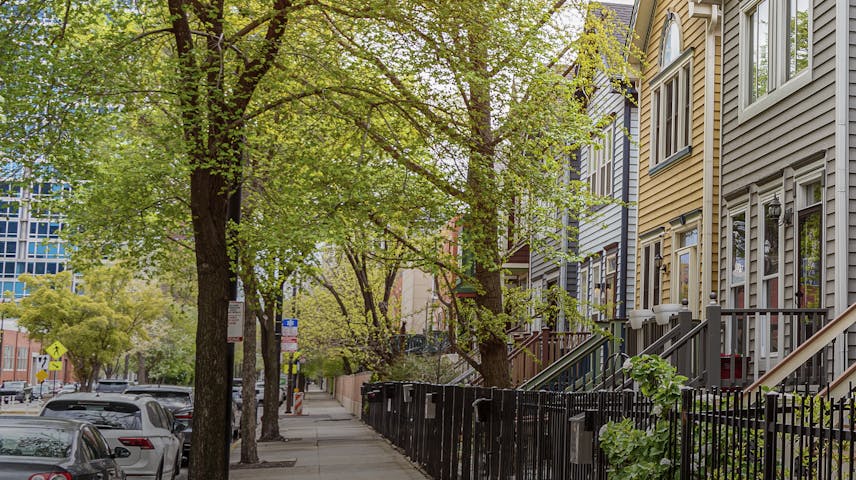
Redlining: How Housing Discrimination Shaped American Neighborhoods
Standard News Bureau