Loading course navigation
Loading lesson
50 min
Student Lesson
Lesson 7: Seen and Unseen, Explanatory Writing, Part 1
Content
Students will draft an explanatory paragraph comparing how an official notice and Seen and Unseen portray the forced removal of Japanese Americans.
Language
Students will use comparative connectors and evidence-based explanation to describe differences in perspective across two sources.
How do historical records (texts, images, and testimony) shape what is remembered about the past?
Knowledge-Building:
Students continue building understanding of how two sources can describe the same event in very different ways.
Enduring Understanding:
Official records may include facts while still hiding the human impact of an event.
Future Lessons:
In Lesson 8, students will extend this source-comparison work as they read pp. 16–35 of Seen and Unseen. This lesson falls in SRSD Stage 3–4: Model It to Support It.
Unit Performance Task:
Students practice writing a focused source comparison they can build on when analyzing how different records shape public memory.
| Lesson Flow | Purpose of Learning Experience |
|---|---|
Launch5 Minutes | Activate prior learning from the previous lesson and focus students on one clear writing task: comparing how two sources portray the same event. |
Literacy Lab10 Minutes | Teach students how to build a comparative analysis sentence that names both sources, uses evidence, and explains perspective. |
Learning in Action30 Minutes | Part A: Model the Paragraph (W.7.2.b, W.7.2.c, W.7.2.e) Students study a teacher model and identify how an explanatory paragraph compares perspective across two sources. Part B: Draft Your Paragraph (W.7.2.b, W.7.2.c, W.7.2.e) Students draft one focused explanatory paragraph comparing the official notice with Seen and Unseen. |
Not available for this lesson
Not available for this lesson
Material List
Student copies of Seen and Unseen by Elizabeth Partridge and Lauren Tamaki
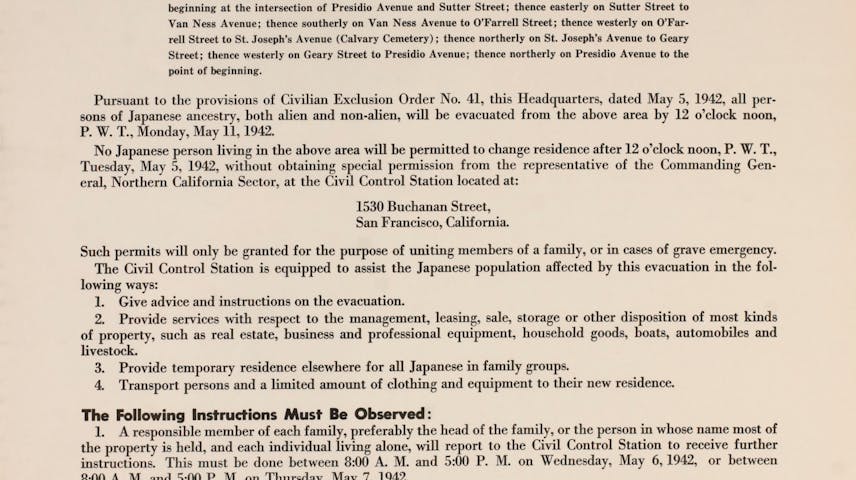
Student copies of the annotated primary source Instructions to All Persons of Japanese Ancestry
Unit 2 Lesson 7 Student Edition
Student journals
Routines
Turn and Talk
Language Study
Modeled Writing
Quick Write
Use this brief routine to reconnect students to the source from the previous lesson and narrow their attention to the exact comparison they will write about today.
Direct students to keep Seen and Unseen open to pp. 12–13, with the official notice, and to look at these pages for 20 seconds before responding.
Say these Directions: In the previous lesson, we annotated the official notice that gave Japanese American families directions during forced removal. In this lesson, we will compare that notice with how Seen and Unseen shows the same event. This will help us answer the Essential Question by showing how different records shape what people remember.
Ask: Look back at the headings, text styles, and organization of both the official notice and these pages in Seen and Unseen. What is one difference you already notice between the official notice and Seen and Unseen, and why might that difference matter to a reader?
One difference is that the notice is all typed and has lists, which makes it look official and distant, while Seen and Unseen shows people reading the notice. That matters because a reader of the notice might only see rules, but a reader of the book also sees the human impact of the policy.
Partner A, share first for 30 seconds. Partner B, listen for the difference the speaker names. Then switch.
Connection to Today's Learning:
Say: We now move from saying a source difference aloud to writing a sentence that explains it clearly.
Use this mini-lesson to teach the sentence move students need for the paragraph: compare two sources and explain what the difference reveals.
Say: When you compare two sources, you need connectors that signal the relationship between them to maintain a formal style in your writing. Some signal contrast, some signal similarity, and some signal addition. Choosing the right one tells the reader exactly how your two sources relate.
Contrast | Similarity | Addition |
|---|---|---|
But However On the other hand Although In contrast | Similarly Likewise Both Neither | Also In the same way Furthermore In addition |
Display these two mentor sentences
Say these Directions: Underline the connector and name the relationship it signals:
“While the official notice gives calm directions for “evacuation,” Partridge explains that the “evacuation” was a forced removal.”
While, Contrast — the two sources frame the same event differently.
“Similarly, both the notice and Partridge confirm that Japanese American families were ordered to leave their homes quickly.”
Similarly, Similarity/addition — the two sources corroborate the same fact.
Say these Directions: We are going to study one model sentence that does the same work your paragraph needs to do. A strong explanatory paragraph does not just list facts. It connects two sources and explains what their different wording reveals.
Target Sentence Block
Display page 14 of Seen and Unseen and direct students to read the sentence beginning with “The ‘evacuation’…” and ending with “…forced removal.”
“The ‘evacuation’ was a forced removal.” (Seen and Unseen, p. 14)
Display this model comparative sentence:
While the official notice gives calm directions for “evacuation,” Partridge explains that the “evacuation” was a forced removal.
Chunk | Meaning | Function |
|---|---|---|
While the official notice gives calm directions for “evacuation” | The notice sounds orderly and official. | Introduces source 1 and signals contrast |
Partridge explains that the “evacuation” was a forced removal | The book names the harm directly. | Introduces source 2 and clarifies perspective |
This difference reveals how the two sources present the same event differently | The writer explains why the comparison matters. | Turns evidence into analysis |
Say: First, make sure both sources are about the same event so you can compare them.
Say: Next, use a connector like while to show contrast.
Say: Include a detail from each source to keep the comparison balanced.
Say: Then ask, What does this reveal about perspective? to turn your sentence into analysis.
Ask: How does the model sentence show the difference in perspective between the official notice and Seen and Unseen?
The model sentence shows that the notice uses calm, official language, but Seen and Unseen uses direct language that reveals harm. The difference in wording helps the reader see that the two sources present the same event from different perspectives.
Check for Understanding (W.7.2.b, W.7.2.c, RI.7.6) | |
|---|---|
Write one sentence that compares the Official Notice and Seen and Unseen. Use while, however, or in contrast. | |
Modeling: If needed, prompt students to name source 1, name source 2, and finish with what the difference reveals. |
Connection to Today's Learning:
Students will now use this sentence structure to plan and draft one focused explanatory paragraph.
Keep the source set narrow. Students should use only the official notice and Seen and Unseen pp. 10–15 in this lesson so the task stays focused and manageable.
Students open their journals. Have them draw a quick two-column notes section and label it Official Notice and Seen and Unseen.
Say these Directions: In your journal, list one detail from the official notice and one detail from Seen and Unseen that clearly show a difference in perspective. Details can include words and phrases but also headings and how the text is organized. We are using only this one source pair today so we can focus on writing clearly instead of gathering too much information.
Ask: Which two details belong in the paragraph because they best show a difference in perspective?
In the notice, the directions to report to a control station make the removal sound administrative. In Seen and Unseen, Partridge says the “evacuation” was a forced removal, which makes the harm clear.
Display the following writing model if needed for support and guidance:
The official notice in Instructions to All Persons of Japanese Ancestry and Seen and Unseen both describe the forced removal of Japanese Americans, but they present it from different perspectives. The notice uses an official, distant voice as it tells families where to go and what to do. In the section listing directions, it makes the policy sound orderly and necessary, even with numbered lists. Seen and Unseen corroborates the basic fact that families had to leave quickly, but Partridge explains that the “evacuation” was a forced removal. Her wording helps readers see fear and loss, not just rules. The notice omits the feelings of the families who had to leave, while the book emphasizes uncertainty and injustice. Comparing the two sources shows that official records can include facts but still hide the human cost.
Say: Start by naming both sources and the shared event so the reader knows what you are explaining.
Say: Write a focus statement that shows the difference in perspective, not which source is better.
Say: Choose one detail from each source to compare, showing how they present the event
Provide specific guidance on how to open the paragraph with a clear thesis/claim and a preview of what is to follow.
Guide students to the compare/contrast structure of the model topic sentence: “The official notice in Instructions to All Persons of Japanese Ancestry and Seen and Unseen both describe the forced removal of Japanese Americans, but they present it from different perspectives.”
Ask: What does the focus statement of the model paragraph explain?
The focus statement explains that the two sources describe the same event but present it from different perspectives. It sets up the paragraph as an explanation of source differences, not an argument.
Guide students to look at these two early sentences of the model: “The notice uses an official, distant voice as it tells families where to go and what to do.” “Seen and Unseen corroborates the basic fact that families had to leave quickly, but Partridge explains that the “evacuation” was a forced removal.”
Ask: How do these sentences help preview the paragraph for the reader?
The thesis in the topic sentence tells us that we are going to read comparison and contrast: both similarities and differences. These sentences show us that we are going to learn specific details about each source.
Pulse Check (RI.7.6) |
|---|
Which sentence best explains the difference in perspective between the official notice and Seen and Unseen?
|
Students now draft one explanatory paragraph, not a full essay and not a general argument. Keep the task consistent and narrow.
Say: Today, you are comparing two sources, so the comparison itself needs transitions. A connector does not just decorate your writing, it’s part of the formal style of explanatory writing and tells the reader what relationship you are claiming. Before you draft, practice turning the evidence you collected into one comparative sentence.
Say these Directions: With a partner, take the two evidence pieces you collected from the two sources and combine them into one comparative sentence. Use a connector from our list — while, however, in contrast, similarly — and be ready to explain what relationship it signals.
“While one source ___, the other ___.” That frame keeps the comparison in one sentence and forces you to name both sources before you explain the difference.
Say these Directions: Write one explanatory paragraph of six to eight sentences in your journal. Explain how the official notice and Seen and Unseen portray the forced removal differently. Use at least one detail from each source, at least one comparative connector, and at least two explanation sentences that tell what the details reveal about perspective.
Ask: Which comparison word and which two source details will you use in your paragraph?
I will use while to compare the two sources. I will use the notice’s reporting directions as one detail and Partridge’s phrase “forced removal” as the second detail because those details clearly show the difference in perspective.
Display the following writing model if needed for support and guidance:
The official notice Instructions to All Persons of Japanese Ancestry and Seen and Unseen both describe the removal of Japanese Americans, but they do not present it in the same way. The notice uses formal directions that make the event sound controlled and administrative. For example, in the section telling families when and where to report, the language focuses on compliance. However, Seen and Unseen explains that the “evacuation” was a forced removal. That wording reveals the fear and injustice hidden by the notice’s official language. While the notice omits the feelings of the families, the book emphasizes the human cost of the policy. Together, the two sources show that an official record can include facts without fully showing lived experience.
Say: Before I draft, I decide exactly what my paragraph will explain in one clear sentence.
Say: Then I choose only the strongest details because too many details can make the paragraph feel scattered.
Say: As I write, I make sure each detail is followed by an explanation sentence. I also reread to check that I am comparing the sources, not writing about them one at a time in isolation.
Say: If I notice that I am only summarizing, I add a sentence with reveals, shows, or emphasizes.
Say: My goal is to help the reader understand how the two sources shape memory differently.
Say these Directions: As you draft, check your work for these three things:
Did I name both sources in the opening?
Did I use one detail from each source?
Did I explain what the details reveal about perspective?
Sentence Frames for Support:
While both sources describe the forced removal, this paragraph will show that the official notice ___, while Seen and Unseen ___.
The official notice portrays the removal as ___, while Seen and Unseen portrays it as ___.
One detail from the notice that shows this is ___.
This detail reveals ___ because ___.
The book emphasizes ___, which helps readers understand ___.
Checklist (W.7.2.a, W.7.2.b, W.7.2.c, W.7.2.e) |
|---|
As you draft your comparative paragraph, make sure you:
|
Lesson 7 Writing Rubric: Explanatory Paragraph — Two Sources, Two Views
Writing prompt: Draft an explanatory paragraph comparing how an official government notice and Seen and Unseen depict the same moment in Japanese American incarceration. Explain how each source's choices shape what the audience sees and understands.
Criteria | 1 — Beginning | 2 — Developing | 3 — Proficient |
|---|---|---|---|
Evidence & Analysis (W.7.2.b) Compare Two Sources | The paragraph does not include evidence from both sources, or evidence is not connected to how each source depicts the moment differently. | Evidence from both sources is present, but the comparison focuses on surface differences. The analysis does not yet explain how each source's choices shape understanding. | The paragraph integrates evidence from both the government notice and Seen and Unseen, and explains how each source's specific choices — what is shown, what is omitted, how it is framed — shape what the audience sees and understands. |
Organization & Transitions (W.7.2.c) Comparative Structure | The paragraph presents each source separately without comparison. Transitions are absent. | Comparative transitions are present (both, however) but the paragraph could still be read as two separate summaries. | Comparative transitions weave the two sources together into a connected analysis. The paragraph shows the comparison rather than just naming it. |
Elaboration (W.7.2.e) Explain What Each Source Reveals | Evidence is cited but not analyzed. The paragraph does not explain what the choices in each source reveal. | Some elaboration is present, but the explanation of what each source reveals is incomplete or only addresses one source. | The paragraph elaborates by explaining not just what each source shows but what it reveals about how official and personal perspectives on incarceration differ. |
Have students reflect on which evidence best clarified differences in perspective. Use responses to assess how well students select and explain supporting details.
Say these Directions: Look back at the paragraph you drafted in this lesson. In two to three sentences, name the two source details that best helped you explain a difference in perspective between the official notice and Seen and Unseen. Explain why those two details made your paragraph clearer.
Ask: Which two details best showed the difference in perspective, and why?
The two best details were the notice’s reporting directions and Partridge’s phrase “forced removal.” Those details made my paragraph clearer because one showed the official voice of the policy and the other showed the human harm the notice leaves out.
Performance Task Bridge
Say these Directions: In the performance task, you will need to explain how records shape what people remember. This paragraph gives you practice comparing how one official source and one narrative source present the same event. The clearer you are about perspective now, the stronger your later analysis will be.
Ask: Which comparison word or sentence move helped you explain your thinking most clearly?
The word while helped me the most because it let me compare both sources in one sentence instead of summarizing them separately.
Have students reread Seen and Unseen pp. 10–15. Instruct students to take notes in their Journal on the following prompt:
Copy one sentence you may want to use as evidence in a future source comparison and write one note explaining what perspective it shows.
Seen and Unseen
Elizabeth Partridge & Lauren Tamaki

Instructions to All Persons of Japanese Ancestry and Glossary of Terms
National Parks Service