Loading course navigation
Loading lesson
50 min
Student Lesson
Lesson 4: “Photos: 3 Very Different Views of Japanese Internment”
Foundational Skills
Students will use examples to test, confirm, and apply the meaning of a newly learned vocabulary word.
Content
Students will read an article about historical photographs and discuss how the author develops his claims through specific examples.
Language
Students will explain how a photographer’s perspective and intent shape meaning by using interpretive academic verbs and textual and visual evidence from the article. Foundational Skills: Students will use examples to test, confirm, and apply the meaning of a newly learned vocabulary word.
How do historical records (texts, images, and testimony) shape what is remembered about the past?
Knowledge-Building:
Students will learn how different photographers approached the task of documenting a historic injustice and gain background knowledge about the central figures in Seen and Unseen.
Enduring Understanding:
Historical records reflect the perspectives and the intents of the people who made and preserved them.
Future Lessons:
In Lesson 5, students will begin engaging with Seen and Unseen and will build understanding of the circumstances that led to the prisons. Then, in Lesson 6, students will read a primary source that shows the official government perspective on Japanese American incarceration.
Unit Performance Task:
The article reinforces the idea that historical records, even when they seem objective, express a point of view.
| Lesson Flow | Purpose of Learning Experience |
|---|---|
Launch5 Minutes | Students will engage in a Quick Write exercise exploring the structure of nonfiction books that integrate images, illustrations, and primary sources. |
Literacy Lab10 Minutes | Students will be introduced to a new vocabulary word relevant to both the article and the anchor text. They will generate examples of correct use and relate the word to the work that photographers do. |
Learning in Action30 Minutes | Part A: Determine Central Ideas (RI.7.2) Students will engage with the article by reading and annotating the text in pairs. Part B: Analyze Connections (RI.7.3) Students will engage in a Think-Pair-Share about the article, responding to questions about the text. |
Material List
Student copies of Seen and Unseen, by Elizabeth Partridge and Lauren Tamaki
Student copies of “Photos: 3 Very Different Views of Japanese Internment”
Unit 2 Lesson 4 Student Edition
Key Terms and Topics graphic organizer (from Lesson 1)
3-Column Chart graphic organizer
Routines
Quick Writes
Generating Situations, Context, and Examples
Think-Pair-Share
3–2–1 Summary
Teacher Tip |
|---|
A photograph on Seen and Unseen p. 6 shows a poster featuring a racist caricature, as well as an illustration of a sign with a slur. Emphasize to students that this term was dehumanizing when it was used, and it remains so today. When historical documents contain slurs, we examine them as evidence of the racism that was part of the historical record, not as language that was ever acceptable. When you address this page with students, keep the focus on why the authors included these hurtful images. What do they want readers to understand about the experience of Japanese Americans in this period? |
Have students take out Seen and Unseen.
Say these Directions: Seen and Unseen explores the photographs of three different photographers. It is not like a typical novel; instead, it uses a mix of text, photographs, illustrations, and primary sources. Flip through your copy to explore how the book is organized. Look closely at the layout, visuals, and features like captions, timelines, and primary source panels, and pay attention to how this book presents information differently from a novel.
Ask: Think about the different types of images in Seen and Unseen. Remember that this is a book about photographers and the photos they took. Why do you think the author and illustrator chose to include a mixture of photos and drawings? What are the advantages of using each kind of artwork?
Photos can show you exactly what a person, place, or event looked like. However, not everything important that happened in history was photographed. Drawings can help us imagine parts of history that were not recorded in photos. They can help us understand how the artist and illustrator feel, and want us to feel, about their subject. I think the people who created this book used both photos and illustrations to show different perspectives on what happened in the camps.
Say: Today, you’ll closely read an article about how three different photographers documented Japanese American incarceration at Manzanar. You’ll annotate, answer text-dependent questions, and track the article’s claim and how the author develops it with examples and explanations.
Say these Directions: We’re learning about the word intent today. Take out your Key Terms and Topics graphic organizer as we explore the word more deeply. In this unit, you will read and think about the intent of different photographers who took pictures of the same place.
Introduce the Word: Write intent on the board and pronounce it.
Ask: Have you seen this word before? Where?
Identify the Root:
Ask: Do you know other words with this root? (extend, attend, pretend)
Language Connection: The Spanish word for intent is intención. A related Spanish word is entender, which means to understand, or what a person can intellectually “grasp” when they turn their attention to (reach toward) something in their mind.
Provide Examples: Explain that a person’s intent is their goal or aim in doing something. The related word intention is sometimes used in the same way.
Say: Sometimes, it is hard to understand a person’s actions unless we know their intent. For instance, a friend might tell a joke that we do not like. We want to know whether their intent was to make us laugh or to hurt our feelings.
Share that, likewise, people who study photographs and other artworks often want to know the intent of the person who made them.
Generate New Examples: Brainstorm with students about different situations in which a person might take a picture. Examples might include a family portrait, a natural landscape, or a product for sale.
Ask: Imagine you are taking a picture of a beautiful sunset. What is your intent in taking that picture? (to share and remember how beautiful it was)
Ask: Now, imagine you work for a jewelry store. You are taking a picture of some earrings that the store sells. What is your intent? (to show customers the earrings and encourage people to buy them)
Build Word Relationships: Write intentional and intend next to intent.
Ask: What is the relationship between intend and intent? (To intend is to have the intent to do something. “I intended to do that” and “That was my intent” have similar meanings.)
Ask: What is the relationship between intentional and intent? (Something intentional was done with a specific intent, not by accident. A person getting ready to bake a cake might leave out the butter intentionally so it will get soft.)
Check for Understanding |
|---|
List the word intent in your Personal Dictionaries and write the definition of that word. Then, write an example using the following sentence frame: When I _____, my intent was/is to ____. |
Allow students to share their work. Once sharing is complete, affirm the connection.
Connection to Today’s Learning
Say: Understanding vocabulary like intent will help you read today’s article with precision. As you annotate and answer text-dependent questions, notice how the author describes the intent of the different photographers. Keep in mind that a person’s intent is sometimes open to interpretation and debate.
Transition the students into partnerships to engage with the “Photos: 3 Very Different Views of Japanese Internment” article, which examines the incarceration of Japanese Americans through three photographers’ perspectives.
Say these Directions: First, listen as we review brief background information about each photographer before they took photos of the camps. You will return to and build on this information later as you read Seen and Unseen. Remember, a central idea is what a text is mostly about; the most important point the author is making.
Dorothea Lange: Documentary photographer during the Great Depression who captured images of migrant workers, displaced families, and poverty. She was known for her empathetic eye and her ability to convey human dignity amid hardship.
Toyo Miyatake: Professional portrait photographer in Los Angeles’s Little Tokyo. He ran a small studio photographing families, children, and community events, building trust within the Japanese American community.
Ansel Adams: Landscape photographer focused on the American West and Yosemite National Park. Known for his technical precision and dramatic compositions, he captured nature’s grandeur and often aimed to inspire public appreciation of wilderness.
Ask: Which photographer was imprisoned at the camp? Which came voluntarily as a government employee? Which was invited by the camp’s director?
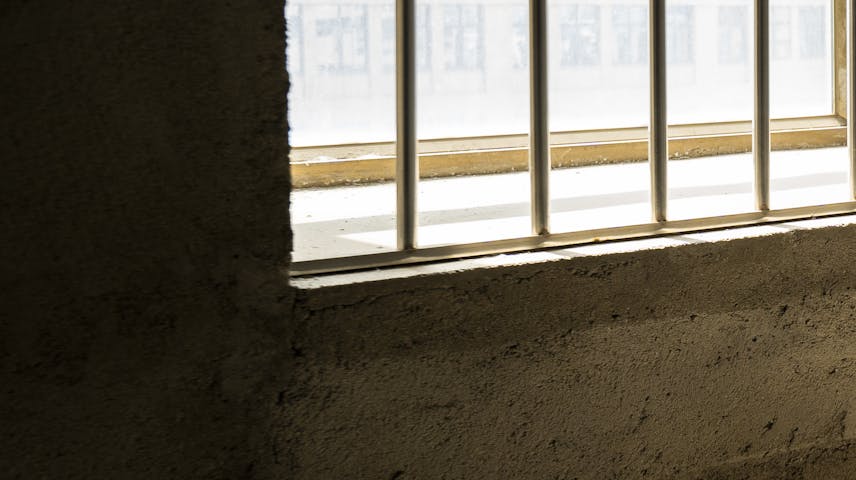
Say: Although the government called Manzanar a “relocation center,” it functioned as a prison where Japanese Americans were incarcerated without trial.
Teacher Tip |
|---|
To deepen student connections and prepare students for engagement with the photos in Seen and Unseen, consider displaying examples of the photography that Lange and Adams were known for outside of their work at Manzanar. For example, present Lange’s famous Migrant Mother photo from Depression-era California and one or two of Adams’s national park photos. If time permits, ask students what they would expect these photographers to focus on when documenting life in a prison. |
Read the article with your partner and annotate as you read to answer the following question.
What is the central idea of this article, and how does the author support that idea by referring to the work of the three photographers?
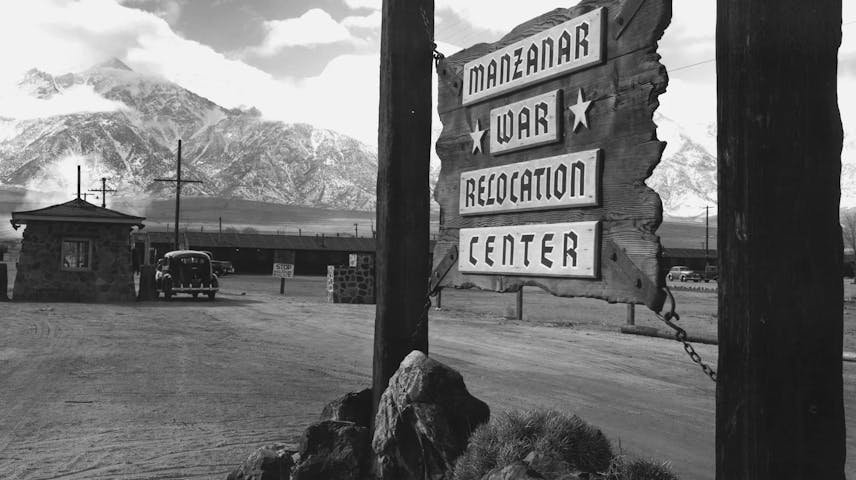
In this short article, author Adrian Florido argues that the photographers who worked at Manzanar provided “three different views” of what happened there. That is, their photos revealed very different things about life at Manzanar. For example, Dorothea Lange showed how unjust the conditions were at Manzanar, while Ansel Adams focused on the beauty of the natural surroundings and the dignity of the people who lived there. Toyo Miyatake was himself incarcerated at the camp, so he was able to photograph daily life and community experiences that the other photographers — who visited from outside — could not easily access or fully understand.
Reflection (RI.7.2) |
|---|
Reflect on your understanding of the article using the Reflection routine.
|
Have students watch the video in the article about Toyo Miyatake (runtime: 5:25). Ask students to notice differences in framing, subjects, and emotional tone.
Say these Directions: Now that you have closely read and discussed the article, you will continue exploring how the authors develop their claim through connected examples with your partner. First, think about your ideas independently. Then, discuss and refine your ideas with your partner. Finally, be prepared to share your ideas with the class. As you work, watch the video about Toyo Miyatake and pay attention to differences in framing, subjects, and emotional tone.
Ask: How do the photographers' perspectives shape the way the events of Japanese American incarceration are presented to the audience?
Ask: Explain how one photographer’s perspective influences how the events of Japanese American incarceration are understood by viewers.
Pulse Check (RI.7.3) |
|---|
Which of the three photographers in Seen and Unseen was (or were) incarcerated at Manzanar?
|
Transition students into the Lesson Look Back by providing them with the 3-Column Chart graphic organizer.
Say these Directions: Create a 3–2–1 summary focused on the phrase “3 Very Different Views” from the article’s title. As you complete your summary, think about how the meaning of this phrase is revealed throughout the article. Use the graphic organizer to record:
3 important words/phrases (key ideas/events that matter)
2 key details or ideas
1 sentence explaining what the text is mostly about (gist sentence)
Direct students to use specific evidence from the text in their responses.
3 Important Words and Phrases | 2 Key Details or Ideas | 1 Sentence Explaining What the Text Is Mostly About (Gist Statement) |
|---|---|---|
1. incarceration 2. perspective/point of view 3. intent | 1. Each of the three photographers had different experiences and a different point of view. I wonder what they had in common. 2. The government set strict rules for the photographers. I wonder what the purpose of those rules was. | 1. The main point of this article is that the photographers at Manzanar captured different aspects of life there and had different intentions for how their work would be shared and understood. |
Students read their independent reading book for 20 minutes and complete a reading log entry.
Read your independent reading book for 20 minutes. In your reading log, record the date and pages you read, write 1–2 sentences about what happened or what you learned, and respond to this week’s prompt using evidence from the text.
Seen and Unseen
Elizabeth Partridge & Lauren Tamaki
Photos: 3 Very Different Views Of Japanese Internment
Adrian Florido, NPR