Loading course navigation
Loading lesson
50 min
Student Lesson
Lesson 26: Animal Farm, Argumentative Writing, Part 3
Content
Students will develop and refine a precise, arguable claim explaining why revolutions may protect or betray their ideals, using evidence from Animal Farm and historical examples studied in the unit.
Language
Students will state and revise a clear argumentative claim that answers the Performance Task prompt by synthesizing ideas and using academic connectors (because, therefore, as a result) to express cause-and-effect reasoning.
Foundational Skills
Students will learn how strong argument claims are constructed and practice identifying strong argument claims
Why do revolutions rise, and why do some end up betraying their own ideals?
Knowledge-Building:
Students synthesize ideas from Animal Farm, the Russian Revolution, and the American Revolution to explain how revolutions can either protect or betray their founding ideals.
Enduring Understanding:
Revolutions often begin with strong ideals, but those ideals can be reshaped, weakened, or betrayed when leaders use power, propaganda, or control of information.
Future Lessons:
Lesson 27 focuses on Chapter IX, where the betrayal of Animalism becomes even more visible. In Lesson 28, students analyze the final chapter of the novel.
Unit Performance Task:
Students will write an argument explaining why revolutions either uphold or betray their ideals. In this lesson, students develop the central claim that will be the introduction to their final essay.
| Lesson Flow | Purpose of Learning Experience |
|---|---|
Launch5 Minutes | Students will discuss how revolutions betray or protect their ideals with a partner. |
Literacy Lab10 Minutes | Students will learn what makes a strong argument claim as they analyze examples of weak and strong claims. |
Learning in Action30 Minutes | Part A: Developing an Argument Claim (W.8.1.a) Students will organize their ideas and prepare to write a precise, arguable claim in response to the upcoming performance task prompt. Part B: Introducing the Claim (W.8.1.a, W.8.4, W.8.5) Students will draft a clear introductory paragraph that develops their argumentative claim and then review a peer’s work to help refine and strengthen the claim. |
Not available for this lesson
Not available for this lesson
Material List
Animal Farm by George Orwell
Unit 2 Lesson 26 Student Edition
Routines
Think-Pair-Share
Peer Review Protocol
Turn-and-Talk
Students engage in a partner discussion to discuss why revolutions either uphold or betray their original ideals.
Transition students into pairs to engage in a Think-Pair-Share activity about revolutionary ideals.
Say these Directions: Discuss the following questions with your partner:
Why are some revolutions able to protect their ideals?
Revolutions protect their ideals when leaders remain accountable to the people and continue to follow the original principles of the revolution.
Why do some revolutions betray their original ideals?
Greed, corruption, or a desire to gain and maintain power can cause leaders to abandon the original ideals of a revolution.
After pairs finish discussing, invite one to two students to briefly share what they discussed with the class.
Connection to Today’s Learning
Say: You now have evidence of how historical and fictional revolutions progress and what influences whether or not the original ideals are protected or corrupted. Today, your task is to use that evidence to build a precise, arguable claim for your unit performance task. Strong revolutions rise on strong ideas, and strong essays rise on strong claims.
Explain that you will be discussing argument claims and how to identify a strong claim. Remind students that they have previously discussed argument claims in Lessons 14 and 22, and this lesson will build on that work.
Display the performance task prompt: Write an argument essay explaining how Animal Farm shows that revolutions can either protect or corrupt ideals.
Say: When we come to the performance task for the unit, you will be making a claim in response to this prompt. A claim is a position or stance you are taking on a topic. It is your opinion based on evidence. In argument writing, your claim is the position you are arguing for.
Display the example claims below for the class.
Say: These are examples of weak claims. They do express an opinion, but these opinions are not fully thought out. The claims are vague and not specific enough to the argument we want to make.
“Some revolutions fail because of bad leaders.”
“Animal Farm shows that revolutions can go wrong.”
“Propaganda affects revolutions.”
Say: Here are some stronger claims that are more specific and answer the prompt more directly.
“Revolutions fail when leaders use fear instead of upholding the revolution’s ideals.”
“Napoleon’s dictatorship shows how the Animal Farm revolution betrayed its original goals.”
Display the following Checklist for a Strong Argument Claim.
Say: Our argument claims need four components:
Answers the prompt by taking a position
Names specific forces or conditions that played a part in the revolution
Clearly shows the cause and effect in the revolutions’ outcomes
Is arguable, meaning someone could disagree
Say: Here is a strong claim that we can look at as an example:
“Animal Farm shows that revolutions are corrupted when the leaders take control of education and the laws, which causes the other animals to lose their agency and eventually their freedom.”
Allow one to two students to communicate ideas for strong claims as time allows.
Connection to Today’s Learning
Say: Today, we will be working on developing strong claims in response to the performance task prompt.
Explain that students will now begin developing a strong claim for their final argument essay by connecting ideas from Animal Farm with historical examples studied in the unit.
Say: Before writing a claim, strong writers first organize their ideas and evidence to make sure their claim can be supported by evidence. Answer the questions below to begin developing your claim for the unit performance task.
Transition students into pairs. Have students develop their claims using the following steps by talking about each step with a partner.
Step 1: Identify the main explanation
Say these Directions: What is your main explanation for why revolutions uphold or betray their ideals based on Animal Farm and the other historical events explored in the unit?
Instruct students to talk with their partner about the main explanation. Encourage students to choose one main explanation, not several unrelated ideas.
fear, control of information, propaganda, erasure of truth, lack of accountability, corrupted leadership
Step 2: Evidence from Animal Farm
Say these Directions: What is evidence from Animal Farm that supports your main explanation? Which moments in the text best support your position?
Instruct students to talk with their partner about evidence from Animal Farm that supports their main explanation or position.
Throughout the novel, Napoleon uses violence and fear to control the animals. For example, in Chapter V, Napoleon uses the dogs to chase Snowball off the farm, showing how violence replaces democratic debate and allows Napoleon to take control.
Step 3: Evidence from the Russian Revolution
Say these Directions: What is evidence from the Russian Revolution that supports your main explanation? Which detail best supports your position?
Instruct students to talk with their partner about evidence from the Russian Revolution that supports their main explanation.
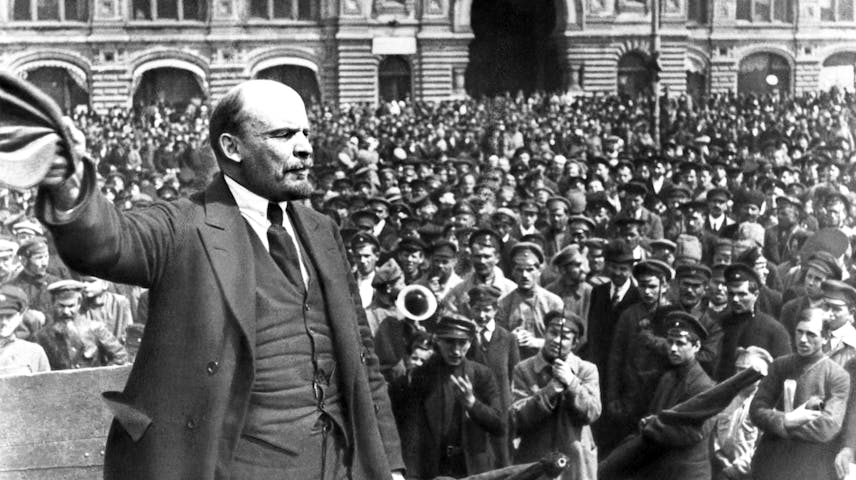
During the Russian Revolution, political opponents were intimidated, arrested, or even executed. This shows how fear and violence were used to silence opposition and maintain power. In Chapter VII of Animal Farm, Napoleon orders the animals to confess and then has them executed. This moment mirrors how revolutionary leaders may use fear and violence to silence opposition and maintain control.
Step 4: Evidence from the American Revolution
Say these Directions: What is one contrasting or reinforcing example from the American Revolution? How does it show a different outcome OR a protected ideal?
Instruct students to talk with their partner about evidence from the American Revolution that either supports or negates their main explanation.
After the American Revolution, leaders created the Bill of Rights to protect freedoms such as speech and religion. This shows how a revolution can protect its ideals by limiting government power and protecting citizens’ rights. In Animal Farm, the pigs secretly change the Seven Commandments, removing protections for equality. Unlike the American Revolution’s attempt to protect rights through written laws, the pigs manipulate the rules to increase their power.
Step 5: Propaganda or rhetorical techniques in Animal Farm
Say these Directions: What is one example of propaganda or rhetorical techniques from Animal Farm that supports your position? What does it reveal about how leaders influence belief or action?
Instruct students to talk with their partner about propaganda or rhetorical techniques from Animal Farm that support their position.
Squealer tells the animals that the pigs need milk and apples because they are the “brainworkers,” convincing them that the pigs deserve special privileges (p. 36). This propaganda persuades the animals to begin to accept inequality on the farm.
Transition students into working independently to draft their claim based on the preceding steps and their partner discussion.
Step 6: Draft your claim
Say these Directions: Now combine your ideas into a clear, arguable claim. Use the following frame to begin drafting:
Display the following frame to support students in drafting their claim.
Revolutions uphold or betray their ideals when __________, as shown by __________ in Animal Farm, __________ in the Russian Revolution, and through __________ persuasion or rhetorical techniques.
Encourage students to revise the frame as needed to make their claim clear and precise.
Circulate to check for accuracy and conceptual clarity as students draft their claims.
Teacher Tip |
|---|
When students draft their claims, it may be helpful to remind them that Orwell wrote Animal Farm as an allegory, meaning that shifts in the pigs’ language and behavior mirror shifts in historical power. If students identify a changed commandment, encourage them to connect it to a similar change after the Russian Revolution. This helps students move away from simply describing the plot and toward analyzing how power operates in both fiction and history. |
Provide students with a confidence continuum (i.e., 1–5). As needed, model how to demonstrate a level of confidence using the continuum.
Reflection |
|---|
Reflect on your understanding of how to write a strong claim in argument writing using the Reflection routine.
|
Introducing the Claim
Instruct students to develop their claim in an introductory paragraph (three to five sentences) using the following criteria. Display the following information and review it with students.
Develop an introductory claim paragraph (three to five sentences), including:
A brief introduction to the topic and the text, Animal Farm
Your argument’s claim
A brief preview of the evidence you will use in the final essay
Say: Use your claim-building from the first half of the lesson and the example frame below to draft your introductory claim paragraph. Your paragraph should clearly explain why revolutions protect or betray their ideals and preview the examples you will use as evidence.
Display the following example frame to support students with writing this introductory paragraph.
Example Frame:
“Throughout history and in Animal Farm, revolutions rise with hope but collapse when ________. This pattern appears in Orwell’s depiction of ________, the Russian Revolution’s ________, and propaganda messages that rely on ________. Together, these examples show that revolutions often betray their ideals because ________.”
Provide students with time to independently draft their introductory claim paragraphs.
Have partners exchange claim paragraphs.
Say these Directions: Use this checklist to review your partner’s introductory claim paragraph.
Display the checklist.
Identify one main explanation (not several unrelated ideas)
Distinguish itself from other claims
Include a reference to Animal Farm
Be arguable and precise (not a summary)
Have partners offer one suggestion to strengthen precision (word choice, clarity, or specificity). Allow students to revise their claim paragraphs based on feedback.
Lesson 26 Writing Rubric: Argument Essay Introduction — Developing the Claim
Writing prompt: Draft a clear introductory paragraph for your argument essay that develops a precise, arguable claim explaining how Animal Farm demonstrates that revolutions can protect or corrupt ideals (or both).
Criteria | 1 — Beginning | 2 — Developing | 3 — Proficient |
|---|---|---|---|
Claim & Argument (W.8.1.a) Precise Claim + Preview | The introduction does not include a clear claim, or the claim does not address how revolutions in Animal Farm protect or corrupt ideals. No preview of the argument is offered. | The introduction includes a claim about the revolution in Animal Farm, but it is vague or does not fully set up the argument. The preview of main points is absent or unclear. | The introduction presents a precise, arguable claim that explains how Animal Farm demonstrates that revolutions can protect or corrupt ideals. The claim previews the argument clearly and invites the reader into the essay. |
Vague word | More precise alternatives |
|---|---|
bad | corrupted, unjust, abusive |
changed | distorted, revised, eroded |
lied | manipulated, misled |
scared | intimidated, threatened |
Check for Understanding |
|---|
Your finished claim paragraph should include an answer to the prompt that:
|
Prepare students to reflect on the following prompt with a partner:
Say these Directions: Turn to your partner and discuss the following questions:
How did writing your claim today help you better understand why revolutions rise or betray their ideals? Use an example from Animal Farm or from the historical events we discussed in class.
Writing my claim helped me understand that revolutions often fail when leaders control information. In Animal Farm, Napoleon changes the Seven Commandments, and Squealer uses speeches to convince the animals that the pigs are always right.
Invite one to two students to briefly share their thinking with the class.
Instruct students to read Chapter IX of Animal Farm. Instruct students to take notes in their Journal on the following prompt: How does Chapter IX continue to show betrayals against the revolution's ideals?
Read Chapter IX of Animal Farm and take notes in your Journal on how Chapter IX continues to show betrayals against the revolution’s ideals. Record at least two examples from the chapter that show how the animals’ original hopes or promises are being broken.
Animal Farm
George Orwell
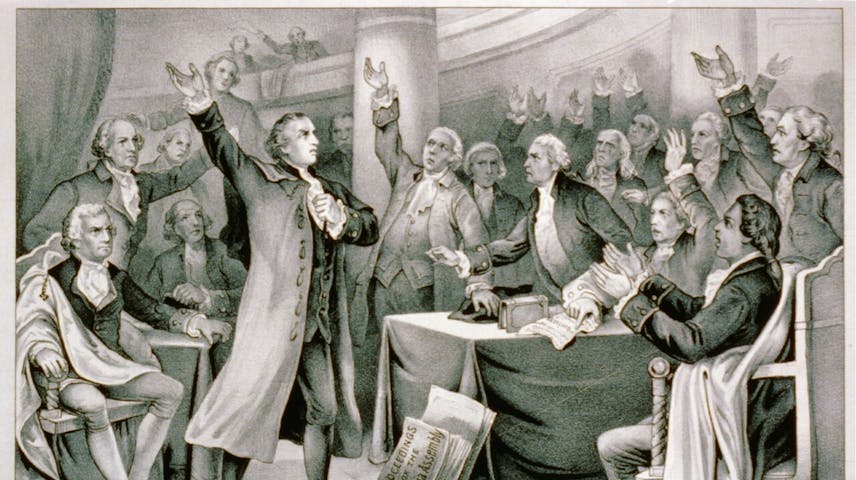
Famous Speeches: Patrick Henry's "Give Me Liberty Or Give Me Death"
Original speech from the public domain
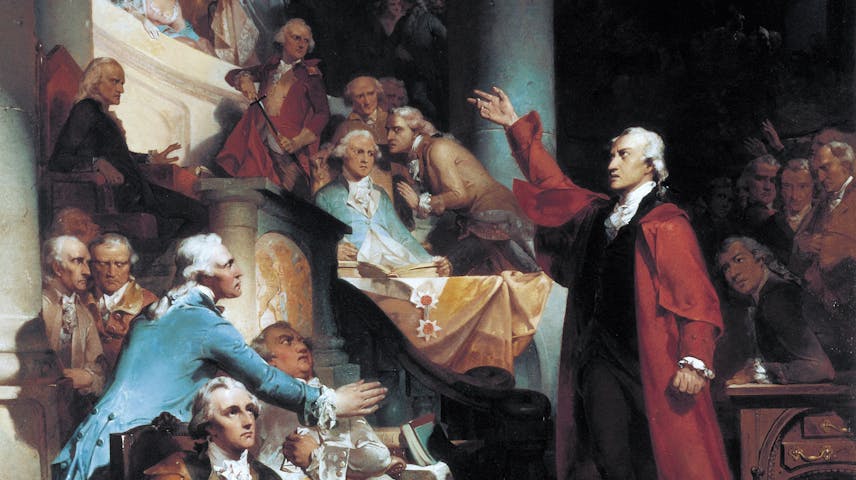
Independence and the Articles of Confederation
USHistory.org
Revolution, Civil War and Terror: The Birth of the Soviet Union
Standard News Bureau

The Russian Revolution: A New Kind of Power
Standard News Bureau