After the Civil War: A Promise Broken
The Civil War ended in 1865 with the defeat of the Confederacy, and three powerful amendments were added to the U.S. Constitution to protect formerly enslaved people. The 13th Amendment ended slavery, the 14th Amendment guaranteed citizenship and equal protection under the law for all people born in the United States and the 15th Amendment gave Black men the right to vote. For a brief period called Reconstruction, the federal government sent troops to the South to enforce these new rights, and Black Americans began to participate in public life by serving in state legislatures and holding political office.
But this progress did not last. When federal troops were withdrawn from the South in the late 1870s, state governments dominated by white former Confederates quickly moved to take back power. Southern states began passing laws specifically designed to strip Black Americans of their rights.
What Were Jim Crow Laws?
Beginning in the 1870s and accelerating through the end of the 19th century, Southern state legislatures passed a wave of laws forcing racial segregation in nearly every area of public life. These became known as Jim Crow laws, a name that likely comes from a minstrel show character used to mock Black people.
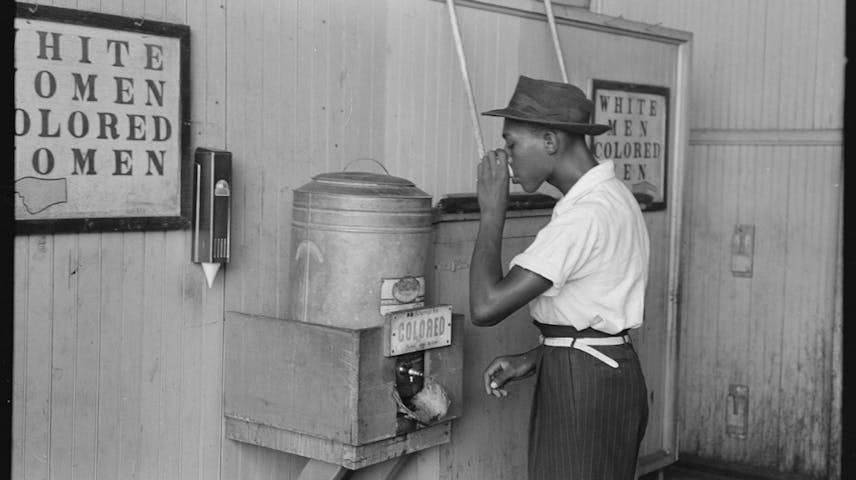
Jim Crow laws required separate schools, separate railroad cars, separate restaurants, separate bathrooms, separate drinking fountains, separate theaters and even separate waiting rooms. The laws touched virtually every moment of daily life. Black Americans in the South lived in a world where the color of their skin determined where they could sit, eat, learn, work, live and even be buried.
These laws were not just about separating people—they were about keeping Black Americans in a position of social and economic inferiority. Facilities for Black citizens were consistently underfunded, run-down and inferior. Separate was never truly equal.
The Supreme Court Makes It Official: Plessy v. Ferguson (1896)
In 1892, a group of Black citizens in New Orleans decided to challenge Louisiana’s law requiring separate railroad cars. They recruited a man named Homer Plessy to deliberately board a whites-only train car and refuse to move. Plessy was arrested, exactly as planned, and the case eventually went all the way to the U.S. Supreme Court.
In 1896, the Supreme Court ruled against Plessy. The Court declared that racial segregation was legal as long as the separate facilities were “equal.” This became known as the “separate but equal” doctrine. In reality, separate facilities were rarely equal. Black schools received far less funding, Black hospitals had worse equipment and Black neighborhoods received fewer city services. The Plessy decision gave the full legal backing of the United States government to a system of racial inequality that would persist for nearly 60 more years.
Laying the Groundwork: The Early Fight for Civil Rights
Despite the brutal reality of Jim Crow, Black Americans did not give up. Individuals and organizations worked tirelessly throughout the early 1900s to challenge racial injustice, even when the legal system was stacked against them.
W.E.B. Du Bois: A Voice for Equality
One of the most important voices of this era was W.E.B. Du Bois. Born in Massachusetts in 1868, Du Bois became the first Black American to earn a doctorate from Harvard University. A scholar, writer and activist, Du Bois believed that Black Americans should demand full and immediate civil rights, and not accept anything less.
In 1905, Du Bois and other Black activists held a secret meeting. This gathering, called the Niagara Movement, demanded immediate civil rights, including voting rights, freedom of speech and an end to all racial discrimination. The movement was bold and unapologetic at a time when such demands were extremely dangerous.
The Founding of the NAACP (1909)
Four years after the Niagara meeting, Du Bois joined with a diverse group of reformers, Black and white, to found a new organization. On February 12, 1909, the National Association for the Advancement of Colored People, or NAACP, was born.
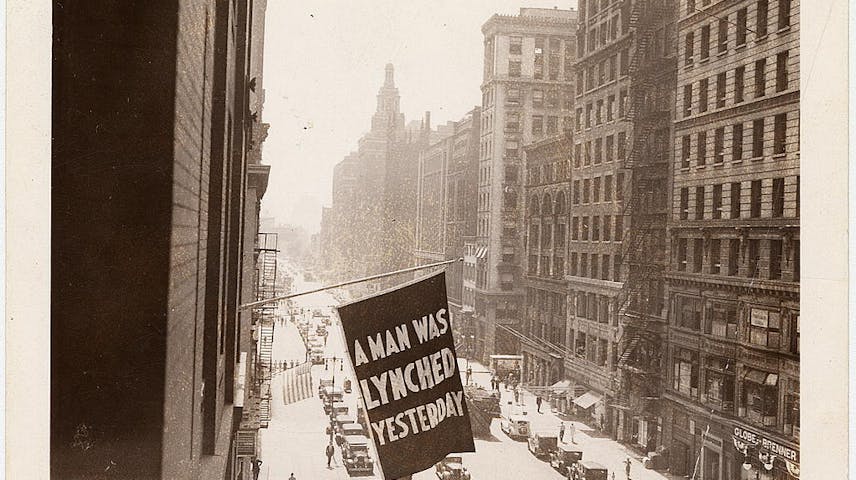
Du Bois became the director of publicity and research and launched the NAACP’s famous magazine, The Crisis, in 1910. The Crisis reported on lynchings, racial violence and injustice that mainstream newspapers ignored. By 1920, it was reaching over 100,000 readers each month. The NAACP also pursued change in the courts, winning early legal victories that chipped away at segregation and voter disenfranchisement.
Why the 1950s? What Made the Civil Rights Movement Possible?
By the 1950s, decades of groundwork had been laid. The NAACP had built a network of legal experts, organizers and activists across the country. But something else was different about the 1950s, and several forces came together at the same time that made a large-scale movement not only possible, but unstoppable.
World War II Changes Everything
World War II, which ended in 1945, was a turning point. More than one million Black Americans served in the armed forces, fighting for a country that still treated them as second-class citizens at home. They served in segregated units under white officers, even as they risked their lives for American freedom.
When Black veterans came home, many refused to accept Jim Crow the same way they had before. They had fought against the racist fascism of Nazi Germany and then returned home to a “democratic” system built on racial inequality. As a result, many veterans became community organizers and activists leading into the Civil Rights Movement.
Brown v. Board of Education (1954)
The NAACP’s legal strategy bore its greatest fruit on May 17, 1954, when the Supreme Court issued a unanimous decision in Brown v. Board of Education. Led by NAACP attorney Thurgood Marshall, the legal team argued that segregated schools were unconstitutional because they violated the 14th Amendment’s guarantee of equal protection under the law.
Chief Justice Earl Warren wrote that “separate educational facilities are inherently unequal.” In one sweeping decision, the Supreme Court overturned the Plessy v. Ferguson ruling that had stood for 58 years: the “separate but equal” doctrine was now deemed unconstitutional. The ruling sent shockwaves through the South, and it energized Black communities nationwide. Membership in the NAACP soared. Civil rights organizers gained confidence to challenge segregation more directly.
Emmett Till: A Nation Forced to Look
Just one year later, in the summer of 1955, a horrifying event shocked the nation and galvanized a generation. Fourteen-year-old Emmett Till, a Black teenager from Chicago, was visiting family in Money, Mississippi. For allegedly speaking to a white woman at a grocery store, he was abducted from his uncle’s home in the middle of the night, brutally beaten, shot and thrown into the Tallahatchie River.
Till’s mother, Mamie Till Mobley, made a devastating decision: she insisted on an open casket at her son’s funeral, so the world could see what had been done to her child. More than 50,000 people attended. Jet magazine published photographs. The image of Emmett Till’s brutalized body horrified people across the country and around the world.
An all-white jury acquitted Till’s killers in just over an hour. Protected from being tried again for the same crime, the two men later admitted publicly to the murder. The injustice was impossible to ignore. Emmett Till’s death became one of the most powerful catalysts for the Civil Rights Movement. A later generation of activists called themselves “the Emmett Till generation.”
Rosa Parks and the Montgomery Bus Boycott (1955–1956)
After hearing about the acquittal of Till’s murderers on December 1, 1955, Parks—a 42-year-old NAACP secretary who had been actively organizing for civil rights for years—refused to give up her seat to a white passenger and was arrested.
Her arrest was not a spontaneous moment; civil rights leaders in Montgomery had been preparing for exactly this kind of challenge. Within days, Black leaders organized a boycott of the city’s buses. About 40,000 Black riders, the majority of the bus system’s passengers, stopped riding. They walked miles, carpooled and rode in Black-owned taxis for 381 days. The boycott cost the bus company money and drew national attention. In November 1956, the Supreme Court ruled that bus segregation was unconstitutional.
A Movement Decades in the Making
The Civil Rights Movement of the 1950s and 1960s did not appear out of nowhere. It was built on decades of resistance: on the writings of W.E.B. Du Bois, the legal battles of the NAACP, the returning veterans who refused to accept second-class citizenship and the courage of ordinary people like Rosa Parks, who had spent years quietly organizing before they made history. They laid the groundwork for significant victories: the Civil Rights Act of 1964, which ended segregation in public places, and the Voting Rights Act of 1965, which prohibited discrimination in voting.