Loading course navigation
Loading unit
Content
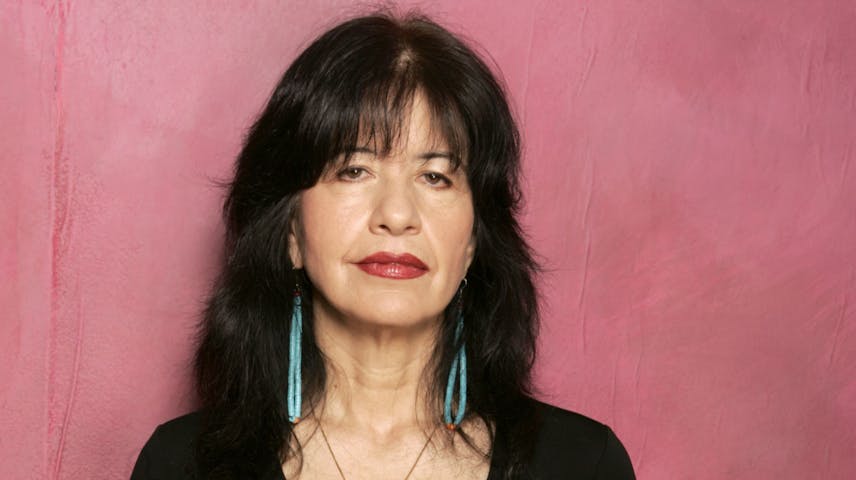
Students will learn about Dr. Robin Wall Kimmerer through a video and generate questions they are curious about as they begin exploring the unit’s Essential Questions.
Language
Students will watch a multimedia informational source and use observation language to convey noticings.
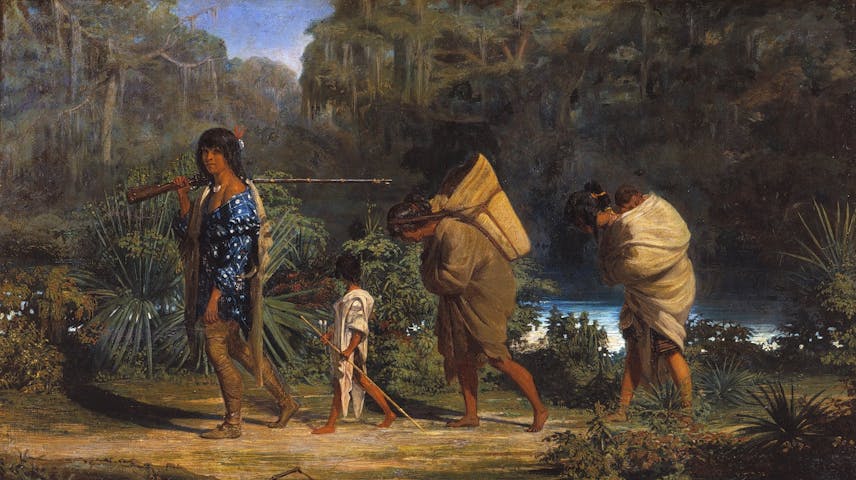
Indian Treaties and the Removal Act of 1830
Office of the Historian, U.S. State Department, adapted by Newsela
Content
Students will analyze an informational text to better understand how events and government actions led to the Indian Removal Act.
Language
Students will compare ideas and explain consequences using contrast connectors and cause-and-effect language in discussion.
Content
Students will interpret information presented in an excerpt and two videos to explain relationships among humans, plants, and other living things.
Language
Students will explain the relationship between humans and living things and acknowledge multiple perspectives using connectors such as because, which leads to, as a result, and therefore.
Content
Students will analyze Chapters 1–3 of Braiding Sweetgrass, examining how the text develops key terms and central ideas like gratitude and reciprocity with nature.
Language
Students will cite textual evidence to explain how a text develops tone, central ideas, and key ideas.
Foundational Skills
Students will use morphology to identify the meaning of a target word.
Content
Students will analyze “The Council of Pecans” and “The Gift of Strawberries” in Braiding Sweetgrass, focusing on the author’s point of view.
Language
Students will compare the author’s perspectives on gift and market economies by citing textual evidence and using compare/contrast connectors (however, whereas, in contrast) and precise academic vocabulary (abundance, commodity, exchange).
Foundational Skills
Students will use a word association strategy to draw connections between the words abundance and flourish.
Content
Students will close-read key excerpts from the Braiding Sweetgrass chapters “An Offering,” “Asters and Goldenrod,” and “Maple Sugar Moon,” examining how the author uses imagery and figures of speech to develop ideas about reciprocity between humans and the natural world.
Language
Students will discuss and refine analytical responses about how Kimmerer uses imagery and figurative language to express ideas about reciprocity by citing evidence, using comparative connectors, and revising responses through discussion.
Foundational Skills
Students will practice fluency by reading an excerpt from Braiding Sweetgrass.
Content
Students will analyze how Kimmerer and Harjo use imagery, metaphor, and figurative language to convey the idea that the earth operates on its own timing and that understanding nature requires humility, not control.
Language
Students will compare how Kimmerer and Harjo use figurative language, including personification, extended metaphor, and imagery, to develop ideas about the earth’s role in human life by identifying figures of speech by name, citing text evidence from both writers, and using compare/contrast connectors (both, however, while) in written analysis.
Foundational Skills
Students will practice fluency in reading poetry by listening to the teacher read as a model, echo-reading with the teacher, and then practicing reading with a partner.
Content
Students will analyze Kimmerer’s interpretation of the Haudenosaunee Thanksgiving Address, examining how its structure reflects oral tradition, how repeated phrasing creates rhythm, and how its meaning contrasts with that of the American Pledge of Allegiance.
Language
Students will explain how the Thanksgiving Address and the Pledge of Allegiance communicate different ideas by using compare/contrast language, academic verbs, and precise noun phrases to analyze how structure and repetition shape meaning.
Foundational Skills
Students will determine the meaning of target words from the reading using context clues.
Content
Students will write an explanatory paragraph that assesses the advantages and disadvantages of a video compared to Kimmerer’s text.
Language
Students will use participial phrases to add descriptive detail and improve clarity in their writing.
Foundational Skills
Students will use participial phrases correctly and avoid misplaced or dangling modifiers in analytical writing.
Content
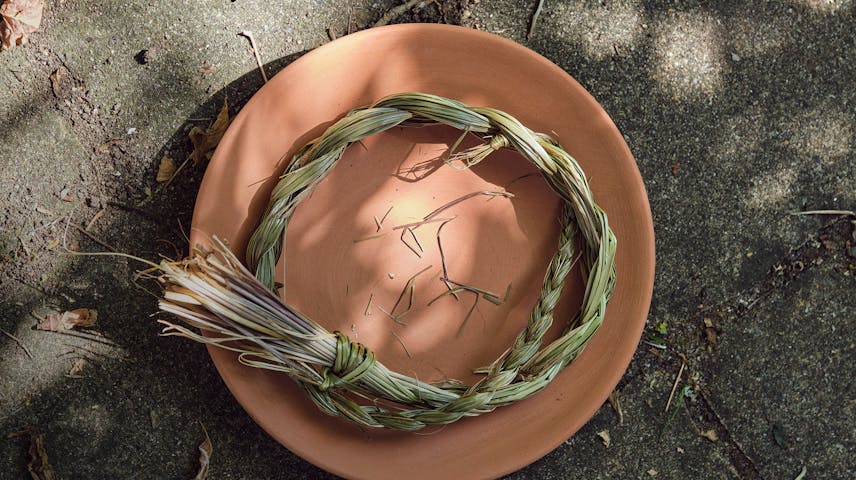
Students will read and analyze the chapter “Wisgaak Gokpenagen: A Black Ash Basket” and discuss how Kimmerer’s description of the basket-making process further develops central ideas in her text.
Language
Students will paraphrase Kimmerer’s ideas and use those details to clearly explain, in discussion, how she connects the physical process of basket making to deeper spiritual and ethical meanings.
Foundational Skills
Students will use morpheme analysis to determine the meaning of the target vocabulary word vigorous.
Braiding Sweetgrass (Young Readers' Edition)
Robin Wall Kimmerer
Content
Students will analyze how Kimmerer adapts the structure of technical research writing to connect scientific knowledge and Indigenous knowledge.
Language
Students will explain how text structure develops ideas by using compare-contrast language in discussion and writing.
Foundational Skills
Students will distinguish shades of meaning between related words by comparing the connotations of thrive and vigorous.
Braiding Sweetgrass (Young Readers' Edition)
Robin Wall Kimmerer
Content
Students will delineate and evaluate a speaker’s argument by identifying and evaluating claims, reasoning, and relevant evidence.
Language
Students will discuss and evaluate how well a speaker’s claims are supported using academic language.
Content
Students will identify the key principles of the Honorable Harvest and analyze how Kimmerer uses specific examples to illustrate what it means to live responsibly within natural systems.
Language
Students will interpret how Kimmerer uses stories and examples to teach the principles of the Honorable Harvest, using interpretive verbs, evidence-based explanation, and figurative-language analysis to explain what responsible behavior within natural systems looks like.
Foundational Skills
Students infer the meaning of two target words using context clues.
Content
Students will analyze and write about how Kimmerer structures her text and uses the Nanabozho story to teach responsible behavior in nature, identifying specific moments that function as "instructions" for how to live with reciprocity.
Language
Students will explain how the Nanabozho story teaches responsible behavior in nature by using cause-and-effect reasoning, verbs of agency and process, and precise evidence-based explanation to show how story events become ethical instructions for human action.
Foundational Skills
Students will review target vocabulary words from earlier in the unit with a Generating Situations activity.
Content
Students will analyze how Kimmerer uses examples in "Sitting in a Circle" to argue that learning comes from many sources, not just teachers and books, and how this idea connects to responsible relationships with the natural world.
Language
Students will narrate and discuss how learning from experience and the natural world shapes responsibility, using temporal sequencing, reflective language, and varied verb moods to explain how firsthand learning changes the way people relate to nature.
Foundational Skills
Students will practice fluency with a selection from “Sitting in a Circle” using a teacher’s model reading, echo reading with the class, and individual practice with a partner.
Content
Students will learn and practice the ACE strategy for analytical writing, using evidence and analysis from the chapter "Burning Cascade Head."
Language
Students will explain relationships between contrasting ideas and outcomes in Braiding Sweetgrass by using evidence; contrast structures such as whereas, in contrast, and while; and cause-and-effect reasoning to show how different kinds of human intervention can either damage or restore ecological balance.
Foundational Skills
Students will study the difference between active and passive voice and the effects the two voices can have on writing.
Content
Students will apply the ACE Strategy independently to write and revise an analytical response about Kimmerer’s ideas in the chapter "Putting Down Roots."
Language
Students will explain how text evidence shows that feeling rooted shapes responsibility by using ACE response language, text-based transitions, and consistent verb voice and mood in an analytical paragraph.
Foundational Skills
Students will practice recognizing and correcting inappropriate shifts in verb voice and mood.
Braiding Sweetgrass (Young Readers' Edition)
Robin Wall Kimmerer
Content
Students will present, delineate, and evaluate claims, evidence, and reasoning during a partner debate about the impact of Kimmerer’s actions.
Language
Language: Students will present claims orally, connect evidence to reasoning, and respond to a partner using precise discussion moves and academic vocabulary.
Content
Students will analyze how Kimmerer makes connections between ideas, expresses her point of view, and makes intentional structural choices to compare and contrast land regeneration with our current mode of overconsumption.
Language
Students will explain how comparisons, contrasts, and cause-and-effect relationships across the two chapters reveal connections among ideas and Kimmerer’s point of view in discussion and writing.
Foundational Skills
Students will use morphology to decode the meanings and explore the relationship of two target vocabulary words that share the same suffix.
Content
Students will draw connections between Kimmerer’s point of view and central ideas in the chapters “People of Corn, People of Light” and “Shkitagen: The People of the Seventh Fire.”
Language
Students will explain how Kimmerer’s point of view develops central ideas using evidence-based discussion.
Foundational Skills
Students will use context clues to infer the meaning of two target words from the chapters.
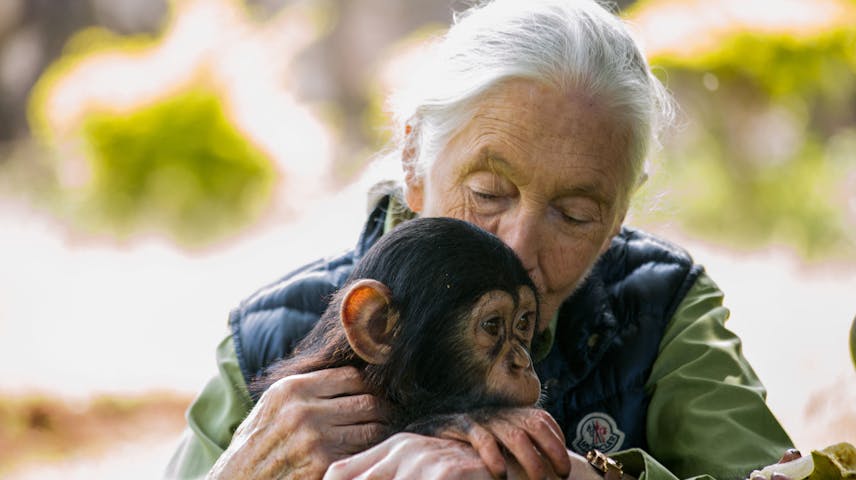
Jane Goodall Taught Us to See the Natural World. Now It’s Our Turn to Act.
Jeff Corwin, USA Today
Content
Students will build on their explanatory writing skills to craft a written response using evidence from across Braiding Sweetgrass to describe how Kimmerer argues that "defeating" the Windigo inside ourselves is necessary to live responsibly within natural systems.
Language
Students will use the conditional verb mood to express relationships between actions and consequences and consider how their language choices help clarify these relationships.
Foundational Skills
Students will practice forming sentences using the conditional verb mood to express conditional ideas.
Jane Goodall Taught Us to See the Natural World. Now It’s Our Turn to Act.
Jeff Corwin, USA Today
Content
Students will read an op-ed about Jane Goodall’s impact and delineate the author’s claims, evidence, and reasoning.
Language
Students will explain an argument using claim–evidence–reasoning language and connectors such as because and as a result, along with key vocabulary such as affirmation and detachment.
Foundational Skills
Students will use context clues and word parts to determine and confirm the meaning and spelling of unfamiliar academic words.
Jane Goodall Taught Us to See the Natural World. Now It’s Our Turn to Act.
Jeff Corwin, USA Today
Content
Students will evaluate the argument in an op-ed about Jane Goodall by assessing whether the author’s claims are supported by relevant and sufficient evidence and sound reasoning.
Language
Students will use evaluative language, text evidence, and discussion stems to build on, question, and refine ideas during a Socratic Seminar.
Foundational Skills
Students will practice fluency using key excerpts from the op-ed.
Content
Students will demonstrate mastery of grade-level skills and concepts by applying their knowledge and critical thinking in a summative assessment environment.
Language
Students will interpret academic vocabulary and complex sentence structures within assessment stems to identify precise relationships between ideas.
Content
Students will analyze how a section contributes to the whole text and will strengthen control of verb voice and mood in reading and writing.
Language
Students will explain text structure and language choices using academic terms including section, develops, active voice, passive voice, conditional, and subjunctive.
Content
Students will generate and narrow possible research topics connected to reciprocity, restoration, or balance in human and natural systems.
Language
Students will justify the relevance of a possible research topic using cause-effect connectors, domain-specific vocabulary, and complex sentences.
Content
Students will develop focused inquiry questions and related search terms to guide their research project.
Language
Students will generate and refine inquiry questions using precise academic verbs, abstract nouns, and complex question forms.
Content
Students will gather and evaluate credible and accurate sources that directly address their inquiry questions.
Language
Students will explain source credibility and relevance using attribution syntax, appositive phrases, and comparison language.
Content
Students will evaluate sources for usefulness and credibility in relation to their overarching inquiry question.
Language
Students will explain their evaluation decisions using cause-and-effect reasoning, transition words, and evaluative vocabulary.
Content
Students will learn how to paraphrase and record relevant information from their sources to answer their research inquiry question.
Language
Students will use attribution phrases and clause restructuring to paraphrase source ideas and explain how evidence answers a research question.
Content
Students will synthesize ideas from multiple sources into a clear paragraph that answers an inquiry question.
Language
Students will use signal phrases, comparison transitions, and complex sentences to connect ideas across multiple sources.
Foundational Skills
Students will accurately use common signal phrases and transitions when combining ideas from multiple sources.
Content
Students will gather relevant information from sources and accurately cite those sources when using quotations or paraphrases in research notes and outlines.
Language
Students will use evaluative feedback stems and complex sentences with because, so that, and this connects to explain revisions.
Foundational Skills
Students will apply ellipses for quotations when omitting unnecessary words from a source.
Content
Students will refine inquiry questions, gather and paraphrase relevant information from sources, and compare information across sources to support research.
Language
Students will explain research decisions using inquiry language, relevance language, and synthesis language including focused question, relevant, paraphrase, compare, and supports.
Content
Students will demonstrate mastery of grade-level skills and concepts by applying their knowledge and critical thinking in a summative assessment environment.
Language
Students will interpret academic vocabulary and complex sentence structures within assessment stems to identify precise relationships between ideas.
Content
Students will evaluate an author’s argument, compare how two sources interpret the same topic, and correct inappropriate shifts in verb voice or mood.
Language
Students will explain source quality and source relationships using evaluative and comparison language including claim, relevant, sufficient, agree, differ, interpretation, active voice, and passive voice.
Content
Students will analyze the performance task prompt and identify the task, audience, and purpose for their research presentation.
Language
Students will use precise academic language to define the task, audience, and purpose of their presentation.
Foundational Skills
Students will combine ideas using complex sentences and use the active voice to strengthen spoken presentation language.
Content
Students will select and justify a presentation format that organizes their research claims and findings clearly for a specific task, audience, and purpose.
Language
Students will justify the choice of their presentation format by using evaluative language and comparative structures.
Foundational Skills
Students will expand noun phrases with appositives and use commas to set off added source information in presentation planning.
Content
Students will revise informative writing to use precise language and domain-specific vocabulary, maintain formal style, and provide a concluding section that follows from the information presented.
Language
Students will explain revision choices using academic language including precise, domain-specific, formal style, conclude, and significance.
Content
Students will draft an introduction for their presentation that states a thesis in response to their overarching research inquiry question.
Language
Students will use signal phrases, cohesive devices, and significance statements to integrate source-based ideas into a presentation introduction.
Foundational Skills
Students will learn and practice how to use signal phrases for source integration.
Content
Students will develop a presentation body section that introduces findings, uses relevant evidence, synthesizes sources, and explains how the evidence supports a thesis.
Language
Students will use transitional words, synthesis phrases, and signal phrases to connect ideas and sources clearly during oral presentation drafting.
Content
Students will develop multimedia and visual displays to support their oral presentations and will draft a concluding section that follows from the information and explanation presented.
Language
Students will explain how a visual supports a claim using precise presentation vocabulary and cause-and-effect language.
Content
Students will format a bibliography for their presentation and continue developing the multimedia components of their presentations.
Language
Students will use precise source language, expanded noun phrases, and analytical connectors to explain how a source or visual supports their message.
Content
Students will revise and edit presentation drafts to maintain a formal style, and they will rehearse their presentation with a peer to receive feedback.
Language
Students will use precise academic vocabulary, varied sentence structures, and presentation language to rehearse claims and findings clearly for an audience.
Content
Students will formally present their research-based presentations and engage in peer feedback.
Language
Students will use precise evaluative language to give peer feedback and reflect on how their understanding of reciprocity has changed.