Loading course navigation
Loading unit
10 Things: Going Interstellar
NASA

How We Have Turned Memories and Stories into Histories
Big History Project, adapted by Newsela staff
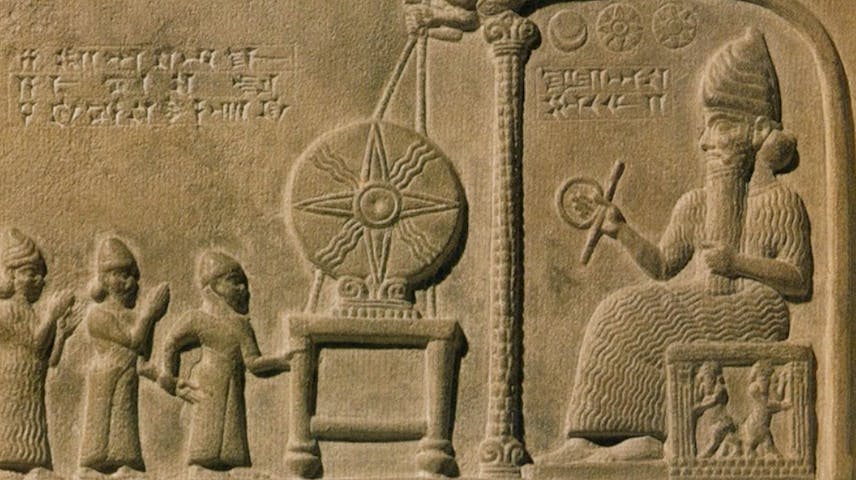
How Wisdom Became the Property of the Human Race
Compiled by W. H. Barker and Cecilia Sinclair, in the book West African Folk-Tales.
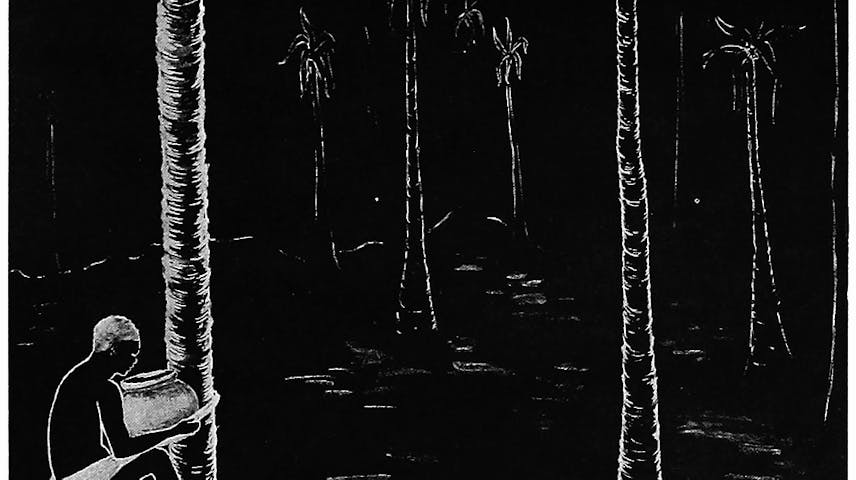
These Sci-Fi Visions for Interstellar Travel Just Might Work
Ramin Skibba and Les Johnson, Wired Magazine

Content
Students will explore how knowledge is recorded and shared by drawing connections between the central ideas in a folktale and an informational article.
Language
Students will exchange ideas and use observation and inference sentence frames with evidence to explain how storytelling connects to memory, identity, and survival.
Foundational Skills
Students will compare and contrast how a folktale and an informational article explain why stories matter.
Content
Students will consider interstellar travel and living outside of Earth by reading and analyzing two informational articles.
Language
Students will use academic vocabulary and connectors to explain relationships among scientific challenges, preservation, and future human choices.
The Last Cuentista
Donna Barba Higuera

Your Brain Forms Memories Differently Based on How Stories Are Told
Standard News Bureau
Content
Students will analyze information about how our brains respond to different kinds of stories and consider how this information can be used to improve memory.
Language
Students will use evidence connectors to explain relationships among memory, storytelling, and identity.
The Last Cuentista
Donna Barba Higuera
Content
Students will analyze how Petra's memories and stories in Chapters 1–3 shape her identity and what she might lose if those memories disappear through an iterative conversation protocol.
Language
Students will explain how Petra’s memories and cuentos shape her identity and what is at risk if those memories disappear by using evidence-based discussion moves and expanded noun phrases (e.g., cultural memory, inherited stories, family traditions).
Foundational Skills
Students will use context clues to determine the meaning of unfamiliar words.
The Last Cuentista
Donna Barba Higuera
Content
Students will analyze how the rules and systems introduced in Chapters 4–6 begin to threaten memory, identity, or choice.
Language
Students will explain how the ship’s rules and systems in Chapters 4–6 shape behavior and threaten memory, identity, or choice by citing evidence and using cause-and-effect connectors (because, therefore, as a result, which leads to).
Foundational Skills
Students use morphology to determine the meaning of unfamiliar words.
The Last Cuentista
Donna Barba Higuera
Content
Students will analyze how the author develops central ideas, moves the plot forward, and uses dramatic irony to create suspense in Chapters 7–9 of The Last Cuentista.
Language
Students will explain character perspective, narrator’s voice, and central ideas using academic vocabulary in discussion and writing.
Foundational Skills
Students will read a Chapter 7 excerpt with accurate pronunciation, phrasing, and prosody to convey suspense and meaning.
The Last Cuentista
Donna Barba Higuera
Content
Students will be introduced to narrative writing and practice crafting a short narrative moment by establishing context and point of view to engage the reader, using a scene from The Last Cuentista.
Language
Students will use first-person narration, character-specific description, and thought language to establish a point of view in narrative writing.
The Last Cuentista
Donna Barba Higuera
Content
Students will analyze how Petra’s memories, the Collective, and the author’s choice of narrative point of view develop character, conflict, and perspective in Chapters 1–9 of The Last Cuentista.
Language
Students will intentionally use active and passive voice and conditional and subjunctive moods to contribute to a Socratic Seminar about memory, identity, and risk.
Foundational Skills
Students will use knowledge of language and its conventions to choose an appropriate voice and mood to achieve particular effects when engaging in academic discussion.
The Last Cuentista
Donna Barba Higuera
Content
Students will close read key excerpts from Chapters 10–11 to analyze and discuss how the Collective controls information, behavior, and memory.
Language
Students will analyze how the Collective controls information, behavior, and memory in The Last Cuentista by citing specific evidence from Chapters 10–11, using cause-and-effect language and expanding noun phrases.
Foundational Skills
Students use morphology to determine the meaning of unfamiliar words.
The Last Cuentista
Donna Barba Higuera
Content
Students will close-read and discuss key scenes from Chapters 12–13 to analyze the Collective's dogma, the way the characters respond to it, and the events that create tension and move the plot forward.
Language
Students will explain how the Collective’s systems enforce compliance and intensify control over memory and truth by using cause-and-effect connectors and precise academic vocabulary (e.g., dogma, compliance, indoctrination) while citing evidence from Chapters 12–13.
Foundational Skills
Students will use the Context Clues routine to infer the meaning of target words from the novel.
The Last Cuentista
Donna Barba Higuera
The Fox & the Crow
The Æsop for Children
Content
Students will analyze how The Last Cuentista draws on the fable “The Fox and the Crow” by adapting its themes and character types, and compare the structure of both texts to explain how these differences shape meaning and style.
Language
Students will analyze how an author uses a fable in the novel using text-to-text connection language and evidence connectors.
Foundational Skills
Students will draw connections between word relationships and distinguish among connotations of words with similar denotations.
The Last Cuentista
Donna Barba Higuera
Content
Students will analyze the differing perspectives of characters and examine how those differences reveal the ways the Collective establishes control and uses erasure of memory as a tool in Chapters 14 and 15 of The Last Cuentista.
Language
Students will explain how the Collective uses conformity to justify control by citing evidence from Chapters 14–15, using cause-and-effect connectors, and using abstract reasoning language (e.g., justifies, reframes, normalizes, trade-off, consequence).
Foundational Skills
Students will use context clues to determine the meanings of unfamiliar words in context.
The Last Cuentista
Donna Barba Higuera
Blancaflor
Folktale from the Public Domain

Content
Students will analyze the significance of storytelling in Chapter 16 by working collaboratively with peers in a Graffiti/Table Talk activity.
Language
Students will explain how Petra’s storytelling in Chapter 16 challenges the Collective’s control of memory by citing text evidence and using cause-and-effect connectors, while expanding abstract noun phrases (e.g., the loss of agency, the erosion of identity, the pressure to conform).
Foundational Skills
Students will form word associations between target vocabulary words.
The Last Cuentista
Donna Barba Higuera
Blancaflor
Folktale from the Public Domain
Content
Students will compare the content and structure of a folktale, “Blancaflor,” and its adaptation within The Last Cuentista.
Language
Students will compare structure, pacing, and point of view using compare-and-contrast language and text evidence.
Foundational Skills
Students will practice fluency by reading a short excerpt of Blancaflor with accuracy, phrasing, and attention to punctuation and expression.
The Last Cuentista
Donna Barba Higuera
Content
Students will practice writing a narrative scene by using the narrative techniques of dialogue and pacing to develop experiences, events, and characters.
Language
Students will use dialogue, punctuation, and time transitions to develop a coherent narrative scene.
The Last Cuentista
Donna Barba Higuera
Content
Students will revise and expand their narrative scene from Lesson 15 to practice using description and reflection to develop experiences, events, and characters.
Language
Students will use sensory detail, internal thinking language, and peer feedback stems to strengthen a narrative scene and explain revision choices.
The Last Cuentista
Donna Barba Higuera
Content
Students will analyze how the Collective justifies survival by analyzing Chapters 17 and 18 through jigsaw reading and partner discussion.
Language
Students will explain and justify ideas using contrast and evidence-linking phrases to evaluate survival needs.
Foundational Skills
Students will use context clues and reference materials to determine the meanings of unfamiliar words.
The Last Cuentista
Donna Barba Higuera
El Conejo en la Luna: The Rabbit in the Moon
Standard News Bureau

Content
Students will analyze themes and allegories in Chapters 19–20 of The Last Cuentista.
Language
Students will explain Petra’s storytelling using evidence from the text and expanded noun phrases to express symbolic meaning.
Foundational Skills
Students will use context clues to determine the meaning of unfamiliar words.
The Last Cuentista
Donna Barba Higuera
El Conejo en la Luna: The Rabbit in the Moon
Standard News Bureau
Content
Students will analyze how Higuera reimagines a traditional legend to develop a theme in The Last Cuentista.
Language
Students will explain comparisons and symbolic meaning using compare-contrast language and evidence connectors in discussion and writing.
Foundational Skills
Students will use context clues to determine the meaning of an unfamiliar word in context.
The Last Cuentista
Donna Barba Higuera
Content
Students will revise and extend their narrative writing to use transition words, phrases, and clauses to convey sequence, signal shifts from one time frame or setting to another, and show the relationships among experiences and events.
Language
Students will combine sentences and use subordinate clauses, transition language, and feedback stems to explain revisions and offer peer feedback on narrative writing.
Content
Students will demonstrate mastery of grade-level skills and concepts by applying their knowledge and critical thinking in a summative assessment environment.
Language
Students will interpret academic vocabulary and complex sentence structures within assessment stems to identify precise relationships between ideas.
The Last Cuentista
Donna Barba Higuera
Content
Students will determine the meaning and effect of words and phrases, analyze how differences in perspective shape a literary text, and explain the function of verbals in sentences from a short passage.
Language
Students will justify claims about word choice, perspective, and sentence function using precise academic language, evidence phrases, and contrast language.
Foundational Skills
Students will reread short passages accurately enough to notice important words, perspective clues, and sentence patterns.
Storytelling helps preserve Navajo culture
Laura Tohe, ASU News

Content
Students will gather relevant information from multiple sources on one preservation topic and synthesize that information into a research claim.
Language
Students will compare sources and explain agreements, differences, and usefulness using precise research language including source, evidence, corroborate, and synthesis.
Storytelling helps preserve Navajo culture
Laura Tohe, ASU News
Content
Students will gather relevant information from their Lesson 23 notes, assess how responsibly it is being used, and revise a synthesis draft with accurate attribution and citation.
Language
Students will explain how source attribution, citation, and punctuation choices preserve meaning and help readers trace information across digital systems.
The Last Cuentista
Donna Barba Higuera
Content
Students will analyze how storytelling and the concept of stories evolve in Chapters 21–22.
Language
Students will construct comparison statements and use context-clue language to explain how ideas about storytelling change across the novel.
Foundational Skills
Students will use context clues to determine the meaning of unfamiliar words.
The Last Cuentista
Donna Barba Higuera
Content
Students will analyze how differences in Petra’s and Nyla’s points of view are portrayed in Chapters 23 and 24.
Language
Students will paraphrase narrative events using adverbial phrases, accurate pronouns, and connotation language in discussion and writing.
Foundational Skills
Students will determine and compare relationships among words to analyze shades of meaning and tone.
The Last Cuentista
Donna Barba Higuera
Content
Students will analyze how key scenes in Chapters 25–26 develop central ideas about storytelling, identity, and memory.
Language
Students will explain and support ideas using evidence frames, connotation language, and subordinate clauses during discussion and writing.
Foundational Skills
Students will draw connections between target words from the novel.
The Last Cuentista
Donna Barba Higuera
Content
Students will analyze how Higuera develops themes about storytelling through the use of references and allusions in Chapter 27.
Language
Students will explain Petra’s dream sequence using abstract nouns, contrastive phrasing, and integrated text evidence with an ellipsis.
Foundational Skills
Students will learn how to use an ellipsis to indicate omission in a quotation from the text.
The Last Cuentista
Donna Barba Higuera
Content
Students will analyze the connection between story and memory while also determining themes that have been developed over the course of the novel in small-group discussion.
Language
Students will construct analytical statements using academic verbs and cause-and-effect connectors to explain themes that are developed over the course of the novel.
Foundational Skills
Students will use morphology to decode, encode, and determine the meaning of unfamiliar words.
The Last Cuentista
Donna Barba Higuera
The Comet
W.E.B. Du Bois
Content
Students will analyze Chapter 30 and the structural choices Higuera makes to begin and conclude The Last Cuentista.
Language
Students will speak and write complex sentences using descriptive noun phrases and adverbial phrases to synthesize Petra’s character development across the novel.
Foundational Skills
Students will practice reading an excerpt from The Last Cuentista with expression and fluency.
The Comet
W.E.B. Du Bois
Content
Students will analyze events and characters in the first half of “The Comet” and examine how W. E. B. Du Bois uses narrative techniques to establish context and point of view.
Language
Students will explain how Du Bois’s narrative techniques (point of view, pacing, description) orient readers to character and conflict by using analytical verbs and evidence-based explanation frames.
Foundational Skills
Students will use context clues to determine the meaning of unfamiliar words.
The Last Cuentista
Donna Barba Higuera
The Comet
W.E.B. Du Bois
Content
Students will analyze the conclusion of “The Comet” and compare and contrast structural differences between “The Comet” and The Last Cuentista.
Language
Students will compare text structures using contrastive transitions and structure vocabulary to explain how each text shapes meaning and style.
Foundational Skills
Students will learn a new word relevant to “The Comet” using morpheme instruction.
The Last Cuentista
Donna Barba Higuera
The Comet
W.E.B. Du Bois
Content
Students will compare and contrast the structures of “The Comet” and The Last Cuentista in a Socratic Seminar discussion.
Language
Students will demonstrate command of formal English as they use academic vocabulary to build on others’ ideas, pose connecting questions, and qualify claims with text evidence during a Socratic Seminar.
Content
Students will use precise words and phrases, relevant descriptive details, and sensory language to convey experiences and events in their narrative writing.
Language
Students will expand sentences with descriptive noun phrases, precise adjectives, and prepositional phrases to create tone in narrative revision.
Content
Students will practice writing a conclusion that follows from and reflects on narrated experiences or events in their narrative scene.
Language
Students will use precise adjectives, adverbial phrases, and adverbial clauses to describe a concrete setting and reflect on the meaning of a narrative ending.
Content
Students will demonstrate mastery of grade-level skills and concepts by applying their knowledge and critical thinking in a summative assessment environment.
Language
Students will interpret academic vocabulary and complex sentence structures within assessment stems to identify precise relationships between ideas.
The Last Cuentista
Donna Barba Higuera
The Comet
W.E.B. Du Bois
Content
Students will analyze how a text’s structure contributes to its meaning and style, how a modern work draws on traditional themes, patterns, and character types, and form and use verbs in the active and passive voice.
Language
Students will explain literary analysis using structure vocabulary, comparison language, and precise language about voice.
Foundational Skills
Students will identify verb phrases and determine whether a sentence is written in active or passive voice.
Content
Students will begin their Performance Task by selecting a narrative pathway and mapping a story arc.
Language
Students will justify a narrative pathway and use verbal phrases, connecting words, and consistent verb tenses to describe a planned narrative action sequence.
Foundational Skills
Students will learn about verbal phrases as narrative tools.
Content
Students will engage and orient the reader by establishing a context and point of view and introducing a narrator and an initial conflict in the opening of their narrative.
Language
Students will use connective phrasing to draft opening events in logical sequence and show cause and effect.
Content
Students will use dialogue, pacing, description, and reflection to develop experiences, events, and characters in a narrative draft.
Language
Students will describe how dialogue, pacing, description, and reflection work together to establish conflict in a narrative scene.
Foundational Skills
Students will explain and apply active and passive voice to establish conflict in a narrative scene.
Content
Students will use a variety of transition words, phrases, and clauses to convey sequence, signal shifts in time or setting, and show relationships among experiences and events in a narrative draft.
Language
Students will explain and revise narrative sequencing using temporal transitions, shift phrases, and relationship clauses during drafting and peer feedback
The Comet
W.E.B. Du Bois
Content
Students will strengthen narrative writing by engaging and orienting the reader, developing conflict with narrative techniques, and using transitions to clarify relationships among events.
Language
Students will explain revision choices using sequence language, craft verbs, and cause/effect phrasing during huddles and reflection.
Content
Students will use precise words and phrases, relevant descriptive details, and sensory language to capture action and convey experiences and events in their narratives and provide a conclusion that follows from and reflects on narrated experiences or events.
Language
Students will explain revision choices using descriptive adjectives, sensory verbs, and reflective language during drafting and peer feedback.
Content
Students will revise and polish their narrative writing using peer feedback and the 8.4 Performance Task Rubric.
Language
Students will give specific, respectful feedback that names a craft move and suggests a usable revision step.
Foundational Skills
Students will learn how to use punctuation to indicate a pause or break in their narrative writing.
Content
Students will present their narratives to their peers.
Language
Students will adapt pacing, volume, pause, emphasis, and reflective language to present a narrative clearly to peers.