Loading course navigation
Loading unit
John F. Kennedy’s Speech: “We Choose to Go to the Moon”
Original speech from the public domain, adapted by Newsela staff

The 1960s: From Dream to Reality in 10 Years
Cheryl L. Mansfield, NASA Kennedy Space Center

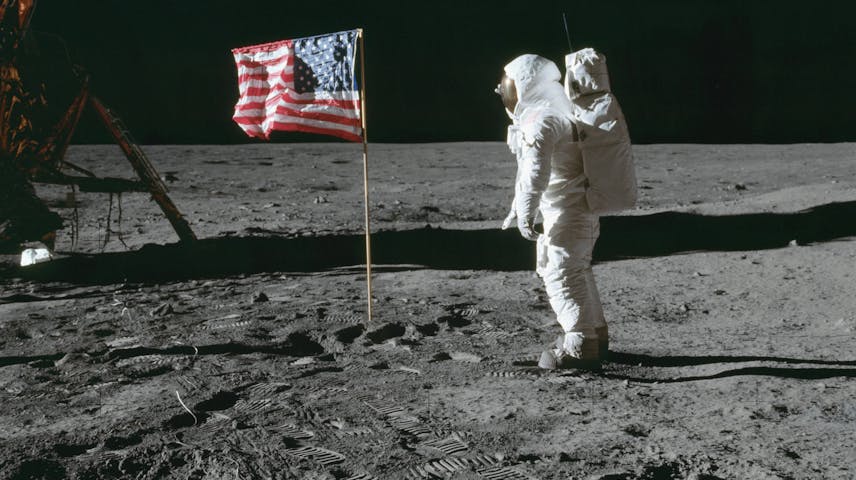
The Space Race: America Reaches for the Moon
NASA and the National Park Service, adapted by Newsela
Content
Students will cite textual evidence to explain the scientific and mathematical challenges NASA aimed to solve and evaluate reasons supporting the push for the moon mission.
Language
Students will explain historical and scientific context using cause-effect transitions and domain-specific vocabulary in discussion and brief summary writing.
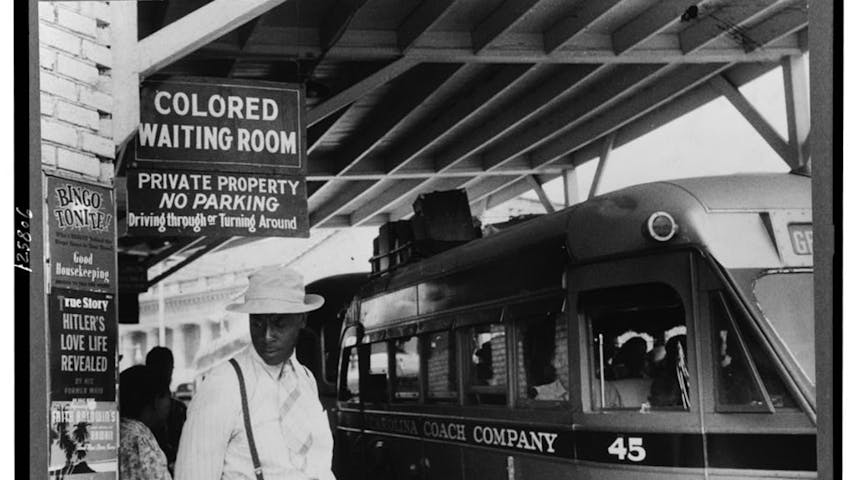
Jim Crow Laws: A Dark Chapter in American History
Library of Congress, adapted by Newsela
Content
Students will analyze how text features organize ideas in an informational text.
Language
Students will explain inequity using causal and contrastive language in discussion and a short paragraph.
Foundational Skills
Students will use context clues to determine the meaning of domain-specific words in an informational text.
Hidden Figures (Young Readers' Edition)
Margot Lee Shetterly

Content
Students will determine the author’s purpose in the prologue of Hidden Figures and define the concept of a “hidden figure” using text evidence.
Language
Students will use domain specific language to define the concept of “hidden figure” and describe the author’s purpose for writing the text.
Foundational Skills
Students will use introductory evidence clauses and correct comma placement to integrate evidence from the prologue of a text.
Hidden Figures (Young Readers' Edition)
Margot Lee Shetterly
Content
Students will determine a central idea in the Prologue and Chapter 1 of Hidden Figures and explain how specific details support and expand that idea. Language Students will explain a central idea using evidence frames, transitions, and paraphrased details from the text. Use common, grade-appropriate Greek or Latin affixes and roots as clues to the meaning of a word (e.g., audience, auditory, audible).
Foundational Skills
Students will write complete complex sentences with subordinating conjunctions to connect claims and evidence.
Hidden Figures (Young Readers' Edition)
Margot Lee Shetterly
Content
Students will analyze how key ideas and events in Chapter 2 interact.
Language
Students will write a short paragraph to explain how the NACA ad and the work done at Langley’s are connected.
Foundational Skills
Students will identify connections between individuals, events and ideas.
Hidden Figures (Young Readers' Edition)
Margot Lee Shetterly
Content
Students will develop a topic with facts, details, quotations, and examples as they explain how the phrases “Double V” and “Colored Line” connect to Dorothy Vaughan’s experiences in Chapters 4–5.
Language
Students will use relative clauses and transitions to explain literal and figurative meanings in an organized explanatory paragraph.
Foundational Skills
Students will paraphrase literal and figurative phrases using relative clauses to unpack meaning.
Hidden Figures (Young Readers' Edition)
Margot Lee Shetterly
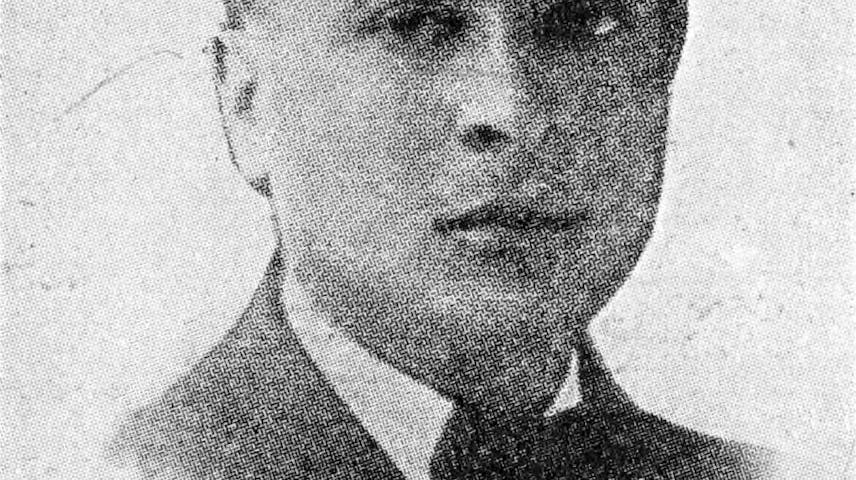
“Tuskegee (1921)”
Leslie Pinckney Hill
Content
Students will analyze how anecdotes in Chapter 6 develop ideas about collaboration and segregation at Langley.
Language
Students will explain contrast using evidence frames and contrast connectors in a two-to-three-sentence response.
Foundational Skills
Students will combine related ideas into compound-complex contrast sentences using although, while, and whereas with correct comma placement.
Hidden Figures (Young Readers' Edition)
Margot Lee Shetterly
“Tuskegee (1921)”
Leslie Pinckney Hill
Content
Students will compare and contrast how Chapter 7 of Hidden Figures and the poem “Tuskegee” approach the topics of struggle, triumph, and achievement.
Language
Students will synthesize evidence using comparative transitions to explain similarities and differences across two texts.
Foundational Skills
Students will use comparative markers to synthesize ideas across a poem and an informational text.
Hidden Figures (Young Readers' Edition)
Margot Lee Shetterly
Content
Students will develop an informative paragraph with relevant details from Chapter 9 to explain how Dorothy Vaughan challenged social constructs.
Language
Students will use pronouns, and transitions to maintain cohesion and formal style in an informative paragraph.
Foundational Skills
Students will track noun-to-pronoun reference to keep paragraph meaning clear.
Hidden Figures (Young Readers' Edition)
Margot Lee Shetterly
Content
Students will analyze Mary Jackson’s response to events in Chapter 11 to discover what they reveal.
Language
Students will explain how a character’s response to events can reveal key ideas in a text.
Foundational Skills
Students will use key vocabulary to develop analytical sentences about Mary Jackson’s courage and resistance.
Hidden Figures (Young Readers' Edition)
Margot Lee Shetterly
Content
Students will determine a central idea in Chapter 12 and summarize how details about Katherine Goble’s school experiences and job decisions help to develop that idea.
Language
Students will explain cause-and-effect relationships and implications using precise academic vocabulary and causal connectors in discussion and writing.
Foundational Skills
Students will use context clues to determine the meanings of domain-specific and academic terms in Chapter 12.
Hidden Figures (Young Readers' Edition)
Margot Lee Shetterly
Content
Students will explain how Katherine Johnson’s mathematical evidence and collaboration led to safer flight regulations using transitions to clarify relationships among ideas.
Language
Students will use sequencing transition words and cause/effect connectors to organize paraphrased evidence in an explanatory paragraph.
Foundational Skills
Students will use formal causal transitions to signal cause/effect relationships across ideas.
Hidden Figures (Young Readers' Edition)
Margot Lee Shetterly
Content
Students will analyze how an idea is introduced, shown, and developed across sections of Chapter 14
Language
Students will use evidence-based explanations to explain the key ideas in a section and explain how the idea is developed by the author.
Foundational Skills
Students will use context clues and morphology to determine and verify the meaning of words.
Hidden Figures (Young Readers' Edition)
Margot Lee Shetterly
Sputnik
NASA, adapted by Newsela

Content
Students will integrate information presented in Chapter 16, the Sputnik text, and historical visuals to explain Langley’s reaction to Sputnik.
Language
Students will synthesize information using comparison frames, and precise scientific vocabulary in a short evidence-based explanation.
Foundational Skills
Students respond orally and in writing to information presented in a variety of formats.
Hidden Figures (Young Readers' Edition)
Margot Lee Shetterly
Content
Students will develop an explanatory paragraph with relevant details from Chapter 17 to explain how Katherine Goble’s persistence in lectures and editorial meetings advanced understanding of spaceflight.
Language
Students will use nominalizations, clear pronouns, and cause/effect transitions to connect curiosity, determination, and collaboration in analytical writing.
Foundational Skills
Students will apply nominalization to increase academic tone when explaining abstract ideas.
Hidden Figures (Young Readers' Edition)
Margot Lee Shetterly
Content
Students will determine a central idea in Chapter 18 and explain how the author uses figurative language to develop that idea.
Language
Students will explain connections between legal progress and scientific progress using academic connectors and layered interpretation clauses.
Foundational Skills
Students will explain the use of figurative and technical language and determine how it is used to convey central ideas.
Content
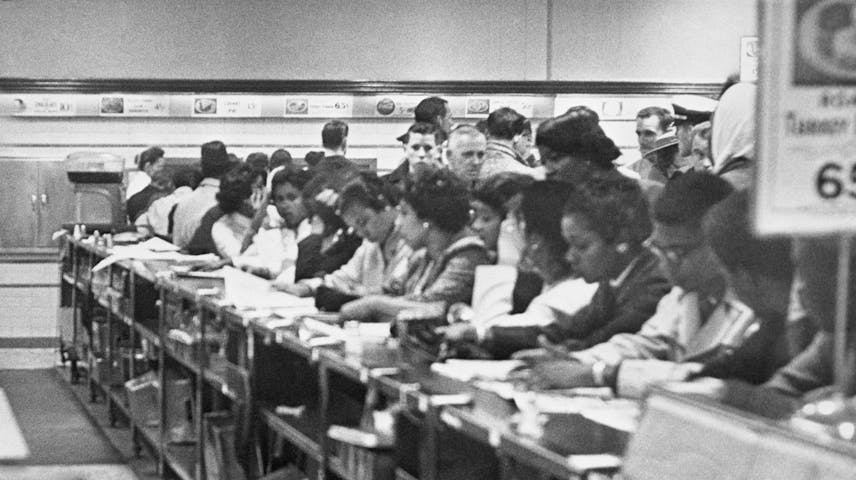
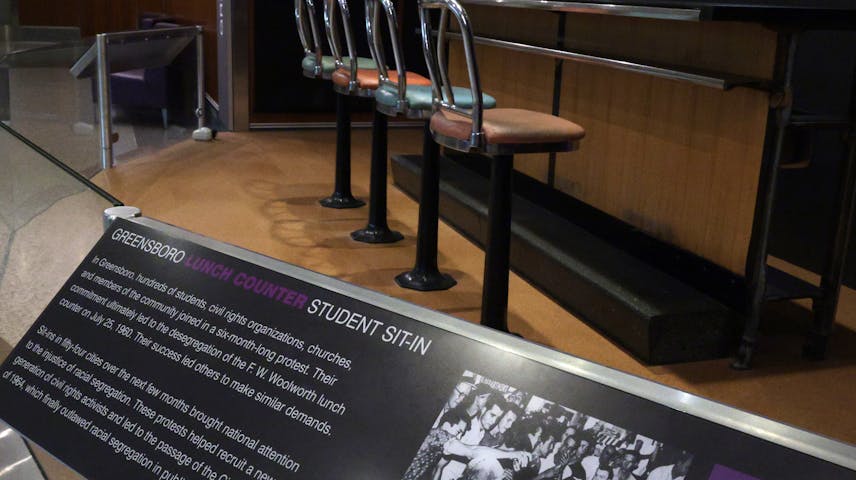
Students will integrate information presented in visuals and informational texts to explain how Chapter 20 and the Sit-Ins source set develop a shared idea about collaboration.
Language
Students will synthesize evidence using comparative transitions and precise academic nouns to explain how groups collaborated to achieve shared goals.
Foundational Skills
Students will use context clues and reference materials to determine the meaning of monitor.
Hidden Figures (Young Readers' Edition)
Margot Lee Shetterly
John Glenn Orbits the Earth
Nikki Welch, NASA

Content
Students will trace and evaluate how two texts support the claim that John Glenn’s mission was dangerous by identifying each author’s reasons and evidence and determining which support is stronger.
Language
Students will use compare/contrast transitions, and technical vocabulary to explain how the two texts present risk, reliability, and collaboration.
Foundational Skills
Students will analyze technical explanations and use modal verbs to discuss mission risks with precision.
Hidden Figures (Young Readers' Edition)
Margot Lee Shetterly
Content
Students will develop a topic with relevant details to explain connections between the key moments described in Chapter 22.
Language
Students will use precise pronouns, formal noun phrases, and cross-idea transitions to write a cohesive informative paragraph.
Foundational Skills
Students will maintain reference chains across a full paragraph and correct shifts in pronoun person or number.
Hidden Figures (Young Readers' Edition)
Margot Lee Shetterly
Content
Students will engage in collaborative discussion to synthesize information across Hidden Figures.
Language
Students will build multi-part evidence-based responses during a fishbowl discussion.
Foundational Skills
Students will practice speaking in clear, organized sentences using sequencing words and other transitional language.
Content
Students will demonstrate mastery of grade-level skills and concepts by applying their knowledge and critical thinking in a summative assessment environment.
Language
Students will interpret academic vocabulary and complex sentence structures within assessment stems to identify precise relationships between ideas.
Content
Students will analyze how a section contributes to the overall structure of an informational text, determine an author’s point of view or purpose and explain how it is conveyed, and integrate information presented in words and visuals.
Language
Students will explain their reading thinking using academic vocabulary about structure, point of view, purpose, and medium in brief oral and written responses.
Foundational Skills
Students will reread a short informational passage fluently and attend to structure, phrasing, and visualization to support meaning.
Content
Students will determine a central idea, analyze how key ideas and events are introduced and developed, and use context clues to determine the meaning of unknown words in a teacher-selected informational passage.
Language
Students will summarize a central idea and explain how an author develops an idea using sequence words and evidence-based language.
Foundational Skills
Students will use context clues and rereading to make and check meaning for unfamiliar words and examine how the words an author chooses help build key ideas.
Content
Students will generate a focused research topic and research question about a hidden scientist, engineer, or innovator.
Language
Students will orally and in writing produce a focused research question beginning with how or why and a 2–3 sentence justification using at least two academic words (e.g., contribution, innovation, recognition).
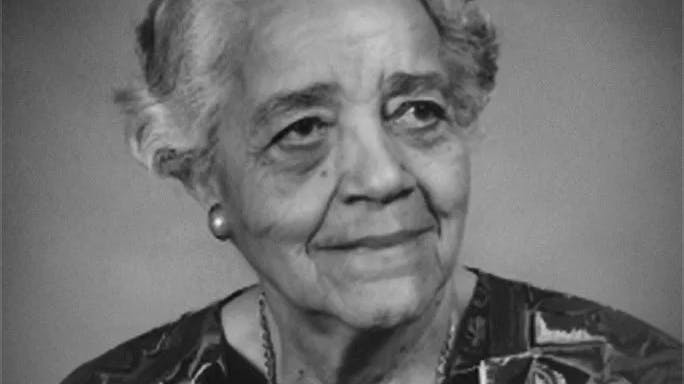
Meet the Human Computer Who Helped Launch the Space Age
NASA, adapted by Newsela
Content
Students will gather relevant keyword sets to support future research searches, identify potential reliable sources, and analyze how sections and text features in media sources contribute to the development of ideas.
Language
Students will use interrogative structures and precise academic vocabulary to break a research question into focused inquiry questions and generate keyword sets and relevant source types. Students will use academic language to explain how specific sections, graphics, captions, or headings help readers understand important ideas in a source.
Content
Students will gather relevant information from multiple credible sources related to a chosen research topic.
Language
Students will evaluate source credibility and interpret visual and text features that contribute to understanding a topic.
Content
Students will evaluate sources for usefulness in relation to a focused research topic. Students will compare multiple sources and select the most accessible and relevant sources for future note-taking.
Language
Students will use comparative language, subordinating conjunctions, and nominalized academic vocabulary to justify why one source is more useful than another.
Content
Students will evaluate the relevance of sources and prioritize them in order of usefulness to their focused research question.
Language
Students will use precise academic vocabulary to explain how paraphrased evidence supports their research claims.
Content
Students will gather relevant evidence from multiple informational sources to support research notes about a hidden innovator.
Language
Students will use attribution stems, reporting verbs, and relative clauses to integrate paraphrased and quoted evidence into complete sentences.
Content
Students will evaluate and gather relevant information from multiple sources by assessing source accessibility, interest, relevance, and evidence support and by reviewing research notes with peers to improve the quality of their notes.
Language
Students will use discourse markers, clarifying questions, and feedback stems to provide evidence-based peer critique about source use and paraphrased notes.
Content
Students will gather evidence and relevant information from multiple informational sources and visuals and finalize a research set for a focused inquiry about one major contribution made by a hidden innovator.
Language
Students will use precise academic vocabulary to evaluate citation-ready notes and explain how visuals support understanding of an innovator’s contribution.
Content
Students will refine a focused research question, paraphrase and organize information from a source, and cite textual evidence to support a research-based claim about a hidden innovator.
Language
Students will explain research choices using inquiry-based, evidence-based, and cause-effect language.
Foundational Skills
Students will use word parts and surrounding context to support understanding of STEM vocabulary in research sources.
Content
Students will engage in collaborative discussions that synthesize ideas from Hidden Figures and independent research to evaluate claims about why innovators remained hidden and why visibility matters using relevant evidence from multiple sources.
Language
Students will rehearse prosodic clarity by pausing, adjusting rate, and emphasizing key words so listeners can follow how evidence supports a claim during discussion.
Content
Students will demonstrate mastery of grade-level skills and concepts by applying their knowledge and critical thinking in a summative assessment environment.
Language
Students will interpret academic vocabulary and complex sentence structures within assessment stems to identify precise relationships between ideas.
Content
Students will evaluate whether reasons and evidence support a claim in a short argument while improving their command of pronouns in standard grammar.
Language
Students will explain their reading using academic vocabulary about reasoning and rhetoric and conventions of grammar surrounding pronoun use.
Foundational Skills
Students will apply reading and writing strategies to correct pronoun errors in sentence-level writing, including to use consistent pronoun number and person and to clarify vague pronoun references.
Content
Students will draw evidence from informational texts to support analysis in writing, vary sentence patterns for meaning and style, and maintain a formal style and tone in research responses.
Language
Students will explain writing choices using evidence-based language, sentence-combining language, and formal academic wording.
Foundational Skills
Students will reread and revise sentences to check for repetition, clarity, and consistency of tone.
Content
Students will plan an informative research essay about one hidden innovator’s key contribution and plan an argument paragraph about why the innovator deserves recognition.
Language
Students will use subordinate clauses (because, although), cohesive previewing language, and precise academic verbs to combine a claim with a reason or counterpoint and draft a clear thesis statement.
Content
Students will draft an informative research essay that examines one key contribution made by a hidden innovator, introduces a claim, and organizes reasons and evidence for an argument paragraph about why the innovator deserves recognition.
Language
Students will use cause/effect connectors, sentence variety, and cohesive transitions to draft in a formal academic style.
Content
Students will develop an informative research draft that examines one hidden innovator’s key contribution with relevant facts and details and develop an argument paragraph with a claim, reasons, and evidence about why the innovator deserves recognition.
Language
Students will use formal diction, nominalization, precision adverbs, and varied sentence patterns to maintain a consistent academic tone across paragraphs.
Content
Students will introduce claims and organize ideas, reasons, and evidence in research and argument drafts.
Language
Students will use precise STEM vocabulary, Greek and Latin roots, and concluding language to strengthen research writing.
Content
Students will revise and strengthen their informative research essay and argument paragraph by using peer feedback to improve clarity, evidence development, organization, and tone. Students will improve informative and argumentative draft sections for clarity, evidence use, and organization.
Language
Students will use nonrestrictive elements, commas, formal diction, and precision adverbs to revise sentences for clarity, cohesion, and academic tone.
Content
Students will revise and edit their informative research essay and recognition argument by strengthening clarity, improving evidence explanations, and correcting technical vocabulary and conventions to produce a more accurate and readable final draft.
Language
Students will apply knowledge of Greek and Latin roots, capitalization rules, and precision language to verify word meaning, improve accuracy, and maintain a consistent academic tone across their writing.
Content
Students will use digital tools to produce clear, coherent final draft sections of an informative research essay that incorporates a supported argument, appropriate citations, and visuals for presentation.
Language
Students will use citation stems, section-level transitions, and academic register to strengthen cohesion and support claims with evidence.
Content
Students will collaborate to rehearse presentation ideas, present findings with relevant facts and details, explain how a visual supports meaning, and adapt speech to a formal presentation context.
Language
Students will use presentation transitions, visual-reference language, and formal academic wording to explain contribution and significance.
Foundational Skills
Students will revise draft lines into concise speaker notes and mark pauses to support clear oral delivery.
Content
Students will present claims and findings about a hidden innovator using relevant evidence, clear organization, and visual supports to showcase the innovator’s contribution and significance.
Language
Students will use cohesive transitions, evidence frames, and formal academic register to present and respond to audience questions.