Loading course navigation
Loading unit
Content
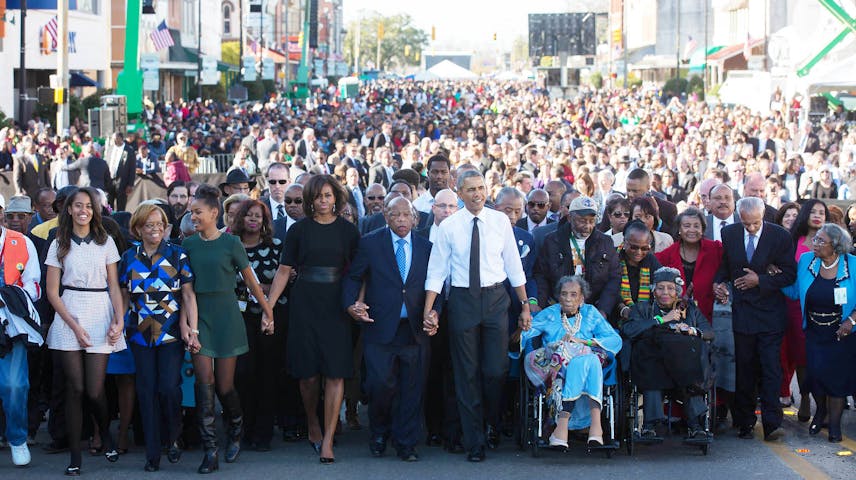
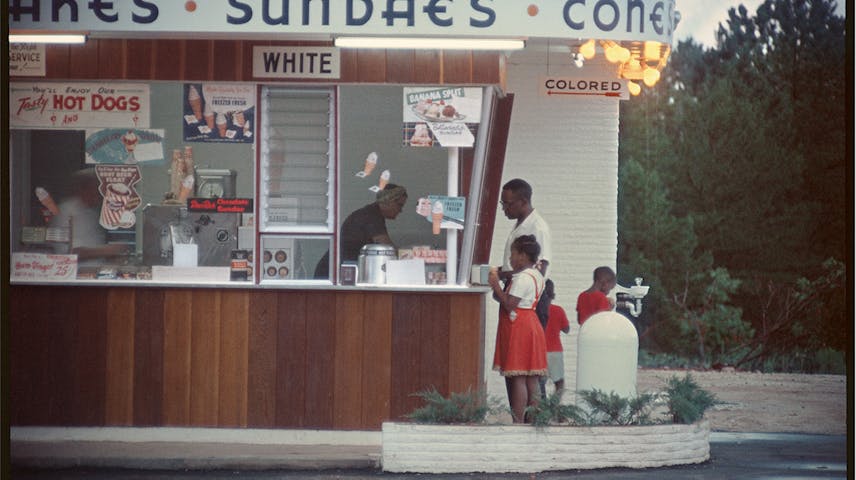
Students will investigate the topic and Essential Questions of the unit before engaging in a gallery walk about segregation during the times of the Civil Rights Movement.
Language
Students will use domain-specific vocabulary and evidence-based language to describe, infer, and connect ideas from images and texts while discussing the Essential Questions of the unit.
Content
Students will preview the core text of the unit before engaging in a partner-read about John Lewis and learning about this unit’s Showcase Performance Task.
Language
Students will use evidence-based language and domain-specific vocabulary to describe, infer, and connect ideas about John Lewis while discussing how personal stories contribute to civic change.
Content
Students will analyze the connections between legal rulings, political policies, and social customs of the Jim Crow Era by engaging in a Jigsaw Reading to determine how these integrated systems enforced segregation and impacted daily life.
Language
Students will use evidence-based and domain-specific language to explain how political, legal, and social systems enforced segregation and shaped daily life during the Jim Crow Era.
March: Book One
John Lewis, Andrew Aydin, Nate Powell

Content
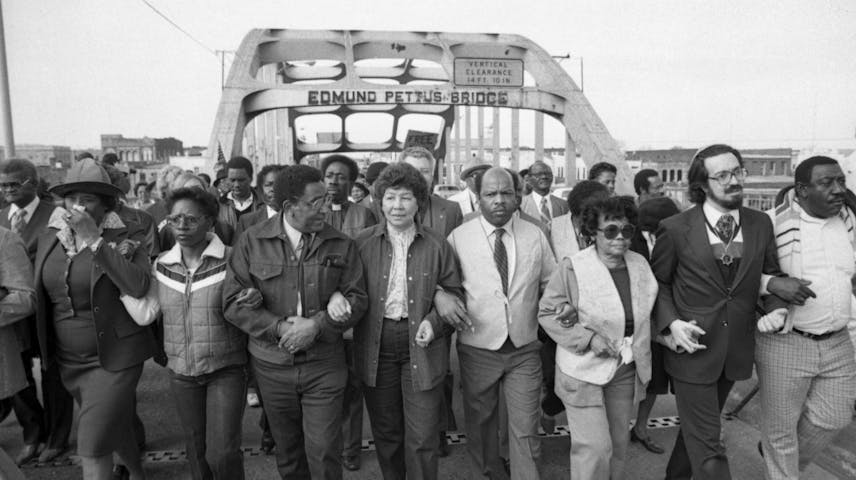
Students will read and summarize the opening events of March to build knowledge of the historical event: Bloody Sunday.
Language
Students will explain important events in the text using cause-and-effect language (e.g. because, as a result, therefore) and key academic vocabulary.
Foundational Skills
Students will identify root words and analyze how affixes change word meanings.
Content
Students will discuss and summarize how the events of Bloody Sunday are connected across multiple sources.
Language
Students will explain the connection between key events using cause-and-effect language (because, as a result, therefore) and academic vocabulary.
Foundational Skills
Students will identify roots and analyze how affixes change word meanings.
Content
Students will write an explanatory paragraph using the RACE writing strategy to explain how the various texts depict the key events of Bloody Sunday.
Language
Students will explain the connection between key events using cause-and-effect language (because, as a result, therefore) and academic vocabulary.
March: Book One
John Lewis, Andrew Aydin, Nate Powell
Content
Students will read and analyze how John Lewis’s past has informed who he was as a person later in life.
Language
Students will explain and write about the connection between key events using cause-and-effect language (because, as a result, therefore) and academic vocabulary.
Foundational Skills
Students will identify roots and analyze how affixes change word meanings: inauguration, generation, dignity.
March: Book One
John Lewis, Andrew Aydin, Nate Powell
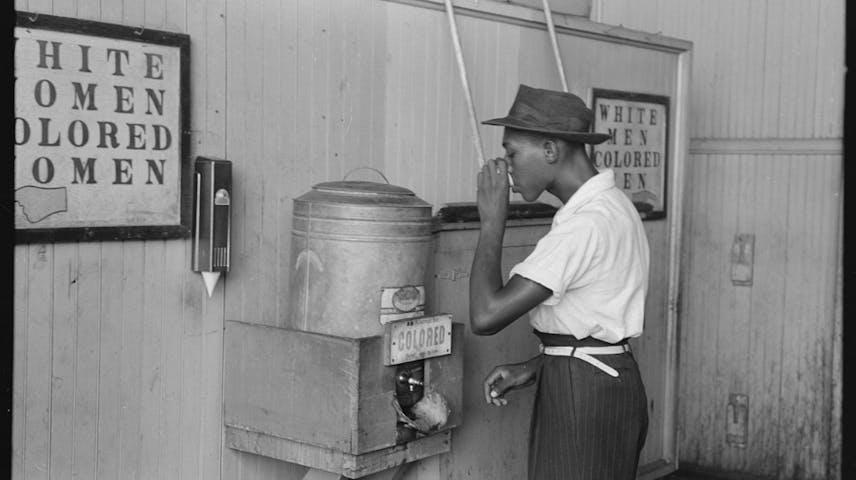
Separate and Unequal: Jim Crow and the Road to Civil Rights
Standard News Bureau
Content
Students will discuss a central idea and key details that develop from pp. 14–35 of March: Book One.
Language
Students will explain a central idea using cause-and-effect/development language (because, as a result, this suggests, this helps readers understand) and citing/reporting verbs (states, shows, explains).
Foundational Skills
Students will practice reading accurately during a fluency activity.
Separate and Unequal: Jim Crow and the Road to Civil Rights
Standard News Bureau
Content
Students will read and analyze the article, “Separate and Unequal: Jim Crow and the Road to Civil Rights,” to explain major events and conditions that contributed to the birth of the Civil Rights Movement.
Language
Students will explain cause-and-effect relationships using causal language and section-based evidence during discussion.
Foundational Skills
Students will use context clues to infer the meaning of two vocabulary words from the article.
Separate and Unequal: Jim Crow and the Road to Civil Rights
Standard News Bureau
Content
Students will write an explanatory paragraph about the social and political factors that led to the Civil Rights Movement using their analysis of the article, “Separate and Unequal: Jim Crow and the Road to Civil Rights.”
Language
Students will use verbals and causal transitions to add precision and cohesion to an explanatory paragraph.
Foundational Skills
Students will learn about verbals and how to identify them in sentences from the article.
March: Book One
John Lewis, Andrew Aydin, Nate Powell
Content
Students will read and analyze pp. 36–46 of March, further exploring how segregation in the South impacts Lewis and other Black Americans through discussion and writing.
Language
Students will explain, discuss, and write about how the central idea of the text connects to the key events described in the text using transition words and key vocabulary.
Foundational Skills
Students will identify roots and analyze how affixes change word meanings.
March: Book One
John Lewis, Andrew Aydin, Nate Powell
Content
Students will continue to learn about the effects of Southern segregation through Lewis’s personal experience as they draw connections between individuals, ideas, and events in pp. 47–56 of March through close reading and discussion.
Language
Students will explain how events and ideas connect across pp. 47–56 by using cause–effect connectors (because, as a result, which led to), academic citing verbs (reveals, demonstrates, suggests), and temporal/spatial transitions (as Lewis travels . . ., in this setting . . .).
Foundational Skills
Students will review words taught in previous lessons using examples and non-examples.
March: Book One
John Lewis, Andrew Aydin, Nate Powell
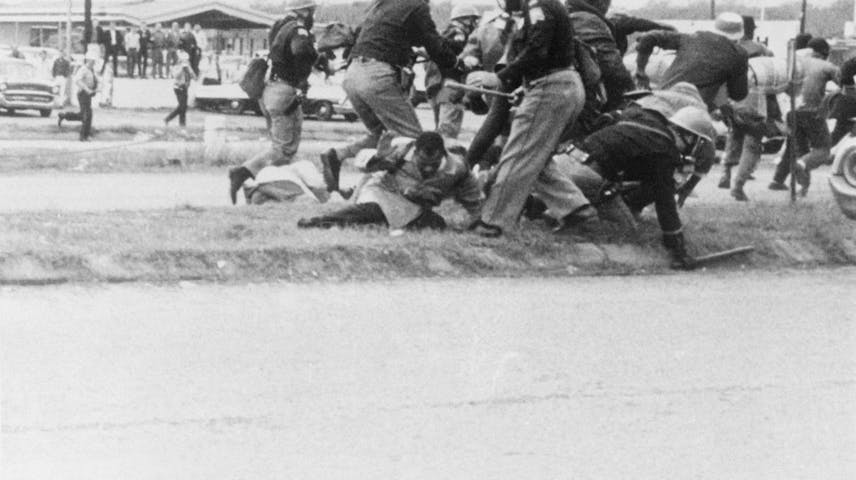
Confrontations for Justice
National Archives
Content
Students will engage in partner discussions to determine a central idea in pp. 47–56 of March.
Language
Students will explain why selected events are central rather than minor by citing evidence and using causal connectors (because, which explains why), clarifying phrases (rather than, instead of), and nominalized ideas (commitment, responsibility).
Foundational Skills
Students will practice reading accurately during a fluency activity.
March: Book One
John Lewis, Andrew Aydin, Nate Powell
Mayor Stops Boycott Talk
Joe Azbell, The Montgomery (Alabama) Advertiser
Content
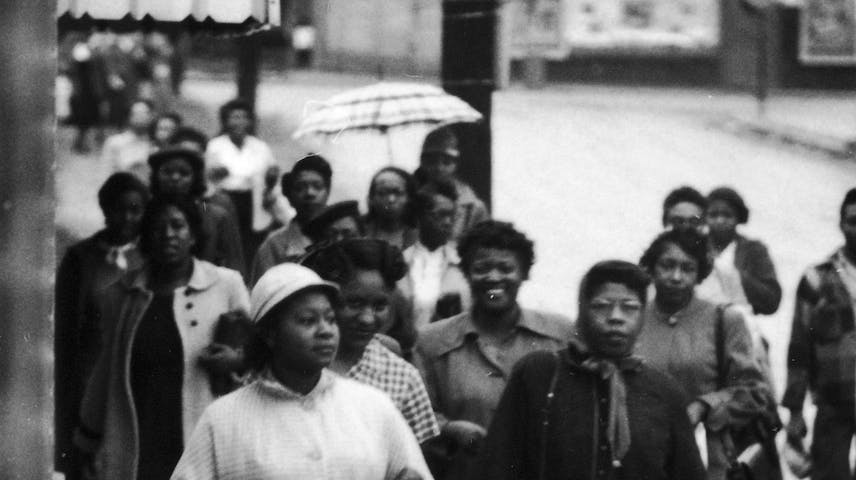
Students will analyze connections across events and ideas, and panels or moments that are structurally important, before synthesizing this analysis to determine and explain a central idea of pp. 56–62 of March.
Language
Students will synthesize how events and structural choices build meaning by citing evidence and using evaluative language (most significant, especially important), structural references (panel placement, pacing, sequence), and synthesis transitions (together, taken as a whole).
Foundational Skills
Students will review words taught in previous lessons using a Generating Situations activity.
Content
Students will compare and contrast the depictions of the Montgomery bus boycott in the “Mayor Stops Boycott Talk” article and pp. 58–59 of March.
Language
Students will compare how different texts interpret the same historical event using comparison structures (both texts . . . , however . . .), credibility language (frames, emphasizes, omits), and perspective markers (according to . . . , from the viewpoint of . . .), and supported by evidence.
Foundational Skills
Students will practice reading at an appropriate rate during a fluency activity.
March: Book One
John Lewis, Andrew Aydin, Nate Powell
Mayor Stops Boycott Talk
Joe Azbell, The Montgomery (Alabama) Advertiser
Content
Students will compare information in the primary source "Mayor Stops Boycott Talk" and March, pp. 1–61, and plan a writing analysis explaining how the two texts provide conflicting information on the same topics and ideas.
Language
Students will explain how the newspaper article agrees or disagrees with March by citing evidence and using analytical verbs (agrees, disagrees, aligns with), evidence-integration frames, and precise academic nouns (philosophy, purpose, commitment).
March: Book One
John Lewis, Andrew Aydin, Nate Powell
Mayor Stops Boycott Talk
Joe Azbell, The Montgomery (Alabama) Advertiser
Content
Students will write and revise an explanatory analysis paragraph explaining how the information expressed in the newspaper article “Mayor Stops Boycott Talk” agrees or disagrees with Lewis’s experiences and reflections about segregation in March.
Language
Students will produce a cohesive analytical explanation using evidence from both texts, transition phrases (for example, as a result, therefore), purposeful verbals and commas for clarity, and an academic tone and register.
March: Book One
John Lewis, Andrew Aydin, Nate Powell
SNCC Statement of Purpose
Student Nonviolent Coordinating Committee
Content
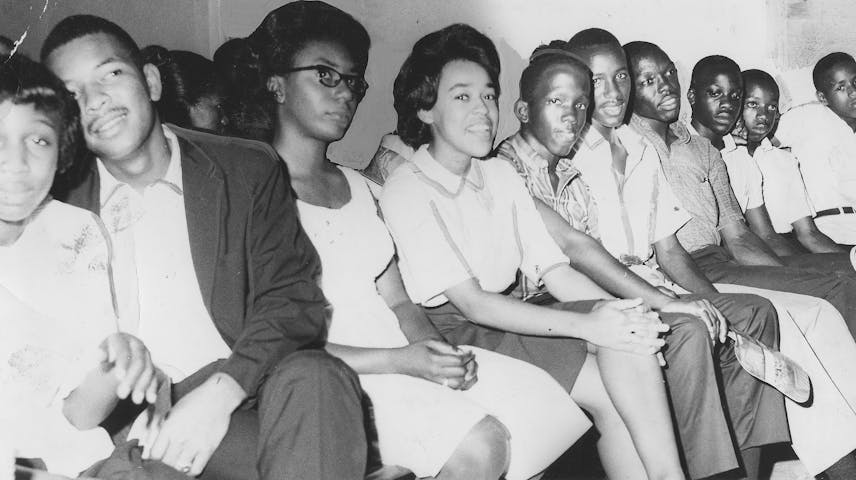
Students will reread and analyze pp. 63–73 of March to learn about Lewis's decision to try to integrate Troy State and his subsequent meeting with Dr. King and other civil rights leaders. Then, review earlier excerpts of March to consider how the visual narrative conveys ideas about injustice and early activism.
Language
Students will explain how visual sequencing conveys civic ideas by using multimodal references (the panel shows . . . , the narration explains . . .), temporal sequencing language, and interpretation verbs (symbolizes, highlights).
Foundational Skills
Students will practice reading accurately during a fluency activity.
March: Book One
John Lewis, Andrew Aydin, Nate Powell
Content
Students will engage in an Academic Discussion, analyzing Lewis’s storytelling and how it builds understanding of injustice and activism, by following established discussion norms and citing evidence from pp. 1–73 of March: Book One.
Language
Students will synthesize ideas and respond to others in discussion by using discussion stems (Building on . . . , I agree because . . . ), evidence-based responses, and clarifying and probing questions.
Content
Students will demonstrate mastery of grade-level skills and concepts by applying their knowledge and critical thinking in a summative assessment environment.
Language
Students will interpret academic vocabulary and complex sentence structures within assessment stems to identify precise relationships between ideas.
March: Book One
John Lewis, Andrew Aydin, Nate Powell
Content
Students will spend time in responsive flex day huddles to improve their understanding of central ideas, the use of text features in consumer materials, and the function of verbals, or will engage in independent extension work.
Language
Students will engage in collaborative academic discourse within differentiated huddles to clarify central ideas, the use of text features in consumer materials, and name the function of verbals, or will extend their mastery of these skills with knowledge-building and independent reading connected to the Civil Rights Movement and Civic Memory.
March: Book One
John Lewis, Andrew Aydin, Nate Powell
Content
Students will determine their focused topic for the Civil Memory Brief, create a related research question, and begin to research sources that can help them with the writing task at the end of the unit.
Language
Students will formulate and explain focused research questions using question frames (How does . . . ? Why did . . . ?), academic nouns (civic memory, testimony), and clarifying language (This question matters because . . .) to guide source selection and inquiry.
March: Book One
John Lewis, Andrew Aydin, Nate Powell
Jim Lawson Conducts Nonviolence Workshops in Nashville
SNCC Digital Gateway, SNCC Legacy Project
Content
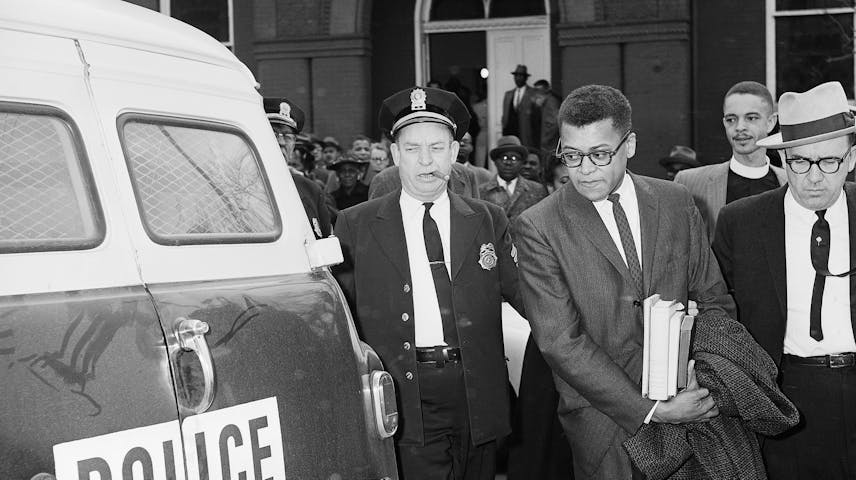
Students will continue their research from the previous lesson and will learn how to use ellipses to indicate omission when integrating text quotes into their writing.
Language
Students will integrate text evidence accurately by quoting and paraphrasing with correct structures, using attribution verbs (states, explains, notes), and condensing ideas without changing meaning.
March: Book One
John Lewis, Andrew Aydin, Nate Powell
Content
Students will analyze how the Nashville Student Movement was born as Lewis and fellow volunteers learn the philosophy and discipline of nonviolent protest by reading and discussing pp. 74–82 in March.
Language
Students will explain how philosophy and discipline shape actions by using cause–effect structures (because, so that, as a result), abstract academic nouns (discipline, philosophy, commitment), and explanation frames (This belief leads to . . . , This practice allows . . . ).
Foundational Skills
Students will identify affixes and determine the meaning of the terms nonviolence and passive resistance.
March: Book One
John Lewis, Andrew Aydin, Nate Powell
Content
Students will learn about the lunch counter sit-ins by identifying new and developing central ideas and analyzing text structure through discussion and writing about March, pp. 83–90.
Language
Students will summarize how events develop a central idea by using objective summarizing language, cause–effect connectors (because, therefore), and central idea frames (The text shows that ... , This section emphasizes ...).
Foundational Skills
Students will draw connections between the words humiliating and dehumanize through a Word Association activity.
March: Book One
John Lewis, Andrew Aydin, Nate Powell
Jim Lawson Conducts Nonviolence Workshops in Nashville
SNCC Digital Gateway, SNCC Legacy Project
Content
Students will evaluate the advantages and disadvantages of how historical events are presented in two different formats while also synthesizing the new information they learn about nonviolent protest and the Nashville sit-ins.
Language
Students will compare how different media present information by using comparison structures (both ... , however ...), medium-specific language (the video emphasizes ... , the text focuses on ... ), and evaluative verbs (highlights, minimizes).
Foundational Skills
Students will identify a root word and analyze how affixes change word meanings.
March: Book One
John Lewis, Andrew Aydin, Nate Powell
Jim Lawson Conducts Nonviolence Workshops in Nashville
SNCC Digital Gateway, SNCC Legacy Project
Content
Students will discuss an informational article about Jim Lawson and the Nashville nonviolence training and evaluate the advantages and disadvantages of how information is shared in an informational article versus March, a graphic novel.
Language
Students will evaluate how text format shapes understanding by comparing how an informational article and a graphic memoir present nonviolent protest, using source-attribution language, comparative transitions, and academic evaluation verbs.
Foundational Skills
Students will practice reading at an appropriate rate during a fluency activity.
March: Book One
John Lewis, Andrew Aydin, Nate Powell
Jim Lawson Conducts Nonviolence Workshops in Nashville
SNCC Digital Gateway, SNCC Legacy Project
Content
Students will explore and practice sentence combining to plan a draft letter from the perspective of one of the Nashville student protestors.
Language
Students will combine sentences to explain ideas in a letter clearly by using compound and complex sentences, coordinating and subordinating conjunctions, and logical connectors (because, although, so that) when planning an explanatory letter.
March: Book One
John Lewis, Andrew Aydin, Nate Powell
Jim Lawson Conducts Nonviolence Workshops in Nashville
SNCC Digital Gateway, SNCC Legacy Project
Content
Students will practice writing a letter from the perspective of one of the Nashville student protestors using sentence combining to fully develop their ideas and to create cohesion and clarity in their writing.
Language
Students will produce a cohesive explanatory letter by integrating evidence, using organizational transitions, maintaining a formal register, and combining sentences to clarify relationships among ideas.
March: Book One
John Lewis, Andrew Aydin, Nate Powell
SNCC Statement of Purpose
Student Nonviolent Coordinating Committee
Content
Students will analyze how Lewis draws connections between the ideas of liberation and nonviolent protest during the Nashville lunch counter sit-ins.
Language
Students will explain how nonviolent discipline leads to liberation by linking events with temporal connectors, abstract academic nouns, and interpretation verbs.
Foundational Skills
Students will practice reading fluently, using context to determine word meanings, and deconstructing sentences.
March: Book One
John Lewis, Andrew Aydin, Nate Powell
SNCC Statement of Purpose
Student Nonviolent Coordinating Committee
Content
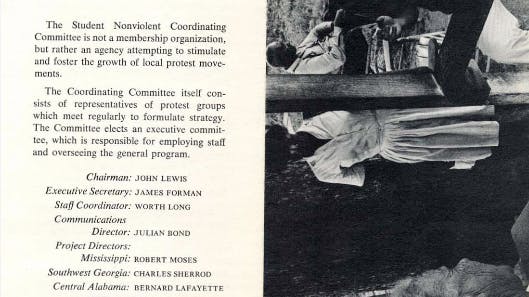
Students will draw connections between SNCC's Statement of Purpose and the Civil Rights Movement events depicted in March on pp. 74–102 through a fishbowl academic discussion.
Language
Students will synthesize connections between March and the “SNCC Statement of Purpose” in a fishbowl discussion using discussion stems, evidence-based responses, and clarifying/probing questions.
March: Book One
John Lewis, Andrew Aydin, Nate Powell
Content
Students will analyze the cause-and-effect connection between the discrimination the protestors face during the sit-ins and arrests and their continued commitment to their cause through group discussion activities.
Language
Students will explain how discrimination leads to escalating collective action by using causal connectors (because, as a result, therefore), abstract nouns (commitment, resistance, discrimination), and interpretation verbs (demonstrates, reveals, reflects) with evidence from captions, dialogue, and panel sequences.
Foundational Skills
Students will practice reading fluently, using context to determine word meanings, and deconstructing sentences.
March: Book One
John Lewis, Andrew Aydin, Nate Powell
Content
Students will consider the impact of the final events in March through central idea analysis and connections between individuals, ideas, and events.
Language
Students will summarize how linked events and decisions build a central idea by using objective summary language, cause–effect structures (because, as a result, therefore), and central-idea frames (This section shows that ... , These events work together to ...) with evidence from captions, dialogue, and panel sequences.
Foundational Skills
Students will explore the relationship between two key words from March.
March: Book One
John Lewis, Andrew Aydin, Nate Powell
Content
Students will watch a news report about the march on the Nashville City Hall and compare and contrast the information and analyze where the texts (the news report and March) disagree on matters of interpretation.
Language
Students will analyze where March and a news report disagree in interpretation by using comparison structures, source-attribution language, and evaluation verbs (portrays, emphasizes, omits) to explain how wording, visuals, and emphasis shape meaning.
Foundational Skills
Students will review words taught in previous lessons using examples and non-examples.
March: Book One
John Lewis, Andrew Aydin, Nate Powell
Eric Reid: Why Colin Kaepernick and I Decided to Take a Knee
Eric Reid, New York Times
Content
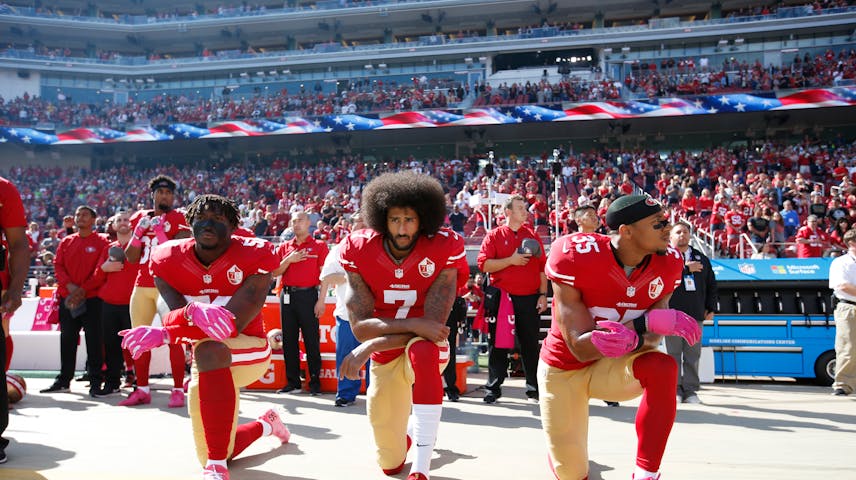
Students will draw connections between the Nashville Student Movement’s actions and philosophy and Lewis’s participation in Bloody Sunday as they analyze the structural choices Lewis makes in the graphic novel through an academic discussion.
Language
Students will synthesize structure, events, and ideas across March in discussion by using evidence-based discussion stems, synthesis language (overall, taken together), and clarifying and probing questions.
March: Book One
John Lewis, Andrew Aydin, Nate Powell
Eric Reid: Why Colin Kaepernick and I Decided to Take a Knee
Eric Reid, New York Times
Content
Students will read Eric Reid’s op-ed and analyze his purpose in writing through collaborative discussion.
Language
Students will explain how point of view shapes an argument by using perspective markers, evaluative language, and comparison frames supported by evidence.
Foundational Skills
Students will practice reading accurately during a fluency activity.
March: Book One
John Lewis, Andrew Aydin, Nate Powell
Eric Reid: Why Colin Kaepernick and I Decided to Take a Knee
Eric Reid, New York Times
Content
Students will draft explanatory paragraphs comparing Lewis’s and Reid’s points of view and explain how they address opposing viewpoints within their respective texts.
Language
Students will compare Lewis’s and Reid’s points of view and explain how each addresses an opposing viewpoint by using comparison structures, logical connectors, and evidence integration frames.
Content
Students will demonstrate mastery of grade-level skills and concepts by applying their knowledge and critical thinking in a summative assessment environment.
Language
Students will interpret academic vocabulary and complex sentence structures within assessment stems to identify precise relationships between ideas.
March: Book One
John Lewis, Andrew Aydin, Nate Powell
Content
Students will spend time in responsive flex day huddles to improve their understanding of point of view and purpose, analysis of conflicting information across texts, and use of punctuation to indicate pauses and breaks, or will engage in independent extension work.
Language
Students will engage in collaborative academic discourse within differentiated huddles to clarify point of view and purpose, analyze conflicting ideas across texts, and use punctuation to indicate pauses and breaks, or will extend their mastery of these skills with knowledge-building and independent reading connected to the Civil Rights Movement and Civic Memory.
March: Book One
John Lewis, Andrew Aydin, Nate Powell
Content
Students will use graphic organizers to engage in the prewriting and planning stages of their performance tasks.
Language
Students will explain how historical memory motivates civic action by planning a multimedia brief using civic vocabulary, evidence integration phrases, and clear explanatory connections.
March: Book One
John Lewis, Andrew Aydin, Nate Powell
Content
Students will draft their Civic Memory Brief using the information from their outline, previous research, and unit texts.
Language
Students will organize and develop an explanatory brief by stating a thesis, linking evidence to ideas with cause-and-effect connectors, and using cohesive references to maintain clarity across paragraphs.
March: Book One
John Lewis, Andrew Aydin, Nate Powell
Content
Students will choose images for the multimedia cover component and write headlines and captions.
Language
Students will write headlines and captions for the images on their covers to explain the images and connect to their thesis.
Content
Students will engage in peer review of each other’s performance tasks by giving and receiving constructive criticism and using it to revise their drafts.
Language
Students will give and respond to feedback by using respectful discussion stems, asking clarifying questions, and explaining revision suggestions with evidence and appropriate register.
Content
Students will spend time in responsive flex day huddles to improve their understanding of writing to engage the reader, using narrative techniques to develop ideas, and applying transition words and phrases or will engage in independent extension work.
Language
Students will engage in collaborative academic discourse within differentiated huddles to clarify how to engage the reader, use narrative techniques, or apply transition words and phrases, or will extend their mastery of these skills with knowledge-building and independent reading connected to the Civil Rights Movement and Civic Memory.
Content
Students will practice presenting their Civic Memory Briefs with a peer in preparation for a presentation in the following lesson.
Language
Students will present their briefs clearly by introducing visuals and text with academic language, explaining significance using evidence-based reasoning, and using precise interpretive verbs to make connections.
Content
Students will apply their presentation skills to present their finished Multimedia Civic Memory Briefs.
Language
Students will present their briefs clearly and reflect on learning using presentation language, audience-aware explanations, and evidence-based reflection.