Loading course navigation
Loading unit
Content
Students will engage with an article and photo collection that provide context for the wartime experiences of Japanese Americans and people on the home front generally. The photos also provide a way to introduce Dorothea Lange, one of three photographers whose work at Manzanar is covered in Seen and Unseen.
Language
Students will build historical context by describing and interpreting details from an informational article and a photo collection, using observation and interpretation verbs (depicts, represents, suggests) and the sentence starters “I notice…”/“I wonder...” to explain how perspective and bias shape what gets remembered about Japanese American life before World War II.
Foundational Skills
Students will learn the meanings of perspective and bias, two words fundamental to understanding both the anchor text and the history of Japanese American internment.
Content
Students will consider the question “What makes an American?” in light of two visual appeals to Americanness: a sign put up by a Japanese American grocer in 1942 and a recruitment poster that predates the United States’ entry into World War II.
Language
Students will analyze how public messages shape perception by interpreting two wartime images (“I Am An American” sign and Uncle Sam poster), using evidence-based language and cause/effect connectors (because, as a result, therefore) plus academic interpretation verbs (suggests, communicates, portrays) to explain how fear can influence how audiences understand “Americanness.”
Foundational Skills
Students will reflect on the many definitions that a political and geographic term such as American can have in different contexts.
Content
Students will read Dwight Okita’s poem “In Response to Executive Order 9066” and compare its portrayal of Japanese American incarceration with Dorothea Lange’s photos from the period.
Language
Students will interpret how Okita’s poem and Lange’s photographs bear witness to Japanese American incarceration by using comparative language (both, similarly, unlike), academic interpretation verbs (reveals, highlights, emphasizes), and source-transition language (In the poem..., In the image...) to connect imagery and visual details to the historic facts and impacts of Executive Order 9066.
Foundational Skills
Students will consider the different meanings and parts of speech that the word witness can have, choosing the most relevant meanings to discuss Japanese American incarceration.
Seen and Unseen
Elizabeth Partridge & Lauren Tamaki

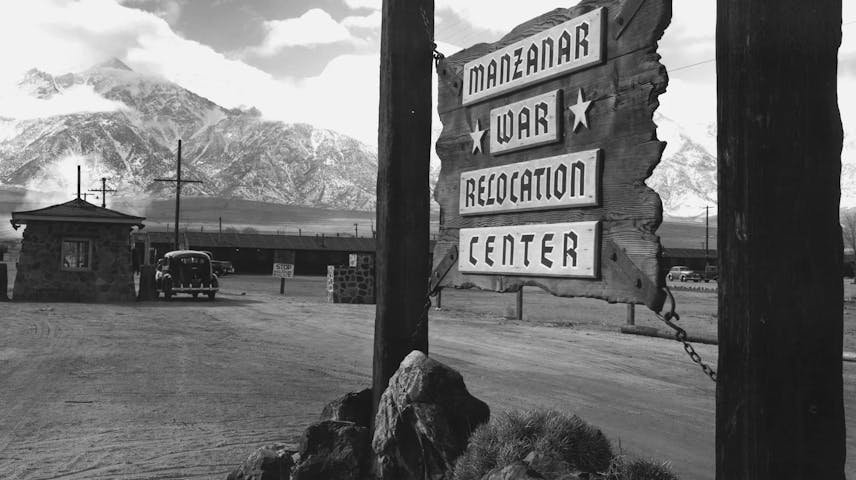
Photos: 3 Very Different Views Of Japanese Internment
Adrian Florido, NPR
Foundational Skills
Students will use examples to test, confirm, and apply the meaning of a newly learned vocabulary word.
Content
Students will read an article about historical photographs and discuss how the author develops his claims through specific examples.
Language
Students will explain how a photographer’s perspective and intent shape meaning by using interpretive academic verbs and textual and visual evidence from the article. Foundational Skills: Students will use examples to test, confirm, and apply the meaning of a newly learned vocabulary word.
Seen and Unseen
Elizabeth Partridge & Lauren Tamaki
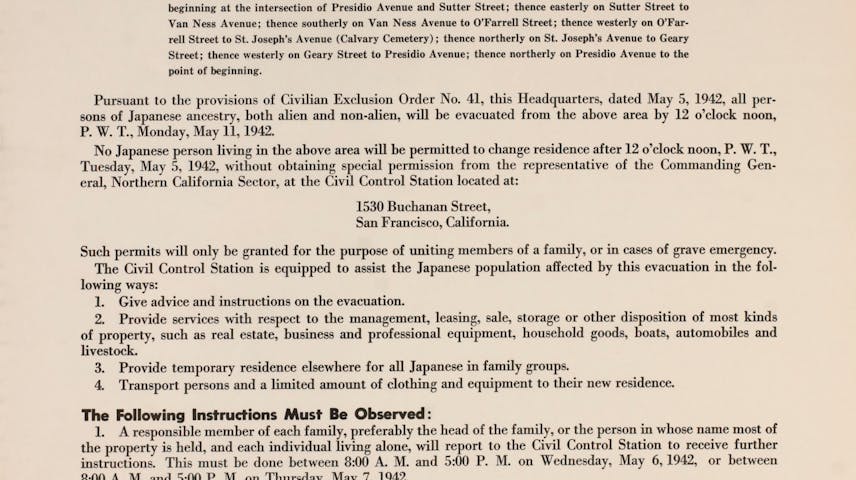
Instructions to All Persons of Japanese Ancestry and Glossary of Terms
National Parks Service
Foundational Skills
Students will identify roots and analyze how known roots combine to create words with inferable meanings.
Content
Students will read an illustrated nonfiction description of the events leading to Japanese American incarceration and discuss how the author and illustrator offer a specific perspective on these events.
Language
Students will summarize key events and explain their impact by using sequencing language, academic explanation verbs, and time/place phrases, while referencing both text and illustrations.
Foundational Skills
Students will identify roots and analyze how known roots combine to create words with inferable meanings.
Seen and Unseen
Elizabeth Partridge & Lauren Tamaki
Instructions to All Persons of Japanese Ancestry and Glossary of Terms
National Parks Service
Foundational Skills
Students will use Latin roots and affixes to support acquisition of a domain-specific vocabulary word.
Content
Students will read an official government document enacting the policy of Japanese American incarceration.
Language
Students will summarize and interpret a government document by citing text evidence, using contrastive language to name omissions, and using evaluative verbs to explain how official documents show point of view.
Seen and Unseen
Elizabeth Partridge & Lauren Tamaki
Instructions to All Persons of Japanese Ancestry and Glossary of Terms
National Parks Service
Content
Students will draft an explanatory paragraph comparing how an official notice and Seen and Unseen portray the forced removal of Japanese Americans.
Language
Students will use comparative connectors and evidence-based explanation to describe differences in perspective across two sources.
Seen and Unseen
Elizabeth Partridge & Lauren Tamaki
Content
Students will determine a central idea and analyze how Partridge’s written account and Lange’s photographs represent Japanese American forced removal and incarceration.
Language
Students will interpret written and visual representations by citing visible details, naming what is outside the frame, and using descriptive academic verbs such as conveys, suggests, and emphasizes.
Foundational Skills
Students will read a short excerpt fluently by using punctuation to guide phrasing and pace.
Seen and Unseen
Elizabeth Partridge & Lauren Tamaki
Foundational Skills
Students will break down challenging words phonetically and practice using them in context.
Content
Students will read an anchor text passage that focuses on efforts to censor and control the way that the incarceration camps were documented.
Language
Students will introduce and support an opinion about censorship by citing evidence from pp. 36–39 and using opinion frames (“I think . . . ,” “It seems . . . ,” “Based on the text . . .”), power-analysis verbs (restricts, controls, prevents), and cause/effect connectors (because, as a result).
Seen and Unseen
Elizabeth Partridge & Lauren Tamaki
Content
Students will analyze how the WRA’s written and unwritten rules about photography shaped what the public understood about Manzanar in Seen and Unseen.
Language
Students will explain cause-and-effect relationships using reporting verbs, contrastive language, and cause-effect connectors in an explanatory paragraph.
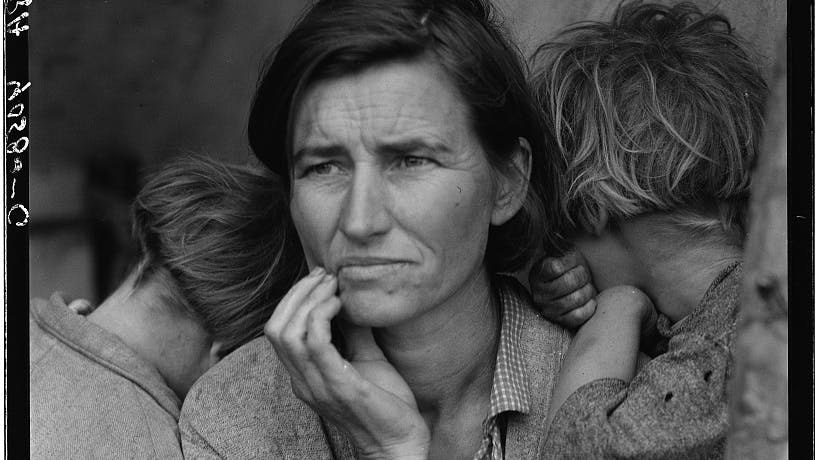
A Picture is Worth a Thousand Words: Why Photojournalism Matters Now More Than Ever
Justin Aitken, Photography Tutor at The Photography Institute
Foundational Skills
Students will distinguish and apply multiple meanings of the word record in practice sentences and within Seen and Unseen.
Content
Students will learn about Toyo Miyatake, a photographer imprisoned at Manzanar, and analyze his motivation to create a photographic record of camp life.
Language
Students will explain how perspective shapes what gets recorded and remembered by using analytical verbs (documents, records, emphasizes), evidence-based explanation (“the text shows . . . ,” “the photos suggest . . .”), and synthesis transitions (similarly, in contrast) when discussing Miyatake’s work in Seen and Unseen and the photojournalism article.
Seen and Unseen
Elizabeth Partridge & Lauren Tamaki
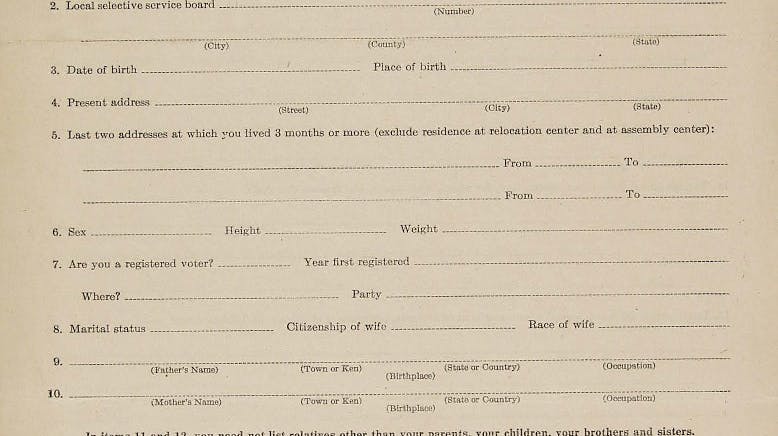
Statement of United States Citizen of Japanese Ancestry
Densho
Content
Students will analyze how Elizabeth Partridge and Lauren Tamaki present the Manzanar protest, the shooting, and the loyalty questionnaire.
Language
Students will explain how sequence, visual design, and contrastive connectors shape a comparison of perspectives and purposes.
Foundational Skills
Students will read long, complex questions fluently by chunking punctuation and phrasing units.
Seen and Unseen
Elizabeth Partridge & Lauren Tamaki
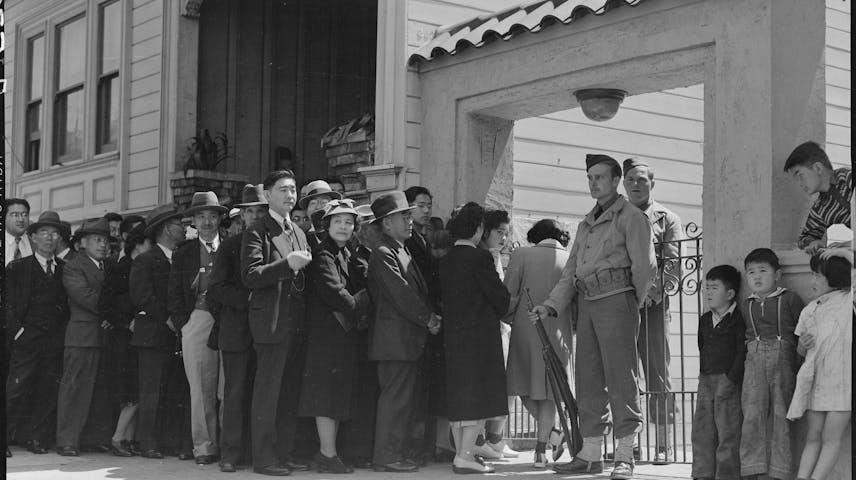
The “Loyalty Questionnaire” of 1943 Opened a Wound that has Yet to Heal
Natasha Varner, Densho
Content
Students will analyze how “The ‘Loyalty Questionnaire’ of 1943 Opened a Wound That Has Yet to Heal” and Seen and Unseen, pp. 66–74, present the loyalty questionnaire and its lasting impact on Japanese American families.
Language
Students will synthesize evidence using compare/contrast connectors and cause-and-effect language to explain how each source shapes contested memory.
Foundational Skills
Students will use morphemes and syllable chunking to analyze and discuss the meanings of loyalty and disloyalty.
Seen and Unseen
Elizabeth Partridge & Lauren Tamaki
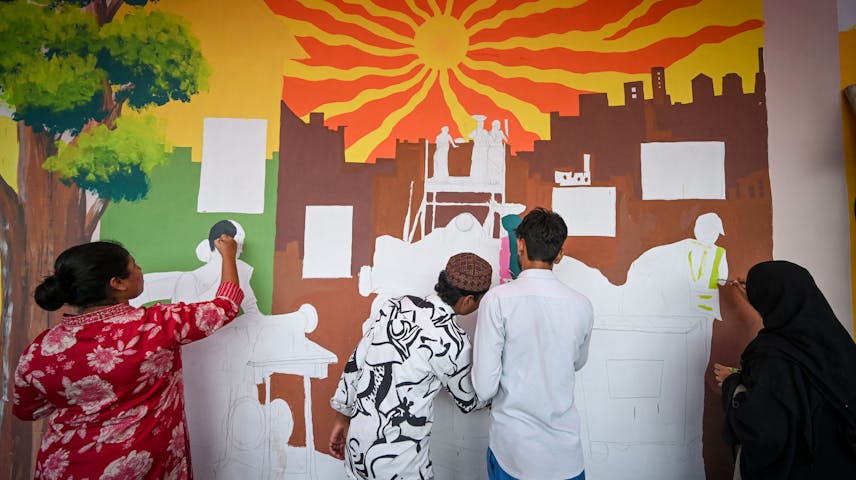
Bearing Witness and Creative Activism
Sondra Bacharach, The Journal of Aesthetics and Art Criticism
Content
Students will analyze how the concept of bearing witness helps readers evaluate Ansel Adams’s photographs of Manzanar.
Language
Students will explain how Adams emphasizes, frames, and omits aspects of life at Manzanar using interpretive verbs, cause-and-effect connectors, and evidence-based explanations from an article excerpt and photographs.
Foundational Skills
Students will analyze the morphemes in resettlement to determine meaning and explain how the word shapes interpretation.
Seen and Unseen
Elizabeth Partridge & Lauren Tamaki
Surviving Poston’s Desert Heat: Cellars, Fans, Ponds and Gardens
Roy Kakuda, Discover Nikkei
Content
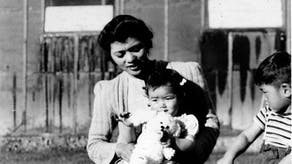
Students will analyze how Roy Kakuda’s survivor-authored essay and Ansel Adams’s photographs in Seen and Unseen shape what readers see and understand about Japanese American incarceration.
Language
Students will compare how Kakuda and Adams present camp life by using comparison connectors, tone and intent adjectives, and evidence-based explanation of what becomes visible or omitted.
Foundational Skills
Students will distinguish among words with similar denotations by comparing the connotations of resilient to similar words in context.
Seen and Unseen
Elizabeth Partridge & Lauren Tamaki
Content
Students will analyze how the back matter of Seen and Unseen develops perspective and contributes to the text’s central ideas about bearing witness, omission, and the historical record.
Language
Students will explain how back-matter features shape historical understanding by using explanatory connectors and precise nouns to connect evidence to analysis.
Foundational Skills
Students will practice fluent reading of a complex informational passage by phrasing across clauses and emphasizing key reporting words.
Seen and Unseen
Elizabeth Partridge & Lauren Tamaki
Letter from Mary Tsukamoto to “Richard,” Soldier in the 442nd Regimental Combat Team, October 21, 1943
California State University
Content
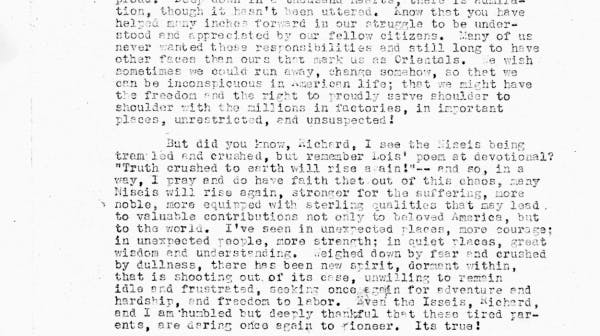
Students will write explanatory paragraphs that synthesize information from a shared model primary source, individually researched primary sources, and Seen and Unseen to learn about Japanese American incarceration.
Language
Students will synthesize what multiple sources reveal and omit about Japanese American incarceration by writing an explanatory paragraph that uses a claim–evidence–explanation structure, synthesis language, and academic nouns while accurately introducing evidence and explaining its relevance to the Essential Question.
Foundational Skills
Students will practice writing explanatory paragraphs that cogently organize details in support of a clearly stated main idea.
Seen and Unseen
Elizabeth Partridge & Lauren Tamaki
Content
Students will engage in a small-group Academic Discussion that considers each section of Seen and Unseen in turn, focusing on what it reveals about the extent and limitations of the records of Japanese American incarceration.
Language
Students will synthesize perspectives across Seen and Unseen and their primary sources by using accountable discussion moves (agree/build/clarify/challenge), comparative and synthesis connectors, and academic nouns (perspective, omission, visibility) to make evidence-based oral explanations that deepen their response to the Essential Question.
Foundational Skills
Students will practice participating in an accountable conversation that observes norms they have helped to decide and articulate.
Seen and Unseen
Elizabeth Partridge & Lauren Tamaki
Content
Students will annotate a selection from Seen and Unseen in terms of craft considerations: specific author and illustrator choices that affect the work’s tone and perspective.
Language
Students will make evidence-based inferences about how multimodal craft choices (text, photograph, illustration) shape perspective and emotion by using analytical verbs (emphasizes, conveys, suggests), multimodal reference language (“the text . . . ” “the photograph . . . ,” “the illustration . . .”), and comparative connectors to explain how meaning is framed for the reader.
Foundational Skills
Students will practice distinguishing the meaning of similar words relevant to the text (incarceration, incarcerated, resettlement, resettle, removal) and using vocabulary with precision.
Content
Students will demonstrate mastery of grade-level skills and concepts by applying their knowledge and critical thinking in a summative assessment environment.
Language
Students will interpret academic vocabulary and complex sentence structures within assessment stems to identify precise relationships between ideas.
Seen and Unseen
Elizabeth Partridge & Lauren Tamaki
Content
Students will compare a written text and multimedia, determine an author’s point of view, and evaluate whether reasons and evidence support claims.
Language
Students will explain comparisons, point of view, and argument strength using evidence language, contrast language, and evaluation language.
Foundational Skills
Students will read a short passage closely and use key words in the text to support analysis.
Seen and Unseen
Elizabeth Partridge & Lauren Tamaki
Exposing Injustice: Incarceration of Japanese Americans
Dorothea Lange Digital Archive at the Oakland Museum of California
Content
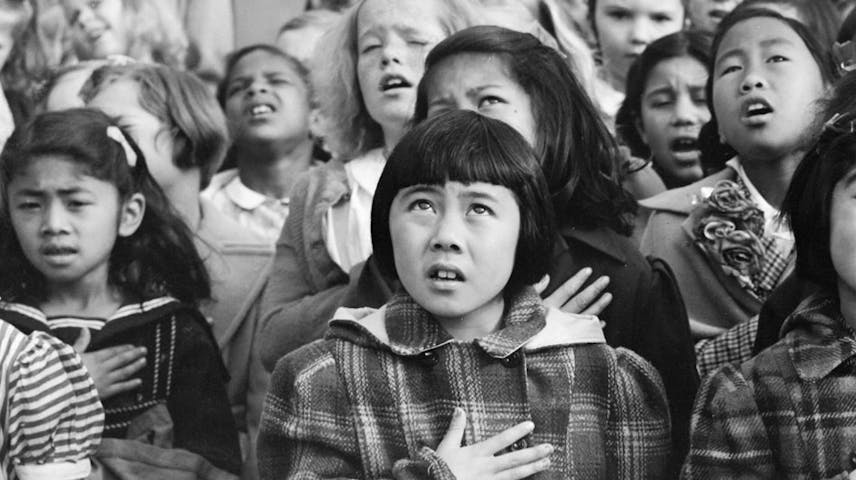
Students will analyze how a photographer’s perspective shapes what a historical photograph reveals and hides about Japanese American incarceration and compare this representation with how ideas are represented in a text.
Language
Students will explain visual choices using source-based language and analytical terms such as framing, perspective, proximity, and cropped out.
Foundational Skills
Students will gather and record relevant visual and textual evidence from photographs, captions, and the unit text to prepare for a follow-up annotation task.
Exposing Injustice: Incarceration of Japanese Americans
Dorothea Lange Digital Archive at the Oakland Museum of California
Content
Students will corroborate two sources about the same aspect of Japanese American incarceration by identifying agreement, divergence, and reasons the accounts differ.
Language
Students will explain how purpose, audience, access, and time of creation shape source differences using evidence-based language and source attribution.
Seen and Unseen
Elizabeth Partridge & Lauren Tamaki
Content
Students will closely examine a passage from Seen and Unseen that features a firsthand account by a survivor of the prison camps.
Language
Students will interpret a survivor’s first-person testimony by identifying voice and emotional tone and using reporting verbs (describes, recalls, emphasizes), emotional/evaluative language, and academic nouns (testimony, experience, omission) to explain what the account reveals and what it leaves unclear.
Foundational Skills
Students will distinguish examples and non-examples of the word miserable both as it relates to Japanese American incarceration and in a wider context.
Seen and Unseen
Elizabeth Partridge & Lauren Tamaki
Content
Students will analyze selected pages from Seen and Unseen that combine survivor testimony with photographs and illustrations and describe the individual and combined effect of these media on their understanding of Japanese American incarceration.
Language
Students will synthesize multimodal evidence (survivor testimony, photographs, and illustrations) by using synthesis connectors (together, combined, across), multimodal reference language (“the text . . . ,” “the photograph . . . ,” “the illustration . . .”), and academic verbs (reinforces, complicates) to explain how perspective is shaped and what remains unclear.
Foundational Skills
Students will practice reading fluency using a passage that includes direct quotation as well as a third-person prose narrative.
Seen and Unseen
Elizabeth Partridge & Lauren Tamaki
Content
Students will further analyze survivor testimony in Seen and Unseen by comparing it with other primary and secondary sources, and then conduct brief research to identify and compare additional primary or secondary sources.
Language
Students will compare and corroborate perspectives across sources by using comparative/contrastive language (similarly, unlike, whereas), evidence-based explanation frames, academic verbs (corroborates, contradicts), and abstract nouns (credibility, perspective) to explain how multiple sources shape historical understanding.
Foundational Skills
Students will practice combining short sentences in a way that illustrates the relationship between ideas.
Seen and Unseen
Elizabeth Partridge & Lauren Tamaki
Content
Students will annotate one more set of pages from Seen and Unseen in terms of craft decisions (both textual and visual), language choices, and the survivors’ perspective.
Language
Students will analyze how multimodal craft choices shape meaning by using analytical verbs (highlights, reinforces, limits), multimodal reference language (“in the text/photo/illustration . . .”), comparative connectors (similarly, unlike, whereas), and evidence-based explanations that name what is emphasized or omitted.
Foundational Skills
Students will practice combining affixes with the Latin root viv, guessing and checking the meaning of the resulting terms.
Seen and Unseen
Elizabeth Partridge & Lauren Tamaki
Content
Students will write paragraphs that synthesize the evidence and insights they have accumulated by annotating Seen and Unseen.
Language
Students will synthesize multimodal evidence in explanatory writing by using a clear claim–evidence–explanation structure, synthesis transitions (together, collectively), and academic verbs (demonstrates, suggests) to explain how word/image choices shape interpretation and responsible witnessing.
Foundational Skills
Students will practice identifying opportunities to add detail to sentences to create more precise descriptions and vary sentence length.
Seen and Unseen
Elizabeth Partridge & Lauren Tamaki
Content
Students will write explanatory paragraphs that compare and contrast the perspectives expressed in Seen and Unseen and other primary and secondary sources.
Language
Students use comparative/contrastive connectors (however, whereas), academic nouns (perspective, bias, omission), and evidence-based reasoning that cites at least two sources.
Foundational Skills
Students will develop a deeper understanding of the term perspective by generating and considering various literal and figurative examples.
Seen and Unseen
Elizabeth Partridge & Lauren Tamaki
Content
Students annotate a selection from Seen and Unseen in terms of structure and sequence, then discuss the effect of structural choices in pairs or small groups.
Language
Students use sequencing transitions, cause/effect language, and academic nouns (pacing, emphasis) in evidence-based explanations.
Foundational Skills
Students distinguish between structure and sequence and develop their understanding that sequences are a type of structure.
Seen and Unseen
Elizabeth Partridge & Lauren Tamaki
Content
Students use the tools developed in past lessons—analysis of craft, perspective, and structure/sequence—to compare two sequences from Seen and Unseen that contain survivor testimony.
Language
Students synthesize patterns across survivor testimonies by using abstract nouns (pattern, theme), comparative verbs (reinforces, complicates, contrasts), and cohesive transitions using evidence.
Foundational Skills
Students distinguish examples of discrimination from non-examples in order to build a more precise understanding of Japanese Americans’ experiences before, during, and immediately following World War II.
Seen and Unseen
Elizabeth Partridge & Lauren Tamaki
Letter to Clara Breed from Fusa Tsumagari, Poston, Arizona, October 9, 1942
Japanese American National Museum
Content
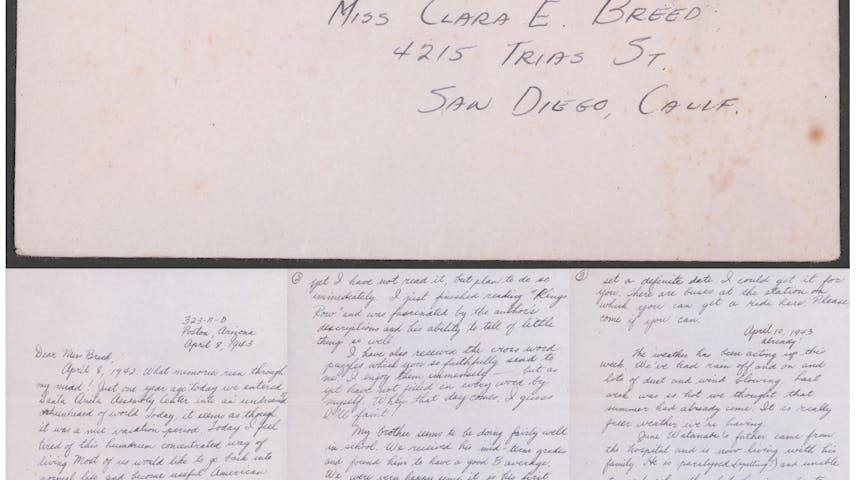
Students will select, analyze, and corroborate credible external sources that confirm and complement the information in the survivor stories from Seen and Unseen.
Language
Students will relate survivor testimony to other sources by using evaluation verbs (confirms, challenges, complicates), source attribution language (“According to . . . ,” “The interview states . . .”), contrastive connectors (however, in contrast), and academic nouns (credibility, evidence, perspective).
Seen and Unseen
Elizabeth Partridge & Lauren Tamaki
Content
Students will write paragraphs that synthesize information from multiple sources on Japanese American incarceration.
Language
Students will produce a cohesive explanatory paragraph that synthesizes multiple survivor accounts using comparative transitions, evidence-based explanation, and an academic tone to analyze patterns, omissions, and perspective.
Foundational Skills
Students will identify opportunities to eliminate redundancy in writing while preserving meaning and flow.
Seen and Unseen
Elizabeth Partridge & Lauren Tamaki
Letter to Clara Breed from Fusa Tsumagari, Poston, Arizona, October 9, 1942
Japanese American National Museum
Surviving Poston’s Desert Heat: Cellars, Fans, Ponds and Gardens
Roy Kakuda, Discover Nikkei
Content
Students will select a preliminary topic and research question for their “Witness to History” multimedia presentation and then combine evidence from Seen and Unseen and an external source to support the presentation.
Language
Students will synthesize evidence from multiple sources to generate a focused research question and explain its relevance using cohesive transitions and evidence-based reasoning language.
Content
Students will engage in a Socratic Seminar with the goal of collecting, organizing, and analyzing evidence to address the Essential Question as it relates to Japanese American incarceration.
Language
Students will articulate synthesized insights in a Socratic Seminar by using discussion moves (build/clarify/extend), evidence-based oral language, discourse connectors, and an academic register to connect sources to the Essential Question.
Foundational Skills
Students will practice participating in an accountable conversation that observes norms and maintains focus with less explicit structure than in previous lessons.
Content
Students will demonstrate mastery of grade-level skills and concepts by applying their knowledge and critical thinking in a summative assessment environment.
Language
Students will interpret academic vocabulary and complex sentence structures within assessment stems to identify precise relationships between ideas.
Seen and Unseen
Elizabeth Partridge & Lauren Tamaki
Content
Students will analyze how two texts shape ideas about the same topic.
Language
Students will explain source relationships and word meaning using comparison language, context language, and connotation language.
Foundational Skills
Students will use context, word parts, and reference materials to determine the meaning of unfamiliar words.
Seen and Unseen
Elizabeth Partridge & Lauren Tamaki
Content
Students will select images and accompanying survivor testimony for use in their Digital Witness Exhibit and complete a chart to compare and contrast how selected sources portray an element of the internment camps.
Language
Students will justify the selection of an image-testimony pairing by using analytical verbs (represents, emphasizes, reinforces, complicates), cause/effect reasoning (because, therefore, as a result), and evidence-based justification (specific visual/text details and page references) to explain how the pairing supports a claim about perspective, tone, and what remains unseen.
Foundational Skills
Students will learn and practice techniques for comparing visual and textual evidence in terms of content, perspective, and tone.
Seen and Unseen
Elizabeth Partridge & Lauren Tamaki
Content
Students will locate, evaluate, and integrate an additional credible source into their Unit Performance Task research.
Language
Students will use source attribution phrases, synthesis connectors, and comparative reasoning to explain how an external source corroborates, complicates, or extends Seen and Unseen.
Seen and Unseen
Elizabeth Partridge & Lauren Tamaki
Letter from Mary Tsukamoto to “Richard,” Soldier in the 442nd Regimental Combat Team, October 21, 1943
California State University
Content
Students will write an explanatory paragraph that synthesizes information from Seen and Unseen and a researched external source.
Language
Students will use precise reporting verbs, source attribution, and synthesis transitions to explain relationships across sources in an academic paragraph.
Foundational Skills
Students will replace vague verbs with precise academic verbs to distinguish reported facts from interpretations.
Seen and Unseen
Elizabeth Partridge & Lauren Tamaki
Content
Students will plan the audio and visual components for Unit Performance Task presentations.
Language
Students will plan a multimodal presentation storyboard by sequencing image–text pairs (first/next/then/finally), justifying design choices with cause/effect reasoning (because/so/therefore), and using academic planning register to ensure text clarifies—not misrepresents—images.
Foundational Skills
Students will learn how to combine text and visuals ethically so that the text reinforces or explains the image without misrepresenting its contents.
Seen and Unseen
Elizabeth Partridge & Lauren Tamaki
Content
Students will produce draft narration and captions for Unit Performance Task presentations.
Language
Students will draft concise captions and narration that synthesize evidence from images and testimony, using cohesive transitions, citing language for evidence, and using an academic tone to clarify perspective and ethical interpretation.
Foundational Skills
Students will learn about passive and active voice and determine when to use each.
Seen and Unseen
Elizabeth Partridge & Lauren Tamaki
Content
Students will strengthen and refine their presentations through multiple rounds of peer review.
Language
Students will revise their presentation drafts by using peer-review language that critiques ideas (not people) and by applying specific, actionable feedback to improve evidence use, ethical interpretation, and clarity.
Foundational Skills
Students will observe, comment on, and practice examples of constructive criticism.
Content
Students will introduce a topic clearly, develop it with relevant details, and use transitions to create cohesion in informative writing about historical sources.
Language
Students will explain relationships among ideas using precise evidence language and cause-effect or sequencing connectors in short informative responses.
Content
Students will present their completed “Digital Witness Exhibit” presentations.
Language
Students will present their “Digital Witness Exhibit” presentations using clear oral transitions and evidence-citation language to synthesize insights across multiple sources and respond to audience questions with academic clarity.
Foundational Skills
Students will show how they have incorporated multiple rounds of peer feedback to refine their presentations.